

No products in the cart.
Contents
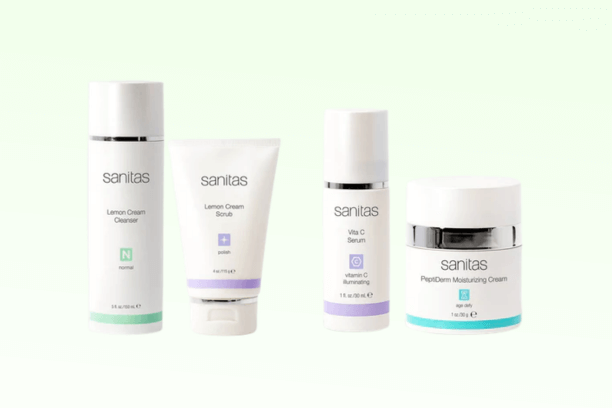
Sanitas Skincare is a performance-oriented skincare brand positioned around corrective, ingredient-driven formulations. Its offerings might help in managing fine lines, hyperpigmentation, dehydration, acne, and sensitivity. The brand builds its identity around antioxidant support and brightening, cellular turnover, collagen signaling support, exfoliation, and lipid barrier repair.
This review will evaluate Sanitas Skincare’s leading products, ingredient transparency, and customer experiences. It will also assess strengths and constraints, and its positioning within the skincare market.
About Sanitas Skincare
Sanitas Skincare is designed to address a broad spectrum of skin types and concerns. The brand organizes its catalog by concern, product type, and ingredient category to streamline regimen building. Listed concerns include aging and fine lines, dryness, uneven skin tone, redness and sensitivity, oily and blemish-prone skin, dry and blemish-prone skin, dark circles, and nighttime repair. Product categories span cleansers and scrubs, serums, moisturizers and mists, exfoliants, masks, toners, body care, eye and lip products, and targeted corrective treatments.
Sanitas positions its line as suitable for all skin types and emphasizes ingredient-led performance. The website highlights ingredient-focused navigation for actives such as vitamin C, hyaluronic acid, ceramides, glycolic acid, salicylic acid, vitamin E, niacinamide, lactic acid, peptides, vegan collagen and elastin, and retinol.
A digital Skin Quiz is also offered to guide product selection based on self-identified concerns, and each order includes a complimentary sample to encourage trial within the system. Sanitas also supports licensed professionals. The website features a spa locator, professional login portal, educational class schedules, and live events, indicating hybrid distribution through estheticians and spas.
Top Offerings
-
Lemon Cream Scrub
As per the makers, Lemon Cream Scrub removes built-up dead skin cells, smooths texture, and improves visible brightness. The formula combines fine polishing particles, plant-based oils and butters, and antioxidants to refine dull or congested skin while maintaining hydration.
The exfoliation comes from hydrated silica. It provides controlled exfoliation by gently removing dead surface cells and debris from the outer layer of skin. This could smooth texture, reduce the look of clogged pores, and improve light reflection for a brighter appearance.
To balance the exfoliation, the formula includes jojoba oil, murumuru seed butter (Astrocaryum Murumuru), and cupuaçu seed butter (Theobroma Grandiflorum). These plant lipids are rich in fatty acids that might strengthen the skin barrier, reduce water loss, and improve comfort after exfoliating. Glycerin and sodium hyaluronate (hyaluronic acid) attract and hold moisture in the skin.
Antioxidants include tetrahexyldecyl ascorbate (a stable, oil-soluble form of vitamin C) and tocopheryl acetate. Oil-soluble vitamin C penetrates the skin’s lipid layer more easily than water-soluble forms and helps defend against environmental damage while supporting gradual brightening. Barley extract, sandalwood extract, and Phellodendron amurense bark extract provide additional soothing and antioxidant support. The formulation also contains lactic acid, which may add mild chemical exfoliation.
-
Lemon Cream Cleanser
Lemon Cream Cleanser is formulated to remove dirt, oil, and makeup while helping preserve the skin’s natural moisture balance. The formula uses mild surfactants within a lipid-rich base.
Jojoba oil resembles natural sebum and may help dissolve impurities while supporting surface lipids. Murumuru and cupuaçu butters contain fatty acids that may help reduce transepidermal water loss and maintain softness after cleansing. Glycerin might help attract moisture and may help counterbalance surfactant activity.
Botanical extracts, including sandalwood, Phellodendron amurense bark, and barley, may help calm visible redness. Lactic acid provides mild surface refinement but is not intended to function as a strong exfoliant.
-
Vita C Serum
Vita C Serum by Sanitas Skincare is a high-strength antioxidant treatment formulated with 30% tetrahexyldecyl ascorbate (THD), an oil-soluble form of vitamin C. It might neutralize free radicals and regulate excess melanin production. This might reduce the appearance of dark spots and uneven tone. Its oil-soluble structure improves stability and absorption, supporting firmness and smoother skin over time.
The base includes cupuaçu seed butters, which provide essential fatty acids to reduce moisture loss and calm visible redness. Vegan squalane, a lipid similar to natural sebum, improves spreadability, strengthens the barrier, and enhances absorption without clogging pores.
-
Brightening Peel Pads
Brightening Peel Pads combine glycolic acid, lactic acid, and salicylic acid, which could resurface and brighten the skin. They might manage excessive dullness, uneven texture, discoloration, clogged pores, and early visible signs of aging.
Glycolic acid penetrates deeply to speed up cell turnover, soften fine lines, and improve brightness. The pads also have lactic acid, which may help maintain hydration. Salicylic acid could penetrate pores to dissolve oil and debris, making it potentially effective for blackheads and congestion. Witch hazel water provides mild astringent and soothing effects, while sodium PCA may support hydration and potentially reduce dryness.
The pads could help smooth texture, brighten dull skin, reduce dark spots, and improve clarity. As they contain AHAs, they increase sun sensitivity. Daily broad-spectrum sunscreen is required during use and for at least one week after stopping.
-
Milk & Honey Cleanser
Milk & Honey Cleanser is formulated for dry or barrier-compromised skin. It removes dirt, oil, sunscreen, and makeup while protecting essential lipids. It uses gentle surfactants such as decyl glucoside, coco-betaine, and sodium lauroyl glutamate that might help cleanse without disrupting the barrier. Raw honey may work as a natural humectant, drawing moisture into your skin while providing antioxidants. Milk proteins supply amino acids that could condition and soften skin. The makers also added sodium hyaluronate, which may support hydration, while jojoba oil and shea-based emollients could replenish lipids and prevent moisture loss.
-
Moisture Mist
As per the official site, the Moisture Mist functions as both a standalone hydration booster and a preparatory step that improves ingredient spreadability and absorption. At the core of the formulation is sodium hyaluronate (hyaluronic acid), which holds moisture within the upper epidermis, visibly plumping fine lines and increasing suppleness.
Beta-glucan complements hyaluronic acid by reinforcing barrier resilience and calming visible redness. Known for its film-forming and soothing properties, beta-glucan might reduce transepidermal water loss while supporting skin recovery.
The makers also added sodium PCA, glycine, proline, serine, and alanine, which could mimic components of the skin’s natural moisturizing factor (NMF). Sodium PCA acts as a water-attracting humectant that could trap moisture in the stratum corneum, while the amino acids support hydration balance and might support your skin texture. Moisture Mist increases immediate water levels in your skin and could leave your complexion appearing visibly plumper and supple.
-
VitaRich Serum
VitaRich Serum may provide antioxidant protection and lipid replenishment. Its base is based on squalane, which may enhance the penetration of fat-soluble vitamins while strengthening the skin barrier. The formulation’s multivitamin antioxidant complex is composed of vitamins A, C, D, E, and K. Vitamin A supports visible skin renewal, while vitamin C contributes brightening support and assists in protecting against oxidative stress. Vitamin E may provide antioxidant stability and help defend against lipid peroxidation within the barrier.
Vegan squalane is a biomimetic lipid that might improve skin permeability and reduce transepidermal water loss. Sunflower seed oil has linoleic acid and naturally occurring vitamin E, which provides additional barrier strengthening and smoothness.
As the formulation is entirely active and anhydrous, it absorbs efficiently while leaving a nourished, dewy finish. The absence of added fragrance might also reduce irritation risk, and the oil-serum texture allows it to spread evenly with minimal product usage.
-
Vitamin C Moisturizer
The Vitamin C Moisturizer may provide brightening and barrier support. Its formulation might neutralize free radicals generated by UV exposure and environmental stress. It could also support visible brightening by potentially reducing the appearance of uneven pigmentation and promoting smoother texture through its role in supporting collagen integrity and skin renewal.
The makers also added beta-glucan, which functions as both a humectant and barrier-supporting agent. It attracts and retains water within the upper layers of the skin while strengthening the skin’s natural defense mechanisms. Beta-glucan might also help calm excessive redness and strengthen resilience.
Advantages
-
Comprehensive Approach to Skincare
Sanitas Skincare structures its portfolio to support full-routine development across multiple steps and skin concerns. The brand organizes offerings into cleansers, exfoliants, serums, moisturizers, masks, and sunscreen products. Cleansers include formulas such as Milk and Honey Cleanser and Sensitive Skin Cleanser. Exfoliation options include Brightening Peel Pads and other acid-based resurfacing treatments.
The corrective category features Vita C Serum, Collagen and Elastin Serum, retinol-based formulas, and acne treatments containing benzoyl peroxide or salicylic acid. Moisturizers such as Vitamin C Moisturizer and Balancing Moisturizer complement treatment masks like Pumpkin Enzyme Mask, alongside eye creams and sun protection products.
The portfolio is organized into concern-based pathways addressing aging and fine lines, uneven tone, dryness, oily and blemish-prone skin, and redness or sensitivity. This structure allows building a coordinated, multi-step routine within one brand framework rather than assembling disconnected products from multiple sources. As active ingredients such as retinol, vitamin C, peptides, glycolic acid, and salicylic acid appear across different categories, the brand supports layering planning under a consistent ingredient philosophy.
Potential Limitations
-
Limited Disclosure of Industry Certifications
Sanitas Skincare does not prominently display widely recognized third-party certification seals such as Leaping Bunny, EWG Verified, or COSMOS on its primary website. Ingredient and ethical positioning claims appear to be self-reported rather than externally audited through publicly visible certification badges. The absence of formal certification marks limits independently verifiable confirmation of these standards beyond brand-issued statements. This means evaluating ingredient integrity and manufacturing standards requires relying primarily on company disclosures rather than third-party validation frameworks. The lack of visible certification seals may reduce comparative transparency. While self-reported claims may still be accurate, they are not substantiated through publicly displayed third-party certification programs.
-
Limited Ingredient Concentration Transparency
Sanitas Skincare does not consistently disclose precise active ingredient concentrations across most of its formulations. Aside from limited references, such as a 30% tetrahexyldecyl ascorbate (THD) claim associated with its Vita C Serum, percentage-based transparency is not standardized across the portfolio. In contrast, PCA Skin emphasizes therapeutic concentrations across its professional line (e.g., targeted AHA/BHA peels, clinical-strength retinoid serums), and Revision Skincare frequently publishes clinical concentration levels (e.g., 30% vitamin C complexes, 1% retinol formulations). Compared with these brands, Sanitas’ selective disclosure limits direct potency benchmarking despite operating within similar categories.
A limited disclosure makes it more difficult to evaluate intensity, compare the brand’s formulations against research-supported thresholds, or confidently layer actives within a structured routine. You may need to infer potency from ingredient order or product positioning rather than explicit labeling. This can complicate your routine planning and make it harder to try products without clearly defined usage transparency.
Pros
- In-house manufacturing ensures quality control.
- Paraben- and phthalate-free formulations.
- Mostly vegan except Milk & Honey Cleanser.
- Uses niacinamide, peptides, and antioxidants.
- Improves hydration, smoothness, and texture.
- Direct-to-consumer bundles and shipping incentives.
Cons
- No sunscreen products available.
- Active ingredient percentages undisclosed.
- Limited range versus larger brands.
- Some serums feel oily, slow absorbing.
- Few travel sizes or samples.
Alternatives To Sanitas Skincare
-
PCA Skin
PCA Skin and Sanitas Skincare follow different structural models. PCA Skin was founded in 1990 and centers its identity on professional chemical peels performed by licensed providers. The brand connects in-clinic support with at-home maintenance products. Sanitas Skincare manages sourcing, formulation, and production internally.
PCA Skin organizes its products around cleanse, correct, hydrate, and protect. Its formulations use alpha hydroxy acids and beta hydroxy acids for exfoliation, retinoids for cell turnover, hyaluronic acid for hydration, niacinamide for barrier support, and antioxidant blends. Professional options such as modified Jessner’s solutions and trichloroacetic acid peels are central to the brand’s positioning. Home-care products are intended to extend and maintain in-office results. Sanitas addresses similar concerns, including aging, hyperpigmentation, acne, dryness, and redness. Its ingredient portfolio includes vitamin C complexes, retinol, peptides, ceramides, squalane, niacinamide, glycolic acid, lactic acid, and antioxidant systems. Instead of focusing on procedural exfoliation, the brand emphasizes ongoing barrier support and daily-use products.
The two brands differ in how they communicate formulation standards. PCA Skin emphasizes internal research and product testing led by in-house chemists. Ingredient lists are disclosed per product, but the brand does not promote broad exclusion claims. Sanitas highlights exclusion standards across its catalog, stating that most of its products are free from parabens, phthalates, dyes, gluten, and preservatives.
Personalization tools also differ. PCA Skin directs you toward certified professionals for skin assessments and planning. It includes a provider locator and a routine builder based on its four-step model, but it does not offer a comprehensive online diagnostic quiz. Sanitas provides a visible skin quiz for product matching, offers free samples with orders, and includes filtering tools by concern, ingredient, and product type. The brand supports self-selection without requiring in-person consultation.
Both companies offer more than 50+ products across cleansers, toners, moisturizers, serums, exfoliants, eye products, and sun protection. Prices generally range from approximately $30 to $170. PCA Skin’s catalog includes focused products and professional-only peel systems. Sanitas includes bundles, subscription options, and body care products in addition to facial care. For example, PCA Skin’s Collagen Hydrator contains shea butter, silicones, hyaluronic acid, and vitamin E, creating a heavier texture. Sanitas’ Natural Moisture Factor uses squalane, coenzyme Q10, and lighter emollients, resulting in a less occlusive formulation. Both target hydration and barrier support but differ in texture and composition strategy.
-
Revision Skincare
Revision Skincare and Sanitas Skincare both focus on skincare targeting aging, pigmentation, hydration loss, and firmness using vitamin C, peptides, retinoids, and hyaluronic acid. However, they have some differences in terms of medical validation visibility and catalog structure.
Revision emphasizes high-potency antioxidant systems such as C+ Correcting Complex 30% (THD vitamin C), DEJ Daily Boosting Serum, peptide-based formulations, microbiome-support positioning, and neck-specific products such as Nectifirm Advanced. The catalog structure is aligned with procedural compatibility. Sanitas offerings are centered around concern, ingredient, product type, and body care. It has cleansers, exfoliating scrubs, serums, moisturizers, masks, along bundled sets such as the Lemon Cream Duo.
Across cleansing categories, Revision offers gentle and exfoliating cleansers designed to support active regimens. Sanitas provides multiple options, including Cleansing Balm, Lemon Cream Cleanser, Milk & Honey Cleanser, clay-based formulas, and sensitive-skin cleansers, resulting in a more visible variety at the entry step.
Within moisturizers, Revision centers on DEJ Face Cream, DEJ Night Face Cream with retinol, and barrier-repair formulas. Sanitas includes PeptiDerm Cream, Antioxidant Moisturizer, Vitamin C Moisturizer, Natural Moisture Factor, and Moisture Mist, offering wider texture variation and price entry points.
For serums, Revision features high-concentration vitamin C, peptide complexes, hydrating serums, and dermal-epidermal junction–targeted products. Sanitas offers Vita C Serum, Collagen + Elastin Serum, Hyaluronic Concentrate, and B3 Clarifying Complex. Both brands use overlapping actives, but Revision positions its products within a longevity and structural-aging framework, while Sanitas positions by ingredient clarity and category accessibility.
A major distinction is the visibility of clinical infrastructure. Revision publishes a Scientific Advisory Board composed of board-certified dermatologists and plastic surgeons. The brand cites 90+ scientific studies and peer-reviewed publications. It also highlights proprietary DEJ (Dermal Epidermal Junction) focused technology referred to as a longevity-layer approach. Sanitas does not prominently display an external advisory board or quantified clinical study count on its site.
Revision maintains a more visible medical-validation framework, including an advisory board, cited studies, and procedure-aligned technologies within a concentrated DTC assortment of 49 core products. Sanitas provides comparable ingredient categories across 50+ products with stronger filtering tools, body care inclusion, and consumer incentives.
How Did We Evaluate?
-
Real User Reviews
To evaluate real-world customer experience with Sanitas Skincare, we analyzed Amazon reviews across its key products. Beta Clarifying Cleanser holds a 4.8/5 rating from 410+ global reviews. Users consistently highlight its fine, dense exfoliating texture and report smoother skin, clearer pores, and brighter tone without excessive irritation. Long-term repeat use is common. Cost is the primary hesitation point, though most describe it as justified by results.
Lemon Cream Cleanser maintains a 4.7/5 rating from 380+ global reviews. Feedback emphasizes thorough cleansing without stripping moisture, alongside a fresh scent and spa-like experience. Many users report visible improvement in breakouts and redness. A minority of dry or mature-skin users report mild dryness with twice-daily use.
Brightening Peel Pads carry a 4.6/5 rating from 160+ global reviews. Customers frequently report improved glow, smoother texture, and a reduction in sunspots and acne scarring with consistent use. Some sensitive-skin users note temporary stinging.
Vita Rich Serum has a 4.5/5 rating from 50+ global reviews. Positive feedback centers on hydration, softness, and improved glow, particularly in dry or high-altitude climates. Negative reviews largely reference suspected third-party seller inconsistencies rather than formula performance concerns.
Customer sentiment toward Sanitas Skincare products trends strongly positive. Performance-related satisfaction is consistently high across cleanser, exfoliant, peel, and serum categories. While price remains a recurring concern, reports of irritation are present but limited.
-
Brand Reputation
As part of our evaluation, we searched for Sanitas Skincare across major third-party review and consumer protection platforms, including Better Business Bureau, ConsumerAffairs, Yelp, Sitejabber, and Trustpilot. At the time of review, no dedicated profiles, ratings, or verified complaint histories were found for the brand on these platforms. This lack of visibility does not inherently indicate negative performance but limits independent verification of customer satisfaction trends, dispute resolution patterns, or operational transparency.
Frequently Asked Questions
- Is Sanitas Effective for Sensitive skin?
Partially. The brand markets a Sensitive Skin Trio and redness-focused products formulated without common irritants. However, claims emphasize clean and barrier support, and suitability depends on individual triggers. - Can I try Sanitas Skincare if I have blemishes and acne-prone skin?
Maybe. The brand has B3 Clarifying Complex (niacinamide, zinc, sulfur) and oily/blemish-prone collections, which might target shine and congestion. These might manage mild breakouts and oil control, but are not prescription acne options or clinically validated products. - Can Sanitas anti-aging products be used with retinol?
Generally, yes, with caution. The brand mentions that its RejuvenA contains retinol and is designed for gradual use. Pairing with vitamin C or moisturizers may reduce irritation. However, layering multiple retinoids or acids increases sensitivity risk.
Final Words
Sanitas Skincare frames its identity around antioxidant defense, controlled cellular turnover, collagen signaling support, and barrier repair, offering a full-routine architecture that could help you build a routine across aging, hyperpigmentation, acne, dehydration, and sensitivity concerns.
However, active ingredient concentration transparency is limited across most formulations, making potency benchmarking more difficult outside of the brand’s disclosures. Widely recognized third-party certification seals and published advisory-board–backed clinical study counts are also not prominently displayed, which reduces independently verifiable validation
The brand functions as a comprehensive corrective skincare system emphasizing antioxidant and resurfacing strategies, but your expectations should align with cosmetic support and barrier strength rather than prescription-level dermatologic support.

Rachel has been a freelance medical writer for more than 18 years. She graduated from the University of Tennessee at Knoxville in 2005 and is currently practicing as a Certified Registered Nurse Anesthetist at a Level I trauma center.
Leave a Reply