

No products in the cart.
Contents
Joovv offers red and near-infrared light devices intended for home and professional use. Its offerings are built around photobiomodulation, in which specific wavelengths of light are delivered to the body to support cellular energy production.
The brand claims to provide a panel-based system that allows you to conduct structured sessions in your own space. Its product range includes compact handheld units designed for targeted areas, as well as modular panels that can function separately or be combined into larger full-body configurations.
In this review, we examine Joovv’s core offerings in detail and compare the brand with similar options in terms of features and positioning. We will also assess real user feedback to understand how the devices perform in real-world use.
About Joovv
As per the official website, Joovv offers devices that focus on cellular optimization and systemic wellness support. It states that its products are intended for topical heating and temporary relief of minor muscle and joint pain.
The company organizes its product ecosystem by procedure coverage and scalability. Its portable device, the Joovv Go 2.0, is designed for targeted support on smaller areas of the body. Mid-size panel systems such as the Joovv Mini 3.0 and Joovv Solo 3.0 offer broader surface coverage for localized or partial-body sessions.
For expanded exposure, the brand provides modular full-body configurations including the Joovv Half-Max 3.0, Joovv Duo 3.0, Joovv Max 3.0, Joovv Quad 3.0, and the Joovv Elite 3.0. These systems can allow multiple panels to connect vertically or horizontally to increase the procedure area over time.
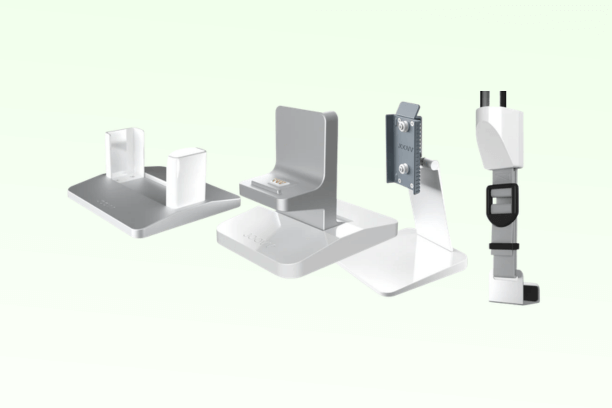
As per the official website, Joovv also supports its hardware with accessories such as floor stands, mini stands, door mounting systems, charging docks, and travel cases. A companion mobile application enables session customization and additional device controls.
Joovv Bestsellers
-
Solo 3.0
Solo 3.0 is a modular red and near-infrared light panel designed for moderate usage areas. It measures 36 inches in length, around 8.75 inches in width, and 2.34 inches in height, and contains 150 LEDs, including 76 red (660 nm) and 74 near-infrared (850 nm) diodes.
As per the official website, the device can be positioned using a boot floor stand, door mount system, or nano wall system, and it can be expanded into larger configurations such as Half-Max, Duo, Max, Quad, or Elite 3.0 Kits if broader coverage is needed.
Its functional components are the 660 nm red and 850 nm near-infrared wavelengths, which fall within the therapeutic optical window. Red light at 660 nm primarily affects superficial tissues by interacting with mitochondrial chromophores like cytochrome c oxidase, potentially supporting ATP production and cellular energy processes involved in tissue repair. The 850 nm near-infrared light penetrates deeper into muscles and joints, where it may influence nitric oxide release and vasodilation, contributing to improved blood flow.
-
Mini 3.0
As per the official website, the Mini 3.0 can be set up using a Door Mount System, Tabletop Stand, or Boot Floor Stand, depending on how you prefer to position it. As part of Joovv’s modular design, the Mini can be expanded into the Half-Max or Max configurations, allowing you to increase procedure coverage over time. The package includes one Joovv Mini 3.0 unit, a US power cord (or an international cord based on shipping address), protective eyewear, and a user manual. The Mini 3.0 is Bluetooth-enabled and includes Recovery+ mode and Ambient Mode. Recovery+ mode is designed to automate sessions using preset parameters, while Ambient Mode allows the device to function as low-intensity red lighting, separate from structured sessions.
-
Go 2.0
Go 2.0 is a handheld device designed for portable, targeted use. Its compact structure allows you to apply light therapy to specific areas without a fixed setup, supporting flexible use at home or while traveling. The device emits red and NIR wavelengths commonly used to influence cellular function through the photobiomodulation process, in which light energy interacts with mitochondrial chromophores such as cytochrome c oxidase. This interaction may support adenosine triphosphate production, which might support cellular repair and energy metabolism. Near-infrared light penetrates deeper into muscles and joints, which can contribute to improved blood flow that can support muscle relaxation and joint comfort.
-
Quad 3.0
Quad 3.0 is a full-body system composed of four Solo panels integrated into a single kit. It is available with a Door Mount System, Nano Wall System, or Mobile Stand, allowing you to configure the setup based on space and mobility needs. The system delivers 660 nm red and 850 nm near-infrared wavelengths through 600 LEDs, including 304 red and 296 near-infrared diodes, providing broad coverage for a full-body procedure. The Quad 3.0 includes upgradeable kit options and compatibility with additional accessories. As per the official website, the system includes Recovery+ mode for guided session settings, as well as Ambient Mode for lower-intensity illumination outside structured sessions.
-
Half-Max 3.0
Half-Max® 3.0 combines one Mini 3.0 and one Solo 3.0 into a vertically aligned setup for moderate coverage. It is available with either a Door Mount System or Nano Wall System and can be expanded into the Max Kit if you choose to increase coverage to full-body. It contains 210 LEDs, including 106 red (660 nm) and 104 near-infrared (850 nm) diodes. As per the official website, the kit includes the Mini 3.0, Solo 3.0, US power cord (or international cord based on shipping address), pairing cables, protective eyewear, and a user manual.
-
Elite 3.0
Elite 3.0 is a full-body system composed of six Solo panels integrated into a single configuration. The system delivers 660 nm red and 850 nm near-infrared wavelengths through a total of 900 LEDs, including 456 red and 444 near-infrared diodes, providing broad, full-body coverage. Optional accessories are available to modify setup and integration based on space or usage preferences. The near-infrared wavelength in this system may help boost blood flow and modulate inflammatory signaling pathways.
-
Max 3.0
According to the official website, the Max 3.0 includes two Mini units and two Solo panels in a single modular configuration. This arrangement increases total light output and procedure coverage compared to single-panel systems, allowing broader exposure within shorter session durations. As part of Joovv’s modular design, the Max 3.0 integrates multiple panels to create a vertically aligned setup intended for full-body application. The makers state that using this device can support cellular energy stimulation, muscle relaxation, and joint comfort within the full body.
Joovv Advantages
-
Professional-to-Home Platform
Joovv presents its devices as medical-grade systems engineered for structured therapeutic applications. The brand features full-body light panels designed for use in clinics, spas, gyms, recovery centers, and private homes. This positioning places the devices across both commercial and personal environments rather than limiting them to a general wellness category. The company states that its systems undergo independent third-party testing and certification. It highlights that its devices are certified to IEC 60601-1 standards for medical electrical equipment safety and IEC 60601-1-2 standards for electromagnetic compatibility. These standards are designed to evaluate electrical safety, mechanical integrity, and electromagnetic interference controls. It means the brand’s offerings are built to meet safety and operational requirements expected in clinical environments while remaining suitable for in-home use. This can support greater confidence in durability, safety standards, and long-term performance expectations, particularly if you plan to integrate light support into a consistent routine at home.
-
Regulated Manufacturing Framework
Joovv states that its red light therapy systems are manufactured under structured medical device quality standards. The company reports compliance with ISO 13485, an international standard that outlines quality management system requirements specifically for medical devices. This framework combines Good Manufacturing Practices and focuses on documentation control, risk management, traceability, and consistent production oversight.
The brand also notes that it includes UL-listed and NRTL-verified components in its systems. Nationally Recognized Testing Laboratories evaluate products against established electrical and safety benchmarks, adding a layer of third-party review to key internal components.
For its Generation 3.0 systems, Joovv reports independent third-party testing and certification through Intertek. These devices carry the cETLus mark, indicating the compliance with IEC 60601 standards for medical electrical equipment.
Rather than emphasizing broad FDA performance claims, the company highlights structured quality systems, international manufacturing standards, and external safety verification. The focus remains on documented production controls and engineering validation.
This framework may influence how you evaluate reliability and build consistency. If you plan to use light therapy regularly at home, structured manufacturing standards and third-party safety certifications can reduce uncertainty around electrical safety, component integrity, and long-term durability.
-
Expandable Modular Ecosystem
Joovv claims that its red light lineup is built around a modular and expandable platform. Its Generation 3.0 series includes the Solo 3.0, Mini 3.0, Duo 3.0, Max 3.0, Quad 3.0, and Elite 3.0. These models range from compact single-panel units designed for targeted sessions to multi-panel systems intended for full-body coverage. Instead of selecting one fixed-format device, you can choose a configuration that aligns with your available space, coverage goals, and intended usage frequency.
The company explains that its panels connect through a patented modular linking system that allows multiple units to function as one integrated setup. Once connected, the panels operate together through synchronized controls. Joovv also offers several mounting options, including the Door Mount, Nano Wall Mount, Mobile Stand, Boot Floor Stand, and Mini Stand. These options allow installation in smaller rooms, dedicated recovery areas, or open floor setups, depending on your layout.
Joovv further states that Generation 3.0 devices are designed for future expansion. You can begin with a smaller panel, such as the Solo 3.0, and add compatible panels over time to increase procedure surface area. This eliminates the need to replace your original unit if you later decide to scale up. You can start with a lower initial commitment and expand gradually as your usage patterns or space requirements change. Instead of outgrowing your device and purchasing a completely new system, you retain upgrade flexibility while maintaining compatibility within the same ecosystem.
Joovv Limitations
-
Minimal Long-Term Reliability Feedback
Joovv has limited large-scale, multi-year performance data available across the industry. It does not publish aggregated failure rates, long-term durability benchmarks, or structured reliability statistics based on extended ownership periods.
The brand’s official materials emphasize product specifications such as irradiance levels, modular design, and procedure coverage. However, it does not provide third-party longitudinal studies or documented hardware tracking over three to five years of continuous use.
You have limited verified multi-year data to assess long-term device reliability. If proven durability history is a priority, the absence of comprehensive long-term reporting may make it harder to confidently evaluate extended hardware performance.
-
Restricted Support Accessibility
Joovv handles customer support primarily through email and online contact forms. The website does not list a dedicated customer service phone number, and there is no live chat feature for real-time assistance. All inquiries are processed through a ticket-based system.
Response times can vary depending on support volume and time zone differences, and replies can take several business days. Some customer feedback in independent reviews indicates that support representatives often refer users to manuals, FAQ sections, or setup guides rather than providing step-by-step troubleshooting through direct interaction.
This means urgent concerns related to installation, warranty clarification, or device performance may not be addressed immediately. You may need to rely on written communication and follow-up emails instead of a direct conversation. The current support model may feel limited, particularly if you prefer speaking with a live representative for faster problem resolution.
Joovv Alternatives
-
Kineon
Kineon concentrates on targeted joint pain relief and mobility support through wearable light systems designed specifically for localized pain. Its messaging centers on clinically backed recovery, inflammation reduction, and improved joint function. Joovv, in comparison, presents a broader at-home light ecosystem, offering compact handheld units and large modular full-body systems.
The technological framework highlights a difference in approach. Kineon offers products like MOVE+ Pro that combine 660nm deep red LEDs with 808nm Class 1 infrared lasers. It highlights that each module contains 8 red LEDs and 10 infrared laser diodes rated at 5mW per diode, delivering 50mW per module. The brand specifically differentiates itself from LED-only devices by combining medical-grade laser technology aimed at deeper tissue penetration. Joovv, in comparison, utilizes LED-based red and near-infrared light across its lineup. Its devices are panel-driven systems rather than laser-integrated wearables, focusing on surface and broader area exposure instead of joint-specific strapping mechanisms.
Kineon maintains a relatively focused catalog that includes MOVE+ Pro for LED and laser support, HEAL+ for targeted infrared laser therapy, RELIEF+ as a four-hump myofascial trigger point tool, and joint-support products. The brand also offers bundled packages such as the Total Relief Duo and Pain to Possible set, combining light modules with manual trigger point tools to address recovery from multiple angles. Joovv, on the other hand, structures its product range into tiers, including Joovv Go® 2.0, Mini® 3.0, Solo® 3.0, Half-Max 3.0, Duo® 3.0, Max® 3.0, Quad® 3.0, and Elite® 3.0. These devices can be mounted on doors, paired with boot floor stands, or expanded through modular additions, allowing you to build from localized sessions to full-body installations.
Design philosophy further illustrates structural contrast. Kineon highlights that its devices are battery-powered, lightweight, and wearable, allowing you to remain mobile during the process. The strap system secures modules around knees, ankles, hips, shoulders, elbows, wrists, and other joints to maintain dosing consistency. Meanwhile, Joovv’s higher-tier devices, such as Max®, Quad®, and Elite® 3.0, are stationary panel systems designed for mounted or stand-supported use, prioritizing larger procedure areas rather than joint-specific wrapping. While Joovv Go® 2.0 provides handheld portability, much of the brand’s ecosystem is built around fixed installations and expansion capability.
Kineon operates as a joint-focused recovery brand integrating laser and LED technology into wearable modules supported by complementary deep-pressure tools and recovery bundles. Joovv functions as a scalable LED panel system brand offering a tiered structure that ranges from handheld devices to large modular full-body configurations. Kineon emphasizes targeted penetration, structured dosage, and musculoskeletal recovery applications, whereas Joovv emphasizes modular expansion, customizable coverage, and carefully regulated claims around temporary symptom relief.
-
NovaaLab
NovaaLab centers its positioning on pain relief, sports recovery, joint mobility, and oral care within a home-use context. It focuses on recovery acceleration, inflammation reduction, and mobility support. In comparison, Joovv prioritizes cellular optimization and medical-grade device engineering. It explicitly identifies its devices as Class II medical devices and states that they are tested and certified by Intertek to IEC 60601 medical electrical equipment safety standards.
The product structure of each brand further explains the differences. NovaaLab’s catalog is organized around wearable and targeted devices. It offers Novaa Light Pad, which uses 660 nm red light (120 LEDs) and 850 nm infrared light (240 LEDs) in a 15.7″ x 9″ format designed for strapable use. The brand also offers the Novaa Light Boot, which provides full foot coverage with 85 red and 85 infrared LEDs. Some of its devices, including the Light Switch, combine multiple wavelengths, including 620–625 nm red, 845–850 nm infrared, 460–470 nm blue, and 585–595 nm yellow. Joovv, in comparison, organizes its lineup by panel size and expandability rather than wearable targeting. It offers Go 2.0, a handheld device that delivers red and near-infrared wavelengths through dual-chip LEDs within the same lens. Larger panel systems scale from Mini® 3.0 and Solo® 3.0 to Half-Max 3.0, Duo® 3.0, Max® 3.0, Quad® 3.0, and Elite® 3.0. These panels can physically connect, allowing you to expand from moderate procedure areas to full-body vertical systems mounted on doors, walls, or mobile stands. This modular structure contrasts with NovaaLab’s standalone device approach.
NovaaLab highlights strapable and adjustable wraps intended for direct application to joints such as knees, shoulders, wrists, and elbows. Devices are described as lightweight with a short setup time. Meanwhile, Joovv includes portability through the Go 2.0, which features a silicone grip handle, an optional charging dock with tilt capability, a travel case, protective eyewear, and Bluetooth pairing. However, the broader Joovv ecosystem centers on fixed panel systems designed for structured sessions rather than wearable mobility.
As per their pricing structures, NovaaLab’s devices generally fall within a mid-range entry point, with products priced around $349.90 to $2,500.00. On the other hand, Joovv’s pricing begins at a higher entry level, with products starting from $549 to $11,099. NovaaLab concentrates on targeted, wearable recovery devices with specified LED counts, wavelength combinations, and observational user data. Joovv focuses on modular, panel-based systems with medical-grade certification language, app-based controls, and physical expandability.
Pros
- Specializes exclusively in red and near-infrared light therapy devices.
- Offers both targeted and full-body systems.
- Uses specific wavelengths (e.g., red and near-infrared) in its devices.
- Offers portable device options for targeted procedures.
Cons
- Customer service is reported as slow or unresponsive in independent reviews, with only email/chat support available.
- Some customers express that warranty service outcomes are slow or uncertain.
How Did We Evaluate?
-
Brand Credibility
To evaluate Joovv, we looked at its third-party ratings, complaint history, brand background, and review volume. The brand currently holds a B+ rating with the Better Business Bureau and is not accredited. Over the past years, a few complaints have been filed, with some closed in the last few months. Most complaints relate to order handling, cancellation decisions, return condition disputes, and promotional pricing enforcement. These patterns suggest that when issues arise, they tend to involve policy enforcement rather than product safety concerns or widespread delivery failures. On Tenereteam, it received a 5.0 rating, but this score is based on only four reviews. While the rating is positive, the small number of reviews does not reflect the overall customer experience at scale.
Based on these factors, Joovv appears to be an established but policy-driven company, with some customer disputes tied to return terms and order handling rather than widespread operational breakdowns.
-
Real User Experiences
We analyzed Reddit discussions from 2025-2026, focusing on recurring patterns in user experiences. Many users mentioned that expectations were high due to strong brand visibility and influencer endorsements, while highlighting disappointment when their experience did not align with the premium positioning. Several mentioned receiving responses that felt brief, scripted, or unhelpful when seeking clarification about device usage, safety positioning, or return logistics. They highlighted frustration with the return process and reported difficulty obtaining clear, personalized answers beyond links to manuals or website excerpts.
Many users claimed that Joovv’s pricing was difficult to justify when compared to similar red and near-infrared panels offering 660 nm and 850 nm wavelengths. Many mentioned some alternatives as potentially more cost-effective options.
On the other hand, several claimed there was limited clarity around manufacturing claims. They mentioned labels indicating design in California and assembly in Malaysia, along with references to medical-grade manufacturing. Some customers even highlighted uncertainty about component sourcing and what medical-grade specifically entails in terms of regulatory standards or third-party validation.
Based on this feedback pattern, Joovv seems to face ongoing scrutiny around value perception and transparency. It appears positioned as a premium, marketing-driven brand whose long-term reputation may depend on strengthening transparency and post-purchase customer experience.
Frequently Asked Questions
- Does Joovv offer condition-specific preset programs?
No. The brand offers devices that do not include condition-specific preset programs. Instead, they offer general modes such as Recovery+ for pulsed near-infrared exposure and Ambient for low-intensity sessions. You can adjust continuous or pulsed settings through the app based on broader wellness goals rather than targeted conditions. - Are Joovv devices portable in the same way as handheld units?
Not entirely. The brand offers options like Joovv Go 2.0, which is compact at under 6×4 inches, weighing about 1.32 lbs, and runs on battery power for travel use. However, larger panels like the Solo and Elite require AC power, mounting, and stationary home placement. - Does Joovv include a companion mobile app for procedure personalization?
The brand features a Bluetooth-enabled mobile app for Generation 3.0 devices and the Go 2.0. It lets you select modes like Recovery+ or Ambient, adjust timers and wavelength settings, track sessions, set reminders, monitor battery levels, and manage multiple devices.
Conclusion
Joovv states that its devices provide topical heating and help manage muscle and joint discomfort while supporting cellular function. However, clinical findings in this field vary by protocol, use, and setting, and outcomes are not uniform across all use cases.
The brand’s modular design provides flexibility, but publicly available long-term durability data remains limited. The brand does not publish multi-year performance benchmarks, aggregated failure rates, or independent longevity studies. Taking a few practical precautions might also be helpful when considering Joovv. Consistent eye protection is recommended during exposure, and if you have photosensitivity, use light-sensitizing medications, or manage specific medical conditions, you should seek professional guidance before starting the procedure.
Make sure to follow manufacturer guidelines related to session duration and distance from the device, as higher exposure does not necessarily correlate with improved outcomes. It is essential to remember that adequate ventilation and stable mounting are also important when configuring multi-panel systems.

Rachel has been a freelance medical writer for more than 18 years. She graduated from the University of Tennessee at Knoxville in 2005 and is currently practicing as a Certified Registered Nurse Anesthetist at a Level I trauma center.
Leave a Reply