

No products in the cart.
Contents
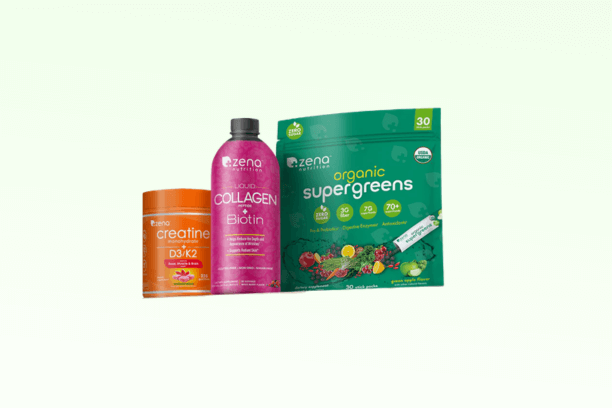
Zena Nutrition is built around certified organic, multi-ingredient formulations. Its formulas are based around broad-spectrum coverage, pairing fruits, vegetables, probiotics, enzymes, and fiber into daily-use formats.
The brand claims to support digestive regularity, gut balance, and baseline micronutrient support. Its offerings could also support muscle performance, hair, skin, and nail health.
This review will examine the brand’s key offerings, ingredient transparency, advantages, and potential limitations. We will also evaluate digestive support claims, fiber adequacy, probiotic inclusion strategy, and how the brand compares with similar brands in the greens and performance market.
About Zena Nutrition
Zena Nutrition emphasizes clean-label formulations, globally sourced ingredients, and third-party testing for purity and safety. Manufacturing takes place in the United States in cGMP-certified facilities, and its core Supergreens formula carries USDA Certified Organic status.
The brand’s flagship product, Zena Organic Supergreens, combines organic fruits and vegetables with digestive enzymes, prebiotics, probiotics, fiber, and a mushroom complex. It has expanded into adjacent categories, including Creatine Gummies with Vitamin D3 and K2, Liquid Collagen + Biotin, Supergreens + Energy + Hydration, capsule options, and variety packs.
As per the official site, the brand also claims to maintain quality and transparency standards by stating that each batch undergoes independent third-party laboratory testing, and many products are marketed as gluten-free and vegetarian-friendly where applicable.
Zena Nutrition Offerings
-
Organic Supergreens Stickpack
Organic Supergreens Stickpack may support digestive health. It provides 20 calories, carbohydrate, dietary fiber, 2 grams of protein, calcium, iron, sodium, and potassium. It may help in supporting gastrointestinal regularity and satiety while maintaining minimal sugar content (0 g total sugars).The core superfood blend has spirulina and chlorella, providing blue-green algae–derived phytonutrients and plant-based protein fractions. Leafy greens and grass powders contribute chlorophyll, carotenoids, and trace minerals. The inclusion of ashwagandha and maca introduces adaptogenic botanical compounds that are associated with stress modulation and energy balance.
A functional mushroom complex features lion’s mane, shiitake, maitake, cordyceps, turkey tail, chaga, and oyster mushroom extracts. These mushrooms contain beta-glucans and other polysaccharides that are commonly studied for immune modulation and cellular resilience.
The digestive support blend has prebiotics, probiotics, and digestive enzymes. Prebiotic fibers help nourish beneficial gut microbiota, while probiotic strains contribute to microbial diversity. Digestive enzymes assist in macronutrient breakdown, improving nutrient absorption and gastrointestinal comfort when taken regularly. Zena Organic Supergreens Stickpack is available in Mixed Berry, Mango, and Green Apple flavors.
-
Liquid Collagen Peptide + Biotin
Liquid Collagen + Biotin is formulated to support skin elasticity, hair thickness, and nail strength. It has bioactive collagen peptides and biotin, in a zero-sugar, mixed berry–flavored liquid format.The collagen component consists of Verisol® bioactive collagen peptides, which are primarily derived from Type I and Type III collagen. They provide amino acids such as glycine, proline, and hydroxyproline, which serve as substrates for endogenous collagen synthesis and may help support dermal structure and elasticity when consumed consistently. Biotin supports keratin infrastructure by functioning as a coenzyme in fatty acid synthesis and amino acid metabolism. The combination of collagen peptides and biotin might help address both the extracellular matrix of the skin and the structural proteins of hair and nails.
-
Zena Supergreens + Energy + Hydration
Supergreens + Energy + Hydration has superfoods alongside dietary fiber, a structured electrolyte blend, adaptogenic botanicals, probiotics, and a caffeine complex. The fiber blend contains gum acacia and organic ground rice hulls, which support gastrointestinal motility, satiety, and prebiotic activity.Prebiotics and probiotics include Jerusalem artichoke–derived inulin-type fibers and multiple probiotic strains such as Lactobacillus rhamnosus, L. plantarum, L. acidophilus, L. gasseri, and Bifidobacterium lactis, supporting microbial diversity and digestive balance.
Sodium chloride and potassium chloride may assist cellular hydration and neuromuscular function. The brand also includes green coffee bean powder, yerba mate powder, Panax ginseng extract, and ginkgo biloba leaf powder. Vitamin B6 and vitamin B12 are also added by the makers, which could support energy metabolism and neurological function. Caffeine in the formulation may help enhance alertness and endurance, and the adaptogenic botanicals may address stress modulation.
The makers also considered cordyceps, reishi, maitake, lion’s mane, white button, and king oyster mushrooms. These fungi are traditionally associated with immune modulation and adaptogenic activity. Digestive enzymes, including cellulase, amylase, and protease, are included to assist macronutrient breakdown and nutrient assimilation.
-
Creatine Gummies With D3 $K2
Creatine Gummies with D3 & K2 may support phosphocreatine replenishment within skeletal muscle. It could help support your strength output, muscular endurance during repeated efforts, and provide lean mass support when combined with resistance training. Creatine also has documented roles in cellular hydration and emerging research supporting cognitive energy metabolism due to its function in neuronal ATP buffering.Vitamin D3 is included to support calcium absorption and musculoskeletal integrity, contributing to bone mineralization and normal muscle function. Vitamin K2 works synergistically with vitamin D3 by directing calcium toward bone tissue and away from soft tissues, supporting skeletal health and vascular balance.
Zena Nutrition Advantages
-
Organics-Driven Brand Positioning
Zena Nutrition positions its supplement portfolio around USDA Organic certification, prominently featured in products like Supergreens. The brand states that Supergreens contains a blend of more than 70 superfoods meeting USDA Organic standards, prohibiting synthetic pesticides and genetic modification.
According to brand claims, the formula excludes GMOs, added sugars, gluten, dairy, soy, and eggs, while including digestive enzymes and probiotics to support gut function and nutrient absorption. This frames Zena as an organic, plant-focused nutrition brand.
This organic certification in flagship products like Supergreens offers sourcing transparency and reduced exposure to synthetic pesticides or GMOs. The allergen exclusions simplify dietary fit, and added gut support streamlines supplementation.
-
Multi-Format Positioning
Zena Nutrition highlights diverse format availability. Its Supergreens are available as powders in stick packs and tubs, and also in capsule form. Creatine is offered as gummies, and Collagen is available in liquid formats. This portfolio structure prioritizes delivery versatility, embedding convenience directly into daily supplement adherence.
When compared with other brands, Live It Up centers primarily on Super Greens powder in tubs and packets, without capsules, gummies, or liquid delivery formats in its core lineup. AG1 similarly focuses on powder offered in tubs and travel sticks, emphasizing formulation depth rather than format diversity. Zena’s multi-format availability avoids powder-only constraints and reduces preparation friction across use cases. This approach can align format with setting, schedule, and taste preference, increasing consistency and long-term adherence.
Zena Nutrition Limitation
-
Usage Of Proprietary Blends
Zena Nutrition uses proprietary blends in products like Organic Supergreens, listing categories (fruits, vegetables, digestive enzymes, prebiotics, probiotics, mushrooms) with total weights but no individual quantities. Specific CFU counts for strains and detailed per-ingredient dosages are absent, with vitamin/mineral Daily Values limited beyond basic nutrition facts. This hinders verifying clinical thresholds, research potency, or sensitivity adjustments, potentially lowering confidence in evidence-driven choices.
Zena Nutrition Alternatives
-
Live It Up
Live It Up and Zena Nutrition both offer plant-based superfood powders and related products designed to address digestion, energy, immunity, hydration, performance, and stress management. At the core of both portfolios are greens powders. Live It Up’s Super Greens contains approximately 20 concentrated superfoods, including kale, spirulina, moringa, and chlorella, combined with 5 billion CFU of probiotics, digestive enzymes, and 3 grams of fiber to support gut health and steady, caffeine-free energy. Beyond greens, Live It Up offers Vital Minerals for electrolyte replenishment, Feel the Beet for circulation and stamina support via nitrates and adaptogenic mushrooms, and Golden Hour, a turmeric-ashwagandha blend positioned for relaxation and stress balance. Zena’s collection similarly centers on USDA-organic Supergreens blends that have vegetables, probiotics, adaptogens such as ashwagandha and rhodiola, functional mushrooms, hydration components, and plant-based proteins. Zena extends into hydration boosters, adaptogen-focused performance products, and stress-support formulas, creating similarities across microbiome balance, workout recovery, and evening wind-down support.
Both brands aim to deliver veggie-derived vitamins and minerals for immune support, natural electrolytes and B-vitamins for hydration and energy, and adaptogens or mushrooms for stress resilience and performance enhancement. The most substantive difference lies in formulation transparency and ingredient architecture. Live It Up provides full micronutrient disclosure, including specific percent daily values for vitamins A, K, B12, iron, and magnesium, derived from natural sources rather than synthetic isolates. It avoids proprietary blends, caffeine, stevia, nuts, and synthetic additives, and is produced in allergen-free facilities, allowing users to stack supplements precisely without ambiguity. Zena Nutrition, by contrast, emphasizes USDA-organic sourcing and broader ingredient diversity within single formulas, but relies on proprietary blends. It includes stevia for sweetness, green tea extract for mild caffeine, and coconut-based ingredients.
Both brands manufacture in GMP-certified U.S. facilities and conduct third-party testing for contaminants such as heavy metals and pesticides. Live It Up underscores allergen segregation and dietitian involvement in formulation, including input from Rachel Gargano. Zena’s quality emphasis centers on organic certification and expansive ingredient sourcing rather than dosage-level transparency.
These brands deliver comparable functional goals through plant-based superfood systems, but they diverge in execution. Live It Up prioritizes dosage clarity, caffeine-free simplicity, allergen control, and a focused product lineup with bundled DTC benefits. Zena Nutrition emphasizes organic ingredient breadth, flavor variety, retail presence, and portable formats.
-
AG1
AG1 and Zena Nutrition differ in leadership transparency, clinical validation, product scope, pricing, and brand mission depth. The brand AG1 presents itself as a premium, science-forward foundation nutrition system, while Zena Nutrition emphasizes organic sourcing, affordability, and accessible formats.
AG1 provides detailed executive visibility. Its names CEO Kat Cole, Chief Science & Nutrition Officer Dr. Ralph Esposito, Chief People Officer Rosalind Chevreuil, CMO Paulie Dery, CFO Sam Diacos. Zena Nutrition emphasizes family-owned origins and holistic values but does not provide credential disclosures.
Clinical validation also separates the two. AG1 publicly references multiple clinical studies, including a triple-blind, placebo-controlled 12-week study, double-blind crossover trials, and a third-party study measuring self-perceived efficacy. Its products, including Next Gen AG1 and newer AGZ sleep supplements, carry NSF Certified for Sport® status, signaling banned-substance screening and purity testing. Zena Nutrition highlights USDA Organic and non-GMO certifications but does not cite specific clinical trials, peer-reviewed publications, or detailed third-party testing documentation tied to finished-product efficacy.
AG1 focuses almost exclusively on its Next Gen AG1 powder, a 12-in-1 formulation containing 75+ ingredients. The formula is delivered in pouches, travel packs, and a bundled shaker system. Zena Nutrition offers a broader assortment, including USDA Organic Supergreens, collagen peptides drinks, muscle recovery blends, hydration boosters, and stick packs. While Zena’s formulas include 70+ organic superfoods such as wheatgrass, barley grass, and beetroot, along with hydrolyzed collagen types I and III in certain offerings, ingredient potency rely more heavily on proprietary blends.
Manufacturing standards for both brands include U.S.-based production and third-party contaminant testing, but AG1 places stronger emphasis on certification layers such as NSF Sport® and structured quality-control narratives. Zena’s primary certification highlight is USDA Organic status.
AG1 delivers a premium, clinically supported, single-foundation formulation model, while Zena Nutrition offers an organically positioned, multi-product wellness product range that is claimed to be designed for everyday accessibility.
Pros
- Offers USDA-certified organic greens blends with probiotics, enzymes, adaptogens, mushrooms, and hydration support.
- Gluten-free, sugar-free, and non-GMO positioning supporting clean-label daily support.
- Multiple flavor options and portable stick packs provide convenience for travel and on-the-go routines.
Cons
- The ingredient label lacks full disclosure of exact amounts for vitamins, minerals, probiotics, and active botanical compounds.
- Some report unexpected shipping charges, delayed deliveries, and difficulty resolving order issues.
How Did We Evaluate?
-
Real User Reviews
To evaluate real customer experience with Zena Nutrition, we analyzed verified Amazon feedback across the brand’s most reviewed products. Liquid Collagen Peptides + Biotin holds a 4.4 out of 5-star rating based on 2,239 global ratings. Reviewers frequently report stronger nails, faster nail growth, smoother skin texture, and reduced hair shedding after consistent use. Some also mention perceived energy improvements and easy digestion. Taste feedback trends positive overall, with many describing it as fruity and manageable, though a minority characterize it as syrup-like or slightly grainy. Perceived value is also divided, with some users considering the product worth the cost and others describing it as expensive.
The brand’s Supergreens Organic Super Greens Powder has a 4.3 out of 5-star rating across 1,840+ global ratings. Digestive improvement is the most consistent benefit reported. Users frequently cite reduced bloating, improved regularity, increased daily energy, and mood stabilization. Several reviewers specifically reference improved alertness. However, taste generates the most variability in feedback. Some customers describe the mixed berry or green apple flavors as refreshing and easy to consume, while others find the sweetness excessive or unpleasant when mixed solely with water. Zena Supergreens + Energy + Hydration reflects similar average ratings and review volume. Reported benefits emphasize hydration support, sustained energy, digestive regularity, and convenience. The single-serve stick format is consistently praised for portability and travel use. As with the core greens formula, taste and dissolvability divide users.
Creatine Monohydrate + D3/K2 (Watermelon) currently shows a limited data set, with a limited number of reviews. One user highlights the flavor as preferable to traditional chalky creatine powders, while another criticizes the perceived sugar content.
Consumer sentiment for the brand’s key offerings appears to be favorable but with consistent points of friction in terms of taste, sweetness intensity, limited collagen type variety, mixability concerns, and price sensitivity.
-
Brand Reputation
Zena Nutrition claims to offer organic supergreens powders and products. Its independent visibility across major consumer review platforms remains limited. Sites such as Better Business Bureau, Thingtesting, ConsumerAffairs, and Yelp show minimal or no presence. This lack of footprint appears more consistent with early-stage brand development and modest customer scale than with documented systemic complaints.
On Trustpilot, only a single negative review from 2023 references shipping delays. While these points point to isolated fulfillment friction, the extremely small review base makes it difficult to identify broader patterns related to product satisfaction and customer service responsiveness.
Testimonials on the brand’s website emphasize USDA organic ingredients, no added sugar, inclusion of probiotics, and affordability relative to higher-priced greens powders. These attributes may resonate with cost-sensitive consumers. However, self-published reviews do not provide independent third-party validation.
External commentary in retail and discussion channels, including Walmart, Reddit, and Costco community discussions, mentions occasional concerns such as gritty texture and stevia aftertaste. These are common sensory critiques in lower-cost greens formulations but remain relevant to overall user experience.
Zena Nutrition appears positioned as an entry-level, budget-oriented option, highlighting organic labeling and price accessibility. However, the current public evidence base suggests additional due diligence is warranted before relying on claims as evidence of measurable efficacy.
Frequently Asked Questions
- Does Zena Nutrition provide information on interactions with medications?
The brand notes that its greens may interact with medications and advises consulting a healthcare provider. However, it does not list specific drug interactions or provide detailed guidance, relying on general precautionary disclaimers instead. - Is Zena Nutrition Necessary If I Am Having a Balanced Diet?
No. If you already maintain a balanced diet rich in whole fruits, vegetables, fiber, and varied micronutrients, Zena Nutrition’s formulations are not nutritionally essential. They do not replicate the structural fiber complexity, nutrient bioavailability, or sustained energy derived from whole foods. Within a well-rounded diet, the brand functions best as an additional convenience rather than a dietary necessity. - Can Zena Nutrition Support My Workout Performance?
Partially. The brand offers Creatine Gummies (5g creatine monohydrate), which can support strength and recovery, consistent with creatine research. Supergreens and Collagen provide general nutrient support but are not performance enhancers. The effects also depend on your training, diet, and consistent usage, not supplementation alone.
Conclusion
Zena Nutrition claims support for gut balance, hydration, muscle performance, and visible hair, skin, and nail health through certified organic, multi-ingredient blends. Its greens formulas, collagen liquids, and creatine gummies may boost physical performance and energy levels.
However, several structural limitations affect analytical clarity. The brand restricts per-ingredient dosage transparency. Without disclosed quantities for probiotic strains, mushroom extracts, adaptogens, or botanical components, it is not possible to confirm whether individual ingredients meet research-supported intake thresholds.
The absence of published clinical trials on the finished formulations further limits outcome predictability. While certain ingredients may have independent scientific backing, the combined products themselves have not been validated as unified, clinically tested options.
Zena prioritizes ingredient breadth and accessibility over fully disclosed usage precision, which makes performance consistency and measurable impact difficult to quantify. Its lineup may function adequately as an entry-level, convenience-driven option for daily nutrition without complex stacking. Your expectations should also remain measured. They do not replace whole-food intake, balanced macronutrient consumption, adequate protein, fiber diversity, hydration, sleep, or structured exercise.

Rachel has been a freelance medical writer for more than 18 years. She graduated from the University of Tennessee at Knoxville in 2005 and is currently practicing as a Certified Registered Nurse Anesthetist at a Level I trauma center.
Leave a Reply