

No products in the cart.
Contents
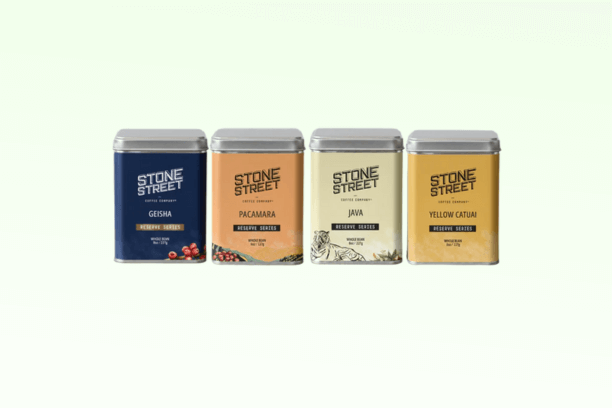
Stone Street Coffee emphasizes small-batch roasting and controlled production methods. It claims to source coffee beans from established growing areas and roasts them in limited batches. This may support freshness, aroma retention, and flavor consistency.
The brand maintains a broad product range designed to accommodate different taste preferences and brewing methods. Its offerings include single-origin coffees, blended roasts, espresso-focused options, flavored varieties, and cold brew–specific products.
In this review, we will examine Stone Street Coffee’s product range in detail and assess the brand’s market positioning and reputation. We will also analyze consumer reviews to understand how the brand performs in terms of quality, consistency, and value.
About Stone Street Coffee
According to the official website, Stone Street Coffee is a Brooklyn-based coffee brand that focuses on freshness and controlled production, with coffee roasted in batches to support consistency across its product range.
The brand operates mainly in the roasted coffee category, offering both blends and single-origin coffees. Its single-origin selection includes beans sourced from areas such as Central America, South America, Africa, and Asia. This range covers standard single-origin offerings as well as higher-priced Reserve Series options like Nicaragua Geisha, Pacamara, Java, and Yellow Catuai. Alongside these are core blends such as Brooklyn Roast, House Blend, Dark Roast Blend, and espresso-focused coffees.
As per the makers, it offers cold brew–specific blends, cold brew reserve beans, breakfast blends, flavored cold brew options, and bundled cold brew packs intended for home use.
The brand also maintains a large flavored coffee lineup. Available options include hazelnut, French vanilla, cinnamon swirl, southern pecan, blueberry cobbler, caramel nut, cappuccino, and similar profiles.
Stone Street Coffee Key Offerings
-
The Perfect Espresso
The Perfect Espresso is a medium-roast espresso blend made entirely from roasted coffee beans, with no added ingredients. It is available in 1 lb, 2 lb, and 5 lb bags, with savings applied to larger sizes, and can be purchased in different grind options to suit espresso machines, moka pots, or other brewing methods. The medium roast is designed to balance solubility and stability during extraction rather than pushing extreme light or dark roast characteristics.
The blend has caffeine, which blocks adenosine receptors in the brain that can increase alertness and reduce perceived tiredness. Medium roasting preserves a moderate caffeine level while avoiding excessive breakdown of heat-sensitive compounds seen in darker roasts.
Chlorogenic acids and related polyphenols influence acidity and bitterness. During medium roasting, a portion of these compounds degrades into quinic and caffeic acids, which softens sharp acidity while still supporting espresso structure. Trigonelline partially converts into aromatic compounds and small amounts of niacin during roasting, contributing to aroma development rather than nutritional impact.
The medium roast also promotes Maillard reactions, where sugars and amino acids form melanoidins. These high-molecular-weight compounds contribute to espresso’s darker color, thicker crema, and fuller mouthfeel. Coffee lipids released during grinding and brewing help stabilize crema and carry volatile aroma compounds, influencing texture and lingering flavor without significantly changing caloric content.
-
Tanzanian Peaberry
Tanzanian Peaberry is a medium roast African coffee, offered in three bag sizes, with grind options personalized to your brewing equipment. As a peaberry selection, the beans are naturally occurring single, round seeds formed inside the coffee cherry. This shape can influence roasting consistency, as the rounded surface allows heat to distribute more evenly during the roast cycle.
The ingredient is 100 percent roasted Tanzanian Arabica coffee. These beans naturally contain caffeine, chlorogenic acids, trigonelline, lipids, and organic acids. The brand highlights that this blend has tasting notes of caramel, stone fruit, and chocolate, which reflect chemical transformations during roasting rather than added flavorings. As per the official website,
-
Cold Brew Reserve
Cold Brew Reserve is a dark roast blend made from gourmet Arabica Supremo beans and processed using the washed method. The coffee is designed specifically for cold brew preparation and is available either as whole beans or ground to a coarse consistency suited for toddy systems, pitchers, French press setups, and similar immersion methods.
The dark roasting process significantly alters the bean’s internal chemistry. Extended heat exposure breaks down a larger portion of chlorogenic acids, which contributes to the smoother perceived acidity described in this blend. The washing process used in this blend removes the fruit pulp before drying, which generally results in cleaner flavor separation and less residual fermentation character. This can help maintain clarity in chocolate and nutty tones even after dark roasting.
-
Brooklyn Roast
Brooklyn Roast is a kosher medium roast blend made from a combination of light and dark roasted coffee beans. It is available in one-pound, two-pound, and five-pound bags. As per the official website, you can select whole beans or request a grind size personalized for French press, drip, or espresso machines. Lighter roasted beans in this blend retain more chlorogenic acids and organic acids, which contribute to brightness and perceived clarity. Meanwhile, the dark roast components undergo longer heat exposure, breaking down more of these acids.
-
Caramel Nut Cold Brew
Caramel Nut Cold Brew is a dark roast cold brew blend made from Colombian Arabica Supremo beans. It is formulated specifically for cold water extraction methods. You can purchase it as whole beans or have it ground to a coarse consistency suited for cold brew makers, French press systems, pitchers, or mason jar preparation. This blend uses roasted Colombian Arabica coffee, which is graded as Supremo, a Colombian size classification for larger beans. Their consistent size and density allow heat to move through the beans more evenly during roasting.
-
Mayan Water Decaf
According to the official website, Mayan Water Decaf is a Central American medium roast coffee that uses the Swiss Water process. It is offered as whole bean or ground to match your preferred brewing method, including French press, drip, or espresso. The blend is positioned as a full-flavored decaf option with modest body and earthy notes.
The only ingredient is roasted, decaffeinated coffee. Arabica beans naturally contain caffeine, chlorogenic acids, trigonelline, lipids, and carbohydrates. In this case, most of the caffeine has been removed through the Swiss Water process, in which green coffee beans are soaked in water to dissolve caffeine and flavor compounds. The water passes through carbon filters that selectively remove caffeine molecules based on their size. The filtered solution, now saturated with flavor compounds but lacking caffeine, is reused to extract caffeine from subsequent batches without stripping away as many aromatic components. As caffeine is a central nervous system stimulant that blocks adenosine receptors, reducing its intake lowers the likelihood of jitteriness or sleep disruption.
Stone Street Coffee Advantages
-
Heritage-Driven Brand Positioning
Stone Street Coffee builds its identity around Brooklyn, New York. The company began roasting in the Gowanus neighborhood in the early 2010s and continues to highlight that its beans are roasted there today. Rather than treating this as background information, the brand presents its Brooklyn roots as a central part of its story. This heritage carries through in both naming and tone. Its blends, such as Brooklyn Roast, reference place directly, while product descriptions use straightforward, New York–influenced language to suggest bold flavor profiles. It actively shapes how the brand defines taste, character, and overall style.
Roasting remains centralized in Brooklyn, and the brand operates a physical café at 379 Broome Street in New York City. It also supplies coffee to local cafés and restaurants, keeping its presence tied to the same community it references in its branding. This clarity can reduce uncertainty during purchase. You know where the coffee is roasted and the general flavor direction the brand aims to deliver. A clearly defined regional identity can make it easier to set expectations and feel more confident about repeat purchases, especially if you prefer bold, city-style roast profiles with a distinct point of origin.
-
Craft-Centric Business Philosophy
Stone Street Coffee claims to focus on small-batch roasting, in-house Brooklyn production near the Brooklyn Bridge, and stated ethical sourcing practices. The company emphasizes roasting operations conducted internally rather than outsourced, framing this as a method of maintaining freshness control. It references direct trade relationships with family farms in origin regions such as Colombia, Nicaragua, and Kenya, presenting its sourcing model as focused on quality selection and ongoing producer relationships. The brand also highlights sustainable farming alignment, recyclable packaging, and operational efficiency measures such as low-waste roasting. These components define a positioning centered on artisanal production and origin-focused procurement rather than large-scale commodity coffee distribution. This structure may offer greater clarity around roast origin and production location compared to mass-market blends. Small-batch roasting may suggest more controlled production cycles, while origin transparency can help you choose coffees aligned with specific flavor profiles.
-
Authentic Specialty Brand Presence
Stone Street Coffee presents itself as a Brooklyn-based specialty coffee brand with a strong New York influence. Its messaging consistently highlights artisanal roasting and local roots, positioning the company as a provider of specialty-quality coffee shaped by its urban setting.
Although the brand emphasizes local production, its distribution model extends through direct-to-consumer e-commerce, subscription services, and wholesale supply to cafés and restaurants. This broader reach allows the company to grow while maintaining a specialty-focused image rather than shifting toward a mass-market or commodity-driven profile.
The Brooklyn roasting emphasis creates a clearer sense of origin compared to generic grocery-store coffee labels. The brand signals proximity production instead of large-scale industrial sourcing, which supports transparency and a defined production base.
If you value traceability, an urban specialty perspective, and sourcing narratives that are tied to a specific place, this may influence your decision. It gives you more context about where your coffee is roasted and how the brand differentiates itself from anonymous bulk coffee suppliers.
Stone Street Coffee Limitation
-
Minimal Influencer Brand Presence
Stone Street Coffee maintains limited visibility through influencer-driven marketing or social media tastemakers, as observed across its official website and known external coverage. Its channels do not highlight collaborations with TikTok baristas, Instagram creators, or recurring celebrity endorsements. No evidence supports an ongoing influencer strategy. Compared to specialty coffee brands using viral content, affiliate codes, and creator-led launches, Stone Street’s positioning remains product-focused with minimal digital amplification. This means less exposure through trending social media content, unboxing videos, or influencer promotions. Discovery relies more on direct search, retail availability, or word-of-mouth rather than algorithmic feeds. If social proof or creator reviews guide your purchases, the brand’s low influencer presence may limit visibility.
Stone Street Coffee Alternatives
-
Driftaway Coffee
Driftaway Coffee and Stone Street Coffee are both Brooklyn-based roasters, yet their operational structures and brand priorities differ in measurable ways. As per their official website, Driftaway Coffee focuses on personalization through a structured subscription system. New subscribers receive a tasting kit with four coffees, which they rate to determine future shipments aligned with their taste preferences. Its catalog is organized into Fruity, Classic, Balanced, Bold, and Extra Bold categories. The company frequently rotates seasonal and limited releases, including India Ratnagiri Scoby Anaerobic 72h, Ecuador Finca La Josefina Sidra Washed, Sebastian Ramirez White Honey Gesha, and Colombia Jorge Rojas Pink Bourbon. Processing methods such as anaerobic fermentation, honey processing, and washed Sidra lots are highlighted.
On the other hand, Stone Street Coffee operates with a wider retail variety that emphasizes direct product selection over guided personalization. You can filter by roast type, certification, or origin, and purchase immediately without a tasting-based onboarding step. Its lineup includes Brooklyn Roast, The Perfect Espresso, Knee Buckling Espresso, Dark Roast Blend, and French Roast. It also carries single origins like Tanzanian Peaberry, Colombian Supremo, Ethiopian Yirgacheffe, and Sumatra Mandheling. A notable portion of the portfolio consists of Hazelnut Supreme, French Vanilla, Southern Pecan, Blueberry Cobbler, Cinnamon Swirl, and Vanilla Hazelnut Cold Brew. Inventory appears structured around steady availability rather than limited seasonal rotations.
Sustainability and sourcing transparency are integral to Driftaway’s positioning. The company states that it uses plastic-free, compostable packaging and operates with carbon-neutral shipping and operations through measured offsets. It references participation in a Price Transparency pledge and includes a Bean-for-Bean contribution model tied to sustainable farmer livelihoods. Meanwhile, Stone Street Coffee highlights certifications including Fair Trade, Kosher, and Rainforest Alliance across portions of its portfolio. Its messaging emphasizes small batch roasting in Brooklyn for consistency and freshness. Its packaging formats include traditional bags, pods, cans, and cold brew pitcher packs. Environmental initiatives are not positioned as central differentiators in the same way as Driftaway’s compostable and carbon-neutral claims.
Driftaway Coffee operates with rotating micro lots, defined flavor frameworks, sustainability claims, and producer transparency integrated into its brand identity. Stone Street Coffee emphasizes product variety, flavored blends, and certification filters.
-
Atlas Coffee Club
Atlas Coffee Club operates on a subscription-centered model built around rotating single-origin coffees sourced from Costa Rica, Ethiopia, India, Colombia, Malawi, Myanmar, and Papua New Guinea. The brand highlights that each shipment features one origin at a time, supporting a structured country-by-country rotation. It also highlights specialty-grade beans that are hand-picked at peak ripeness and roasted fresh to order. On the other hand, Stone Street Coffee functions primarily as an online coffee retailer with a broad catalog. Its offerings include blends, flavored coffees, cold brew formats, espresso lines, and selected single-origin coffees such as Tanzanian Peaberry, Colombian Supremo, Ethiopian Yirgacheffe, and Sumatra Mandheling.
The purchasing structure differs significantly between the two brands. Atlas Coffee Club requires you to build a plan through a six-step selection process, including coffee format, grind type, caffeine preference, roast profile, bag quantity (6oz, 12oz, or 24oz), and delivery frequency. Meanwhile, Stone Street Coffee uses a conventional e-commerce model where you can select individual products directly from the catalog. While it offers a Subscribe & Save option, it is not positioned as the primary purchasing method.
Product scope further distinguishes the two brands. Atlas Coffee Club focuses exclusively on single-origin coffee and does not prominently feature flavored blends. Roast customization is available within defined ranges, but the emphasis remains on origin rotation rather than flavor infusions. Stone Street Coffee offers a significantly broader selection that includes flavored coffees such as Hazelnut Supreme, French Vanilla, Cinnamon Swirl, Blueberry Cobbler, Southern Pecan, Caramel Nut Cold Brew, and Vanilla Hazelnut Cold Brew. It also provides multiple cold brew–specific products, including Cold Brew Reserve, Cold Brew Breakfast Blend, and Cold Brew Boost, as well as espresso-focused offerings like The Perfect Espresso and Knee Buckling Espresso.
In terms of price range, Atlas Coffee Club structures its pricing around shipment size rather than individual product pricing. As per the official website, a 6-oz half bag is priced around $11, a 12-oz single bag at $17, and a 24-oz double bag at $32, with ongoing subscription savings ranging between 22% and 27%. Meanwhile, Stone Street Coffee lists single products primarily in the $19 to $25 range per bag, depending on the blend or origin.
Atlas Coffee Club is structured as a curated subscription experience centered on rotating single-origin coffees, structured customization, and educational inserts tied to each origin. Stone Street Coffee operates as a Brooklyn-based roaster with a broad, stable product portfolio that includes blends, flavored coffees, cold brew products, and optional subscription savings.
Pros
- Brooklyn-based roasting gives the brand a strong local and artisanal positioning.
- Offers both single-origin and blended coffees under one brand ecosystem.
- Its catalog covers whole bean, ground, coarse ground, and pod formats.
Cons
- Some users on individual review platforms highlighted limited customization in subscription frequency in independent reviews.
- A few users mentioned finding the pricing of the brand offerings higher compared to the perceived value.
How Did We Evaluate?
-
Brand Reputation
Stone Street Coffee focuses on blends, single-origin coffees, flavored varieties, and cold brew-specific offerings. However, at the time of writing this review, the brand does not have a listing with the Better Business Bureau (BBB). However, this absence is not uncommon among specialty or mid-sized direct-to-consumer brands.
Based on these factors, Stone Street Coffee appears to be an established specialty coffee brand with sustained market presence. However, there is limited information available on third-party platforms, which makes it difficult to understand the overall brand credibility.
-
Real User Experiences
To evaluate Stone Street Coffee, we analyzed customer feedback published on Judge.me, where the brand holds a 4.89 out of 5 rating based on more than 3,000 reviews/ Many users claimed that flavor quality is a primary reason for repeat purchases. Several highlighted single-origin offerings, such as Costa Rica Tarrazu, Ethiopian Sidamo, Peru Atahualpa, Tanzania Peaberry, and Nicaragua Yellow Catuai, are described as smooth, crisp, mild, or fruit-forward depending on origin and roast. Users also claimed that espresso varieties like The Perfect Espresso and Knee Buckling Espresso produce strong and rich results suitable for home machines.
At the same time, a few users mentioned limitations in flavor depth. Many customers highlighted that certain reserve coffees lacked complexity or did not deliver expected fruit-forward notes. A few users mentioned being unaware of artificial flavoring in a flavored blend and described the taste as somewhat off.
Numerous claimed that freshness and delivery reliability contributed to their positive experience. They also highlighted receiving freshly roasted beans and appreciating whole bean options for home grinding. Subscription convenience, particularly for decaf and half-caff options such as Mayan Water Decaf and European Fancy Decaf, was also noted by several customers. However, some users mentioned shipping delays and advised ordering ahead of time. They highlighted minor concerns about flavor intensity in specific blends.
Frequently Asked Questions
- Does Stone Street Coffee provide origin traceability down to the farm level?
No. The brand highlights blends and regional sourcing, without disclosing specific farm names or detailed producer-level transparency. - Does the brand offer subscription customization flexibility?
The brand promotes a recurring Subscribe and Save model and offers gift subscriptions with selectable durations such as 1, 2, or 3 weeks. However, detailed customization options like adjusting grind type, bag size, shipment frequency, or mixing coffees are not clearly visible on publicly accessible pages. - Does Stone Street Coffee provide information on roast profiles?
The brand organizes its coffees into light, medium, and dark roast categories and provides brief flavor descriptors such as bold or smooth. However, it does not disclose detailed roast profiles, Agtron measurements, roast temperatures, or specific roasting methodology.
Conclusion
Stone Street Coffee maintains dedicated cold brew blends and an extensive flavored coffee range as permanent categories within its lineup. It highlights bold roast profiles, structured flavor direction, and strong regional identity.
The brand highlights centralized Brooklyn roasting and references direct trade relationships as part of its sourcing narrative. However, it maintains limited visibility through baristas, Instagram creators, or recurring celebrity collaborations. This lower digital visibility may affect discoverability and perceived community validation.
Before considering Stone Street Coffee, it is essential to review ingredient disclosures for flavored variants, assess roast level suitability based on personal caffeine sensitivity and acidity tolerance. Assessing these factors in advance may help you make a more informed choice based on your priorities.

Rachel has been a freelance medical writer for more than 18 years. She graduated from the University of Tennessee at Knoxville in 2005 and is currently practicing as a Certified Registered Nurse Anesthetist at a Level I trauma center.
Leave a Reply