

No products in the cart.
Contents
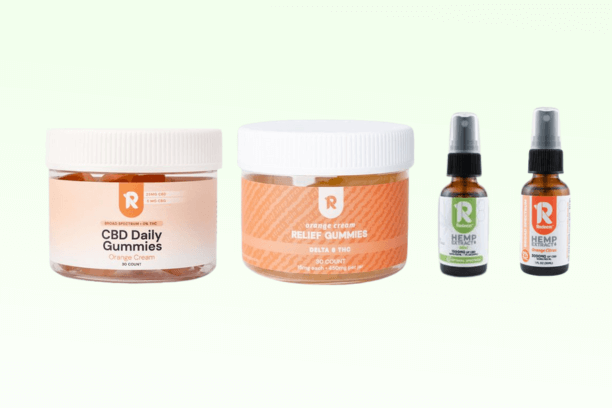
Redeem Therapeutics offers various hemp-derived products that are intended to support calmness, lower stress levels, and improve focus.
The brand’s offerings pair a mix of cannabinoids like cannabidiol, CBN, CBG, and THC. They are spread across multiple formats like gummies, capsules, oils, creams, and THC drops. The brand offers both THC-free and THC-containing options depending on the product type and formulation.
This review examines the brand’s core background, sourcing and testing disclosures, range of offerings, and potential brand limitations.
About Redeem Therapeutics
Redeem Therapeutics focuses on products to support relaxation and ease physical discomfort. The brand organizes its offerings across cannabidiol-only, cannabidiol plus THC (full-spectrum), and THC-free (broad-spectrum) options. Products are further grouped based on benefit-driven segmentation, including sleep, relief, focus and energy, and stress categories.
The manufacturer describes the brand’s hemp sourcing as USDA-certified organic, grown in North Carolina, and processed in an in-house extraction facility in Columbia. Manufacturing is described as aligned with current Good Manufacturing Practices, which the company states are followed voluntarily.
According to its official website, all brand offerings undergo third-party testing by independent laboratories, with Certificates of Analysis (COAs) available through QR codes and searchable lot numbers. These COAs are stated to screen for cannabinoid potency, THC levels, terpene profiles, and safety markers like heavy metals, pesticides, residual solvents, and microbial contaminants.
Redeem Therapeutics Offerings
-
Full Spectrum CBD Oil
As per the makers, the Full Spectrum CBD Oil is formulated to support relaxation, provide mild mood upliftment benefits, and boost focus. The formulation is available in Mint and Natural flavors and offers 1,500mg of cannabidiol per jar. It also contains trace amounts of hemp-derived THC, along with naturally occurring omega fatty acids.
Cannabidiol in the formulation interacts with the body through the endocannabinoid system, primarily CB1 and CB2 receptors, which signal pathways involved in stress response, pain perception, inflammatory regulation, and sleep-wake cycles by slowing the degradation of compounds like anandamide.
-
Broad Spectrum CBD Oil
Broad Spectrum Oil provides cannabidiol along with cannabinoids and terpenes found in the hemp, while containing zero THC. The formulation contains a total of 1,500mg of cannabidiol per bottle, delivering 50mg of cannabidiol per ml. It is available in Honey Lemon, Orange Citrus, and Spearmint flavors. The oil is suspended in fractionated coconut oil to support stability and absorption.
Cannabidiol in the product could suppress nervous system excitability and inflammatory pathways that affect physical comfort and emotional balance. It also interacts with serotonin receptors and ion channels involved in stress perception and sleep regulation. Beyond cannabidiol, the formulation includes cannabinol, which could support sleep onset and quality by influencing GABA and serotonin pathways involved in relaxation. The makers also included cannabichromene, which interacts with inflammatory molecules and transient receptor potential channels, influencing pain signaling and tissue response.
-
Sleep Gummies
As per the official site, the Sleep Gummies might support sleep onset, sleep continuity, and nighttime relaxation. According to its official website, one serving (two gummies) contains 20 calories, 10mg of melatonin, 25mg of cannabidiol, and 10mg of CBN. It comes in Orange Cream, Honey Lemon, and Watermelon Mint flavors. These gummies use cannabidiol to help suppress excitatory and inhibitory signaling in the brain by influencing serotonin receptors, adenosine signaling, and inflammatory pathways that may otherwise disrupt sleep quality. Exogenous melatonin is added to the formulation to support the timing of the sleep-wake cycle by promoting circadian signaling, especially in situations where natural melatonin production is delayed or disrupted.
The manufacturers further included a botanical blend comprising lemon balm, passion flower, and chamomile extracts, which contain plant compounds that interact with GABA receptors and other calming pathways in the brain, helping reduce nervous system arousal before sleep. Griffonia seed extract is also included for its 5-HTP content, which could support serotonin synthesis. Serotonin could support mood regulation and is also involved in the natural production of melatonin, supporting sleep onset and continuity.
-
Pain Cream
Pain Cream is a topical formulation intended for localized application to areas of physical discomfort. The cream contains cannabidiol, which may provide localized comfort through interaction with the CB1 and CB2 receptors found in skin cells, sensory nerve endings, and immune cells. It acts locally by suppressing inflammatory signaling, pain perception, and nerve sensitivity at the site of application.
The manufacturer included menthol and capsicum in Pain Cream, which provide counterirritant effects. Menthol activates cold-sensitive receptors in the skin, creating a cooling sensation that temporarily suppresses pain signaling. Capsicum contains capsaicinoids that stimulate heat-sensitive receptors, which may reduce pain signal transmission by decreasing the activity of sensory nerves. Pain Cream also features an essential oil blend comprising basil leaf, clary sage, ginger root, and rosemary oils. These oils contain volatile compounds that interact with sensory receptors in the skin and may support circulation, muscle relaxation, and localized comfort through mild anti-inflammatory and antioxidant mechanisms.
-
Delta (D8) Gummies
Delta 8 (D8) Gummies are formulated to support emotional resilience, provide mild mood upliftment benefits, and lower stress levels. As per its official website, one gummy provides 15mg of delta-8 tetrahydrocannabinol (THC). These gummies are sweetened with organic beet sugar and coated with camauba wax to support texture and formulation stability.
Delta-8 THC is said to work by interacting with the CB1 receptors in the brain to reduce excessive neuronal signaling, which may contribute to mental relaxation and reduced overstimulation. It also interacts with the CB2 receptors, which help suppress inflammatory signaling and discomfort in peripheral tissues. Such effects may help reduce physical discomfort, lower post-exercise soreness, and reduce fatigue.
-
Daily Gummies
As per its official site, Daily Gummies provide 25mg of broad-spectrum cannabidiol, 5mg of cannabigerol (CBG), and around 20 calories, with no detectable THC content. These gummies are available in Orange Cream and Peach Mango flavors.
Daily Gummies are formulated to ease physical/mental discomfort, promote relaxation, improve sleep quality, and support focus. CBG in the formulation supports neurotransmitter balance by influencing serotonin and dopamine signaling pathways, which are involved in supporting focus, motivation, and emotional resilience.
-
Stress-Less Gummies
Stress-Less Gummies are formulated to lower stress levels and ease mental tension using a combination of cannabinoids and calming nutrients. As per its official site, one gummy contains 20mg of cannabidiol, 5 mg of Delta-9 THC derived from hemp, and 100 mg of L-theanine. The manufacturer states that the formulation uses nano-emulsion technology, which breaks THC into smaller particles so it absorbs more quickly and produces a faster, more predictable effect.
Cannabidiol may function by interacting with the endocannabinoid system, which helps improve stress response, mood balance, and nervous system activity. The inclusion of Delta-9 THC enhances this effect by gently activating cannabinoid receptors involved in relaxation and emotional processing, which may support calmness and light euphoria. L-theanine in the formulation could increase alpha brain wave activity, which helps reduce mental tension while maintaining alertness.
Redeem Therapeutics Limitation
-
Regulations Uncertainty
Redeem Therapeutics operates in a cannabinoid space that lacks routine federal pre-market approval and a clearly defined supplement pathway. Cannabidiol is not formally categorized as a standard food ingredient under existing federal frameworks. Due to this, the brand’s products do not follow the same structured review process required for conventional formulations. This regulatory gap shapes how the brand communicates its offerings. There are no universally established standards for cannabidiol serving sizes, long-term use guidance, or consistent labeling requirements. Oversight relies on internal compliance practices, third-party lab testing, and limited federal enforcement actions such as warning letters, rather than centralized, product-level federal validation. Ongoing uncertainty around how cannabidiol products are regulated can make it even more difficult to evaluate the consistency and long-term reliability of the brand’s offerings.
Pros
- Organizes products around benefit-driven categories like sleep, stress, focus, and relief, improving selection convenience.
- Highlights third-party lab testing, batch traceability, and access to lab results (COAs) for transparency.
- Claims to adhere to USDA-certified organic hemp sourcing standards.
- Offers free U.S. shipping on purchase orders worth $75 or more.
Cons
- Independent reviews noted that some users experienced dizziness, dry mouth, and nausea with the brand’s offerings.
- Delays in order fulfillment and refund processing are noted in independent reviews.
Redeem Therapeutics Alternatives
-
Cornbread
When comparing Cornbread Hemp and Redeem Therapeutics, they have some differences in their product breadth, quality standards, hemp sourcing, and pricing structure. In terms of offerings, Cornbread Hemp organizes its catalog around clearly defined use cases. The brand organizes its lineup across cannabidiol-based oils, creams, gummies, sleep gummies, and balms, alongside THC Gummies and THC Seltzers. Some core offerings include the Whole Flower USDA Organic Oil, Cherry Lime Chill THC Gummies, and Variety Pack THC Seltzer. Meanwhile, Redeem Therapeutics structures its catalog more explicitly by both format and functional intent. Its offerings are spread across formats like oils, capsules, gummies, creams, and THC drops, grouped under goals like sleep, stress, pain relief, focus, and mood support. Some featured offerings include Sleep Gummies with CBN, Melatonin & Botanicals, Social Drops (THC), and Stress-Less Gummies.
Sourcing and formulation philosophies represent another point of difference. Cornbread Hemp emphasizes its Kentucky-only sourcing model, using hemp grown exclusively in the Bluegrass Basin. The brand highlights the region’s limestone-rich soil, mineral-balanced groundwater, and favorable latitude as contributing factors to hemp quality. Its Flower-Only™ approach uses only the cannabinoid-rich flower and excludes stems and leaves, paired with organic sugarcane ethanol extraction applied consistently across product lines. Meanwhile, Redeem Therapeutics emphasizes pharmaceutical-grade standards and in-house control over formulation and production standards. All products from the brand are made in the United States using USDA-certified organic hemp and all-natural ingredients, with manufacturing aligned to FDA-style cGMP standards to support precision dosing and batch consistency.
Transparency and testing are central to both brands. As per its official site, Cornbread Hemp sends every batch to an independent third-party laboratory and does not release products until testing confirms accurate cannabinoid labeling and the absence of pesticides, heavy metals, mycotoxins, and microbes. Its full library of certificates of analysis is publicly accessible without restriction, highlighting an open-access approach to verification. Similarly, Redeem Therapeutics also provides QR-linked, publicly available certificates of analysis for every product, detailing cannabinoid and THC potency, terpene profiles, and extensive safety panels covering residual solvents, pesticides, heavy metals, aflatoxins, and microbial contaminants.
-
Lazarus Naturals
Lazarus Naturals and Redeem Therapeutics both operate within the hemp and cannabinoid space. However, the brands differ in their core positioning, range of offerings, quality/testing framework, and accessibility. Founded by Sequoia Price-Lazarus, Lazarus Naturals is built around an accessibility-first approach that considers hemp-derived products as everyday necessities rather than premium offerings. The brand emphasizes a vertically integrated structure that keeps cultivation, extraction, formulation, testing, and fulfillment under one ecosystem. Meanwhile, Redeem Therapeutics positions itself around pharmaceutical-style formulation discipline and clearly defined use case products.
In terms of product range, there are some differences between the brands. Lazarus Naturals concentrates on hemp-derived cannabidiol formats commonly used for routine intake, including tinctures, capsules and softgels, edibles, topicals, and concentrates. These offerings are further organized around benefit-based categories like sleep health, stress relief, pain management & recovery, and pure & potent. Some signature offerings include options like the Classic Organic Tincture, Relief + Recovery Muscle Gel, and Organic CBD + Body Massage Oil. Meanwhile, Redeem Therapeutics structures its catalog across broad-spectrum and full-spectrum options. Such offerings are available across diverse formats like gummies, oils, capsules, THC drops, and creams. Some signature offerings in the brand’s catalog include options like Delta (D8) Gummies, Pain Cream, and Stress-Less Gummies.
Production and quality control are central to both brands, though executed with different emphasis. As per its official website, Lazarus Naturals grows certified organic hemp in Central Oregon, air dries the harvested plants, and uses cryogenic ethanol extraction before formulation in cGMP-compliant facilities. Every batch undergoes third-party testing for potency, pesticides, heavy metals, and microbial contaminants, with certificates of analysis published publicly on its website. Meanwhile, Redeem Therapeutics highlights in-house USA-based manufacturing under self-imposed cGMP standards aligned with FDA Good Manufacturing Practices. The brand also claims that every batch is third-party tested, with lab reports accessible through QR codes on product labels.
In terms of sustainability standards, Lazarus Naturals claims broader commitments to social responsibility and environmental practices, including increased use of post-consumer recycled packaging and publicly stated goals around carbon neutrality and waste reduction. Certifications like USDA Organic and Leaping Bunny are used to externally validate these efforts. Meanwhile, Redeem Therapeutics places greater emphasis on operational visibility and process disclosure, with no transparency around its sustainability or ecological commitments.
Redeem Therapeutics Legal Framework
Redeem Therapeutics’ offerings sit within a legal framework that depends on both federal rules and state-specific regulations governing cannabinoid and THC use in the USA. At the federal level, hemp-derived cannabidiol is legal in the United States when it comes from hemp containing less than 0.3% delta-9 THC on a dry-weight basis. The brand claims to adhere to such THC limits across its offerings, making them legal at the federal level.
However, state-specific regulations influence how cannabidiol and THC products can be grown, sold, and used within their borders. For instance, the U.S. states of California, Colorado, New York, Oregon, and Washington allow hemp-derived cannabidiol products for general possession and sale as long as a 0.3% THC limit is followed. Meanwhile, the U.S. states of Idaho, Kansas, Wyoming, and Nebraska impose strict regulations and restrictions on the sale or possession of cannabidiol products.
Legality of Redeem Therapeutics products depends on whether the product has hemp-derived cannabidiol or contains THC, since federal law treats these categories very differently. FDA oversight also applies, especially around cannabidiol marketing and labeling, so evaluating legality depends on product formulation, THC content, and the rules in your state.
Frequently Asked Questions
- Can Redeem Therapeutics’ offerings impact appetite?
Yes. The brand notes that appetite changes are possible with some of its offerings, like Delta (D8) Gummies or Full Spectrum Oil. Such offerings contain THC, which may stimulate appetite, while cannabidiol effects on appetite vary and are indirect. Appetite impact is not guaranteed and depends on formulation, frequency of use, and individual response. - Do Redeem Therapeutics’ offerings trigger dry mouth?
Yes. The brand’s offerings, such as Broad Spectrum Oil and Social Drops (THC), may trigger dry mouth as they could trigger decreased salivation. However, the side effect is described as common, usually mild, and temporary. - Can Redeem Therapeutics’ topical products stain clothing or surfaces?
It is possible. Redeem Therapeutics topical offerings, like Pain Cream, contain oil-based ingredients (e.g., shea butter, cocoa butter, plant oils) that may transfer or stain if not fully absorbed. Product descriptions note fast-absorbing formulas, which may reduce but not eliminate staining risk.
Conclusion
Redeem Therapeutics operates as a cannabinoid-focused brand emphasizing product variety, sourcing control, and batch testing transparency. Its offerings align most closely with general wellness use cases like sleep support, stress moderation, and discomfort management.
However, outcomes with the brand’s offerings may differ widely due to individual metabolism, genetics, baseline endocannabinoid activity, and concurrent medication use. Regulatory constraints also apply, as the legality of hemp-derived cannabinoid products varies based on state laws and local regulations.
When considering the brand’s offerings, it is essential to consider potential risks associated with cannabinoid products, such as drowsiness, gastrointestinal discomfort, appetite changes, or dizziness. Reviewing medical history, monitoring response, and reassessing continued use if effects remain unclear are important steps to consider before exploring the brand.

Rachel has been a freelance medical writer for more than 18 years. She graduated from the University of Tennessee at Knoxville in 2005 and is currently practicing as a Certified Registered Nurse Anesthetist at a Level I trauma center.
Leave a Reply