

No products in the cart.
Contents
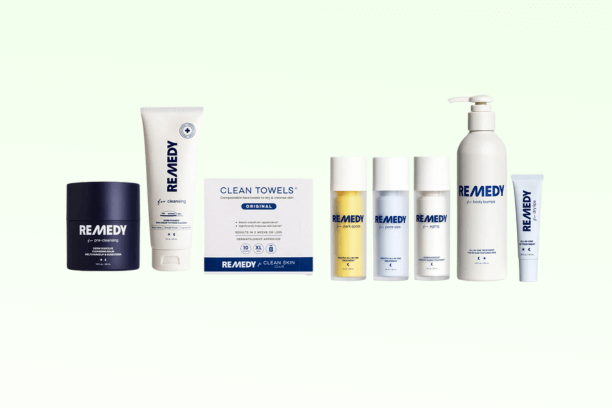 Remedy Skin is a dermatologist-founded skincare brand focused on combining multiple active ingredients within streamlined formulations. The products are designed to target common skin concerns such as uneven tone, dark spots, dryness, and texture irregularities, using components like retinol, niacinamide, and ceramides.
The brand states that its goal is to simplify skincare by offering multi-functional products that can address several concerns within a limited routine. Its range includes options for dark spots, healthy aging, and body texture, along with cleansers and moisturizers aimed at maintaining barrier integrity and hydration.
This review discusses what the brand claims to offer, the formulations it uses, and the concerns its products are intended to help with. It also examines the structure of its product line, the principles guiding its development, and the areas where further independent evaluation may be relevant.
About Remedy Skin
Founded by Dr. Muneeb Shah, DO, Remedy Skin focuses on creating science-based products that are easy to use and effective, combining multiple active ingredients in simple routines.
The product range is organized into three main categories such as Cleanse, Treat, and Moisturize. The Cleanse line includes Remedy for Rich Cream Cleansing for dry skin, Remedy for Lightweight Cleansing for oily skin, and the Derm Dissolve Cleansing Balm for pre-cleansing or makeup removal. The Treat line includes targeted products such as Remedy for Dark Spots, Remedy for Body Bumps, Remedy for Pore Size, Remedy for Healthy Aging, Remedy for Dandruff, and Remedy for Pimples (patches). These formulas use ingredients like retinol, niacinamide, tranexamic acid, mandelic acid, and peptides to help with uneven tone, texture, acne, and signs of aging. The Moisturize line features Remedy for Rich Moisture, Remedy for Light Moisture, and Remedy for Dry Lips, which are designed to hydrate and strengthen the skin barrier with ceramides, squalane, and glycerin.
Remedy Skin also offers bundled routines called Protocols and Stacks, such as the Even Tone Protocol, Oil Control Protocol, and Longevity Protocol. These combine multiple products to target specific concerns like pigmentation, oil balance, or skin resilience. The brand’s Super Stacked™ method combines several proven actives into each product to reduce the number of steps needed in a routine. The brand claims all formulations to be fragrance-free, cruelty-free, and made without common allergens or irritants.
Remedy Skin operates as a direct-to-consumer company, selling mainly through its official website, which includes accessibility support, educational resources like Skinpedia, and formulation details under the Lab section.
Remedy Skin Best Sellers
-
Hydration + Even Tone Protocol
The Remedy Hydration + Even Tone Protocol combines three formulations, such as the Cream-to-Foam Cleanser, a Retinol-Based Brightening Serum, and a Rich Ceramide Moisturizer.
According to the brand, the Hydration + Even Tone Protocol is designed to work in sequence to remove impurities, even skin tone, and strengthen the barrier. The cleanser transitions from cream to foam, dissolving excess sebum and environmental debris without disrupting the stratum corneum’s lipid matrix. Maintaining physiological pH helps preserve the integrity of corneocyte junctions and supports a stable barrier environment.The Dark Spots serum uses encapsulated retinol to promote epidermal renewal and regulate pigment-producing melanocytes. Retinol binds to retinoic acid receptors in keratinocytes and fibroblasts, enhancing gene expression that drives orderly cell turnover and balanced melanin distribution. The final step, the ceramide-rich moisturizer, restores lipids such as ceramide NP, AP, and EOP, which organize into lamellar layers between corneocytes. This structure prevents transepidermal water loss (TEWL) and maintains barrier function.
-
Remedy For Dark Spots
Remedy for Dark Spots may help address pigmentation irregularities by targeting multiple biological stages of melanin production and cell turnover. It contains 0.1% encapsulated retinol, mandelic acid, kojic acid, glutathione, licorice root extract, 3% tranexamic acid, 5% niacinamide, silymarin, and acetyl glucosamine.
Retinol increases epidermal renewal by activating nuclear retinoid receptors, reducing compacted corneocytes, and allowing uniform pigment dispersion. Mandelic acid, a mild alpha-hydroxy acid, further loosens intercellular connections, enhancing desquamation and texture refinement. Compounds such as kojic acid and licorice root extract inhibit tyrosinase, the key enzyme in melanin synthesis, slowing pigment formation at the cellular level.
Tranexamic acid reduces inflammation-driven pigmentation by disrupting plasminogen activation, while niacinamide interferes with melanosome transfer from melanocytes to keratinocytes. Glutathione and silymarin present in the formulation may help neutralize reactive oxygen species that stimulate excess melanin, preserving cellular equilibrium.
-
Remedy For Healthy Aging
As per the official site, Remedy for Healthy Aging helps in managing signs of aging through mechanisms that support collagen synthesis, cellular renewal, and oxidative balance. The formula contains 0.1% encapsulated retinol, 0.05% retinaldehyde, 2% Argireline™, glycolic acid, 2% niacinamide, Matrixyl® 3000, ceramides, resveratrol, and ferulic acid.
Retinoids act on retinoic acid receptors within fibroblasts and keratinocytes, promoting collagen I and III synthesis and aid in epidermal turnover. Glycolic acid complements this process by breaking down desmosomal bonds between corneocytes, allowing smoother renewal and improved penetration of active compounds.
Peptides such as Argireline™ and Matrixyl® 3000 influence dermal signaling. Argireline™ modulates neurotransmitter release involved in facial muscle contraction, softening expression lines, while Matrixyl® 3000 promotes extracellular matrix protein synthesis to improve firmness.
Niacinamide and ceramides reinforce the barrier by enhancing lipid synthesis and maintaining hydration, while antioxidants resveratrol and ferulic acid counteract free radicals that degrade collagen fibers. They may help in the maintenance of dermal structure, surface smoothness, and elasticity while minimizing oxidative and mechanical stress on aging skin.
-
Remedy For Body Bumps
Remedy for Body Bumps is formulated to smooth the rough, bumpy texture associated with keratosis pilaris and dryness. The blend of 0.1% encapsulated retinol, 10% urea, 5% lactic acid, and ceramides acts on both cellular renewal and barrier recovery.
Urea in Body Bumps formulation functions as a humectant and mild keratolytic, disrupting hydrogen bonds within keratin to soften and loosen compacted cells. Retinol could help speed up the epidermal turnover by reducing hyperkeratinization that blocks hair follicles. Lactic acid, which is a naturally occurring alpha-hydroxy acid, aids enzymatic exfoliation and restores the skin’s optimal pH (~5.0), supporting desmosomal activity and moisture retention.
Ceramides replenish lipids in the stratum corneum, restoring the lamellar bilayers that maintain barrier integrity and hydration after exfoliation. This process of keratolysis, lipid restoration, and hydration may help rebalance the epidermal renewal, helping normalize texture and restore softness to the skin’s surface.
-
Remedy Rich Cream Cleanser
The Rich Cream Cleanser is a gentle, lipid-preserving formula designed to cleanse without barrier disruption. It contains ceramide NP, glycerin, and panthenol to maintain the skin’s hydration and integrity during cleansing.
Ceramide NP integrates into the lamellar structure of the stratum corneum, reinforcing the lipid matrix that prevents water loss. Glycerin binds and retains water within the corneocyte layer, supporting enzymatic processes responsible for lipid renewal.
Panthenol, or provitamin B5, converts into pantothenic acid within the skin, aiding in lipid synthesis and fibroblast activity that supports barrier repair. The cream-to-foam transformation allows emulsification of sebum and debris while minimizing lipid extraction from the epidermis. This preserves the hydrolipidic film and tight junction cohesion, allowing effective cleansing without inducing dryness or irritation.
-
Remedy Rich Cream Moisture
Remedy Rich Cream Moisture is a barrier-restoring moisturizer formulated for dry to normal skin. It features a Quadruple Ceramide Complex (NP, AP, EOP, and Phytosphingosine) with glycerin, squalane, peptides, and niacinamide.
Ceramides are key lipids that form lamellar bilayers between corneocytes, essential for maintaining hydration and preventing excessive water loss from the skin. Phytosphingosine acts as both a ceramide precursor and an antimicrobial lipid that supports the skin’s microenvironment.
Glycerin draws moisture into the epidermis, while squalane integrates into the lipid matrix, improving elasticity and surface smoothness. This Rich Cream Moisture also contains peptides that could stimulate fibroblast signaling for collagen and elastin synthesis. Its niacinamide content enhances ceramide production while regulating pigment transfer and sebum balance. They may help restore lipid structure, improve water retention, and reinforce dermal communication.
Remedy Skin Advantages
-
Dermatologist-Founded Brand
Remedy Skin is a dermatologist-founded brand led by Dr. Muneeb Shah, DO, a board-certified dermatologist with clinical experience in acne, hyperpigmentation, and sensitive skin conditions. His professional background in medical dermatology guides the brand’s approach to product development, including how formulations support barrier repair, calm surface inflammation, and reduce the likelihood of irritation.
Dr. Shah’s clinical exposure to common patient concerns, such as redness, dryness, compromised barrier function, and ingredient sensitization, informs how the brand evaluates which components are included and which are intentionally excluded. This medical oversight influences formulation review, texture selection, and pH balance decisions during development, ensuring each product is designed with skin tolerability in mind.
Shah’s involvement provides a direct connection to clinical findings, including how certain ingredients perform across diverse skin types and how routine design can affect barrier resilience over time.
-
Minimalist Skincare Approach
Remedy Skin follows a minimalist skincare approach by offering a short routine built around a few focused products rather than a long list of steps. The routine centers on items such as the Remedy Cleanser, which is used to wash the face without stripping the skin, the Remedy Retinol Serum, which is applied at night to support smoother texture and clearer tone, and the Remedy Moisturizer, which helps maintain daily comfort and calmness. Each product has a clear place in the routine and is intended to work together without additional support products.
The Remedy Cleanser prepares the skin for nightly care, the Remedy Retinol Serum is used in small amounts to avoid overuse, and the Remedy Moisturizer helps the skin remain steady between applications.
The minimalist approach also supports consistency, which is important for sensitive skin. Remedy Skin focuses on helping you build steady habits instead of adding new formulas too quickly. Routine tips are shared with instructions on when to apply each product, how much to use, and how to adjust frequency if the skin becomes dry.
Remedy Skin Limitation
-
Short Market Tenure
Remedy Skin has only been operating for a limited number of years, with brand-profile listings and business registry database entries referencing its commercial activity beginning around 2020-2021. As the company’s product portfolio has been introduced relatively recently, there is a smaller volume of multi-year consumer feedback, fewer repeat-purchase satisfaction trends, and minimal documentation on how its formulas perform after prolonged use. This shorter operating history also limits the availability of long-term user reports on concerns such as sensitivity over repeated applications, seasonal performance patterns, or multi-year skin texture changes.
Moreover, the brand has not yet established a long record of batch refinement cycles, which older skincare companies often cite as evidence of formula improvement over time. There are also fewer archived updates related to reformulation history, packaging evolution, or ingredient sourcing changes that typically emerge as brands mature. As the company’s products have not been tested across multiple generational user cohorts or exposed to extended dermatology community review, you have less historical context to reference when evaluating consistency, reliability, and product stability.
Remedy Skin Alternatives
-
Vetted Dermlab
Vetted Dermlab was founded by three board-certified dermatologists, Drs. Nina Botto, Lindy Fox, and Carina Woodruff, who specialize in allergic contact dermatitis. The brand’s purpose is to bring clinical dermatology standards into skincare formulation, emphasizing reproducibility, testing, and medical precision.
Remedy Skin was founded by dermatologist Dr. Muneeb Shah, known for using digital media to educate consumers about skincare. Its mission is to make dermatologist-level care understandable and affordable for the general public.
While both brands originate from dermatologic expertise, Vetted Dermlab operates from a clinical and research-driven perspective, whereas Remedy Skin is communication- and accessibility-focused.
Vetted Dermlab’s product range is intentionally narrow, consisting of five core essentials which is the C Cleanser, Vc Vitamin C Complex Serum, R Retinoid Serum, M1 Light Moisturizer, and M2 Rich Moisturizer. These options undergo repeated allergen and irritation patch testing, clinical validation, and over twenty iterations before release. The minimalist range reflects the brand’s goal of controlled precision and reproducibility rather than variety.
Remedy Skin offers a broader lineup designed to simplify skincare through multi-active formulations. Its range includes Remedy for Dark Spots, Healthy Aging, Pore Size, Remedy for Body Bumps (Keratosis Pilaris), Remedy Cleanse, and a Dry Lips Treatment. These Super Stacked products combine clinically supported actives such as retinol, peptides, and AHAs to target multiple concerns in fewer steps. Vetted Dermlab emphasizes precision and reproducibility, while Remedy emphasizes simplicity and efficiency.
Vetted Dermlab focuses more on providing options for highly sensitive or reactive skin. Its market position is premium and medically aligned, often distributed through dermatology offices or select retailers.
Remedy Skin claims to provide straightforward and affordable skincare. Its market position is mid-tier direct-to-consumer, built on trust and education rather than exclusivity. Vetted appeals to users with specific dermatologic needs, while Remedy appeals to those looking for reliable, easy-to-understand products.
In terms of pricing differences, Vetted Dermlab’s C Cleanser retails at around $32, and Remedy Skin’s cleansers are priced between $9 and $18. This establishes Vetted as the higher-priced option for basic cleansing products. Both brands’ vitamin C serums are priced similarly at around $78, showing parity in this category despite differing market tiers.
For retinoids, Vetted Dermlab’s R Retinoid Serum is priced at approximately $98, reflecting its premium clinical testing and formulation process. Remedy Skin offers both lower-cost options, such as retinoid patches (around $10) and its Remedy for Healthy Aging serum (around $38).
Moisturizers also demonstrate a pricing gap. Vetted Dermlab’s M1 Light Moisturizer and M2 Rich Moisturizer range from $50 to $110, while Remedy Skin’s moisturizers range between $20 and $38. This difference aligns with each brand’s broader strategy, which is Remedy emphasizing accessibility, Vetted emphasizing controlled, high-grade formulations.
Bundles and protocols further show Remedy’s broader reach. Vetted Dermlab’s sets typically range between $110 and $166, maintaining a narrow but premium pricing band. Remedy offers sets ranging from $27 to $152, accommodating both entry-level and higher-value options. It also provides a variety of targeted options, including its Remedy for Body Bumps, Remedy for Dry Lips, and Remedy for Pore Size, which fall between $16 and $57 depending on format and quantity. Vetted Dermlab does not currently offer equivalents in these specialized categories, focusing instead on a smaller number of clinically verified essentials.
Remedy Skin’s pricing extends from $9 for individual products to approximately $152 for bundles, while Vetted Dermlab’s products occupy a premium space between $32 and $166.
Vetted Dermlab maintains higher price consistency aligned with its clinical testing standards and professional-grade positioning, whereas Remedy prioritizes affordability and range, offering more product diversity and entry-level options.
-
Doctor Rogers Skin Care
Doctor Rogers Skin Care was founded by Dr. Heather Rogers, a board-certified dermatologist and wound-healing expert. Every formulation is minimalist, plant-based, and hypoallergenic, developed with clean and sustainable ingredients that respect both the skin barrier and the environment.
The brand focuses on using fewer, proven ingredients for deeper, longer-term recovery rather than short-term correction. It highlights that each formula is cruelty-free and built around plant-derived, biodegradable components clinically validated for efficacy and safety. The focus is on purity and tolerance, eliminating unnecessary additives, fragrance, or irritants. Designed especially for sensitive, reactive, or post-procedure skin, Doctor Rogers’ products aim to calm and protect the skin while reinforcing its barrier function.
Its product range supports this restorative mission. Key offerings include the Healing Balm, Face Cream, and Night Repair, each created for multi-purpose use. The Healing Balm, for instance, doubles as a support for dry or damaged skin, a post-procedure protectant, and a daily moisturizer for sensitive areas.
Doctor Rogers’ pricing mirrors its premium, dermatologist-developed positioning. Cleansers range between $22 for travel sizes and $38 for full sizes. Moisturizers, including the Face Cream and Body Cream, sit between $44 and $78, while restorative options such as the Night Repair Treatment retail between $88 and $98. Specialty products like balms and targeted repair products fall within the $8 to $68 range, and curated skincare sets, such as the Balm Trio or the comprehensive Day-to-Night Kit, can reach up to $284.
The brand’s identity is distinctly minimalist and premium, reflecting confidence in simplicity and precision rather than abundance. Its clinical yet refined aesthetic appeals to consumers who value dermatologic authenticity and sustainability. Doctor Rogers Skin Care stands apart for its scientific restraint and claims to provide consistent, measurable healing and protection.
Remedy Skin follows a parallel path of dermatologist-led formulation but moves in a different direction and focuses on accessible, results-driven science. Founded by Dr. Muneeb Shah, the brand exists to make clinical skincare knowledge usable for everyone. Its ingredient philosophy centers on multi-active, science-driven formulas that address multiple concerns, such as pigmentation, texture irregularities, and signs of aging, in a single step. Each product is hypoallergenic, fragrance-free, and cruelty-free, excluding irritants and unnecessary fillers. Instead of single-purpose products, Remedy develops multi-active formulations that combine compatible, proven actives to address several skin concerns simultaneously, such as dark spots, acne, aging, and uneven texture.
Remedy Skin’s product range is broader and more specific than Doctor Rogers’. It includes targeted options like the Body Bump Remedy for keratosis pilaris, the Dark Spot Corrector, and the Healthy Aging line, all designed to deliver visible results through multi-functional efficiency. Each product merges actives such as niacinamide, retinoids, and exfoliating acids in concentrations that are both effective and safe for daily use. The textures are clinical and lightweight, prioritizing function over indulgence.
Pricing reinforces this accessible philosophy. Remedy Skin products are positioned in the moderate, mass-affordable tier: cleansers range from $9 to $18, moisturizers from $20 to $38, and serums or patches between $10 and $78. Bundles vary from $27 to $152, offering flexible entry points for different budgets. Unlike Doctor Rogers, which curates fewer, high-value products, Remedy offers more options per concern to serve a broader audience.
Pros
- Combines actives like retinol, peptides, niacinamide, and plant oils into multi-active stacks for simplified routines.
- Offers dermatologically-inspired skincare at accessible price points, balancing efficacy with value.
- Products target specific skin concerns, including dark spots, aging, pore size, and skin texture, with comprehensive options.
Cons
- No prominent features regarding eco-friendly packaging, refill programs, or sustainability commitments.
- Less extensive clinical transparency.
How Did We Evaluate?
-
Brand Reputation
Remedy Skin maintains a modest third-party presence. While the brand features numerous customer reviews on its official website, independent feedback through platforms like Trustpilot remains limited, suggesting that external evaluations are still taking shape. Its reputation is largely defined by its clinical positioning and dermatologist-led branding rather than by extensive third-party reviews. Independent assessments remain sparse, leaving most available impressions drawn from the brand’s own channels and early consumer experiences.
-
Real User Reviews
Customer feedback for Remedy Skin products is largely positive, with users reporting visible improvements in skin texture, clarity, and tone across several of the brand’s most popular formulations.
However, reviews also highlight a few consistent drawbacks related to overuse sensitivity, packaging issues, and varying results depending on individual skin types and concerns.
The Remedy Pore Size Niacinamide Serum maintains a 4.3 out of 5 stars rating from 260+ global reviews. Many users describe noticeable refinements in skin texture and the appearance of pores, citing clearer, smoother complexions and fewer blackheads. Reviewers emphasize that while the serum improves pore visibility, it does not physically reduce pore size. The product is praised for its fragrance-free, alcohol-free formula and compatibility with other skincare steps. Negative feedback mainly centers on irritation or dryness caused by overuse, particularly when layered with other active ingredients such as retinol or acids. A few users report minimal changes despite consistent application and feel that the results do not fully justify the price.
The Healthy Aging Remedy Serum has a 4.4 out of 5 stars, which is based on 200+ global reviews. Most customers note smoother, firmer, and brighter skin within weeks of use. Its lightweight texture and combination of retinaldehyde and niacinamide are commonly praised for being both effective and gentle, even for sensitive or rosacea-prone skin. Reviewers appreciate that the formula combines multiple active ingredients, streamlining their routines. However, packaging problems, specifically malfunctioning or broken pumps, are repeatedly mentioned. Some users had to cut open the bottle to access the product.
The Remedy Dark Spot Corrector holds a 4.1 out of 5-star rating from 105+ reviews. Its reviews appear mixed, with many noticing the fading of dark spots and more even skin tone after consistent use over several weeks or months, while others report minimal or no improvement, particularly with deeper pigmentation such as melasma.
Some experience mild irritation or dryness during the initial stages, though most find the formula gentle compared to stronger brightening options.
Across all three products, recurring themes include strong user appreciation for effective formulations, dermatologist-developed ingredients, and customer service responsiveness. The most common complaints involve packaging malfunctions, occasional skin irritation from overuse, and inconsistent results depending on skin type or condition.
Frequently Asked Questions
- Do Remedy Skin products contain parabens or sulfates?
No. The brand claims to make all products without parabens, sulfates, fragrances, or phthalates. However, their retinoid potency and multi-active formulas mean products may not be suitable for those with extreme sensitivity. - Does Remedy Skin offer sustainability or recycling programs?
The brand emphasizes clean, dermatologist-developed formulations but lacks visible sustainability initiatives. It does not promote recyclable or refillable packaging, take-back programs, or carbon reduction efforts, leaving room for improvement in environmental transparency and eco-friendly practices. - What delivery systems does the Remedy Skin use in formulations?
The brand claims to use advanced lipid and emulsion-based delivery systems to enhance ingredient absorption and barrier protection. Its Super Stacked™ formulations combine actives for improved bioavailability, controlled release, and reduced irritation, supporting effective, gentle skincare performance.
Final Words
Remedy Skin reflects a growing trend toward dermatologist-developed, simplified skincare designed to address multiple concerns in fewer steps. Its use of clinically supported ingredients, such as retinol, niacinamide, and ceramides, aligns with its goal of merging effectiveness with accessibility.
However, it’s worth approaching the products with measured awareness. Remedy Skin’s formulas include potent actives that can deliver visible results but may also trigger irritation if introduced too quickly or combined with other exfoliating or retinoid-based products. Starting slowly, monitoring skin response, and maintaining consistent barrier support with moisturizers are key steps in safely including these formulations.
Remedy Skin offers a modern approach to skincare that bridges professional formulation with accessibility, but it’s best to introduce its products gradually and pay attention to how your skin responds to maintain comfort and protect your barrier over time.

Rachel has been a freelance medical writer for more than 18 years. She graduated from the University of Tennessee at Knoxville in 2005 and is currently practicing as a Certified Registered Nurse Anesthetist at a Level I trauma center.
Leave a Reply