

No products in the cart.
Contents
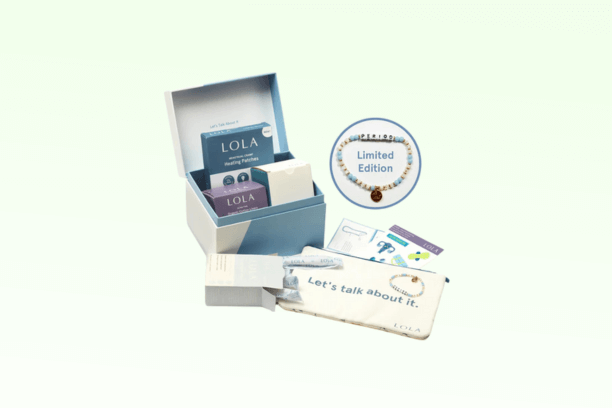 Lola is a feminine care brand that offers products such as organic cotton tampons, pads, and liners. Its offerings also include period underwear, heating patches, and cleansing wipes.
In addition to its core feminine care products, the brand also offers sexual wellness and postpartum care products, including lubricants and postpartum recovery kits, designed to support you through different stages of reproductive health.
In this review, we’ll explore the brand’s full range of offerings, highlighting how its formulations and subscription system compare with other options. We’ll also discuss its key advantages and limitations, and take a closer look at what real customers are saying through online reviews to help you decide whether the brand aligns with your personal care needs.
About Lola
According to the official website, Lola provides gynecologist-approved products using 100% organic cotton and clearly labels ingredients, ensuring they are free from synthetic fibers, fragrances, dyes, and chemical additives.
The brand’s product range covers four main categories such as Period Care, Sexual Wellness, Vaginal Health, and Postpartum Care. In its period care line, you’ll find compact plastic, cardboard, and non-applicator tampons, along with pads with wings, ultra-thin liners, and menstrual cups.
The Sexual Wellness collection from Lola includes ultra-thin latex condoms, personal lubricants (including fertility-friendly options), cleansing wipes, and a mini vibrator, each formulated with natural, skin-safe materials.
Under Vaginal Health, the brand provides gentle cleansing wipes and washes that are pH-balanced and designed to maintain your body’s natural ecosystem. You can also get access to disposable postpartum underwear, absorbent pads, perineal gel pads, stretch mark prevention creams, and essential kits under their Postpartum Care.
MyLola Offerings
-
Stretch Mark Prevention Cream
The Stretch Mark Prevention Cream may strengthen your skin’s natural structure during pregnancy or any period of rapid body change. It could help enhance elasticity, restore hydration, and protect against the micro-tears that often lead to stretch marks.
The cream includes apricot oil, which is naturally rich in linoleic and oleic acids that may support your skin’s lipid barrier. It could help regulate transepidermal water loss, keeping your skin hydrated at a cellular level by replenishing these lipids. Apricot oil also contains vitamin A (retinyl compounds) and vitamin E (tocopherols), which promote gentle cell renewal and protect collagen fibers from oxidative damage. This may help improve texture and suppleness without clogging pores.
Shea butter is included in this cream to provide nourishment through stearic, oleic, and linolenic acids. It contains triterpenes and cinnamic acid esters, which may help soothe inflammation and enhance fibroblast activity. This formulation aims to keep skin pliable as it expands, potentially reducing visible stretch marks.
Vitamin E in the Stretch Mark Prevention Cream is noted for its potential to help neutralize free radicals, support the repair of damaged cell membranes, and improve your skin’s ability to retain moisture.
-
Postpartum Essentials Kit
As per the official website, the Postpartum Essentials Kit is a curated set that may support your comfort and recovery after childbirth. It includes Organic Postpartum Pads, Hot & Cold Perineal Gel Pads, and Stretch Mark Cream.
The Organic Postpartum Pads in this kit feature a 100% organic cotton top sheet for softness and breathability, while a layer of polypropylene helps distribute liquid evenly to prevent leakage. The core of the pads is made of elemental chlorine-free wood pulp for natural absorbency, and the polyethylene backing helps contain moisture.
Postpartum Essentials Kit features Hot & Cold Perineal Gel Pads, which are designed for multipurpose relief. As per the makers, their PVC sleeves and outer pockets are phthalate-free, latex-free, and BPA-free, ensuring safe contact with the body. Inside, the non-toxic gel beads are made with purified water, glycerol, and food-grade pigments to provide temperature-responsive therapy, cooling to reduce swelling, and heat to relax sore muscles.
The Stretch Mark Cream included in this kit uses hydrating oils and botanical extracts to help maintain skin elasticity. With ingredients such as chamomile, licorice root, and mango butter, the formula is intended to calm and condition skin, targeting areas that may feel tight or dry after pregnancy.
-
First Period Kit
The First Period Kit is designed to support first menstrual experiences by including essentials for different flow levels, as well as added features. The kit contains 12 pads with wings (six for regular flow and six for heavier days) made from breathable organic cotton, 28 ultra-thin liners for lighter days or extra protection, and 8 light organic cotton tampons with BPA-free plastic applicators.
According to the official website, the kit includes heating patches intended to provide mild warmth to the lower abdomen for added comfort. A pouch is also included for convenient organization, and a sheet of period-themed stickers adds a personal touch. The digital guide offers straightforward information and expert advice about period care, and a $5 LOLA credit is provided for future purchases.
Lola Advantages
-
Recognized Brand Positioning
Lola has maintained an established brand identity in the feminine care market since its founding in 2014 by Alex Friedman and Jordana Kier, who created the company after identifying a lack of transparency in period-care product ingredients. Their founding mission centered on clear labeling, straightforward language, and access to menstrual products made with 100 percent organic cotton rather than materials treated with dyes, synthetic fragrances, or chlorine bleaching.
Under the direction of its founders, Mylola developed a visual and educational style that aligns with modern conversations about menstrual health, removing stigma and encouraging informed decision-making. This approach appears through packaging language, website explanations, and subscription onboarding, each strengthening the brand’s intention to make ingredient quality and menstrual comfort part of everyday wellness routines.
As the portfolio expanded into sexual wellness and vaginal-health support, the brand maintained this identity by disclosing material sources, usage intent, and safety considerations across all product types.
Lola’s founders also integrated community-focused values into the brand identity by supporting menstrual equity initiatives and donation programs, supporting a mission-driven personality rather than commodity-only positioning. The company’s consistent tone across digital content, subscription communication, and retail packaging helps you recognize Lola’s perspective on ingredient integrity and straightforward education.
-
Focus On Portfolio Expansion
Lola is expanding its portfolio by adding products for all phases of menstrual, sexual, vaginal-health, and postpartum needs. Beyond its original organic cotton products, Lola introduced period underwear for light to moderate flow, offering a reusable option for comfort and sustainability.
Lola has also introduced PMS support supplements, formulated to assist with mood, cramping, and bloating concerns usually common in the luteal phase of the menstrual cycle, extending its relevance beyond period-day products.
The brand’s sexual wellness assortment has grown to include ultra-thin condoms made with natural rubber latex and water-based lubricants formulated without synthetic fragrances or artificial flavors. In vaginal wellness, the brand offers pH-balanced cleansing wipes for sensitive skin and boric acid suppositories, which are commonly recommended for supporting vaginal flora balance. This expansion may align with your growing interest in microbiome-friendly hygiene options.
Lola’s postpartum care line launched in early 2025 with organic cotton postpartum pads, stretch mark prevention cream, and hot and cold perineal gel pads. These products reflect the brand’s focus on non-toxic ingredients and expanding support throughout women’s reproductive stages.
-
Focus On End-to-End Women’s Care
Lola focuses on end-to-end women’s care by developing products that address recurring needs across the full spectrum of intimate wellness, from menstruation through everyday vaginal comfort and sexual activity. This approach is evident in the brand’s expansion from organic cotton period products into vaginal balance support, sexual wellness essentials, and hygiene solutions designed for use beyond the days of active menstruation.
Rather than centering on a single category, the brand builds continuity across monthly routines so that you can rely on the same ingredient philosophy throughout different points of their cycle and daily care.
MyLola supports this focus through a product architecture that spans period care, pH maintenance, and intercourse-related comfort, allowing you to manage multiple touchpoints within the same brand ecosystem. The company reduces commonly fragmented purchasing behaviors into a more integrated care pattern, establishing itself as a consistent resource for ongoing intimate wellness needs by offering products relevant before, during, and after the cycle.
Lola Limitations
-
Limited Practitioner Endorsements
Lola claims to use clean ingredients and organic cotton in its menstrual and personal care products, but the brand has relatively limited visibility within clinical environments such as OB-GYN offices, women’s health clinics, and dermatology practices. Its products are not commonly distributed through medical channels where clinicians can familiarize themselves with product texture, absorbency performance, and compatibility with sensitive skin. As a result, healthcare professionals may be less likely to recommend the brand offerings during routine exams, menstrual hygiene consultations, or discussions involving irritation or sensitivity concerns.
The brand also does not prominently reference endorsements from major medical associations, board-certified specialists, or practitioner-backed health networks that typically influence purchasing confidence in reproductive health categories. Provider-curated product lists, postpartum recovery kits, and hospital-based menstrual supply programs rarely feature Lola, reducing opportunities for clinical exposure. As practitioner guidance plays a significant role in product selection, if you have conditions such as contact dermatitis, recurrent irritation, or pH sensitivity, the limited presence of the brand in clinical advisement channels may affect consumer trust, especially if you are a new buyer seeking reassurance from medical professionals.
-
Unclear Sustainability Reporting
Lola highlights the use of certified organic cotton in tampons and pads, but the brand provides limited visibility into sustainability practices beyond raw material selection. For example, the company does not publish data on the environmental impact of cotton farming used in its supply chain, such as irrigation requirements, pesticide avoidance metrics, or soil management benchmarks. There is also no annual sustainability report or third-party audit summary outlining greenhouse gas emissions, energy sources used in product manufacturing, or transportation-related carbon output associated with shipping subscription boxes.
Packaging sustainability is addressed mainly through marketing language, but the brand does not consistently disclose recyclability details for outer cartons, wrappers, or adhesive strips, nor does it reference programs for post-consumer waste recovery. Information on whether production facilities operate under environmental management certifications such as ISO 14001, or if suppliers meet specific ethical or labor standards, is not prominently documented. The brand has not established measurable long-term goals related to plastic reduction, renewable packaging materials, or end-of-life waste minimization.
Pros
- Offers products across periods, sexual wellness, vaginal care, and postpartum needs.
- Claims to use 100% organic cotton without synthetics, dyes, or fragrances.
- Maintains modern, minimalist branding and packaging.
Cons
- Reports of poor absorbency and leakage from some users.
- Complaints about difficult or faulty tampon applicators.
Lola Alternatives
-
Tampon Tribe
Tampon Tribe and MyLola both offer cleaner and safer menstrual care, yet their philosophies, product lines, and sustainability approaches set them apart in meaningful ways.
As per its official website, Tampon Tribe focuses on the zero-waste principle, with its products such as Organic Tampons, Organic Pads, and Reusable Cotton Pads that are made from GOTS-certified organic cotton and packaged entirely in compostable materials.
The brand also offers eco-conscious options like the Menstrual Cup, Tweenie Bikini, and Butter Butter Soft underwear, maintaining a consistent emphasis on plastic-free, reusable, and biodegradable options.
On the other hand, MyLLola focuses more on ingredient transparency and accessibility. Its range includes options like Compact Plastic Applicator Tampons, Pads with Wings, and Ultra Thin Liners that are said to be non-toxic, fragrance-free, and free from chemical additives or synthetic fibers.
Tampon Tribe’s collection remains intentionally concise, centered on essential period care products and a few comfort-based additions like Shorty Jim Jams and Mama Mama Cotton Comfy loungewear.
MyLola, however, extends well beyond menstrual care, offering a holistic range across categories like Sexual Wellness, Vaginal Health, and Postpartum Care. Its products, such as the Mini Vibrator, Personal Lubricant, Cleansing Wipes, and Stretch Mark Prevention Cream, highlight its approach to address multiple stages of reproductive health. This diversification makes MyLola more of an all-around feminine wellness brand, while Tampon Tribe maintains a clear niche in sustainable, period-focused care.
According to the official website, Tampon Tribe is highly transparent about its certifications and claims that its products are GOTS, ICEA, FSC, and Hypoallergenic Certified, ensuring quality from cotton sourcing to final packaging. MyLola, while equally committed to using 100% organic cotton, relies on self-defined safety benchmarks rather than third-party certification systems. Its products are marketed as “clean” and safe, but without the same level of certification-based validation.
Pricing also sets them apart in accessibility. Tampon Tribe’s standard boxes are priced around $10.60, with bulk packs at $20. MyLola’s tampons start around $7.50 for cardboard options and $9.50 for compact plastic applicators. While MyLola’s pricing makes it easier to adopt for recurring use, Tampon Tribe’s cost reflects its certified sourcing and fully compostable packaging materials.
Tampon Tribe aims to prioritize eco-certifications, compostable packaging, and a minimal-waste lifestyle, while MyLola focuses on a customizable, lifestyle-oriented approach, where menstrual, sexual, and postpartum wellness coexist under one brand.
-
Cora
Cora focuses on sustainable period care with a curated range that includes The Comfort Fit Tampon, The Peace-of-Mind Pad, and The Got-You-Covered Liner. Alongside its disposable options, it offers reusable products such as The Perfect Fit Disc, The Easy-Does-It Cup, and The Free-to-Flow Period Underwear, emphasizing long-term comfort and reduced waste.
On the other hand, MyLola takes a broader approach to women’s wellness. While it also offers organic tampons, pads, and liners, its catalog extends into categories like sexual wellness and postpartum recovery with products such as Ultra Thin Latex Condoms, Personal Lubricant, Mini Vibrator, Organic Postpartum Pads, and Stretch Mark Prevention Cream.
Cora’s range includes reusable products, like the Soft Fit Disc and Period Sleep Short, that provide sustainable alternatives that replace disposable options. MyLola, meanwhile, focuses on flexibility and customization. Its tampon subscription model allows you to mix absorbencies, and its wider collection, covering from Cleansing Wipes to Postpartum Essentials Kits, supports different stages of reproductive health.
The brands also differ in presentation and tone. Cora maintains a minimalist and calming aesthetic, with messaging that highlights comfort and body confidence. Its products, such as The Simply Soothing Heat Patch and The Peace-of-Mind Maxi Overnight Pad, are positioned as reliable essentials for everyday use.
MyLola’s approach feels more approachable and education-driven. It provides practical guides such as the First Period Guide and Sexual Wellness Guide, along with products like the First Period Kit designed to support you through different stages. As per their official website, Cora’s product pricing ranges from $6 for liners to around $38 for reusable shorts, while MyLola’s prices range $7.50 to $44.
Cora offers a focused collection centered on sustainability and long-term comfort, while MyLola provides a wider product ecosystem that combines menstrual, sexual, and postpartum care under one brand.
How Did We Evaluate?
-
Brand Reputation
Our evaluation of Lola considered its background, credibility, and available customer feedback. Founded by Jordana Kier and Alexandra Friedman in New York, the brand offers pads, liners, and sexual wellness products.
It holds an A+ rating from the Better Business Bureau (BBB), which suggests strong business practices and a responsive approach to customer issues. However, its 5.0 rating on TenereTeam, based on only four reviews, offers limited insight into the overall customer experience. While the feedback is positive, the small sample size makes it difficult to form a conclusive view of the brand’s consistency or long-term performance.
MyLola emphasises transparency and simplicity in its offerings. While its available ratings indicate professionalism and credibility, more comprehensive customer data would provide a clearer picture of how effectively the brand delivers on its promises.
-
User Experiences
To evaluate MyLola, we considered its customer reviews shared on Trustpilot between 2023 and 2025, where the brand currently holds an overall 2.0-star rating based on over 1,000 reviews.
The brand was widely appreciated for offering organic, chemical-free period care products that focused on safety, comfort, and transparency. However, more recent user reviews indicate growing concerns among users about inconsistent order management and customer service delays. Several customers mentioned unauthorized charges, subscription renewals without approval, and difficulty canceling or modifying orders, issues that have led to frustration and a sense of declining reliability.
Many users reported problems with tampon absorbency, adhesive strength of liners, and product quality, with some describing discomfort or manufacturing defects. Others noted shipping errors and incomplete deliveries, which, combined with unresponsive support, further affected their confidence in the brand.
On the other hand, a smaller group of customers shared positive perspectives, especially those who have used MyLola products since its early years. They praised the brand’s use of clean ingredients, pH-balanced formulas, and earlier responsiveness to customer needs.
These user feedbacks indicate that while MyLola still upholds a valuable mission centered on safe and sustainable feminine care, its recent operational inconsistencies and customer service lapses have impacted trust. The brand should focus on restoring reliability and communication quality to align its current practices with the high standards.
Frequently Asked Questions
- Does Lola offer products suitable for people with sensitive skin?
The brand highlights offering tampons, pads, and liners made with organic cotton, which some people may find gentler on the skin. However, sensitivity varies, so it’s best to test one product type first before committing to long-term use. - Does Lola have products for irregular periods or spotting?
Lola offers Organic Tampons, Pads, and Liners focused on comfort and sensitivity, not irregular period management. While their blog promotes menstrual tracking, they don’t provide products for spotting or hormonal regulation, and medical guidance is advised for such concerns. - Does Lola offer a plastic-free tampon option?
Yes. Lola offers a Non-Applicator Tampon that is said to be made with organic cotton. These are designed to be environmentally friendly, with no synthetic fibers, chemical additives, fragrances, dyes, or elemental chlorine.
Conclusion
Lola focuses on providing clean, transparent, and body-safe options for period and reproductive care. The brand claims to use non-toxic materials across its range of tampons, pads, liners, lubricants, and vaginal wellness products. Despite these strengths, it faces certain limitations.
The brand provides limited clinical validation for its formulations, and its sustainability reporting also remains underdeveloped, with few measurable details on material sourcing or environmental impact.
Some users have noted delivery delays and subscription management issues, while others mention texture or absorbency preferences that vary by individual comfort.
Lola supports the demand for safe and ingredient-conscious feminine care, but could improve in areas like medical credibility and environmental transparency.

Rachel has been a freelance medical writer for more than 18 years. She graduated from the University of Tennessee at Knoxville in 2005 and is currently practicing as a Certified Registered Nurse Anesthetist at a Level I trauma center.
Leave a Reply