

No products in the cart.
Contents
 BowFlex is focused on enabling structured workouts within a residential environment through compact, multi-functional machines. Its product range includes home gyms, adjustable dumbbells, treadmills, exercise bikes, ellipticals, and workout benches. The brand’s offerings are built around space efficiency and versatility, using systems such as adjustable resistance and all-in-one training stations to replicate full-body workout setups.
This review examines BowFlex’s top product offerings, key advantages, and potential limitations. We will also analyze insights from consumer experiences to provide a clearer understanding of how the brand performs in practical use.
About Bowflex
As per the official website, Bowflex helps you create a personalized workout setup with a mix of cardio machines, strength training systems, and connected fitness technology. Its product ecosystem is built around enabling full-body training at home, combining space-efficient equipment with scalable resistance and guided workout experiences.
Bowflex also combines a digital layer through its JRNY fitness platform, which connects with compatible machines and mobile devices. This platform delivers personalized workout recommendations, adaptive coaching that adjusts intensity based on your performance, and progress tracking across sessions.
Top Offerings
-
Treadmills
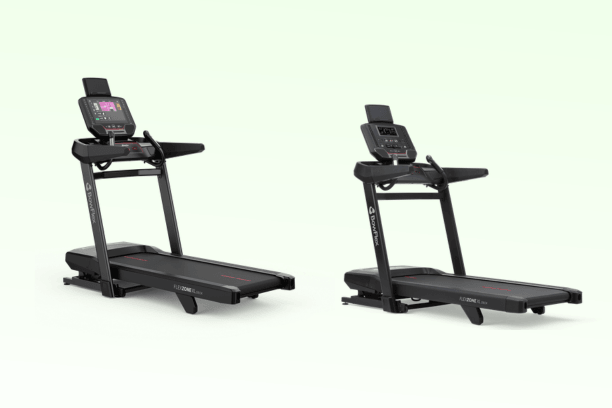
BowFlex Treadmills may support walking, jogging, and running while integrating app-based training and entertainment features through the JRNY platform. The lineup includes models such as the T16, T9, and T6, which are described as offering varying levels of display technology and connectivity.
The T16 model includes a 16-inch HD touchscreen, while the T9 uses a high-contrast color LCD, and the T6 relies on app-based interaction through a phone or tablet. These display systems can show workout data such as speed, time, and distance, and in some cases may also allow access to external streaming services.
As per the official website, the treadmills support speeds ranging from 0 to 12 miles per hour and incline levels up to 15 percent. These adjustable settings may allow you to vary exercise intensity by changing pace or elevation. Walking or running on an incline may increase activation in lower-body muscles such as the glutes, hamstrings, and calves, while flat-surface movement may place more consistent demand on muscles like the quadriceps.
The running surfaces differ slightly, with the T16 and T9 offering a 22 by 60 inch running path, while the T6 provides a 20 by 60 inch surface. These dimensions may influence stride comfort and stability, particularly during higher-speed running. According to the company, all the treadmills in the lineup come with folding capabilities that may allow you to store the machine when not in use.
Advantages
-
Broad Home Fitness Product Portfolio
Bowflex presents a broad home fitness portfolio covering strength, cardio, and accessories. Its lineup includes home gyms such as the Revolution, Xtreme 2 SE, PR1000, and PR3000, alongside SelectTech adjustable dumbbells, kettlebells, and barbells. On the cardio side, the brand offers bikes like the VeloCore and C6, Max Trainers (HIIT hybrids), and treadmills, supported by benches, attachments, and weight accessories. This range reduces reliance on traditional gym infrastructure like racks, plate systems, or multiple standalone machines. You can build a complete home setup using a single brand. It works particularly well if you have limited space or prefer a more streamlined fitness setup.
-
Omnichannel Retail Distribution Network
As per the official site, Bowflex combines direct-to-consumer sales with broad third-party retail partnerships. Through its own website, the brand offers a full product catalog, financing options (e.g., 0% APR plans), and integrated digital services like JRNY. At the same time, it maintains a strong physical and online retail presence through partners such as Dick’s Sporting Goods, Target, Nebraska Furniture Mart, and Johnson Fitness. This creates a unified ecosystem where products are consistently available across channels, often with aligned pricing and promotions, while also enabling in-store demos and consultations. It means you have flexibility in how you research and purchase, whether you prefer buying online, seeing equipment in-store first, or comparing options across retailers. You can try products physically at certain locations before committing, then choose the most convenient purchase channel. This reduces friction in the buying process and makes it easier to access the brand.
Potential Limitations
-
Customer-Borne Return Cost Structure
Bowflex places full financial responsibility for returns on you, particularly for large, heavy equipment. You must obtain a Return Authorization within 30 days, but you are required to arrange and pay for return shipping yourself, with no prepaid labels provided. Original shipping fees, often ranging from $99 to $299 depending on item size, are non-refundable. Given the weight of Bowflex products (commonly 130–400+ lbs), return shipping costs can be substantial, and in some cases may be combined with restocking fees. This means returning a product can be expensive and logistically challenging, especially if the equipment is large or difficult to ship. You may face several hundred dollars in total costs between return shipping and non-refundable original delivery fees, which can make it risky to purchase without being fully certain. This setup can discourage trial purchases and reduce flexibility if the product does not meet your expectations.
-
Weak App and Tech Integration
Bowflex features a JRNY app, whose connected tech experience is affected by inconsistent content stability and limited user communication. A verified 2025 user report documents MT 40 owners experiencing workouts longer than 30 minutes disappearing post-update, with no just-for-you recommendations or longer programs available on the machine/iPhone app. This removal was done without user notice, restoration, or timeline. This creates an unpredictable digital experience where guided workouts you may rely on can disappear without warning. It can disrupt your routine and reduce the value of connected equipment, especially if you depend on structured training programs. It can weaken the brand’s claim of delivering a seamless and integrated home fitness experience.
Pros
- Wide range of home fitness equipment.
- Offers cardio and strength machines.
- Includes treadmills, bikes, and home gyms.
Cons
- Screen responsiveness issues are reported on some machines.
- Reports of dumbbells breaking over time.
Alternatives To Bowflex
-
DeerRun
DeerRun and Bowflex differ in how they approach home fitness, starting with their scope and positioning. As per their official website, DeerRun centers its offering around compact, cardio-focused equipment designed for everyday use in small spaces. Its offerings include under-desk walking pads, foldable treadmills, and lightweight exercise bikes. On the other hand, Bowflex builds a broader home gym ecosystem that includes treadmills, incline ellipticals, bikes, barbells, and full home gym systems such as the Xtreme 2 SE with 210 lbs of Power Rod resistance.
The difference becomes more apparent in product design and use cases. DeerRun emphasizes portability and space efficiency, offering models like the Z20 suitcase-style foldable treadmill with a retractable handle and wheels, and walking pads that can be conveniently stored. It also offers A6 Plus and A1 Pro Move+ treadmills, which combine foldable frames, incline options of 5–6 percent, and speeds up to 10 mph. Bowflex, on the other hand, leans toward larger, performance-oriented machines such as the T9 and T16 treadmills, Max Trainer series, and VeloCore Bike with a built-in 22-inch console and lean mode, which require more dedicated space but support more intensive training.
DeerRun focuses on accessible, moderate-intensity workouts like walking, light jogging, and calorie-burning incline sessions, with features such as 7% to 15% incline and quiet motors designed for daily use without disruption. Meanwhile, Bowflex supports a wider intensity range, from cardio to strength training, allowing you to build a full-body routine using equipment like SelectTech adjustable dumbbells, kettlebells (8–40 lbs), and multi-function home gyms.
Technology integration also highlights different priorities. DeerRun combines Bluetooth connectivity, NFC support, and the PitPat app, which introduces a gamified fitness experience aimed at making daily activity more engaging and easy to maintain. On the other hand, Bowflex combines its equipment with the JRNY digital fitness platform, which delivers adaptive workouts, guided training programs, and entertainment features through built-in consoles.
-
Sole Fitness
Sole Fitness is built around durability and long-term performance, with equipment originally designed for hotel use and later adapted for home environments. Its focus remains on dependable construction, consistent performance, and machines that can support walking and intensive training. On the other hand, Bowflex takes a broader and more flexible approach, focusing on creating a complete home gym ecosystem where you can combine cardio, strength training, and digital coaching into one setup.
The product range highlights this difference in a practical way. Sole Fitness keeps its lineup focused on cardio equipment. It offers treadmill series such as the F6X models, like the F63 and F65, the F8X models, including the F80, F85, and F89, and non-folding options. These machine features include display sizes ranging from 6.5-inch LCD screens to 21.5-inch touchscreens, running surfaces up to 22 by 60 inches, and weight capacities reaching 375 lbs. The brand also includes ellipticals such as the E95, along with bikes and rowers, but its strength category remains limited. Meanwhile, Bowflex expands into multiple categories, offering treadmills like the T6, T9, and T16. It also offers bikes such as the C6 and VeloCore 22, along with home gyms like the Xtreme 2 SE with 210 lbs of Power Rod resistance and the Revolution system with 220 lbs of SpiraFlex resistance. This broader catalog allows Bowflex to function as a full home gym solution rather than a cardio-focused brand.
The design philosophy further separates the two. Sole Fitness emphasizes features like large roller sizes up to 7.44 inches on the ST90, high weight capacities, and incline and decline options. Even its folding treadmills use mechanisms like kick release or release levers that prioritize ease of use without compromising durability. In comparison, Bowflex focuses more on innovation and convenience, combining features such as QuickDial, the MaxReact drive system, and compact adjustable weights that replace multiple traditional dumbbells. This creates a more space-efficient and feature-driven experience compared to Sole’s heavier, performance-oriented builds.
Digital integration is another area where the differences are clear. Sole Fitness includes the SOLE+ app with its equipment, giving you access to fitness classes that cover running, cycling, boxing, and rowing. Meanwhile, Bowflex centers its experience around the JRNY platform, which offers adaptive workouts that adjust based on your performance, more than 200 scenic routes, trainer-led sessions, and streaming options.
Sole Fitness focuses on durability, structured product tiers, and consistent performance, delivering machines designed for long-term use. Bowflex emphasizes versatility, combining a wide range of equipment with connected features, adaptive training, and entertainment integration through JRNY.
How Did We Evaluate?
-
Brand Reputation
We evaluated Bowflex’s brand reputation through publicly available information from BBB, where its parent company, Johnson Health Tech North America, Inc., has received a rating of B.
The company has a limited footprint across various review platforms, which has made it difficult to evaluate the brand’s reputation on a broader scale or draw comprehensive conclusions about performance. However, the available data has indicated a notable volume of negative feedback tied to Bowflex-branded products.
Recurring patterns have included concerns related to product quality, such as defective or non-functional equipment, as well as delays in receiving replacement parts or warranty service. There have also been repeated issues involving recall handling, particularly delays in providing remedies after customers have returned affected products. Apart from these, customers have also reported delayed responses, lack of follow-up, and difficulty reaching support teams.
-
Real User Experiences
We evaluated Bowflex’s real user experiences based on customer feedback from Trustpilot, where the brand holds a TrustScore of 3.8 out of 5, which is based on 2,000+ reviews. Many describe the ordering process as straightforward and easy to navigate. Customers also mention that product information, comparison tools, and checkout steps are clear. They report that orders arrived as expected, products were well-packaged, and equipment performed adequately in early use.
Product-related feedback appears mixed. Some report that the treadmills work well, while others question performance or durability. Specific concerns include resistance levels feeling lower than advertised, mechanical failures after limited use, and issues tied to recalls.
While many customers describe the purchasing process as smooth, others report problems such as missing parts, delayed confirmations, canceled or held orders, and unclear shipping timelines. Along with this, the customer service feedback for the brand is also inconsistent. Positive experiences often involve individual representatives who provide clear explanations, apply discounts, or resolve issues efficiently. However, recurring concerns include slow response times, difficulty reaching support, lack of follow-up after ticket creation, and challenges with returns or warranty claims.
Frequently Asked Questions
- Does Bowflex offer support for assembling equipment at home?
Yes. The brand offers optional in-home assembly selected at checkout, including room-of-choice delivery, full setup by a technician, and packaging removal. Scheduling typically occurs within 1–3 days after shipping, though availability may be limited, and accessories are usually excluded. - Does Bowflex offer support for digital workout tracking?
Yes. The brand offers support with digital workout tracking through its JRNY® platform, which records metrics like time, calories, and performance. Availability varies by equipment, with newer models offering built-in tracking, while others rely on Bluetooth syncing or limited manual tracking. - Does Bowflex offer support for replacing worn-out parts?
Partially. The brand replaces parts under warranty only if they fail due to defects occurring from materials or workmanship. Normal wear-and-tear components (e.g., cables, rods) are typically excluded and must be purchased separately through its parts store or third-party suppliers.
Final Words
Bowflex focuses on combining strength and cardio training within a compact, space-efficient setup. Its JRNY platform extends this ecosystem with guided workouts, adaptive coaching, and performance tracking.
However, the effectiveness depends on factors such as resistance accuracy and progression increments. Compared to traditional free weights, some of its resistance mechanisms may offer less precise load adjustments, which can influence how consistently progressive overload is applied over time.
The brand’s setup can reduce the need for multiple standalone machines, and its retail presence and financing options improve accessibility. At the same time, High return costs for large equipment can reduce post-purchase flexibility.
Bowflex provides a structured and space-efficient approach to building a home gym, but its value depends on how well its systems align with your training needs. You may need to account for limitations related to resistance precision, digital consistency, and return logistics, particularly if you prioritize long-term progression or rely on connected training features.

Rachel has been a freelance medical writer for more than 18 years. She graduated from the University of Tennessee at Knoxville in 2005 and is currently practicing as a Certified Registered Nurse Anesthetist at a Level I trauma center.
Leave a Reply