

No products in the cart.
Contents
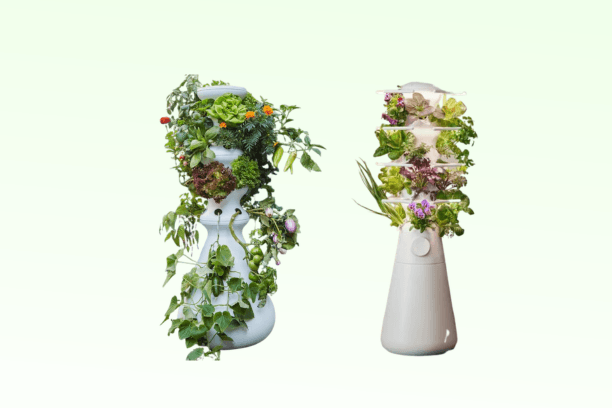
Lettuce Grow is a home gardening brand that develops technology-enabled growing systems for cultivating fresh produce year-round. The company positions its products around making home food production more accessible through simplified growing options.
In this review, we review the brand’s core offerings and assess its advantages and potential limitations. We also provide a comparison with similar brands to provide you with a detailed review.
About Lettuce Grow
Founded by Zooey Deschanel and Jacob Pechenik, Lettuce Grow is focused on helping households grow produce at home through vertical growing systems and pre-sprouted seedlings. Its purpose is to shorten the distance between harvest and consumption and reduce water usage.
The company’s product lineup includes the Original Farmstand and the Farmstand Nook. It also offers the Counterstand Set, a smaller countertop system. They are paired with living, pre-sprouted seedlings, which allows you to grow produce faster and with more consistent results compared to starting from seed.
The company also offers accessories and maintenance supplies, including Glow Rings, rolling Dollies, and Cleaning Kits. It also provides harvesting tools like the Gardena VeggieCut and nutrient products under its Supplies category. The brand also emphasizes that its seedlings are non-GMO and pesticide-free.
Top Offerings
-
Farmstand Models
Lettuce Grow offers multiple indoor hydroponic growing systems within its Farmstand models category, including the Farmstand Nook and the Counterstand Set.
The Farmstand Nook is an indoor vertical hydroponic system that supports 20 plants across four growing levels. The system includes LED grow lights, a 9-gallon water tank, grow cups, nutrients, pH-balancing supplies, and a water pump. It also comes with a digital timer system with app-based controls for watering and lighting schedules. It is designed for indoor operation in urban spaces without soil, direct sunlight, or outdoor placement.
The system uses pre-grown live seedlings instead of seed germination or seed pods. According to the company, harvests may begin within approximately 3-4 weeks, depending on plant type.
The Counterstand Set is a smaller system designed for countertop placement and smaller-scale indoor cultivation. It uses a passive hydroponic setup that hydrates plants through water wicks in place of a circulating pump system.
The set includes three borosilicate glass growing containers, six water wicks, plant nutrients, and credits for three live starter seedlings. You can also select a configuration with an LED Glow Lamp. The lamp includes a built-in timer, USB-C power compatibility, and a 4000K white LED light intended for indoor growing conditions without direct sunlight. One lamp is designed to support up to three Counterstands simultaneously.
-
Seedling Varieties
Seedling varieties consist of a broad mix of leafy greens, herbs, vegetables, and edible flowers designed for cultivation across Lettuce Grow’s hydroponic systems. The selection allows you to grow everything from everyday kitchen staples to seasonal produce within the same growing setup.
| Category | Details |
| Leafy Greens | Butter lettuce, romaine, spinach, and Swiss chard. |
| Herbs | Mint, Genovese basil, parsley, cilantro, thyme, and chives. |
| Vegetables | Broccoli, cauliflower, mini cucumbers, cherry tomatoes, peppers, zucchini, beans, cabbage, eggplant. |
| Specialty Varieties | Romanesco cauliflower, purple broccoli, lemon cucumber, shishito peppers, and various mustard greens. |
| Edible Flowers | Viola Mix, chamomile, marigold, dianthus, snapdragon, zinnia, alyssum. |
Lettuce Grow Advantages
-
Pre-Sprouted Seedling Supply Chain
Lettuce Grow rotates more than 100 seedling varieties across greens, herbs, vegetables, fruits, and edible flowers, and its farm teams check root size and scan for pests before shipment. The brand states that its expert team of farmers and horticulturalists nurtures seedlings from seed to germination, optimizes delivery routes to reduce transit stress, and pairs the seedling program with self-watering, self-fertilizing Farmstand hardware. The brand also claims harvests can begin in as little as two weeks and says the living-seedling model grows 2x faster than seed-start systems.
You may find this easier to use if you want a home-growing company that reduces the most failure-prone stage of gardening. It gives you access to an ongoing seedling fulfillment system with pre-grown starts, not a one-time hardware purchase that leaves propagation entirely to you.
-
Multi-Format Hardware Ecosystem
Lettuce Grow offers a tiered hardware lineup that includes the Counterstand Set, Farmstand Nook, and Original Farmstand, giving you multiple ways to grow fresh produce at home. The Counterstand Set is designed for kitchen countertops and includes three Counterstands with three live plants, while the compact Farmstand Nook grows 20 plants in a small indoor space. The Original Farmstand supports 18–36 plants and can be used indoors and outdoors, helping you to choose a setup that matches your available space and growing goals.
The ecosystem extends beyond the growing systems themselves as the brand also offers Glow Rings for indoor Farmstand growing, a Glow Lamp for the Counterstand, a Dolly, Cleaning Kit, Gardena VeggieCut, and Supplies that include nutrients and other growing essentials. It also supports the growing experience through a companion app that provides harvest alerts, growing tips, and reminders to refill water and nutrients, along with recipes, educational resources, customer reviews, and a Farmstand Quiz to help you choose the most suitable system and seedling varieties.
Lettuce Grow Limitations
-
High Entry-Cost Structure
Lettuce Grow’s growing systems require a relatively high upfront investment compared with many entry-level hydroponic gardens. The Original Farmstand starts at $574, while the Farmstand Nook starts at $799. Although the Counterstand Set lowers the starting price to $149, it supports only three live plants, making it better suited for small batches of herbs, greens, and edible flowers than larger, ongoing harvests. Indoor setups may also require optional accessories, such as the Glow Lamp for the Counterstand or Glow Rings for the Original Farmstand.
The cost pattern continues after purchase because the system relies on brand-specific operating inputs. The setup guide includes purchased nutrients, pH tools, timers, pumps, and reusable cups, and the shopping flow is built around recurring seedling refills. You may find the overall cost becomes more noticeable if your goal is to produce enough fresh greens, herbs, and vegetables to meaningfully supplement your grocery shopping.
-
Brand-Dependent Growing Model
Lettuce Grow’s operating system is tightly linked to its own seedling fulfillment. The company directs you to redeem starter seedlings and browse ongoing seedling assortments through its platform, and its core performance claims are built around receiving healthy, pre-grown starts from its farms. Its same brand-dependent approach extends to its support tools and accessories, with guides referencing lights, app, smart-timer compatibility, branded nutrients, and customer-success assistance for certain pump models.
While this creates a cohesive and guided growing experience, it also functions as a form of ecosystem lock-in. Relying on proprietary seedlings, branded nutrients, compatible accessories, and ongoing replenishment can increase long-term costs compared to sourcing raw seeds or generic hydroponic inputs independently. This may be limiting if you prefer a more flexible gardening setup with interchangeable products from multiple suppliers.
Lettuce Grow Alternatives
-
AeroGarden
AeroGarden and Lettuce Grow both make it easier to grow fresh produce at home through hydroponics, but the experience you get from each brand is quite different.
As per the official site, AeroGarden concentrates on compact indoor gardening systems that fit comfortably on a countertop, with models ranging from the Sprout and Harvest Lite to the Harvest XL, Bounty, and Bounty Elite. Its ecosystem revolves around indoor gardens, Seed Pod Kits, grow lights, and accessories designed to help you grow herbs, leafy greens, tomatoes, peppers, and flowers year-round without soil. Lettuce Grow, on the other hand, positions itself as a broader home-growing platform. Its flagship Original Farmstand supports 18–36 plants indoors or outdoors, while the Farmstand Nook is meant for compact indoor spaces. The company also offers the Counterstand Set for kitchen countertops, creating an ecosystem that extends beyond hardware to include living seedlings, accessories, recipes, educational resources, and digital growing support.
The biggest difference you’ll notice is what you actually plant. AeroGarden is built around proprietary Seed Pod Kits, offering options such as Gourmet Herbs, Grow Anything, Mixed Romaine, Mixed Kale, Pesto Basil, Salsa Garden, Mighty Mini Cherry Tomato, Heirloom Cherry Tomato, Cucumber, Fairy Tale Eggplant, Sweet Banana Pepper, and Cascading Petunias. Most refill kits begin between $13.95 and $16.95, while larger fruiting varieties are priced at $21.95. Lettuce Grow takes a different approach by shipping living, pre-grown seedlings that are already 3–4 weeks old, allowing you to begin growing immediately instead of waiting for seeds to germinate. The selection includes herbs, vegetables, and edible flowers such as Viola Mix.
AeroGarden keeps its lineup relatively streamlined with indoor garden systems, Seed Pod Kits, the Seed Starting System for the 2020 Sprout Garden, and lighting accessories such as the Stem Grow Light and Trio Grow Light. Lettuce Grow expands the experience into a larger ecosystem that includes the Original Farmstand, Farmstand Nook, Counterstand, Glow Lamp, Glow Rings, Dolly, Cleaning Kit, Gardena VeggieCut, nutrient supplies, recipes, a growing journal, a Farmstand Quiz, and a companion app that provides harvest reminders and growing guidance.
The scale of each system also shapes the growing experience. AeroGarden remains centered on compact indoor gardens that let you grow a selection of herbs, leafy greens, tomatoes, peppers, cucumbers, and flowers on a countertop. Lettuce Grow is designed for larger, ongoing harvests through its vertical Farmstand systems, which support both indoor and outdoor growing. Instead of treating each planting as a single growing cycle, the company encourages you to harvest portions of your greens, allow them to regrow, and periodically refresh the Farmstand with new seasonal seedlings to maintain continuous production.
AeroGarden emphasizes year-round indoor gardening, fresh herbs for cooking and drinks, giftability, and approachable hydroponics supported by ScottsMiracle-Gro’s gardening portfolio. Lettuce Grow expands the conversation beyond convenience by connecting home gardening with food freshness, sustainability, and greater awareness of where your food comes from.
-
Gardyn
Gardyn and Lettuce Grow both make it easier to grow fresh produce at home with hydroponic gardening systems that require little to no gardening experience. Instead of relying on grocery store vegetables, both brands encourage you to harvest your own greens, herbs, vegetables, and edible plants year-round. They also share several features, including automated growing technology, non-GMO plants, app support, warranties, risk-free trial periods, and vertically designed systems that fit modern homes. Their biggest differences come down to the types of growing systems they offer, how they manage plant care, and how you start growing.
Gardyn’s product lineup is primarily designed for indoor vertical growing in compact spaces. The Gardyn Home grows 30 plants and is positioned for households of three to four people, while the Gardyn Studio grows 16 plants for one to two people. The systems occupy approximately 2 sq ft and 1.4 sq ft, respectively, and use full-spectrum vertical LED grow lights intended to replicate natural sunlight, including in windowless rooms. The company also offers multiple finishes, including Classic Walnut, Iris, Sage, and Rose. Lettuce Grow takes a broader environmental approach with systems that can function across kitchens, balconies, patios, and outdoor areas. It highlights adaptability across different home layouts and growing conditions.
The growing systems themselves also differ significantly. Gardyn uses compostable yCubes containing seeds placed inside nutrient-rich rockwool within silicone-sealed growing columns. The systems automate lighting and watering schedules while using sensors and cameras to monitor plant conditions continuously. Gardyn also highlights a catalog of more than 100 non-GMO plant varieties, including cucumbers, cherry tomatoes, basil, sweet peppers, and Pink Swiss Chard. The company also offers curated starter collections such as Salad Lover, Budding Florist, and Chef Faves. Lettuce Grow structures its growing process differently by shipping seedlings that are already alive, rooted, and approximately three to four weeks old before arrival. The brand repeatedly positions this as an alternative to seed germination and pod-based systems.
Technology use is a major point of difference between the two brands. Gardyn places automation at the center of the growing process through inward-facing cameras, sensors, automated nutrient delivery, and Kelby, its AI gardening assistant. The Gardyn app provides real-time alerts, harvest reminders, and personalized care guidance based on sensor monitoring. The systems also use automated watering technology that the company states reduces water usage by 95%. You are needed to refill a 4+ gallon water tank approximately every one to two weeks. Lettuce Grow includes automation more selectively. Its systems include automated watering support and lighting accessories such as Glow Rings and Glow Lamps with built-in customizable timers and multiple light settings. The company focuses more on maintaining a simplified growing routine that involves inserting seedlings, monitoring water and nutrients periodically, and harvesting continuously over time.
The accessory ecosystems also reflect the different operational focus of each brand. Gardyn’s accessories are closely tied to indoor hydroponic expansion and maintenance, including HydroBoost systems, Sprout Nurseries, Trellises, Harvest Kits, Plant Food, and replacement parts. Lettuce Grow’s accessory lineup focuses more heavily on environmental customization and maintenance tools. Its catalog includes Glow Rings, Glow Ring Extensions, pH management products, spray bottles, and cleaning kits. The company also separates seedling collections according to indoor, outdoor, and countertop growing environments.
Both brands simplify home hydroponic gardening but take different approaches. Gardyn centers on indoor automation and AI-supported plant care, while Lettuce Grow emphasizes environmental flexibility and live seedling cultivation.
Pros
- Offers a 90-day risk-free trial for Farmstand systems.
- Provides a guided quiz to help choose suitable growing systems
- Gives a 3-year warranty for offerings like Farmstand and Glow Rings.
Cons
- Steep initial investment for entry users.
- Orders cannot be canceled after purchase.
How Did We Evaluate?
-
Brand Reputation
We evaluated Lettuce Grow’s brand credibility using complaint and review activity from the Better Business Bureau and Trustpilot. At the time of evaluation, the brand holds a B- rating on BBB. On Trustpilot, the brand has a 2.8 out of 5 TrustScore based on 10+ reviews. The active complaint volume on both BBB and Trustpilot is relatively limited, which means the assessment is based on a smaller pool of publicly available customer experiences.
The most consistent concerns relate to customer support responsiveness, return handling, setup guidance, and communication delays. Multiple users describe difficulty reaching support through phone or live channels, slow response times over email, and extended back-and-forth communication during returns or troubleshooting. Some complaints also mention confusion around return logistics, shipping costs, and refund timelines, especially for larger equipment orders.
We also noticed that several users describe friction during onboarding and setup, especially when instructions, app guidance, or troubleshooting support did not match expectations. In some cases, users felt that resolving issues required repeated follow-ups across different communication channels.
Based on our evaluation, you may consider paying attention to the company’s return terms, shipping conditions, and support accessibility before placing a larger order. If you decide to purchase, keeping the original packaging, documenting setup issues early, and maintaining written communication records could help you with potential support or return-related disputes more smoothly.
-
Real User Experiences
We assessed real user experiences for Lettuce Grow by reviewing Reddit discussions focused on the brand’s Farmstand and Nook hydroponic growing systems.
Some users described the Farmstand positively for its open root space and ability to support different plants, including leafy greens, herbs, peppers, strawberries, and tomatoes. The larger root area was associated with stronger plant growth and better resilience over time.
However, the discussion highlighted some operational limitations with the Nook system. One user mentioned that larger plants, such as basil and butter lettuce, developed thick root systems that occasionally blocked water flow or caused drainage problems within the cups. Other users reported successful growth of cherry tomatoes and jalapeños in the Nook, suggesting that performance may vary depending on plant selection, maintenance habits, and growing setup.
The discussion remains relatively narrow and technical in scope, with only a small number of firsthand experiences. The available feedback is not extensive enough to form a definitive assessment of the brand as a whole.
In our evaluation, we find that Lettuce Grow appeals most to users who enjoy experimenting with hydroponic growing setups and optimizing plant performance over time. However, you may still need broader long-term user reporting before drawing strong conclusions about consistency across different growing conditions and skill levels.
Conclusion
Lettuce Grow reduces much of the complexity associated with traditional home gardening by narrowing your decisions through preset structures, guided workflows, and branded consumables. While this creates a smoother onboarding experience, it also means the long-term usability of the systems remains closely tied to the company’s own seedling supply, replacement availability, and ecosystem continuity.
As much of the experience depends on proprietary or semi-closed inputs, disruptions in availability, product variety, or fulfillment can have a disproportionate effect on usability. It’s relatively narrow hardware-and-seedling model provides fewer opportunities to evaluate how the brand handles broader agricultural scalability, supply resilience, or interoperability outside its own controlled environment.
The brand claims to provide you with a convenient growing structure. However, its reliance on branded seedlings, limited compatibility with third-party supplies, app-dependent workflow, and restricted customization may feel limiting if you prefer a more flexible and independent growing setup.

Rachel has been a freelance medical writer for more than 18 years. She graduated from the University of Tennessee at Knoxville in 2005 and is currently practicing as a Certified Registered Nurse Anesthetist at a Level I trauma center.
Leave a Reply