

No products in the cart.
Contents
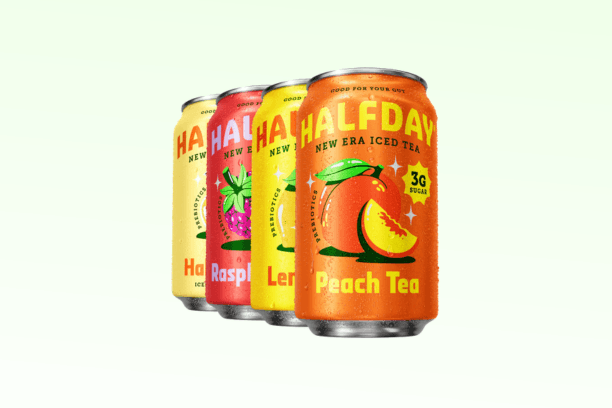
HalfDay Iced Tea is a beverage brand that specializes in ready-to-drink iced teas and variety packs. The company has positioned its products as lower-sugar alternatives to traditional sweet teas while emphasizing convenience and modern beverage preferences.
This review examines HalfDay’s ingredient strategy, flavor selection, nutritional profile, customer feedback, and overall value proposition. It also explores the key strengths and potential limitations of the brand’s offerings.
About HalfDay Iced Tea
Co-founded by Kayvon Jahanbakhsh and Mike Lombardo, HalfDay Iced Tea offers ready-to-drink iced teas that combine familiar tea flavors with lower sugar content and added prebiotic fiber.
The brand’s portfolio includes canned iced teas, half-and-half blends, and multi-flavor variety packs. Its lineup features flavors such as Lemon Tea, Peach Tea, Raspberry Tea, and seasonal offerings, alongside collections like the Classic Variety, Fan Favorites, and Fruity Variety packs.
According to its official website, the brand’s teas are brewed using organic tea and packaged in 100% recyclable materials. The company’s products are also OU Kosher certified, which may be relevant if you follow specific dietary preferences or certification standards.
Key Offering
-
Iced Tea
HalfDay’s Iced Tea range is divided across categories like classic iced teas, fruit-forward tea blends, Half & Half combinations, and multi-can variety packs. Most drinks from the brand feature around 3–5g of sugar per can. Across the iced tea range, some featured flavors include tropical, raspberry, green, sweet, peach, and lemon. These drinks pair organic teas with fiber sources like cassava root fiber, fructan fiber, and organic agave inulin.
Organic tea extracts in the drinks naturally contain catechins, flavonoids, and small amounts of caffeine that interact with the central nervous system by blocking adenosine receptors, which may support alertness and improve focus. Ingredients like Cassava root, fructan, and agave inulin function as prebiotic fibers, which are fermented by the gut bacteria into short-chain fatty acids. Such effects may support microbial activity and contribute to intestinal barrier function and digestive regularity.
The range also extends into Sweet Tea and Classic Half & Half formulations that follow more traditional iced tea formats commonly associated with Southern-style tea drinks. Beyond singular options, the brand also offers Variety Packs, such as the Fruity Variety, Classic Variety, Southern Variety, and Refresher Variety.
HalfDay Iced Tea Advantages
-
Consistent Prebiotic Formulation
As per the official site, Halfday centers its product lineup around a standardized prebiotic formula that delivers 6 grams of prebiotic fiber per 12-ounce can across its core flavors. The brand uses the same GOODDAY Prebiotic Blend, which includes cassava root fiber, fructan fiber, and organic agave inulin, helping create a consistent nutritional profile throughout the lineup.
The company also maintains a relatively uniform formulation structure across flavors. Products are made with brewed organic black tea or brewed organic green tea and typically contain similar calorie and sugar levels, generally ranging from 30 to 40 calories and 3 to 5 grams of sugar per can.
Flavor variations are built around additional ingredients such as fruit components, organic acids, and mineral ingredients rather than changing the underlying functional formula. This prebiotic-focused approach is applied across much of its iced tea and half-and-half product range. If you switch between flavors, you can experience a similar amount of prebiotic fiber, comparable calorie and sugar levels, and the same core functional ingredients. This makes it easier to compare products across the lineup and choose flavors based on taste preferences.
-
Low-Sugar Formulation Approach
Halfday claims that its products have a relatively low-sugar formulation strategy, with most flavors containing between 3 and 5 grams of sugar per 12-ounce can. It combines organic raw cane sugar with stevia leaf extract to create a sweetened iced tea profile while keeping sugar and calorie levels lower than many traditional ready-to-drink teas. It is applied consistently across the company’s product range, including Lemon Tea, Peach Tea, Raspberry Tea, Green Tea, Sweet Tea, Classic Half & Half, and Watermelon Half & Half varieties.
The brand also maintains a relatively narrow calorie range, with most products falling between approximately 30 and 45 calories per can, creating a more predictable nutritional profile.
You may find the brand easier to use as a soda or sweet tea replacement because the flavor direction remains familiar. The narrower nutritional spread across the lineup can also help if you want a canned tea brand with predictable sugar and calorie details.
HalfDay Iced Tea Limitation
-
Uneven Certification Coverage
HalfDay’s dietary certifications and product claims are not applied uniformly across its entire lineup. While some flavors display gluten-free, vegan, or kosher certifications, the specific combination of certifications can vary from one product to another. As a result, the brand does not appear to operate under a single portfolio-wide certification standard that applies equally to every can.
Ingredient choices also differ between flavors. For example, certain products are marketed as vegan, while others contain ingredients such as honey that would not meet vegan dietary requirements. Similarly, kosher certification is displayed on some flavors but not consistently across the entire range. A certification or badge displayed on one product does not necessarily indicate that the same certification applies to other flavors within the lineup.
You may need to verify each flavor individually if vegan status or kosher certification is a purchase requirement. You should not assume that a certification or dietary badge on one HalfDay can extend automatically to the rest of the brand.
Pros
- A non-carbonated approach may suit calmer, smoother sipping experiences.
- Multiple flavors in the catalog, including peach, classic, lemon, and watermelon.
- Recyclable packaging indicates the brand’s commitment to sustainability.
Cons
- Some users noted certain flavors as overly sweet or unconventional.
- Premium pricing of drinks might reduce accessibility.
HalfDay Iced Tea Alternatives
-
Just Ice Tea
Just Ice Tea and HalfDay both operate within the ready-to-drink tea segment, but they reflect notably different approaches in terms of brand philosophy, formulation priorities, sourcing standards, and product positioning.
In terms of positioning, Just Ice Tea emphasizes organic tea production, Fair Trade Certified sourcing, and traditional brewed tea authenticity, with a strong emphasis on environmental responsibility and transparency across its agricultural supply chain. HalfDay positions itself as a functional iced tea brand that focuses more heavily on gut health support, lowering sugar intake, and mild flavor profiles.
Just Ice Tea maintains a focused lineup built around categories such as green tea, black tea, herbal tea, mint tea, and lightly sweetened or unsweetened bottled teas. Some featured offerings include Original Green Tea, Berry Hibiscus Herbal Tea, Moroccan Mint Green Tea, and Dragon Green Tea. Meanwhile, HalfDay offers a broader flavor-oriented portfolio that features iced teas, half-and-half combinations, and variety packs. A few core flavors across its lineup include Peach Tea, Raspberry Tea, Green Tea with Honey & Ginseng, and Classic Half & Half, alongside bundle combos such as Fruity Variety and Classic Variety packs.
The ingredient philosophy and formulation strategy also differ between the brands. Just Ice Tea highlights USDA Organic certification, Fair Trade Certified ingredients, non-GMO positioning, and Kosher certification. The brand also provides sourcing transparency around tea-growing regions, including Zhejiang and Jiangxi provinces in China, while emphasizing reduced reliance on synthetic pesticides and fertilizers. Meanwhile, HalfDay approaches formulation through a functional drink framework built around organic brewed tea combined with added prebiotic fiber blends and low sugar sweetening systems. The brand uses ingredients like cassava root fiber, fructan fiber, organic agave inulin, and stevia leaf extract to support its low-calorie and gut health positioning.
-
Olipop
When comparing the brands, Olipop and HalfDay both position themselves around low-sugar drinks with prebiotic ingredients, but they differ significantly in drink format, formulation depth, operational transparency, and category focus.
Olipop positions itself around reworking traditional soda drinks into fiber-rich alternatives that support digestive health while recreating nostalgic soda experiences. The brand places strong emphasis on microbiome-focused drink development through its proprietary OLISMART blend, which combines ingredients such as cassava root fiber, acacia fiber, guar fiber, botanicals, and plant extracts. HalfDay Iced Tea positions itself more narrowly within the ready-to-drink iced tea category, focusing on low sugar prebiotic teas made with brewed organic tea bases and a simplified Goodday Prebiotic Blend containing cassava root fiber, fructan fiber, and organic agave inulin.
The difference in product range further separates the brands. Olipop offers a broad lineup of carbonated sodas that feature classic cola-inspired drinks, fruit flavors, cream soda variations, and seasonal options. Its flavor portfolio includes options like Vintage Cola, Classic Root Beer, Strawberry Vanilla, Orange Cream, and Ginger Ale. Beyond these, the brand also offers variety packs and limited-edition flavors. Meanwhile, HalfDay maintains a more specialized iced tea-based collection focused on ready-to-drink prebiotic iced teas, variety packs, and half-and-half combinations. Some core flavors across the brand’s iced tea catalog include Sweet Tea, Green Tea, Tropical Tea, Raspberry Tea, and Watermelon Half & Half.
Manufacturing transparency, ingredient philosophy, and quality control standards represent another difference between the brands. Olipop places extensive focus on operational oversight and scientific validation through GFSI-certified manufacturing facilities, FDA-compliant GMP standards, third-party laboratory testing, heavy metal screening, GCMS analytical testing, and supplier compliance evaluations. The brand also highlights certifications and positioning such as Certified B Corporation status alongside broader sustainability initiatives involving greenhouse gas reduction efforts, renewable energy initiatives, and environmental impact monitoring.
Meanwhile, HalfDay maintains a more simplified ingredient and production narrative focused primarily on brewed organic tea, low sugar formulations, gluten-free positioning, and kosher certification across selected product lines. The brand provides limited details regarding its third-party testing standards, manufacturing certifications, sustainability programs, and environmental initiatives.
Olipop differentiates itself through broad soda-inspired flavor diversification, extensive quality control disclosures, sustainability initiatives, and a strong infrastructure around research and microbiome-focused drink development. Meanwhile, HalfDay Iced Tea highlights its focused iced tea specialization, approachable flavor profiles, low-calorie tea positioning, and streamlined product range.
How Did We Evaluate?
-
Brand Reputation
When evaluating HalfDay Iced Tea, we analyzed the brand’s operational background, product positioning, and presence across available independent review forums.
On ThingTesting, the brand carries a 4.6 rating out of 5, which is based on over 75+ reviews. Across the platform discussions, products such as Peach Iced Tea, Raspberry Iced Tea, and Honey Ginseng Tea were repeatedly mentioned for their lighter sweetness, nostalgic tea-style flavor profiles, and lower sugar content. However, a few reviews indicated that some flavors tasted too sweet, while others specifically noted sensitivity to stevia or digestive effects linked to the fiber content. Some reviews also mentioned inconsistent store availability, which may indicate that the brand’s retail reach is still expanding.
Beyond ThingTesting, the brand currently has limited visibility across larger independent review forums such as Better Business Bureau (BBB), Reviews.io, and ConsumerAffairs. Based on the currently available information, the brand holds a moderately positive but still developing reputation within the functional drinks category. We also noticed limited representation across third-party review and accreditation platforms, which makes long-term service consistency and broader operational transparency harder to assess at this stage.
-
Real User Feedback
During our evaluation of HalfDay Iced Tea, we examined available user feedback for the brand’s two core products on Amazon to understand how they perform in regular day-to-day consumption.
The Peach Iced Tea currently holds a 4.4 out of 5 rating based on more than 250 reviews. Many users appreciated the lighter sweetness, low sugar content, and non-carbonated profile of the drink, while some also associated the added prebiotic content with digestive support. Peach flavor consistency and refreshment value appeared frequently in positive feedback, although some users felt the tea was still slightly sweeter than expected. A few users also expressed concerns regarding pricing, packaging inconsistencies between different versions ordered online, and uncertainty about whether the functional gut-health claims produced noticeable personal benefits.
The Fruity Variety Pack carries a 4.2 out of 5 rating from more than 125 reviews. Several users viewed the drinks in the variety pack as a low-sugar alternative for reducing soda or sugary drinks intake, with peach and raspberry flavors receiving the strongest response across reviews. Many users noted that the drinks helped satisfy sweet cravings without excessive calories or carbs, while others appreciated the smoother finish and lack of strong bitterness commonly found in reduced-sugar drinks. However, some users reported that the stevia-based sweetness created an unusual aftertaste that affected the tea flavor, particularly in certain varieties.
Based on the available feedback, we found that flavor satisfaction of the HalfDay Iced Tea drinks remained dependent on personal sweetness tolerance, particularly due to the stevia-based profile present in some varieties. We suggest approaching the brand primarily for taste balance and reduced sugar intake, instead of expecting significant functional effects to help set more realistic expectations.
Conclusion
HalfDay Iced Tea emphasizes nostalgic tea flavors, convenient canned packaging, a less sugary taste profile, and wide retail accessibility. However, the brand’s offerings typically deliver a milder flavor and sweetness level than conventional iced teas, so the experience may feel less satisfying if you prefer a bold brewed tea taste or moderately sweetened drinks.
Inclusion of prebiotic fibers such as agave inulin and cassava may support digestion, but it can also trigger bloating, gas, cramping, or stomach discomfort, especially if your body is sensitive to fiber-rich drinks or if you have IBS, acid reflux, or dietary sensitivities. As the drinks feature brewed tea, caffeine sensitivity may become another factor to consider before regular consumption.
Pricing and accessibility might also influence long-term convenience. HalfDay sits within the premium drinks category, which may feel more expensive than standard bottled tea or homemade options. Rotating flavors, limiting rapid back-to-back consumption, and monitoring digestive response may help you decide whether the brand’s offerings comfortably fit your long-term drink routines.

Rachel has been a freelance medical writer for more than 18 years. She graduated from the University of Tennessee at Knoxville in 2005 and is currently practicing as a Certified Registered Nurse Anesthetist at a Level I trauma center.
Leave a Reply