

No products in the cart.
Contents
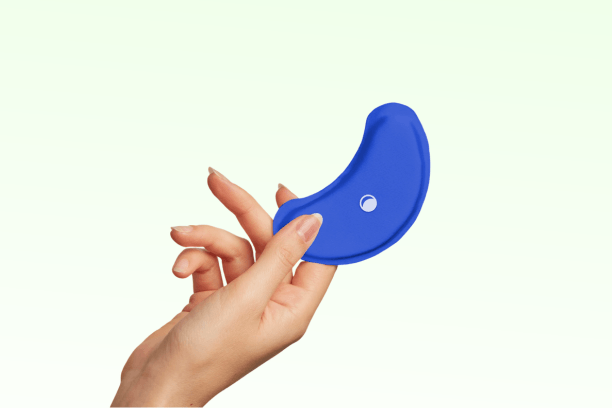 Wesper focuses on providing clinical-grade, at-home sleep testing and monitoring. The platform aims to make sleep diagnostics more accessible through multi-night tracking. It claims to address concerns such as sleep apnea, irregular breathing, snoring, and poor sleep quality.
The brand’s technology is designed to improve diagnostic accuracy and accessibility by measuring physiological signals in a home setting. Its approach centers on combining wireless wearable patches and advanced data analysis to improve convenience.
This review evaluates the brand’s testing technology, usability, and customer experience. It also examines strengths and limitations, and how it compares to similar brands.
About Wesper
Wesper was founded by Amir Reuveny and Adi Mordechai. It is a health technology company focused on simplifying how sleep disorders are identified and monitored without relying on traditional in-lab studies.
The brand’s core offering is an FDA-cleared at-home sleep testing platform designed to deliver high-resolution physiological data. The system captures signals such as respiratory effort, airflow, and sleep staging, providing a more detailed view of sleep patterns in a home setting. The platform also gives access to booking demos through its website.
Core Offering
-
Home Sleep Testing (HSAT)
Home Sleep Testing (HSAT) evaluates sleep disorders such as obstructive sleep apnea by collecting physiological data during your normal sleep routine. The system uses wearable, wireless patch-based sensors that you apply before sleep and remove after waking, allowing data collection in a non-clinical environment.
The system delivers Level 3 HSAT data, including measurements such as thoracic and abdominal respiratory effort, airflow, blood oxygen saturation (SpO2), heart rate, and body position. It also tracks snoring, respiratory rate, movement, and skin temperature, along with advanced metrics like sleep staging and hypoxic burden. These parameters are used to identify breathing interruptions and oxygen fluctuations that may be associated with sleep apnea and related concerns.
Data is collected continuously throughout the night and analyzed using automated algorithms to detect respiratory events and sleep stages. The platform provides access to both raw data and interpreted results, which may support clinical review.
According to the brand, the technology has been evaluated against polysomnography, with reported correlation in measures such as the apnea-hypopnea index (AHI). The service also includes guided setup, real-time updates, and access to support, which may help ensure proper use during testing.
Wesper Advantages
-
Provider-integrated workflow positioning
Wesper structures its platform around a provider-connected sleep monitoring and reporting system that combines at-home physiological data collection with clinical review, workflow support, and long-term monitoring. It includes a cloud-based provider portal that gives clinicians access to multiple physiological signals, including thoracic and abdominal respiratory effort, airflow, SpO2, and body-position data.
The brand also uses AI-assisted autoscoring workflows and supports multi-night data review. This allows providers to evaluate changes and variability in sleep-disordered breathing patterns across multiple sessions. It also includes an integrated mobile app experience with guided setup, sleep reports, behavioral questionnaires, care-plan delivery, and remote monitoring support.
-
Platform-Based Sleep Monitoring Ecosystem
Wesper positions itself as a connected sleep-monitoring platform and service provider. The company combines wearable patches that collect more than 45 sleep and respiratory metrics with a cloud-based platform designed for AI-assisted scoring, reporting workflows, and longitudinal trend analysis. Its wearable sensors capture physiological signals such as respiratory effort, airflow, SpO2, heart rate, and body-position data, while the platform manages data storage, multi-night comparison, and provider review.
The brand also claims to integrate operational and clinical workflow support through a unified service model. It combines hardware, software, guided onboarding, remote monitoring support, and provider-connected reporting into a single ecosystem.
Wesper Limitation
-
Dependence on Proprietary Algorithms
Wesper relies heavily on automated scoring systems. Sleep apnea scoring, oxygen desaturation detection, central apnea classification, airflow estimation, and total sleep time analysis depend on internally developed AI-assisted processing models and software logic. As many of these outputs are generated through derived calculations rather than direct measurement alone, the accuracy and interpretation of results depend significantly on the company’s internal signal-processing methods and modeling decisions.
The official site also provides limited technical transparency into how these systems operate in routine use. It does not publicly provide detailed documentation covering algorithm architecture, model version history, preprocessing standards, event-classification methodology, or software-update governance. It is difficult to inspect or validate how signal interpretation changes over time as software systems evolve. You may want more transparency if you prefer systems where core measurements come from simpler, directly interpretable channels and publicly documented scoring logic.
Wesper Alternatives
-
CPAP.com
CPAP.com and Wesper differ in how they structure sleep care. As per its official website, CPAP.com presents a fully integrated pathway that combines diagnosis, product access, and ongoing therapy support within a single platform. It outlines a guided journey that starts with an at-home sleep test priced at $149, shipped within 2–3 days, followed by 1–3 nights of testing and doctor-reviewed results delivered in under a week. This pathway connects directly to its retail ecosystem, where you can purchase CPAP machines, masks, and supplies. In comparison, Wesper isolates the diagnostic phase and builds around it, positioning itself as an FDA-cleared sleep platform focused on clinical-grade data capture and analysis, without extending into therapy product sales or fulfillment.
As per their brand approaches, CPAP.com emphasizes simplicity and accessibility, offering a single-device home sleep test that fits into your nightly routine and avoids lab-based complexity such as wires, overnight observation, and long referral timelines that can cost up to $3,000. Its test is described as FDA-cleared, DOT-approved, and capable of detecting sleep apnea with 98% effectiveness, with results reviewed by licensed sleep doctors who can issue prescriptions if needed. However, Wesper builds its device around data, delivering Level 3 HSAT signals that include thoracic and abdominal effort, pressure, body position, and sleep staging, along with snoring, movement, respiratory rate, and skin temperature. It extends beyond basic apnea detection by combining advanced metrics such as hypoxic burden, ODI, RDI, central apnea index, and total sleep time.
CPAP.com focuses on producing clear, actionable outputs that move you quickly toward therapy, supported by auto-adjusting CPAP machines, travel-sized machines, and BiPAP systems. It complements this with mask personalization across full-face, nasal, and nasal pillow options. Meanwhile, Wesper instead emphasizes longitudinal analysis, offering multi-night testing that captures variability across sleep cycles, along with autoscored reports and overscoring capabilities. It states that its device helps track longitudinal trends, enabling more detailed clinical interpretation.
When it comes to plan integration, CPAP.com creates a direct pathway from diagnosis to therapy. Once diagnosed, you can access a wide catalog of CPAP machines such as ResMed AirSense models, along with masks and accessories. It also offers structured onboarding through its Build My First CPAP Setup feature and ongoing guidance from CPAP experts. In comparison, Wesper supports providers through a cloud-based portal, seamless integrations, and automated workflows. This reduces logistical burden and eliminates the need for inventory management. As per their official website, CPAP.com combines diagnosis, product access, and long-term support into a single ecosystem, whereas Wesper prioritizes diagnostic precision, multi-night data collection, and advanced analytics.
-
SleepDoctor
Sleep Doctor builds a guided, consumer-facing pathway that starts with a sleep quiz designed to identify issues like snoring, sleep apnea, insomnia, or uncertainty. This is followed by consultation with a licensed sleep expert to determine next steps, such as a Home Sleep Study or coaching. The platform emphasizes a four-step progression that includes starting with clarity, choosing a care path, receiving hands-on guidance, and working toward lasting results. In comparison, Wesper is structured around delivering clinically reliable diagnostics, focusing on multi-night data collection that supports better outcomes through deeper, longitudinal insights.
This difference is supported in how each brand delivers care. Sleep Doctor emphasizes hands-on care through a clinical team that includes respiratory therapists, registered respiratory therapists, and registered polysomnographic technologists. It also combines one-on-one consults, forming a core part of the experience. After testing, you review results directly with a licensed provider and may transition into sleep coaching or procedure recommendations, supported by programs like clinical follow-up and CPAP guidance. Wesper, however, prioritizes a technology-driven ecosystem that combines FDA-cleared diagnostics with automated scoring, real-time updates, and a cloud-based provider portal. It highlights integrations and automated workflows, allowing providers to focus on care delivery while still offering 24/7 guidance and support during the testing process.
The testing formats present a contrast in design and execution. Sleep Doctor offers a disposable at-home sleep study device, which includes a telehealth consultation and is HSA/FSA eligible, FDA approved, and HIPAA compliant. The brand states that its device uses finger, wrist, and chest sensors connected to a smartphone app to measure seven metrics tied to obstructive sleep apnea, including peripheral arterial tone, heart rate, body position, snoring, and chest motion. It is designed for single-night use, with results such as the AHI score delivered quickly via follow-up email and consultation. Meanwhile, Wesper replaces this with a reusable, wireless patch system made from durable silicone with gentle adhesives for all-night wear, eliminating wires. Its system supports multi-night testing and captures a broader dataset, including thoracic and abdominal effort, airflow, pressure, SPO2, snoring, movement, and sleep staging, enabling a more continuous and less intrusive monitoring experience.
As per their official website, Sleep Doctor operates as a structured, human-supported platform that simplifies the path from diagnosis to plan through guided steps. Meanwhile, Wesper functions as a precision-focused diagnostic platform that prioritizes multi-night data collection, advanced metrics, and scalability.
Pros
- Offers an FDA-cleared sleep option.
- Claims to help detect obstructive and central apnea.
- The brand claims to support remote monitoring.
- Offers consultation with sleep experts.
Cons
- Users reported that the insurance documentation was unclear or inconsistent.
- Users report customer support struggles with complex queries.
How Did We Evaluate?
-
Brand Credibility
We assessed Renude’s brand reputation by reviewing its presence across platforms such as Reviews.io, Thingtesting, and Trustpilot, but did not find any meaningful activity or substantial review presence under the brand’s name.
While the brand is listed on Tenereteam, it does not currently have an active review record. The brand shows limited third-party review visibility, making its broader brand credibility harder to verify independently.
-
Real User Experiences
We assessed real user experiences for Wesper by reviewing publicly available discussions on Reddit. The available feedback is limited but reflects mixed to negative experiences. Some users initially describe the home sleep test as easy to order and convenient to use. However, this convenience appears to decline when users try to access results or move forward with follow-up care. One user reports difficulty obtaining proper documentation or billing details for insurance, along with confusion during multiple support interactions and no successful refund.
There are also concerns around subscription management. In some cases, users report difficulty canceling subscriptions despite not actively using the product, suggesting challenges with account control after purchase. Access to sleep reports is another recurring issue. Some users mention being unable to locate or download their results within the app. Others report needing to request reports separately through a doctor, creating uncertainty around result availability.
In our evaluation, we observe that while the initial testing experience may be convenient, issues related to report access, subscription handling, and customer support may affect your experience after purchase.
Frequently Asked Questions
- Does Wesper provide real-time sleep feedback during the night?
Yes. The brand provides real-time guidance through its mobile app during sleep studies, helping ensure correct device usage and data capture. However, deeper insights such as AHI trends and sleep staging are typically delivered after the session via autoscored reports. - Does Wesper offer support for people with restless sleep patterns?
Yes. The brand supports analysis of restless sleep through FDA-cleared patches that track leg activity, body position, and movement. It states that its offering also helps monitor 45 longitudinal trends across multiple nights, helping identify patterns linked to disrupted or fragmented sleep. - Can Wesper help me identify all types of sleep disorders?
No. The brand offers a device primarily designed to assess sleep-disordered breathing, including obstructive and central sleep apnea. While it states that the device tracks 45 longitudinal trends, it may not identify complex neurological sleep disorders that require full polysomnography or EEG-based analysis.
Conclusion
Wesper offers support for pattern tracking across nights and compliance with defined clinical validation standards. However, its reliance on proprietary algorithms reduces transparency in how results are generated, and variability in patch placement or nightly conditions may influence data consistency. The system is also primarily focused on sleep-disordered breathing, which narrows its scope relative to broader sleep health assessment.
When using Wesper, you need to maintain consistent patch placement and follow the instructed setup closely, as its multi-signal system depends on accurate positioning to capture reliable respiratory and cardiovascular data. Irregular placement, partial adhesion, or shifting during sleep can affect signal quality and lead to incomplete or misinterpreted outputs. The platform aims to deliver clinically aligned sleep monitoring with measurable depth, but with trade-offs in flexibility, transparency, and independent usability.

Rachel has been a freelance medical writer for more than 18 years. She graduated from the University of Tennessee at Knoxville in 2005 and is currently practicing as a Certified Registered Nurse Anesthetist at a Level I trauma center.
Leave a Reply