

No products in the cart.
Contents
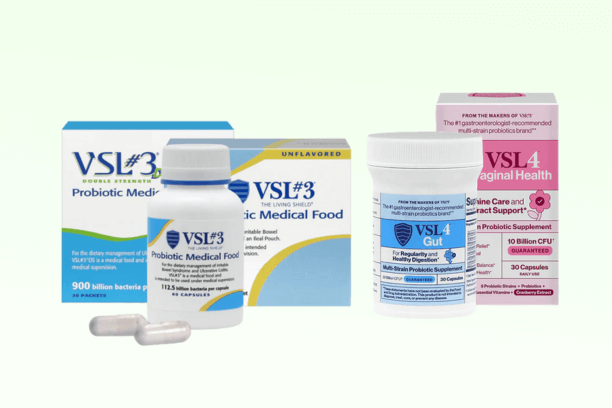
VSL3 is a probiotic brand that offers multi-strain formulations that could support digestive and gut health. It is primarily known for a concentrated blend of live bacterial strains.
Products are formulated with multiple probiotic strains across different genera and can deliver very high colony-forming unit (CFU) counts. The range is designed to support digestive comfort, regularity, immune support, and women’s vaginal health.
In this review, we will examine VSL3’s product range and how its formulations are structured across different formats and strengths. We will also explore the brand’s reputation and consumer feedback to help you understand how its products perform in daily use.
About VSL3
According to the official website, VSL3 operates within the broader VSL® Probiotics portfolio and offers a broad, all-purpose catalog. The brand’s primary identity is tied to its VSL3® medical food line, which is formulated for the management of irritable bowel syndrome (IBS), ulcerative colitis (UC), and pouchitis. These products are positioned for use under medical supervision and contain eight probiotic strains selected as per clinical research.
The VSL3 range includes Capsules providing 112.5 billion CFU, Powder sachets providing 450 billion CFU, and DS Powder providing 900 billion CFU per serving. The brand highlights that all its VSL3 products are refrigerated and distributed through a controlled cold-chain system, with the brand emphasizing verification of labeled CFU counts through expiration when stored as recommended.
VSL3 also extends into everyday use through its VSL4® line, which is positioned for routine digestive and feminine wellness support. The brand states that its VSL4® products are shelf-stable, formulated for convenience, and designed with acid-resistant capsules to support probiotic survival through digestion. The line includes VSL4® Gut Capsules and VSL4® Vaginal Health to support vaginal microbiota balance, pH levels, and urinary tract health.
VSL3 Offerings
-
VSL3 Capsules
VSL3 Capsules may help in the management of specific gastrointestinal conditions and for maintaining intestinal microbiota balance. It contains a defined blend of eight probiotic strains drawn from three bacterial genera.
The formulation includes Streptococcus thermophilus, which contributes to the breakdown of lactose and other sugars, producing lactic acid that can lower intestinal pH. A more acidic environment may limit the growth of harmful bacteria while supporting the activity of other beneficial microbes. S. thermophilus also interacts with intestinal epithelial cells, where it may support barrier function by influencing tight junction integrity.
The makers also added Bifidobacterium breve in this formula, which participates in the fermentation of non-digestible carbohydrates. Through this process, it contributes to the production of short-chain fatty acids such as acetate, which work as an energy source for colon cells and are involved in maintaining mucosal health.
The VSL3 Capsules also contain Bifidobacterium lactis, which participates in fiber fermentation and might support stool consistency and intestinal transit. It may interact with immune cells in the gut-associated lymphoid tissue, influencing cytokine activity that is relevant to digestive comfort and immune regulation.
-
VSL3 Powder
According to the official website, VSL3 Powder delivers a concentrated dose of live bacteria in a powder format. It is stored and shipped under refrigerated conditions to help maintain bacterial viability through handling and distribution.
The formula also has Lactobacillus acidophilus, which is involved in the fermentation of carbohydrates into lactic acid that can lower intestinal pH and affect the surrounding microbial environment. It might also interact with intestinal epithelial cells, where it may contribute to maintaining mucosal integrity.
The powder also has Lactobacillus plantarum, which can metabolize fibers and polyphenols, producing metabolites that interact with gut cells. It could help modulate inflammatory signaling pathways and support the gut barrier by influencing tight junction proteins between intestinal cells.
-
VSL3 DS Powder
VSL3 DS Powder may support intestinal microbiota balance and digestive function. The formulation includes Lactobacillus acidophilus, which may influence microbial balance by limiting the growth of certain gas-producing or opportunistic bacteria, while supporting populations of acid-tolerant beneficial microbes.
The makers state that this formula could help reduce abnormal permeability and excessive immune activation, which are factors often associated with abdominal discomfort and pain perception in functional digestive conditions. As per the official website, the powder could also help reduce bloating, changes in discomfort, or improved stool patterns.
VSL3 Advantages
-
Multi-Strain Brand Specialization
VSL3 centers its offerings on a single, fixed multi-strain formulation. The brand states that this formula includes four Lactobacillus strains, three Bifidobacterium strains, and one Streptococcus strain (Streptococcus salivarius subsp. thermophilus). This same strain composition appears across formats, including capsules and sachets, and has remained consistent despite ownership changes.
The brand places strong emphasis on strain diversity and total bacterial count. Product labels highlight very high colony counts, often reaching hundreds of billions of CFU per serving. This is presented as a deliberate design choice, favoring a dense, multi-strain formula over single-strain or rotating blends.
Product development also follows a preservation-focused model. VSL3 maintains one core formula, keeping strain ratios stable while prioritizing freeze-dried stability and labeled potency. There is less focus on expanding flavors, delivery formats, or convenience-driven variations, strengthening the idea of one standardized option rather than a broad product range.
This specialization narrows the decision process. You choose one defined, multi-strain formula instead of sorting through several strain combinations within the same brand. Comparison stays focused on strain count, strain types, and labeled potency, keeping the emphasis on formulation depth rather than product variety.
-
Established Brand Presence
VSL3 highlights a long-standing clinical and professional legacy rooted in the original De Simone Formulation. Developed by Claudio De Simone in the early 1990s and patented in 1998, the eight-strain formula entered commercial use in Europe before 2000 under names such as Vivomixx. By the early to mid-2000s, it had gained recognition in professional and institutional healthcare settings across Europe and the United States. Although the original formulation was rebranded as Visbiome following a 2016 formula change, the brand name has persisted into the 2020s, reflecting sustained demand and market presence. By 2026, this represents roughly three decades of continued relevance in clinical and professional probiotic markets. This can translate into greater confidence in the product category and formulation concept. A probiotic with decades of use suggests that it has been repeatedly evaluated, prescribed, and relied upon. Even amid brand transitions and competition, the persistence of the VSL3 name signals ongoing demand and familiarity, highlighting established track records and long-term adoption.
Professional-First Brand Growth Model
VSL3 grew mainly through professional channels rather than consumer marketing. The original formula was developed by Claudio De Simone, a physician and researcher. Early awareness came from hospitals, gastroenterology clinics, and specialist practices, not from retail shelves or lifestyle advertising.
The brand’s visibility increased via clinician use and professional discussions, with distribution mainly through specialty pharmacies and similar outlets, limiting mainstream consumer retail presence initially. This kept VSL3 closely tied to professional environments over consumer-led discovery. This can add confidence if you prefer brands shaped by professional adoption, even if it means taking extra time to understand the product details on your own.
VSL3 Limitation
-
Legal History Impacts
VSL3 has a long and well-known legal history. Disputes arose post-2016 after Claudio De Simone split with VSL Pharmaceuticals over undisclosed formula changes. The main issue involved changes to the formula and how those changes were presented to buyers. In 2018, a U.S. federal jury ruled that the sellers were liable for false advertising. That ruling was upheld by a federal appeals court in 2021. The court confirmed that the newer product was different from the original formula and stopped marketing that implied they were the same. Additional consumer lawsuits followed. This history can make evaluation more difficult. Older studies, reviews, and professional references may not match the product sold today. You may need to review labels and product details more carefully and avoid relying on older information when comparing this brand to others.
VSL3 Alternatives
-
Visbiome
Visbiome and VSL3 are both positioned as high-potency probiotic brands intended for the management of gastrointestinal conditions, but they differ in formulation ownership, product architecture, and brand scope.
As per their official website, Visbiome is manufactured by ExeGi Pharma and is presented as the only probiotic containing the De Simone Formulation, a proprietary eight-strain blend developed by Professor Claudio De Simone, M.D. The brand states that these eight live bacterial strains are combined in a fixed, specific ratio and produced as a proprietary blend exclusive to Visbiome. On the other hand, VSL3 also offers an eight-strain probiotic profile but does not reference use of the De Simone Formulation or proprietary strain ratios in its current product descriptions.
Both brands classify their core offerings for use under physician supervision. Visbiome consistently supports its medical food designation and frames its products as tools for the management of digestive disorders associated with dysbiosis. VSL3 similarly identifies its Capsules, Powder, and DS Powder as probiotic medical foods for supervised use, primarily for irritable bowel syndrome, ulcerative colitis, and pouchitis. However, VSL3 additionally markets the VSL4 line as probiotic products rather than medical foods, introducing a parallel category within the same brand portfolio.
The product structures of the two brands reflect different approaches. Visbiome offers a tiered GI Care lineup that includes GI Care Capsules (112.5 billion CFU), Advanced GI Care Powder, Extra Strength GI Care Powder, and GI Care Kids powder in a wild berry flavor. These products are differentiated by CFU strength, format, and intended population, including pediatric use. VSL3 structures its offerings primarily by potency, with Capsules providing 112.5 billion CFU, Powder delivering 450 billion CFU per packet, and DS Powder delivering 900 billion CFU per packet, without separate pediatric-specific branding.
Storage and handling requirements are similar for medical food products but differ in scope. Visbiome claims that its products are shipped and stored under refrigeration at 36–46°F to maintain potency, with room-temperature storage for up to 1 week without significant loss of viability. VSL3 highlights that its products are also refrigerated. Meanwhile, its VSL4 products are shelf-stable probiotic formulas, reflecting a formulation and regulatory distinction within the VSL brand ecosystem that is absent from the Visbiome portfolio.
Visbiome focuses on proprietary formulation, controlled strain ratios, and physician-supervised options across its entire product range. On the other hand, VSL3 claims to combine refrigerated formulations with shelf-stable probiotic formulas under the VSL4 name, resulting in a more segmented brand framework.
-
Seed
Seed presents itself as a microbiome science–focused company with a broad view of fitness. Its main product, DS-01® Daily Synbiotic, is positioned for daily use as part of long-term gut and whole-body support, using ViaCap® capsule-in-capsule technology to protect probiotics through digestion and deliver 24 strains to the colon. The brand emphasizes strain transparency, whole-genome sequencing, flow cytometry, SHIME® digestion modeling, and human clinical trials, and extends its portfolio into multivitamins, energy, sleep, pediatric, and vaginal health products. In comparison, VSL3 focuses more narrowly on clinical digestive support, prioritizing high-dose probiotic formulations intended for specific gastrointestinal conditions rather than broad lifestyle or preventive use.
As per their official website, Seed uses a subscription model, with DS-01® priced at about $49.99 per month and most other products in the $30–$40 range. Bundles are offered to support routine daily use and keep costs predictable over time. On the other hand, VSL3 follows a different pricing structure that reflects product potency and medical classification. Its products range from about $59 for capsule formats to more than $140 for high-dose DS powder packets, with prices increasing alongside CFU levels, refrigeration requirements, and medical food status.
The brands also differ in how they communicate science. Seed places strong emphasis on education and transparency, sharing detailed strain information, research processes, and the role of its scientific advisory board. Meanwhile, VSL3 relies more on its medical food designation and clinical use cases to establish credibility, with less focus on consumer-facing explanations of strain-level research.
Sustainability further separates the two. Seed integrates environmental considerations into its brand through biodegradable packaging, refillable containers, compostable materials, carbon footprint measurement, and its SeedLabs initiative, which explores microbial applications beyond human health. VSL3 does not place visible emphasis on sustainability or packaging innovation, keeping its focus on functional outcomes and clinical relevance.
Seed focuses on preventive, daily support, advanced delivery systems, and accessible science within a broader lifestyle and sustainability framework. VSL3 centers on high-dose probiotic intervention for specific gastrointestinal conditions, operating within a medical food model that prioritizes clinical supervision.
Pros
- The brand claims to use strains that are individually named and disclosed.
- Offers both capsule and powder delivery formats.
- Focuses on gut ecosystem balance rather than symptom masking.
Cons
- Brand effectiveness messaging relies heavily on historical clinical association rather than recent large-scale trials.
- No personalized formulations within the lineup.
How Did We Evaluate?
-
Brand Credibility
VSL3 focuses on high-potency, multi-strain probiotic formulations intended for more targeted digestive support rather than broad, lifestyle-oriented products.
On Tenereteam, it holds a 4.2 out of 5 rating based on more than 1,900 reviews, where users highlighted positive responses around customer service, shipping and delivery, return policy, and perceived value. At the time of writing this review, VSL3 does not have a listing with the Better Business Bureau. However, this absence does not inherently indicate negative business practices.
Based on the evaluation, the brand appears to be an established probiotic provider with a narrow and focused product portfolio. However, its absence from the Better Business Bureau suggests a need for additional caution when assessing third-party accountability and consumer protection signals.
-
Real User Experiences
To evaluate VSL3 as a brand, we evaluated experiences shared by users on Reddit in 2025. VSL3 offerings are most often discussed as a high-dose probiotic. Many users reported trying them during active flares, but most could not clearly link improvement or remission to the product itself. This made VSL3 appear, in practice, as a supportive option with inconsistent outcomes rather than a dependable formulation across users.
Pricing and portfolio value were also key to the brand evaluation. Customers frequently described its VSL3 Capsules and Sachets as expensive relative to the benefits they experienced. When results were unclear or absent, the brand’s premium pricing weakened overall satisfaction.
Our brand evaluation shows VSL3 as a well-known probiotic brand with narrow, condition-focused products and strong name recognition, but limited perceived effectiveness for many users. This feedback suggests that while the brand’s products are generally tolerated and safe, it struggles with value justification, outcome consistency, and confidence tied to its current formulation.
Frequently Asked Questions
- Does VSL3 provide complete strain-level identification for all of its products?
No. The brand lists an 8-strain blend by species name only (such as Streptococcus thermophilus and Lactobacillus acidophilus) and does not provide full strain identifiers like ATCC or DSM numbers on its products. - Does VSL3 offer general probiotic blends?
No. The brand primarily markets its capsules and powders as medical foods for IBS, ulcerative colitis, and pouchitis. While its Gut Capsules and Vaginal Health products still target specific health areas, they are not fully condition-neutral. - Does VSL3 support microbiome diversity beyond core strains?
No. The brand emphasizes diversity within its fixed 8-strain blend (about 450 billion CFU per dose) to support microbiota balance, but it does not claim to expand overall gut diversity beyond those core strains.
Conclusion
VSL3 focuses on delivering a fixed multi-strain blend with very high CFU levels. It claims to offer consistency in strain composition and formulation strength, prioritizing standardization over customization or convenience. However, its formulations are intense by design. High bacterial loads can lead to bloating, gas, abdominal discomfort, or altered bowel habits.
VSL3 may suit you if you value a long-standing, professionally oriented probiotic brand with a standardized approach. However, it is essential to stay aware of its limited product variety and stricter storage requirements. Paying close attention to storage conditions, dosing guidance, and formulation updates is important before deciding whether it aligns with your expectations.

Rachel has been a freelance medical writer for more than 18 years. She graduated from the University of Tennessee at Knoxville in 2005 and is currently practicing as a Certified Registered Nurse Anesthetist at a Level I trauma center.
Leave a Reply