

No products in the cart.
Contents
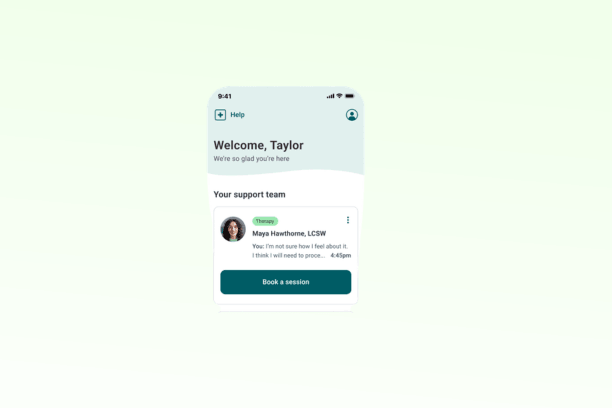 Talkspace is a digital mental health platform that centers its services around accessibility and flexibility, allowing you to engage with therapy in a way that fits your daily routine.
The platform offers online therapy and psychiatry services through its app and web interface, connecting you with licensed providers across a wide network.
In this review, we will explore Talkspace’s core offerings, how its service model works in practice, and its key advantages. We will also evaluate what real users report about their experiences with the platform.
About Talkspace
As per the official website, Talkspace covers an extensive range of concerns such as anxiety, stress, relationship challenges, trauma, grief, and mood-related conditions. It also highlights provider expertise across more than 150 specialties, which reflects a broad scope of support.
The platform provides individual therapy for adults aged 18 and above, teen therapy for ages 13 to 17, and couples therapy for relationship-focused support. It also includes psychiatry services with evaluations, prescription support, and ongoing medication management. This allows you to access both therapy and medication-related support within the same platform.
The platform is built around flexible communication options. You can choose live video sessions, voice calls, or real-time chat, depending on your preference. It also includes unlimited messaging, which allows you to send text, audio, or video messages to your therapist at any time, with responses provided regularly.
Services Offered
-
Therapy
Talkspace’s Therapy service connects you with licensed professionals for ongoing support across a wide range of emotional and behavioral concerns. It provides convenient access to professional care from anywhere, allowing you to communicate with a therapist through live video sessions, voice, or real-time chat, depending on your preference.
Talkspace states that once you sign up, you are then matched with a licensed therapist based on your responses to a set of questions about your symptoms, preferences, and goals. The service includes ongoing communication with scheduled sessions and unlimited messaging with your therapist, available at any time.
The platform presents the service as covering a broad range of life situations, with providers specializing in areas, including anxiety, depression, stress, relationships, trauma, eating disorders, parenting, and identity-related concerns.
It is available for different groups, including adults, teens aged 13 to 17 with guardian consent, and couples seeking relationship counseling. Couples therapy, as described by the company, involves joint or separate participation in sessions and focuses on communication, conflict resolution, and relationship goals over time.
The platform also uses AI tools that assist with generating session notes, summarizing conversations, and identifying potential safety concerns, such as signs of self-harm, which can trigger alerts for providers.
-
Medication
Talkspace gives access to managing medications for concerns such as anxiety, depression, ADHD, PTSD, insomnia, and bipolar disorder through its platform. Within this framework, the process begins with scheduling a video-based psychiatric assessment, during which a licensed provider evaluates your condition in detail. This step supports the platform’s emphasis on personalized care, as any decision regarding medication is made only after this clinical review. If deemed appropriate, the provider may issue a prescription, which is sent to a pharmacy of your choice.
Follow-up appointments are then integrated into the same plan, allowing ongoing monitoring or changes as needed. The company also outlines that it does not prescribe controlled substances, which can include some stimulant medications commonly used for ADHD.
-
Treatment
The Treatments service accessible through Talkspace provides integrated care, combining therapy, psychiatric evaluation, and medication management. According to the company, the process begins with an initial assessment of symptoms, goals, and preferences, which informs how care is structured.
The scope of the service under this category includes anxiety, depression, ADHD, PTSD, OCD, insomnia, and bipolar disorder. Based on needs, care involves therapy, psychiatry, or a combination of both.
Advantages
-
Integrated Self-Guided Support Ecosystem
Talkspace has developed an integrated self-guided support ecosystem through its Talkspace Go app, also referred to as Talkspace Self-Guided. This system complements its core therapy services by offering non-live, on-demand mental health resources that you can access anytime. It includes interactive sessions that combine psychoeducation, journaling prompts, guided reflections, evidence-based exercises such as CBT-style techniques, and short meditations, often designed in quick 5-minute formats. The content addresses areas like anxiety, depression, relationships, parenting, burnout, and stress, with personalized programs for people, couples, or parents based on initial assessments.
The ecosystem also features five to six weekly, anonymous, therapist-led Zoom workshops that typically run for 30 to 60 minutes, covering topics like navigating conflict or managing workplace stress. Recordings are available for on-demand access, alongside daily reflection prompts and app reminders that support habit-building. This structure gives you flexible access to exercises, programs, and workshops without needing to schedule live sessions.
-
Cross-Channel Service Delivery Model
Talkspace follows a cross-channel service delivery model that brings multiple communication formats into a single, unified platform. You can connect with therapists through asynchronous messaging, text, short audio clips, or pre-recorded videos, with responses typically provided within one business day on weekdays. Subscription plans include scheduled live sessions, available via video, audio-only, or live chat, supported by HIPAA-compliant technology. All communication channels are synced across iOS and Android apps as well as desktop browsers under one account, so you can switch between formats without losing context or needing separate logins. This setup allows you to adjust how you communicate based on your situation.
-
Insurance-Integrated Care Model
Talkspace uses an insurance-integrated model that connects its services with a broad network of in-network providers. The platform partners with major insurers, including Cigna, Aetna, Optum, Carelon, Blue Cross Blue Shield, Anthem, Regence, UnitedHealthcare, TRICARE, and Medicare. You can verify your eligibility directly within the app by entering your insurance details, such as your member ID and plan information. After this, the platform manages real-time claims processing, NCQA-credentialed provider matching, and generates superbills when required.
Coverage generally extends to messaging-based therapy, which is billed weekly, as well as live video, audio, or chat sessions and psychiatry services involving non-controlled medications. These services are structured under ACA-compliant behavioral health benefits. The platform simplifies access and reduces the administrative effort typically associated with using insurance for mental health support.
Potential Limitation
-
Scheduling and Session Availability Gaps
Talkspace relies on a credit-based system that limits availability and booking flexibility for live therapy sessions. Each subscription tier provides a fixed number of monthly live session credits (typically 1–4 for 30-45 minute video/audio/chat sessions), issued at billing cycle renewal and expiring after 30 days with no rollover or transfer options. Sessions are booked via an in-app calendar showing therapist availability on a first-come, first-served basis, where popular slots, particularly evenings and weekends, often fill within hours due to high demand against limited provider schedules.
Therapist confirmation is required for bookings, and rescheduling from missed sessions triggers automatic credit refunds, but faces the same availability constraints, creating capped access dependent on credit limits and provider capacity.
You may struggle to secure live sessions at preferred times despite available credits, often needing to book days ahead, shift timing, or switch therapists when slots disappear quickly. Unused credits expire at cycle end, pressuring front-loaded scheduling within tight windows. Recent 2025-2026 Reddit reports highlight persistent frustrations like forfeited credits from late cancellations and overwhelmed calendars, making the system feel restrictive for those needing frequent or flexible live interaction compared to more open scheduling models.
Pros
- Offers therapy, psychiatry, and medication support.
- Provides individual, teen, and couples therapy.
- Fully virtual therapy access.
- HIPAA-compliant secure platform.
Cons
- Users mentioned that delayed replies reduce conversation flow.
- Customers claimed to feel emotionally unheard.
Alternatives To Talkspace
-
Brightside
Brightside centers its model around support for anxiety and depression. You begin with a free assessment that informs a personalized plan, and the platform emphasizes fast access, with appointments available in as little as 24 hours to 2 days. On the other hand, Talkspace focuses on accessibility and convenience, guiding you through insurance verification and a short matching process to connect with a licensed therapist, typically within two days. While both offer relatively quick onboarding, Brightside leans into structured clinical intake, whereas Talkspace prioritizes ease and flexibility.
The model also differs significantly in how support is delivered. Brightside assigns you a dedicated provider who remains your single point of contact throughout the plan, supporting continuity and a more traditional pathway. Talkspace, on the other hand, builds flexibility into the experience by allowing you to switch therapists at any time without additional cost, which can be helpful if your preferences change but may reduce continuity. This distinction reflects a broader contrast where Brightside emphasizes consistency and guided progression, while Talkspace emphasizes user control and adaptability.
The plan approach is another key differentiator. As per its official website, Brightside combines psychiatry and therapy through a data-driven framework. It analyzes over 100 data points to guide medication decisions and combines cognitive and behavioral therapy with structured skill-building. It also offers specialized programs based on the Collaborative Assessment and Intensive Outpatient Programs that include individual therapy, group therapy, and psychiatry. Talkspace, while offering both therapy and psychiatry, does not highlight the same level of algorithmic personalization or structured clinical pathways. Instead, it focuses on giving you multiple communication formats such as video, audio, and live chat. It also combines unlimited messaging, along with features like Talkcast personalized podcasts and programs like Chapters designed for women’s mental health.
Insurance and affordability are important for both, but they are framed differently. Brightside emphasizes coverage through major insurers, including Medicare and Medicaid, and highlights its reach across more than 150 million covered lives, positioning itself as an insurance-first, care-plan-driven service. On the other hand, Talkspace also partners with major insurers and often promotes low or even $0 copays, along with employer-sponsored access and plans starting at $69 per week without insurance. This makes cost transparency and flexibility a central part of its value proposition.
According to their official website, Brightside is structured as a clinically intensive, data-driven platform designed for targeted plans and measurable outcomes. Talkspace, in comparison, is built as a flexible, communication-first platform that prioritizes accessibility, variety in interaction formats, and broader mental health support across different life situations.
-
Cerebral
Cerebral and Talkspace both operate as online mental health platforms, but they differ in how they structure support and guide your experience. As per its official website, Cerebral emphasizes evidence-based therapy and medication management with a clinically driven model that combines prescribers and therapists into a single pathway. Talkspace, in comparison, positions itself as a flexible, access-first platform where you can get support through therapy, messaging, and optional psychiatry.
The way you access support differs in both speed and structure. Cerebral promotes rapid onboarding with appointments available within 24 hours and even same-day sessions, depending on state and capacity. You can directly browse clinicians, view real-time availability, and book intake sessions without going through a matching system. Talkspace follows a guided onboarding process where you answer a questionnaire and get matched with a licensed therapist, typically within two days or sooner. While slightly less immediate, it prioritizes compatibility and allows you to switch providers anytime at no additional cost, which is not emphasized as a core feature in Cerebral’s flow.
Their therapy delivery formats reflect two distinct approaches. Cerebral focuses on scheduled sessions with therapists or prescribers, encouraging a structured, appointment-based model supported by tools to track progress and build long-term skills. Meanwhile, Talkspace expands the experience by offering therapy through video, voice, and live chat, along with unlimited messaging that allows you to communicate with your therapist 24/7, depending on your plan. This continuous messaging feature, combined with the ability to receive responses between sessions, makes Talkspace more fluid and ongoing, whereas Cerebral remains more session-centric.
Medication management is a key differentiator where Cerebral is more deeply integrated. It offers 1-on-1 online psychiatry with licensed prescribers, including professional evaluations, diagnoses, and personalized plans that include lifestyle recommendations. Through its Cerebral Rx system, prescription costs can be included in out-of-pocket plans, with free shipping, refill tracking, and reminders built into the platform. Cerebral can prescribe a wide range of medications for conditions like anxiety, depression, ADHD, and bipolar disorder, though it does not prescribe controlled substances. On the other hand, Talkspace also provides psychiatry and medication management, connecting you with a psychiatric provider within about a week, but it does not highlight an integrated pharmacy system or bundled prescription pricing in the same way.
Pricing and insurance coverage also reflect different positioning. Cerebral provides a flat out-of-pocket plan priced at $180 every three months, which includes prescription costs when using its pharmacy, and it accepts insurance with an average copay of around $30 per session. It works with major insurers such as Aetna, Blue Cross Blue Shield, Cigna, Optum, and UnitedHealthcare, and states that it covers over 100 million lives. Talkspace pricing begins at $69 per week for out-of-pocket users, while many insured members pay a $0 copay depending on their plan. It supports a wide range of coverage options, including Medicare, TRICARE, employer-sponsored plans, and Employee Assistance Programs.
Cerebral offers a structured, clinically driven approach that combines therapy with medication management, supported by licensed prescribers, progress tracking tools, and a focus on long-term outcomes. Meanwhile, Talkspace differentiates itself through flexibility and accessibility, offering multiple ways to communicate with therapists, continuous messaging support, and the ability to switch providers easily.
How Did We Evaluate?
-
Brand Reputation
We evaluated Talkspace based on publicly available data from the Better Business Bureau, including accreditation status, complaint history, customer reviews, and patterns in reported issues. Talkspace has been listed as a BBB-accredited business with an A+ rating since 2017. However, BBB records of the company have shown a high complaint volume, with several complaints reported over the past few years. Common concerns shared across these complaints have included billing disputes, insurance-related issues, delayed claim processing, unexpected or automatic charges, and difficulty obtaining refunds.
Some customers have also reported confusion around subscription renewals and no-show fees. Customer service issues have also appeared frequently, with users citing difficulty reaching support, reliance on automated systems, delayed responses, and limited access to direct communication. Additional concerns have included technical platform issues, scheduling inconsistencies, and challenges with accessing records or closing accounts.
-
User Experiences
We evaluated Talkspace based on publicly available customer feedback from Trustpilot as of 2026. The platform holds a TrustScore of 4.5 out of 5 based on 1,980+ reviews. Users consistently report positive experiences with therapists, highlighting professionalism, empathy, and strong listening skills.
Many describe meaningful progress, including improved coping mechanisms, emotional clarity, and long-term personal growth. They emphasize ease of scheduling, remote access, and the ability to message therapists between sessions.
As per the platform’s customer service and operations, feedback appears mixed. While some users report smooth experiences, others highlight slow response times, unresolved support tickets, billing issues, and difficulty contacting customer service. Technical performance issues such as application instability, session disruptions, and scheduling inconsistencies are noted to negatively affect the service experience.
Frequently Asked Questions
- Does Talkspace ensure quick onboarding for new users?
The platform aims to provide relatively quick onboarding by matching you with a licensed therapist within 48 hours to a few days. The process includes an initial assessment, real-time insurance verification, and provider matching, though timelines can vary based on availability. - Does Talkspace provide unlimited real-time interaction?
No. The platform does not provide unlimited real-time interaction. Unlimited access applies only to asynchronous messaging, where therapists typically respond once or twice daily, five days a week, while live video, audio, or chat sessions are scheduled and plan-limited. - Does Talkspace offer transparent therapist performance metrics?
No. The brand does not publicly share detailed therapist performance metrics like success rates. It relies on internal quality monitoring, AI-driven insights, and user feedback, while offering only aggregate research data and limited outcomes reporting for business clients.
Final Words
Talkspace offers multiple engagement formats, including live sessions, asynchronous messaging, and structured programs. However, the effectiveness of its model can depend on how the platform is used.
Talkspace’s credit-based system for live sessions can limit how frequently you can access that format, particularly if you prefer consistent scheduling. Session availability can also vary due to demand, which can create gaps between interactions.
Before considering Talkspace, it is important to evaluate how you plan to balance messaging and live sessions. Monitoring session credits, booking early, and setting real expectations around response times can help manage your experience. If you require frequent, time-specific sessions or a more structured plan schedule, the platform’s model may present constraints that are important to consider.

Rachel has been a freelance medical writer for more than 18 years. She graduated from the University of Tennessee at Knoxville in 2005 and is currently practicing as a Certified Registered Nurse Anesthetist at a Level I trauma center.
Leave a Reply