

No products in the cart.
Contents
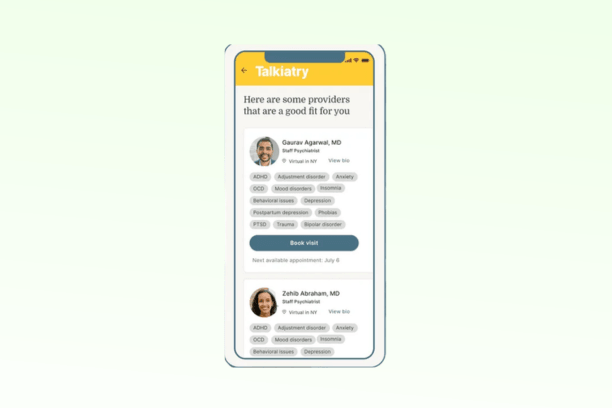 Talkiatry focuses on providing psychiatric services through virtual consultations. It connects you with board-certified psychiatrists who can assess symptoms, provide diagnoses, and guide next steps within a structured clinical framework.
The platform claims to make ongoing support more accessible compared to fully out-of-pocket options. Its offering centers on medication management and psychiatric evaluations, typically beginning with a detailed initial assessment followed by scheduled follow-ups.
In this review, we will explore Talkiatry’s offerings in detail and evaluate its overall reputation based on user experiences and operational structure. We will also compare it with similar platforms to understand how it differs in approach, accessibility, and scope.
About Talkiatry
According to its official website, Talkiatry highlights access to psychiatrists, allowing for a more standardized and consistent approach to evaluations, follow-ups, and prescribing. The platform is structured to get you started quickly. You begin with a short assessment where you share your symptoms, preferences, and goals, after which you are matched with psychiatrists who fit your needs. The platform lets you review their profiles, including plan approaches, and book an appointment, often within a few days.
Talkiatry’s care model centers on psychiatry-specific support, particularly evaluation and medication management. As per the official website, Psychiatrists on the platform are fully licensed to prescribe and collectively represent over 25 subspecialties.
The platform’s scope includes a broad set of mental health categories, including ADHD, anxiety, depression, bipolar disorder, insomnia, substance use disorder, and general mood disorders. It also extends to more focused areas such as children and adolescent mental health (ages 5–18) and pregnancy or postpartum-related concerns.
Talkiatry Core Offerings
-
60-minute Initial Evaluations
60-minute initial evaluations help provide a detailed understanding of your mental health needs from the beginning. The brand states that you begin by completing an online assessment through its website. Based on the responses, the platform matches you with a psychiatrist suited to your specific concerns. You are then able to view availability and schedule your appointment directly through the provider’s calendar.
During the session, the psychiatrist or psychiatric nurse practitioner works to understand your medical history, daily lifestyle, and personal mental health goals. The company explains that this extended format also allows you to begin building a working relationship with your clinician.
Talkiatry states that the evaluation session helps in developing a personalized plan, which may include a diagnosis, a medication management approach, or recommendations for additional support.
-
Full-spectrum Medication Management
The Full-spectrum Medication Management service gives you access to FDA-approved medications. It includes the management of multiple classes of medications based on the condition. This may provide continuity, meaning you continue seeing the same clinician throughout. It also notes that clinicians may prescribe controlled substances, such as stimulants for ADHD or certain anti-anxiety medications, when clinically appropriate and permitted under state regulations.
As part of ongoing care, the service’s follow-up appointments for medication management are used to monitor response to medication, assess any side effects, adjust dosages if necessary, and provide additional support as part of the plan.
In terms of payment structure, the company states that it operates as an insurance-only provider and does not offer a subscription or cash-pay model. The cost for medication management services is typically based on the insurance plan’s specialist copay or deductible, rather than a fixed rate.
-
Integrated Therapy
The Integrated Therapy service uses a collaborative care model where your psychiatric help and psychotherapy are managed within the same system as part of a single, coordinated plan.
According to the brand, this model is psychiatrist-led, meaning you cannot access therapy as a standalone service. The company explains that you must first be an active user under one of its psychiatrists. During your initial evaluation or in a follow-up appointment, if your psychiatrist determines that therapy would be beneficial, they will refer you to a therapist within the Talkiatry network.
The company explains that therapy is provided at two levels within this integrated model. During regular follow-up visits with your psychiatrist, the program includes supportive therapy. This involves discussing your current mental state, life stressors, and coping strategies alongside medication management. If you require more structured or frequent therapy, you may be referred to a licensed therapist on staff who focuses specifically on ongoing psychotherapy while the psychiatrist continues overseeing medications.
Talkiatry Advantages
-
Psychiatry‑Only Care Specialization
Talkiatry focuses specifically on psychiatry rather than general therapy or wellness services. The platform states that care is delivered by licensed MD psychiatrists, following a medical model centered on diagnosis, structured planning, and medication management.According to the company, providers conduct comprehensive initial evaluations that typically last around 60 minutes. During this session, they review your symptoms, medical history, and plan goals, using evidence-based methods to assess specific concerns.
Talkiatry also emphasizes continuity, with psychiatrists overseeing your care over time. They can prescribe medications and make adjustments based on how you respond, allowing for ongoing clinical monitoring within the same system.
Therapy is positioned as a secondary layer within this model. Psychiatrists may refer you to therapists or coordinate additional support when needed, but the primary focus remains on psychiatric evaluation and medication management. You can access diagnosis, planning, and medication support in one place, which may be useful if you are looking for structured clinical oversight rather than therapy alone.
-
Nationwide Licensed Provider Network
Talkiatry reports a network of more than 800 full-time employed psychiatrists across the United States, covering adult and child/adolescent psychiatry (ages 5+). The platform highlights transparency through detailed clinician profiles that outline credentials, clinical experience, focus areas, and plan approaches, as exemplified by providers like Georgia Gaveras, DO (Co-Founder and Chief Medical Officer, triple board-certified in adult psychiatry, child/adolescent psychiatry, and addiction medicine). This level of visibility and network size supports finding a psychiatrist who aligns with your condition, preferences, and scheduling needs while enabling more informed decisions before starting care.
-
Insurance‑Integrated Care Platform
Talkiatry begins with an online intake and eligibility check, confirming whether your insurance plan is accepted before you proceed. Once verified, it matches you with in-network psychiatrists based on both your coverage and clinical needs, so you don’t have to search for providers on your own.The platform states that it works with major insurers, including Aetna, Cigna, UnitedHealthcare (including Optum), Blue Cross Blue Shield plans, Humana, Oscar Health, and Compsych. An upfront eligibility checker is used to verify your plan before scheduling.
For billing, Talkiatry handles claims submission after each visit. It sends claims to your insurer, waits for processing, and then issues a statement only for your share of the cost. This keeps billing centralized and removes the need for manual claim handling.
With early coverage confirmation and in-network matching, you can move through the process more quickly. The centralized billing system may also reduce paperwork and make ongoing payments easier to track and manage.
Talkiatry Limitations
-
Billing Transparency and Cost Clarity Issues
Talkiatry states that most users pay $30 or less per visit after insurance, but this figure is only an estimate. Your actual cost depends on factors like your deductible, copay, and coinsurance, and is finalized only after your insurer processes the claim.If you have a high-deductible plan, you may need to pay the full session rate, typically around $325 to $414, until your deductible is met. Once that threshold is reached, your cost generally shifts to a lower copay. Since billing occurs after insurance review, the final charge can take up to 30 days to appear.
Pricing may not be fully clear at the time of booking. The initial estimate can differ from the final billed amount, which can make it harder to plan your expenses and may lead to unexpected out-of-pocket costs.
-
Limited Continuity Across Providers
Talkiatry uses a matching system based on insurance coverage, availability, and clinical fit, rather than assigning a permanent provider. You can switch psychiatrists if the fit is not right, often after an initial or follow-up visit. While the platform uses data to refine matches over time, it prioritizes flexibility over long-term provider continuity.The platform also does not offer a self-pay option. If your insurance changes or your psychiatrist moves out of network, you generally cannot continue with the same provider. In most cases, you will need to switch or get rematched within the network. Thus, your experience may not stay with one provider over time. Even if you find a good fit, changes in insurance or availability can require a transition. This can interrupt your progress and may require you to repeat your history with a new clinician.
Talkiatry Alternatives
-
Talkspace
As per its official website, Talkspace combines therapy and psychiatry into a single, flexible system. You can get matched with a licensed therapist, often within two days or sooner, after answering a short questionnaire, and begin care through video, voice, live chat, or ongoing messaging.The platform highlights features like unlimited messaging with your therapist, depending on insurance coverage, the ability to switch providers at no cost, and additional tools such as Talkcast personalized podcasts for between-session support. It also supports an extensive range of use cases, including individual therapy for adults, teen therapy for ages 13 to 17, couples therapy, and psychiatric services for evaluation and medication management. On the other hand, Talkiatry operates as a psychiatry-focused medical practice with a more structured and clinically oriented model. It offers support through scheduled virtual appointments, with no emphasis on asynchronous messaging. The process begins with a short online assessment, after which you can choose a psychiatrist and book a visit within a few days. The platform emphasizes continuity by encouraging you to stay with the same psychiatrist, and its clinicians are directly hired and vetted rather than part of a marketplace.
The scope of care further highlights the contrast. Talkspace covers both therapy and psychiatry, promoting a combined model where therapy and medication can be combined for better outcomes. It reports that its providers cover more than 150 conditions and plan approaches, ranging from anxiety, depression, and trauma to parenting, chronic illness, and relationship issues. Talkiatry, in comparison, is more narrowly focused on psychiatric conditions such as ADHD, bipolar disorder, depression, insomnia, substance use disorder, and postpartum mental health. Its care model is rooted in diagnosis, medication management, and measurable progress based on standardized tools like PHQ-8 and GAD-7.
Insurance and pricing structures also differ in how access is framed. Talkspace works with a broad network of major insurers, including Aetna, Cigna, Optum, Anthem, TRICARE, and Medicare in select cases. The brand states that you might get a $0 copay, with average copays around $15, depending on the plan. It also accommodates employer-sponsored benefits, Employee Assistance Programs, and self-pay options starting at approximately $69 per week, making it accessible even without insurance. Talkiatry, on the other hand, is built around an in-network insurance model and only accepts patients whose plans are covered. It notes that most visits may cost $30 or less after insurance, factoring in copays, deductibles, or coinsurance, but places less emphasis on out-of-pocket flexibility. This makes insurance eligibility a more central requirement for using the service.
Talkspace offers a convenience-first, therapy-led platform that combines psychiatry into a broader, user-driven experience. In comparison, Talkiatry positions itself as a psychiatry-first clinical service, prioritizing structured care, provider expertise, and data-backed outcomes within an insurance-based framework.
-
Cerebral
Cerebral and Talkiatry differ in how their services are structured and delivered, even though both operate fully online. According to its official website, Cerebral combines therapy, medication management, couples therapy, and child and teen therapy within one platform, allowing you to access multiple forms of care simultaneously. It supports both therapists and prescribers, with over 600 clinicians, 65+ combined specialties, and 35 therapy modalities available. Talkiatry, in comparison, focuses specifically on psychiatry. It connects you directly with a licensed psychiatrist who evaluates your condition, provides a diagnosis if applicable, and builds a plan centered on psychiatric care.The way you begin care also differs. Cerebral allows you to browse available clinicians, view their credentials, such as LPC or LCSW. It also lets you check real-time availability and book sessions, with some appointments available within 24 hours and even same-day, depending on state and capacity. You can also get access to scheduling a free 15-minute consultation with a care coordinator before committing. On the other hand, Talkiatry uses a structured matching process where you answer questions about your needs and are paired with a psychiatrist who fits your preferences. Instead of selecting from a large list, you are guided toward a match, and appointments are typically available within a few days rather than on the same day.
The clinician network highlights another contrast. Cerebral operates a large, flexible network that includes therapists and prescribers across multiple disciplines, with ongoing education and access to subject matter experts for clinicians. Talkiatry functions as a single practice that hires and vets its own psychiatrists. The platform highlights that its clinicians have an average of 10 years of clinical experience, represent 26 subspecialties, and speak 32 languages, which creates a more standardized care structure compared to Cerebral’s broader provider selection.
Their models also differ in how care is delivered over time. Cerebral integrates therapy, medication, and lifestyle recommendations into a single care plan. Prescribers are expected to address factors beyond medication, and the platform includes tools to track progress and develop long-term skills. Meanwhile, Talkiatry focuses on psychiatric care with longer visits that allow you to build a relationship with the same psychiatrist. Follow-up appointments are used to monitor symptoms, adjust medications, and refine your plan based on your response.
Pricing and insurance handling further separate the two. Cerebral supports both insurance and self-pay options, with an average copay of about $30 per session for insured users. It also offers a flat-rate plan priced at $180 every three months, which can include prescription costs when using its pharmacy, and is eligible for FSA or HSA use. Talkiatry relies primarily on insurance, with all clinicians in-network with major insurers, and does not emphasize a subscription-based or bundled pricing structure for those paying out of pocket.
Pros
- Claims to accept 100+ insurance plans.
- 60-minute initial evaluations offered.
- Personalized plans developed.
- Flexible scheduling options available.
Cons
- Less emphasis on non-medication therapies.
- Digital-only limits personal interaction.
- Availability may vary by specialty.
How Did We Evaluate?
-
Brand Reputation
The evaluation has been based on publicly available data from the Better Business Bureau. The platform is not accredited and currently holds a rating of F. Many complaints have been filed over the past years, highlighting issues related to billing transparency, unexpected or high charges, insurance-related discrepancies, and cancellation fee disputes.Additional concerns have included difficulty accessing customer support, lack of follow-up on inquiries, and challenges obtaining refunds or billing clarifications. Operational issues such as appointment scheduling, technical platform reliability, and administrative inefficiencies have also contributed to the perception of the brand. While the company operates within a growing telehealth space, its current reputation reflects concerns around reliability, transparency, and consistency in handling customer issues.
-
Real User Experiences
We evaluated the real user experience of Talkiatry based on publicly available customer feedback from Trustpilot, where it has a 2.5 out of 5 rating from 700+reviews. Users describe improved mental health outcomes, effective medication management, and appreciation for the convenience of virtual appointments and faster scheduling compared to local in-person options.However, concerns about pricing and billing appear consistently across reviews and are among the most prominent issues raised. Many users report unexpectedly high costs for initial sessions, citing a lack of transparency around fees, delayed billing, and confusion about what insurance would cover.
Service reliability and continuity of care are also recurring concerns. Several describe frequent provider changes, appointment cancellations, or long wait times for rescheduling. In some cases, users report that appointments were cut short, started late, or did not address their primary concerns.
Customer service and administrative processes are another area of mixed feedback. Reviewers report difficulty reaching support, receiving delayed responses, or encountering scripted interactions that did not resolve their issues.
Customer feedback on Talkiatry shows that the brand appears to deliver positive outcomes in certain cases, but inconsistencies in cost clarity and operational reliability remain significant areas for improvement.
Frequently Asked Questions
- Are Talkiatry appointments flexible for people with unpredictable schedules?
The platform offers fully virtual appointments, including some evening and weekend availability, which can help fit busy or changing schedules. However, you must follow a strict 48-hour cancellation policy, as missed or late changes may result in a $100 fee. - Does Talkiatry offer support for emergency mental health situations?
No. The brand does not provide emergency mental health support and is intended for non-urgent care only. In crises, you are directed to contact emergency services or a crisis lifeline, as the platform focuses on ongoing virtual psychiatric management. - Does Talkiatry offer second opinions on existing diagnoses?
No. The brand does not formally offer second opinions, but psychiatrists conduct independent 60-minute evaluations that may confirm or adjust prior diagnoses. Your history is considered, though clinicians form their own assessment, and you can request a provider change within the platform.
Conclusion
Talkiatry follows a defined clinical flow, starting with intake and moving through diagnosis, follow-ups, and ongoing monitoring. This setup may suit you if you are looking for a clearly defined, medication-focused pathway supported by regular follow-ups. At the same time, since the platform does not strongly integrate therapy within the same system, you may need to seek additional support separately.
The model also comes with operational limitations. Your experience can depend on insurance coverage, provider availability, and network alignment. Costs are not always fully predictable upfront, and continuity may be affected if your provider changes or your insurance status shifts. The absence of a self-pay option further limits flexibility outside the in-network structure.
If you are considering Talkiatry, it might be helpful to review your insurance details, confirm follow-up frequency, and assess whether you will need external therapy support. The platform offers a structured and clinically grounded approach to psychiatry, but its reliance on insurance, limited flexibility, and medication-centered design remain important constraints to keep in mind.

Rachel has been a freelance medical writer for more than 18 years. She graduated from the University of Tennessee at Knoxville in 2005 and is currently practicing as a Certified Registered Nurse Anesthetist at a Level I trauma center.
Leave a Reply