

No products in the cart.
Contents
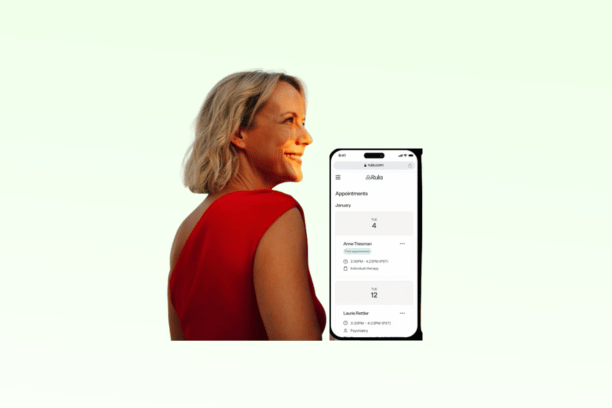
Rula is an online mental health platform that connects you with licensed therapists and psychiatric providers. You can search for providers based on your needs, preferences, availability, and insurance, giving you several factors to consider before booking.
Having therapy and psychiatric services on one platform also raises practical questions about how provider matching works, what you may pay, and how the platform handles appointments and insurance.
In this review, we examine the brand’s provider network, therapy and psychiatry options, insurance process, and potential limitations. We also look at customer feedback and the platform’s reputation to give you a clearer picture of what to expect.
About Rula
According to the official website, Rula’s network includes more than 23,000 licensed providers and covers over 90 conditions. Its services include individual, couples, family, child, and teen therapy, along with psychiatry and medication management.
The platform lets you search for providers using factors such as insurance, state, city, and specialty. After entering your preferences and insurance information, you can review profiles of matching in-network providers before choosing an appointment.
Sessions are primarily conducted through live video, while some providers offer in-person care in selected locations.
The brand also accepts more than 120 insurance plans nationwide, although coverage varies by state. Listed partners include Aetna, Cigna, Optum, UnitedHealthcare, Blue Cross Blue Shield, and Anthem. Some Medicare, Medicare Advantage, Medicaid, and employer-sponsored plans are also accepted in specific areas.
The platform reports an average insured session cost of $15, but your actual cost depends on your insurance plan and deductible.
Primary Services
Rula offers individual, couples, family, child, teen, and psychiatric services. Individual therapy covers personal concerns, while couples and family sessions may address relationship difficulties, communication, and family conflict. Child and teen therapy is also available.
Within these services, the platform supports several therapy approaches, including Acceptance and Commitment Therapy (ACT), attachment-based therapy, client-centered therapy, and child and parent psychotherapy. Psychiatry focuses on prescription medication discussions and management, including cases where therapy alone has not produced enough progress.
Therapy and psychiatry can also be used together through the same account, with appointments for different types of providers managed in one place.
Rula Advantages
-
Large Network of Licensed Providers
Rula says its network includes 21,000+ licensed providers across 180+ clinical specialties and modalities. This gives you more options when looking for someone with experience related to your concerns. For example, it highlights Tiffany Jansen, LCPC, who works with anxiety, depression, mood disorders, and stress.
The platform also says it verifies provider credentials and carries out regular quality reviews. You can look through provider profiles before booking to see whether their experience matches what you are looking for. If the first match does not feel right, you can use its portal to choose another provider.
Having more providers to choose from can make it easier to find someone who fits your needs and preferences. You are not necessarily locked into the first match, which gives you more flexibility if the initial provider does not feel like the right fit.
-
Behavioral Health Integration
Rula brings therapy and psychiatry into the same behavioral-health ecosystem, with its licensed therapists and psychiatric providers offering specialized care for 90+ concerns. Its care model includes individual, couples, family, child, and teen therapy alongside psychiatry and medication management, while it also explicitly addresses combining therapy and psychiatry. You can access different forms of behavioral healthcare within the same ecosystem as its not limited to one type of mental-health service.
Rula Limitation
-
Limited Flexibility for Appointment Changes
Rula has a strict late-cancellation policy that can result in significant out-of-pocket charges. Canceling, rescheduling, or missing a therapy appointment less than 24 hours before it starts can cost $99. The fee rises to $150 for psychiatry appointments. Insurance does not cover these charges, and you must pay the fee before your next appointment.
The brand also treats certain late arrivals as no-shows. Arriving more than 15 minutes late for therapy can trigger the fee. For psychiatry, the limit is more than 15 minutes late for an initial visit and more than 10 minutes late for a follow-up. Repeated no-shows within 12 months can also lead to termination of care.
This policy can leave you with an unexpected bill when plans change at short notice. A missed psychiatry appointment could mean a $150 charge even when your regular sessions are covered by insurance. You also need to keep the 24-hour cutoff in mind and allow enough time to avoid a late-arrival fee.
Rula Alternatives
-
Headway
Headway and Rula both connect you with licensed mental health providers through insurance, but their reported network sizes differ.
As per its official website, Headway lists 80,000+ licensed therapists and psychiatric providers. Meanwhile, Rula lists 23,000+ licensed providers, including 20,000+ therapists. The insurance networks also differ. Headway says it works with 100+ insurance plans, including Aetna, Anthem, Cigna, Oxford, UnitedHealthcare, and Oscar. Rula states that it is in-network with 120+ plans nationwide, including Aetna, Cigna, Optum, UnitedHealthcare, Blue Cross Blue Shield, Kaiser, and UMR. It also highlights Medicare, Medicare Advantage, and Medicaid coverage in many states.
Provider searches follow similar steps but use different matching structures. Headway asks for a ZIP code and insurance information, then allows you to filter providers by preferences, specialty, and location. Its directories are organized by state, city, and specialty, with categories including ADHD, bipolar disorder, couples and family concerns, and LGBTQIA+ issues. Rula also uses insurance and personal preferences to identify providers. Its directory adds plan-method filters such as Acceptance and Commitment Therapy, child and parent psychotherapy, and client-centered therapy.
Both platforms provide virtual and in-person options. Headway states that its providers offer care across 57+ languages, and single profiles specify whether a provider is virtual or offers both virtual and in-person appointments. Its listings include providers in Maryland, Virginia, Oklahoma, Texas, Indiana, and Georgia, with specialties ranging from ADHD to OCD. Meanwhile, Rula also offers online and in-person care and has separate categories for online therapy, individual therapy, couples therapy, family therapy, and teen therapy.
Headway allows you to book directly through the platform and says they are billed after the session. Its provider profiles display available dates, appointment formats, and, for some providers, free consultations. Rula’s process involves entering preferences, reviewing matched profiles, selecting an appointment time, and joining an online session. Rula states that you can meet with a provider as soon as tomorrow, so appointment availability is combined directly into its description of the process. Headway concentrates on insurance-based access, cost, and network scale. Meanwhile, Rula gives more detail about provider matching, care categories, clinical progress, and patient-reported experience.
-
Grow Therapy
Grow Therapy states that it has 26,000+ providers, accepts 125+ insurance plans including Medicaid, and offers therapy and medication support through the same platform. It provides virtual and in-person care, including nights and weekends. Meanwhile, Rula lists 23,000+ licensed providers, works with 120+ insurance plans nationwide, and offers therapy alongside psychiatry and medication management.
Grow Therapy gives you more direct control over provider searches. Its system allows filtering by specialty, identity, availability, language, and care approach, with 90+ specialties available. Its providers offer support for anxiety, depression, ADHD, trauma and PTSD, family conflict, and military or veteran concerns. Rula instead describes a matching process in which you provide your preferences and insurance information before browsing licensed, in-network providers.
The pricing approach is also different. Grow Therapy states that the average insured session costs $21, with some paying $0 per session. It says you can see appointment costs before booking and that there are no subscriptions or hidden fees. The brand also provides self-pay and sliding-scale options. Rula states that its average insured session costs $15 and says it verifies insurance coverage and provides expected costs before the first appointment. It focuses primarily on insurance-based pricing, while Grow specifically identifies self-pay and sliding-scale arrangements.
The scope of services overlaps, but the emphasis differs. Grow explicitly combines therapy and medication support, with support for anxiety, depression, coping skills, ADHD, family conflict, and grief. Its trauma section identifies providers trained in EMDR and somatic therapy, while its ADHD section includes providers working with children, teens, and adults. Rula offers individual, couples, family, along with psychiatry and medication management. The brand states that its providers cover 90+ conditions, including anxiety, depression, ADHD, autism, PTSD, OCD, and bipolar disorder.
Grow also specifies several scheduling and care-format options. Its site states that therapy can be provided virtually or in person, including nights and weekends. You can search across an entire state because providers must be credentialed in that state, or switch to an in-person search to find providers near your address. Rula likewise provides online and in-person care, but it places the selection process around matching you with an in-network provider based on preferences, insurance, and specialty.
Pros
- Provides access to single, couples, and family therapy.
- It also has options for medication management through psychiatry.
- Allows therapist changes when matches don’t fit.
- Provider matching uses personal preferences and insurance.
Cons
- Billing disputes are reported in independent reviews.
- Some users also report poor therapist matches.
How Did We Evaluate?
-
Brand Reputation
Rula holds an A+ rating on the Better Business Bureau, where several customers specifically praised their therapists for listening well and creating a safe environment for communication. One user said video therapy was convenient and that their therapist made them feel safe, while another praised the platform for helping them find a therapist they connected with.
We also noticed a few complaints where one customer reported discovering a $1,000 outstanding balance three months after starting, despite believing insurance was covering the sessions.
Another user reported seeing a $0 estimated copay during booking with Ambetter, followed by an email stating the provider was out of network and that the customer would owe $150-$175 per appointment.
Refund processing also appears repeatedly in the complaints. One customer said the platform acknowledged a $104.31 overpayment but had not issued the refund after more than two months. Another reported waiting for an $80 refund despite repeated communications.
Based on our evaluation, the brand appears to have an established operating structure and with user sharing satisfactory experiences. However, its administrative processes can create disputes that require follow-up.
-
Real User Experiences
We evaluated Rula by looking at its Trustpilot reputation and the recurring themes in recent customer reviews. The brand currently holds a 4.5-star rating from 5,000+ reviews, with several customers praising the ability to choose their own provider and switch therapists when the first match was not suitable.
Customers frequently describe their providers as attentive, empathetic, knowledgeable, supportive, and easy to talk to. Some even said they finally found a therapist who suited their needs after previous experiences elsewhere. Meanwhile, others appreciated automatic scheduling, appointment reminders, flexible rescheduling, and convenient virtual sessions.
We also noticed the concerns users reported in these reviews. Several customers reported difficulties with insurance processing, unexpected balances, billing disputes, and communication with support. One customer described an EAP and insurance billing mix-up that was followed by rushed online support and responses that did not directly address the question. Another user reported problems receiving password-reset emails and messaging a regular therapist. Some customers also reported a last-minute cancellation of a scheduled meeting and then experienced a delayed response from the company.
Based on our observation, the brand has a strong customer reputation for therapist selection and appointment management. However, reported complaints suggest areas that require caution. We noticed that routine use is generally positive, while administrative or technical problems can lead to a more difficult experience.
Conclusion
Rula centers its service around making mental health care easier to arrange online, but its billing and appointment policies require close attention. Late cancellations and missed appointments can result in significant fees, while insurance-related charges may appear weeks after an appointment once claims are processed.
Reviewing a provider’s qualifications, specialty, plan approach, and availability can help you assess whether the match suits your needs. Keeping track of appointment start times is also important because certain late arrivals can be treated as no-shows and trigger a fee.
You should also review the platform’s privacy practices and understand what information is collected or shared when using its website and telehealth services. Psychiatry appointments may require additional attention to medication-related follow-up, since access to a prescription does not replace ongoing evaluation of whether a plan remains appropriate.
Checking these details alongside the provider’s qualifications, insurance status, appointment requirements, and privacy practices can help you avoid preventable surprises.

Rachel has been a freelance medical writer for more than 18 years. She graduated from the University of Tennessee at Knoxville in 2005 and is currently practicing as a Certified Registered Nurse Anesthetist at a Level I trauma center.
Leave a Reply