

No products in the cart.
Contents
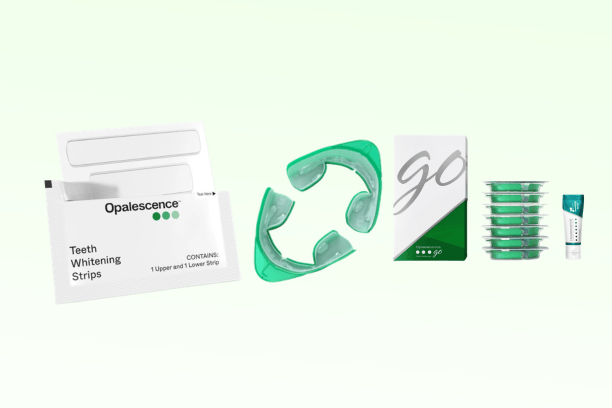
Opalescence is a teeth-whitening brand that offers a variety of products that could improve the appearance of stained or discolored teeth. Its portfolio includes professional whitening options, take-home whitening systems, prefilled whitening trays, and oral care products intended to support a brighter smile. The brand claims that its offerings address stains associated with coffee, tea, wine, tobacco use, and natural aging.
In this review, we will take a closer look at the brand’s product offerings, whitening options, and brand approach. We’ll also examine potential advantages, limitations, and customer feedback to provide a balanced overview of what you can expect before deciding whether the brand is the right fit for your teeth-whitening needs.
About Opalescence
Opalescence is developed by Ultradent Products, a dental company founded by dentist Dr. Dan Fischer. Established in 1990, the brand specializes in professional and at-home whitening options that may help address tooth discoloration, staining, and smile-brightening goals.
As per the official website, the brand primarily operates within the teeth-whitening and whitening maintenance category. It offers products that can be used both independently at home and under the supervision of a dentist.
Top Offerings
-
Go™
According to the official website, Opalescence Go™ uses 10% hydrogen peroxide as its primary whitening ingredient. The product is delivered through prefilled UltraFit™ trays that are designed to adapt to different tooth shapes and can be used by people with braces or other orthodontic appliances. The formula also contains potassium nitrate, which may help reduce temporary tooth sensitivity. It works by helping calm nerve activity within the tooth, which can make the whitening process more comfortable. PVP (polyvinylpyrrolidone) is included as a film-forming and stabilizing ingredient. It helps the whitening gel remain evenly distributed across the tooth surface, allowing the active ingredients to maintain contact with the enamel for a longer period.
-
Whitening Gel Refills
Whitening Gel Refills are designed for use with a dentist-provided custom tray. The product is available in multiple carbamide peroxide concentrations, including 10%, 15%, 20%, and 35%, allowing you and dental professionals to choose an option based on whitening goals, wear time preferences, and individual sensitivity considerations.
The primary active ingredient in these refills is carbamide peroxide, which gradually breaks down into hydrogen peroxide and urea when it comes into contact with saliva. Hydrogen peroxide serves as the whitening component, releasing oxygen molecules that move through the enamel and underlying dentin to interact with stain molecules. These oxygen molecules help break apart the chemical bonds that make stains visible, which may result in a lighter tooth appearance over time.
-
Whitening Strips
As per the official website, Whitening Strips are applied directly to the teeth and are intended to provide a close fit that remains in place during use. These stripes come in a package of 12 procedures, with a recommended wear time of approximately 30 minutes per day.
The whitening action comes from peroxide-based whitening agents used within the strip system. These ingredients release oxygen molecules that move into the outer layers of the teeth and interact with stain compounds. They also combine acrylates copolymer, which helps the strips adhere securely to the teeth. It creates a flexible layer that keeps the whitening gel in contact with the tooth surface throughout the procedure period.
Sodium Saccharin is included as a non-sugar sweetening agent that helps improve the taste of the whitening strips. Disodium EDTA in these strips helps maintain product consistency by binding certain metal ions that could otherwise interfere with the stability of the whitening ingredients.
-
Whitening Toothpaste
Whitening Toothpaste is a line of daily oral-care products that combines cavity protection with whitening support. The range includes Complete Whitening Toothpaste, Original Whitening Toothpaste, and Sensitivity Relief Whitening Toothpaste. These formulations remove surface stains that can develop from foods, drinks, and everyday habits while supporting tooth and gum health through the use of fluoride-based ingredients.
Complete Whitening Toothpaste in this range contains 0.454% stannous fluoride, which provides fluoride ions that help strengthen enamel by supporting the remineralization process. It also offers additional benefits beyond cavity protection by helping reduce bacterial activity in the mouth, which may contribute to healthier gums and lower plaque accumulation over time.
The formula also contains glycerin, which helps maintain a smooth texture and prevents the product from drying out. The range also features Original Whitening Toothpaste, which contains 0.24% sodium fluoride that may help prevent cavities and strengthen enamel.
-
Whitening Mouthwash
Whitening Mouthwash is designed to complement regular brushing and flossing while helping manage surface stains on the teeth. The alcohol-free formula is intended for routine use and features a Cool Mint flavor that can help leave the mouth feeling clean and refreshed after rinsing.
As per the official website, the mouthwash contains xylitol, which does not contribute to the acid production that can weaken enamel and promote tooth decay. It may also help support a healthier oral environment by reducing the ability of certain bacteria to adhere to tooth surfaces, making it a useful addition to daily mouth-care products.
The makers also added sorbitol to this formula, which might help maintain product consistency while improving taste. Sorbitol also helps retain moisture within the formulation, contributing to a more comfortable rinsing experience without adding fermentable sugars that could encourage bacterial growth.
Opalescence Advantages
-
Established Dental Heritage
Opalescence has focused on professional teeth whitening since entering the market in 1990, making whitening a core part of the brand. Its long-standing specialization has allowed the company to build extensive experience in whitening product development and professional dental adoption. The brand also emphasizes clinical research as a key part of its positioning. It states that it is one of the most studied and tested professional whitening brands and reports having more published clinical research than competing professional whitening systems.
This experience may provide greater confidence when choosing a whitening system. A brand that has focused on professional whitening for more than 35+ years has accumulated decades of research, product development, and real-world use, which may offer more reassurance than newer brands with a shorter track record.
-
At-Home and In-Office Options
Opalescence product lineup serves different whitening preferences while maintaining a strong presence across both professional and consumer channels. For professional support, it offers Pro (formerly known as Boost). Dentists administer this in-office whitening system during scheduled appointments. It uses 40% hydrogen peroxide and can deliver visible whitening in as few as two or three 20-minute sessions. It supports professional whitening services within dental practices.
The brand’s portfolio includes Custom (formerly known as PF) whitening gel in multiple strengths, Go prefilled whitening trays, whitening kits, and gel refills. These products give you flexibility in how you approach whitening and allow you to continue outside the dental office. The added flexibility makes it easier to find a whitening option that matches your goals and lifestyle.
Opalescence Limitation
-
Dependence on Shade-Based Expectations
Opalescence is designed to improve tooth shade through professional whitening, making visible whitening results the primary benefit of its products. However, the level of improvement that you achieve can vary considerably based on starting tooth color, the type and severity of staining, consistency, lifestyle habits, and dental condition. It becomes more noticeable with dental restorations such as crowns, veneers, bridges, or fillings, as these materials do not respond to whitening components in the same way as natural teeth. Similarly, certain forms of intrinsic discoloration may be more resistant to whitening than surface stains. As outcomes depend on multiple personal factors, shade-based claims can sometimes oversimplify the whitening process. You may focus on achieving a specific shade improvement, only to find that the results fall short due to factors outside the product’s control. It makes the overall whitening experience less predictable than the brand’s shade-focused claim may initially suggest.
Opalescence Alternatives
-
Smile Brilliant
Smile Brilliant functions as a direct-to-consumer dental lab and oral care company with offerings that extend beyond whitening. Its catalog includes custom whitening trays, night guards, sports mouthguards, electric toothbrushes, water flossers, and skincare options. Opalescence maintains a narrower focus centered on teeth whitening, with products that include whitening strips, prefilled whitening trays, whitening gel refills, and professional whitening systems used in dental offices.
The brands also differ in how whitening formulas are delivered. Smile Brilliant’s whitening systems are built around custom-fitted trays created from impressions submitted by users. These trays are a central part of the brand’s product lineup and are also used across other categories such as night guards and sports guards. Whitening options are paired with professional-strength whitening gels, and the company also offers desensitizing gel refills intended for remineralization and sensitivity management. Opalescence provides several whitening formats, including whitening strips, Opalescence Go™ prefilled trays available in 10% and 15% concentrations, whitening starter kits, and whitening gel refills offered in concentrations ranging from 10% to 35%. Unlike Smile Brilliant’s emphasis on custom fabrication, Opalescence offers both ready-to-use options and products that can be used with dentist-provided custom trays.
The range of oral health concerns addressed by each company also reflects its different priorities. Smile Brilliant offers products for issues such as bad breath, dry mouth, cavity prevention, gum inflammation, enamel protection, microbiome support, and tooth sensitivity. Its cariPRO product line includes oral probiotics, electric toothbrushes, water flossers, and enamel-support products intended to support oral hygiene beyond cosmetic whitening. However, Opalescence focuses more narrowly on stain removal, tooth whitening, and whitening-related sensitivity. Products such as Sensitivity Relief Whitening Toothpaste, lower-concentration whitening gels, and whitening trays designed for sensitive teeth are intended to manage discomfort during the procedure.
Product diversification represents another notable contrast. Smile Brilliant has expanded into categories outside traditional oral care through a research and development partnership with Formulate Labs. It includes skincare products targeting concerns such as visible pores, dark spots, firmness, rosacea, scarring, fine lines, and breakouts. Opalescence has remained largely within the whitening category, adding products such as whitening strips, whitening mouthwash, whitening starter kits, whitening toothpaste, and various gel concentrations.
As per their official website, Smile Brilliant places greater emphasis on customization and category breadth. Meanwhile, Opalescence remains centered on whitening-specific options and professional dental adoption.
-
Snow
Snow and Opalescence both operate in the teeth-whitening category, but their product portfolios are structured differently. As per its official website, Snow extends beyond whitening formulas into a broader oral-care range that includes whitening pens, LED whitening mouthpieces, LED electric toothbrushes, charcoal floss, floss picks, water flossers, toothpaste tablets, and its Purple Collection. However, Opalescence maintains a narrower product range centered on whitening formulas, including whitening strips, prefilled whitening trays, whitening gel refills, whitening toothpaste, and professional in-office whitening products.
The whitening approaches used by the brands differ in both format and focus. Snow combines whitening pens, powders, strips, serums, and LED-assisted whitening systems within a single ecosystem. It also combines color-correcting products through its Purple Collection, which includes Purple Teeth Whitening Powder, Purple Serum, Dissolving Purple Teeth Whitening Strips, and Purple Color Correcting Toothpaste Tablets. These products are positioned separately from traditional whitening products and focus on altering the appearance of tooth color through color-correction technology. It also combines hydroxyapatite and nano-hydroxyapatite into selected products. Meanwhile, Opalescence relies primarily on whitening gels and tray-based systems. Its lineup includes Opalescence Go prefilled trays in 10% and 15% strengths, whitening gel refills available in 10%, 15%, 20%, and 35% concentrations, whitening strips, and professional dental-office whitening options. The brand focuses on varying whitening concentrations and formats.
Sensitivity is addressed differently by the two companies. Snow maintains a dedicated Sensitive category. Hydroxyapatite-containing products are also included within the broader product range. The brand’s presentation of sensitivity is largely tied to consumer experiences and product category segmentation. Opalescence approaches sensitivity through specific formulations and concentration options. Its catalog includes Sensitivity Relief Whitening Toothpaste as well as lower-strength whitening trays and gels intended for less intensive support. The brand’s sensitivity strategy is combined into its whitening system through strength selection.
Technology is a more visible component of Snow’s product lineup. The company offers LED whitening mouthpieces, LED whitening electric toothbrushes with sonic technology, and whitening kits that combine serums with device-based whitening systems. Products such as the Diamond Series Teeth Whitening Kit and Diamond Series Wireless Whitening Kit place electronic devices alongside whitening formulations as part of the process. Snow also offers oral-care hardware such as the AquaJet Pro Water Flosser. Opalescence relies less on consumer devices and focuses primarily on whitening formulations delivered through trays, strips, gels, toothpaste, and mouthwash. Its whitening systems are generally built around the whitening formula itself.
Snow places greater emphasis on product diversity and consumer-directed use, whereas Opalescence places greater emphasis on professional whitening systems and dentist-associated pathways.
Pros
- Focused exclusively on teeth whitening.
- Offers at-home whitening options.
- Provides professional in-office formulas.
- Multiple whitening delivery formats.
Cons
- Users have reported temporary tooth sensitivity from the brand offerings.
- Some users mentioned finding the instructions overwhelming.
How Did We Evaluate?
-
Brand Reputation
To evaluate Opalescence, we considered factors such as brand history, company background, product specialization, and the availability of independent consumer feedback. The brand has operated in the teeth-whitening category for more than 30 years, focusing primarily on whitening products. A long-standing presence within a specialized category can be a useful indicator of industry experience and sustained market relevance.
We also examined the brand’s professional foundation. Opalescence products are manufactured by Ultradent Products, Inc., a dental company founded in 1978 that has served dental professionals for decades. Many of the brand’s flagship whitening systems are distributed through dental practices, reflecting strong connections to the professional dental community.
As part of our evaluation process, we reviewed independent reputation signals and publicly available review sources. As Opalescence is a product line, it does not maintain its own Better Business Bureau (BBB) profile. However, its parent company, Ultradent Products, has an established corporate presence with an A+ rating on BBB. Similarly, while there is no centralized global Trustpilot profile dedicated to Opalescence, consumer feedback can be found across authorized retailers, dental suppliers, and regional distribution platforms that provide access to the brand’s products.
Based on these factors, we observed that the brand appears to be a well-established and highly specialized teeth-whitening brand with decades of industry experience. Its backing by a recognized dental manufacturer, long-standing presence in professional dental settings, and focused product portfolio contribute to its credibility within the whitening category. While independent reviews are spread across multiple platforms, the brand’s history and professional roots support its reputation as a notable player in the teeth-whitening market.
-
Real User Experiences
We looked at a combination of verified customer feedback on Amazon to analyze user experiences of Opalescence. Its Go 15% Prefilled Teeth Whitening Trays Kit holds a 4.4-star rating based on more than 10,800 reviews. Many users reported visible whitening within a few applications, particularly for stains caused by coffee, wine, and everyday food and beverage consumption. Customers frequently praised the prefilled tray design, describing it as easier to use and more secure than whitening strips. Several users also noted that the results were comparable to professional whitening options, and some mentioned receiving recommendations from dental professionals. However, we also considered recurring criticisms, including temporary tooth sensitivity, the relatively high price point, and occasional complaints regarding tray fit or gel distribution.
We also reviewed feedback for the Whitening Toothpaste, which maintains a 4.6-star rating based on more than 18,300 reviews. Users commonly reported gradual improvements in tooth brightness after several weeks of consistent use, along with positive feedback regarding the mint flavor, clean-feeling finish, and gentle formulation. Many customers appreciated that the toothpaste did not cause significant sensitivity. However, some users questioned the extent of its whitening effects and felt the results were less noticeable than expected, especially when compared to dedicated whitening options.
Based on the information reviewed, the brand appears to be a well-established whitening-focused brand that is generally successful at delivering the results consumers expect. Customer feedback suggests that its products are particularly valued for their effectiveness, convenience, and professional reputation. While the brand’s premium pricing and occasional reports of sensitivity may not appeal to every buyer, the consistently high ratings across products and the large volume of positive reviews indicate that many users view it as a reliable option for at-home teeth whitening and whitening maintenance.
Based on our perspective, we believe the brand has established enough credibility, product consistency, and consumer trust to be considered a serious player in at-home whitening. However, we do not see evidence that the brand is redefining the category or offering a substantially different whitening approach from the broader market. Instead, its value appears to come from refining and professionalizing a familiar product category, making it a brand that succeeds more through execution and reputation than through innovation alone.
Conclusion
Opalescence claims to provide professionally developed whitening options with varying application methods, durations, and whitening strengths. Its whitening approach is based on peroxide ingredients, which are widely used in clinical and consumer whitening products and have been studied for their ability to lighten tooth stains. However, whitening results can vary depending on factors such as the cause of discoloration, tooth characteristics, and procedure adherence.
If you are considering Opalescence, it is important to recognize that whitening outcomes are often measured by visible shade improvement, which may not align with your expectations. Certain forms of discoloration, including staining linked to medications, trauma, or underlying dental conditions, may respond differently than surface stains.
Existing dental restorations, such as crowns, veneers, bonding, and fillings, generally do not whiten alongside natural teeth, which can create uneven shade matching after the procedure. The brand offers a focused whitening portfolio supported by a professional background, but its reliance on visible cosmetic improvement means that outcomes can vary substantially from one user to another.

Rachel has been a freelance medical writer for more than 18 years. She graduated from the University of Tennessee at Knoxville in 2005 and is currently practicing as a Certified Registered Nurse Anesthetist at a Level I trauma center.
Leave a Reply