

No products in the cart.
Contents
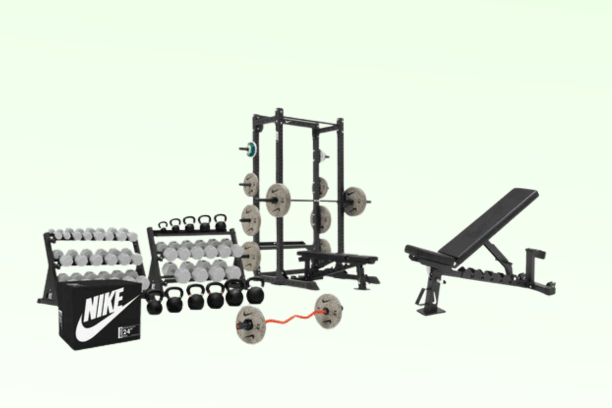
Nike Strength offers gear for building and outfitting home and commercial gyms. Its equipment can be used for strength training, resistance workouts, muscle building, conditioning, and general fitness.
The brand states that its range is designed to support different training environments and strength-training needs. Its product range includes dumbbells, kettlebells, barbells, and training accessories.
In this review, we will examine what the brand offers, its advantages and limitations, and how it compares with other strength-training equipment brands. We will also evaluate its brand reputation to provide a clearer view of its position in the market.
About Nike Strength
Nike Strength is a fitness equipment brand that offers core strength equipment, along with hybrid conditioning equipment, apparel, and complete home-gym setups.
The brand offers multiple options within each equipment category. Its dumbbell range includes adjustable dumbbells, Grind Dumbbells, Strength Pro Dumbbells, and dumbbell sets. Kettlebell options include standard, rubber-coated, OG, and set configurations.
As per the official website, it also covers the equipment needed to build out a gym. Its racks include half racks, squat cages, squat racks, and squat stands, while its bench range includes rolling, flat, and adjustable weight benches.
The brand also offers home-gym bundles and setups, including the Alpha, Victory, and Elite Home Gym Setups, as well as combinations such as adjustable dumbbell and bench bundles and dumbbell rack sets.
Nike Strength Offerings
-
Equipments
Nike Strength offers a wide range of equipment designed to support diverse training needs, from isolated muscle work and compound lifts to conditioning-focused movements.
Equipment category What it offers and how it helps with exercise Dumbbells Standard, Grind, OG, Pro Urethane, and adjustable dumbbells, along with sets. They can be used for presses, rows, curls, lunges, squats, and other upper- and lower-body exercises. Kettlebells Standard, rubber-coated, OG, and kettlebell sets. They support swings, goblet squats, cleans, presses, and loaded carries for dynamic full-body training. Barbells 15 kg and 20 kg barbells, the 1972 Power Bar, Open Trap Bar, Shield Curl Bar, and curl-bar bundles. These support compound movements such as squats, deadlifts, presses, and rows. Plates Grind Bumper Plates, Change Plates, Rubber Bumper Plates, Pro Urethane Bumper Plates, and Pro Urethane Grip Plates. They provide adjustable resistance for exercises such as squats, deadlifts, presses, and other loaded movements. Racks Half Rack, Squat Cage, Squat Rack, Squat Stand, and rack attachments. They provide a stable setup for exercises such as squats and barbell presses while supporting rack-based training. Benches Rolling, Flat, and Adjustable Weight Benches. They provide support for bench presses, dumbbell presses, rows, and seated exercises, with adjustable models offering different training positions. Storage Dumbbell trees, storage racks, kettlebell and dumbbell racks, Pro Urethane Dumbbell Racks, plate trees, and rack shelves. Accessories Landmine, Barbell Collars, Premium J-Cups, Spotter Arms, Dip Station, and lifting and athletic tape. Hybrid Conditioning Sandbags, Weight Sleds, Soft Plyo Boxes, and a Hybrid Conditioning Set alongside dumbbells and kettlebells. Strength Pro Pro Urethane Dumbbells, Grip and Bumper Plates, a Pro Half Rack, Spotter Arms, and a Single Barbell Holder. -
Apparel
The apparel range features Dri-FIT tees, hoodies, crewnecks, and hats, with dedicated men’s and women’s collections as well as unisex styles. The currently available options include the Strength Men’s Tee and Strength Unisex Hoodie.
The Strength Men’s Tee is part of the brand’s Dri-FIT tee collection and offers a lightweight option for training and everyday wear. Its Unisex Hoodie adds a warmer layering option to the apparel range. Its unisex design gives the collection a more versatile clothing option that could be worn for training, warm-ups, or casual use.
Nike Strength Advantages
-
Comprehensive Strength Equipment Portfolio
Nike Strength offers a broad range of strength equipment, extending beyond individual free weights to include the main components of a training setup. Its range includes dumbbells and kettlebells, as well as barbells, bumper plates, benches, racks, storage, and conditioning equipment. Covering these categories allows the brand to support different forms of resistance and strength training while also providing the equipment needed to organize and develop a training space. Such breadth can make it easier to build a more complete training setup and expand it as exercise needs change. Keeping major equipment categories within the same brand can also simplify putting together a cohesive setup without having to source every key piece from different brands.
-
Training Versatility Framework
Nike Strength covers several resistance formats across its equipment range, including fixed dumbbells, the Adjustable Dumbbell, 15 kg and 20 kg barbells, the 1972 Power Bar, Open Trap Bar, and Shield Curl Bar. Its plate selection includes bumper plates, change plates, and Pro Urethane plates, giving you different ways to load and use the equipment across strength exercises.
You can use lighter dumbbells for some movements, increase resistance with adjustable or fixed weights, and choose specialized bars for exercises that require a different setup. The combination of adjustable equipment and multiple bar and plate types also gives you more ways to build a training setup around the exercises you actually perform. You have more equipment options for adjusting resistance and selecting exercises as your training develops.
Nike Strength Limitation
-
Limited Manufacturing Track Record
Nike Strength is operated by Dimension 6 Fitness Corporation, which has a relatively limited track record in strength-equipment manufacturing. This leaves you with less historical data to assess how equipments perform across practical metrics such as frame stability, weld integrity, load-bearing performance, barbell sleeve tolerances, knurling consistency, rubber durability, and finish resistance.
The shorter track record also means there is less multi-year evidence on how these components perform under repeated loading, exposure to chalk and sweat, structural friction, frequent adjustments, and commercial-level use. Established equipment manufacturers can draw on longer production histories and field-use data to identify recurring issues and refine designs, whereas Dimension 6 has had less time to establish a comparable depth of real-world performance data. You have fewer long-term data points to judge how consistently the equipment maintains tolerances, finish, and structural performance under extended heavy use.
Nike Strength Alternatives
-
Rogue Fitness
Rogue Fitness has a broader equipment range than Nike Strength, covering strength equipment, weightlifting bars and plates, rigs and racks, conditioning, bodyweight, and gymnastics. Other options also include CrossFit® equipment, mobility and rehab, apparel, nutrition and supplements, programming, facility outfitting, storage, and replacement parts. In comparison, Nike Strength has a narrower category structure covering dumbbells, kettlebells, barbells and plates, benches and racks, hybrid conditioning, apparel, Grind, and the Strength Pro range.
Rogue Fitness has greater depth in racks, rigs, and squat systems. Its catalog includes S-Series Squat Stands, R-Series Power Racks, Monster and Monster Lite systems, half racks, wall-mounted racks, rack attachments, and specialty equipment. Examples include the RML-490 Power Rack 3.0, RM-3 Monster Rack 2.0, RM-6 Monster Rack 2.0, and SML-2C Squat Stand. Meanwhile, Nike Strength offers Half Racks, Squat Cages, Squat Racks, Squat Stands, Rack Attachments, Premium J-Cups, Spotter Arms, and a Pro Half Rack. The range covers the main rack configurations but does not show the same number of specialized rack systems listed by Rogue.
Rogue Fitness has more equipment dedicated to specific training disciplines. Its categories include CrossFit® Equipment, Strongman, Bodyweight & Gymnastics, and Iron Game Programming. Its CrossFit® catalog includes the Rogue Echo Bike V3.0, Rogue Echo Rower, Rogue Echo SKI, Rogue Gymnastic Wood Rings, and various bumper plates and speed ropes. Nike Strength does not list separate CrossFit®, strongman, or gymnastics categories. Its Hybrid Conditioning section instead includes dumbbells, kettlebells, sandbags, a weight sled, Nike Soft Plyo Box, and Hybrid Conditioning Set.
Rogue Fitness offers more variety within individual strength categories. Its dumbbell range includes Rogue Dumbbells, Urethane Dumbbells, Loadable Dumbbells, Dumbbell Sets, and PowerBlock products. Its barbell selection includes The Ohio Bar – Cerakote, The Ohio Bar – Stainless Steel, The Rogue Bar 2.0, Curl Bars, and C-Series bars. The brand’s plate range includes competition plates, bumper plates, Olympic plates, change plates, Hi-Temp Bumper Plates, and US-MIL Spec Bumpers. In comparison, Nike Strength covers the same main categories through products such as Adjustable Dumbbells, Grind Dumbbells, Dumbbell OG, Strength Pro Dumbbells, and Pro Urethane Bumper and Grip Plates. According to their official websites, Rogue Fitness appears to be a broader, more specialized equipment brand, while Nike Strength has a more focused strength-training catalog.
-
Rep Fitness
Rep Fitness has a broader equipment ecosystem that includes racks and rigs, cardio, benches, bars and weights, cable machines, accessories, apparel, nutrition, and deals. Its strength catalog ranges from basic equipment such as kettlebells, Hex Dumbbells, and Old School Iron Plates to more specialized products such as PR-1100.
The brand also extends into dedicated cardio equipment, including the Strive Curved Treadmill, Strive Air Bike, Concept2 RowErg, Concept2 SkiErg, Concept2 BikeErg, and STEPR Stair Climber. In comparison, Nike Strength covers many of the same core strength categories, including dumbbells, kettlebells, barbells and plates, benches, and home-gym bundles. Its lineup includes the Adjustable Dumbbell, Grind Dumbbell, 1972 Power Bar, and Soft Plyo Box. Nike Strength does not include a dedicated cardio machine category, with conditioning instead centered on sandbags, weight sleds, soft plyo boxes, and a Hybrid Conditioning Set.
Rep Fitness uses a tiered rack structure that includes the PR-1100, PR-4000, and PR-5000, with its guidance directing you to compare rack height, depth, hole spacing, steel size, and attachment expandability. Its PR-1100 is positioned as a budget option, the PR-4000 as a mid-tier option, and the PR-5000 as a heavy-duty option. The brand’s catalog also includes separate components, including PR-5000 Crossmembers, PR-4000 Crossmembers, Standard J-Cups, Flat Sandwich J-Cups 2.0, and a Rear Base Stabilizer 2.0. Nike Strength offers Half Rack, Squat Cage, Squat Rack, Squat Stand, rack attachments, and a Pro Half Rack, but the range is less tiered than Rep’s PR system. The brand also places more of its gym-building options into complete packages, including the Alpha Home Gym Setup, Victory Home Gym Setup, Elite Home Gym Setup, and Adjustable Dumbbell & Bench Bundle.
Cardio is one of the clearest differences between the two brands. Rep Fitness has a dedicated cardio category with the Strive Curved Treadmill, Strive Air Bike featuring VPR, Concept2 RowErg, and STEPR Stair Climber. These machines come with different applications, including running mechanics and sprinting on the curved treadmill, upper-body emphasis on the SkiErg, and leg-focused climbing on the STEPR. The equipment also includes features such as PM5 monitors, Bluetooth connectivity, LCD consoles, and ANT+ compatibility. Meanwhile, Nike Strength’s supplied catalog does not show dedicated treadmills, bikes, rowers, SkiErgs, or stair climbers. Its conditioning range instead focuses on equipment such as sleds, sandbags, plyo boxes, dumbbells, and kettlebells, giving Rep a much wider machine-based cardio offering.
The pricing structures also show different purchasing approaches. Rep Fitness ranges from entry-level individual products, such as $15.99 kg kettlebells, $22.50 Old School Iron Plates, to mid-range equipment, such as the $269.99 AB-3100 Bench. Meanwhile, Nike Strength ranges from the $11 Dumbbell OG and $19 Grind Dumbbell to the $899 Adjustable Dumbbells. REP Fitness features a more expansive and modular catalog of the two, particularly in specialty bars, rack components, plate formats, dedicated cardio machines, and individual accessories. Nike Strength covers the main strength-training categories but differentiates its range through branded collections, Grind products, and the Strength Pro line.
Pros
- Broad strength equipment selection.
- Dedicated home gym bundles.
- Offers multiple dumbbell options available.
- Provides a hybrid conditioning equipment range.
Cons
- Complete gym setups require significant investment.
- Product range centers heavily on strength.
- Equipment prices can be substantial.
How Did We Evaluate?
-
Brand Reputation
We examined Nike Strength based on its brand age, history, parent company background, and independent customer feedback. While Nike is an established global sports brand, Nike Strength is a newer strength-focused extension managed in partnership with Dimension 6 Fitness. It covers heavy equipment, apparel, and gym-building products, giving it a much shorter standalone track record.
Public platforms such as Trustpilot, BBB, and Yelp currently provide very limited data on the brand. There is no centralized, high-volume consumer review profile specifically covering its equipment. Yelp results primarily relate to its physical retail locations or regional Training Studios. This fragmented third-party footprint limits a comprehensive understanding of customer satisfaction, delivery complaints, and long-term service quality.
As per our observation, the brand benefits from Nike’s recognition and established background, but has a relatively short standalone history and limited US-specific third-party review data. Its long-term customer satisfaction and service logistics remain difficult to independently verify at scale due to the limited consumer review data.
-
Real User Experiences
We evaluated Nike Strength by examining the specific experiences and concerns shared by Reddit users in discussions about its adjustable dumbbells, Grind dumbbells, and kettlebells. Product design and handling were among the features praised in the feedback, particularly for the Grind range. One user shared that the Grind dumbbell has a premium feel and that its rubberized coating does not have a strong smell.
Price was a recurring concern in the Reddit discussions. One user felt the 65-pound maximum was too low for the price, making cost an important consideration for users comparing the brand with other adjustable dumbbell options.
We also evaluated the adjustable dumbbells based on their weight capacity and adjustment mechanism. One user considered the 65-pound maximum insufficient for their needs, adding that even an 80-pound adjustable dumbbell could be limiting for some training programs.
Durability was therefore another important part of the evaluation. The Reddit discussion does not provide sufficient evidence of long-term ownership to conclude that the brand’s adjustable dumbbells have a durability problem. One customer shared that he noticed that the adjustable dumbbells have more wear and tear and are vulnerable when dropped.
Based on these discussions, the brand appears to be a premium fitness equipment brand, with stronger customer sentiment toward its fixed Grind weights than its adjustable dumbbells. It appears well regarded for design and physical user experience, but its higher price and comparatively limited ownership track record make value and longevity important considerations.
Conclusion
Nike Strength features a strength-focused equipment ecosystem that supports resistance training across a range of exercises and training environments. Its range is supported by product-specific specifications, weight tolerances, durability testing, and quality controls.
However, its relatively short history as a standalone heavy-equipment operation leaves less long-term evidence for assessing durability and performance, while independent customer feedback remains limited. Safe setup and equipment handling also matter across a range that includes adjustable components, collars, J-cups, spotter arms, rack attachments, and adjustable benches.
Adjustable dumbbells deserve particular attention because repeated drops or impact can place additional stress on their adjustment and locking mechanisms. Checking welds, handles, fasteners, padding, and adjustment points for unusual wear, while staying within stated weight and use conditions, remains important when you are building and using a strength-training setup.

Rachel has been a freelance medical writer for more than 18 years. She graduated from the University of Tennessee at Knoxville in 2005 and is currently practicing as a Certified Registered Nurse Anesthetist at a Level I trauma center.
Leave a Reply