

No products in the cart.
Contents
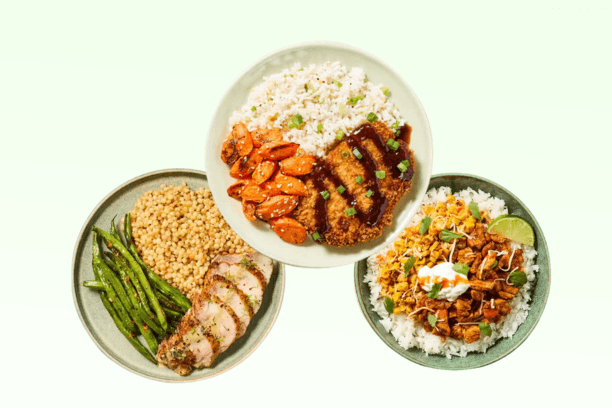
HelloFresh is a meal kit delivery service focused on making home cooking more convenient and structured for you if you want to handle every part of meal planning yourself.
The brand provides pre-portioned ingredients along with guided recipe cards, helping reduce the time spent deciding what to cook, shopping for ingredients, and preparing meals from scratch. It highlights a weekly rotating menu that includes a broad mix of family-friendly recipes, vegetarian meals, calorie-smart dishes, quick-prep options, and protein-focused selections.
In this review, we will take a closer look at HelloFresh’s offerings, subscription structure, menu variety, and customer experience. We will also explore the brand’s advantages, potential limitations, and consumer feedback to help you understand where the service may fit into your routine.
About Hello Fresh
As per the official website, HelloFresh mainly operates in the meal kit category, but its offerings extend beyond standard dinner boxes. The company highlights more than 100 weekly menus and market options, giving you access to changing recipes instead of fixed meal plans. It also operates the HelloFresh Market, where you can add breakfast options, snacks, desserts, sides, and seasonal convenience foods to weekly deliveries.
According to the makers, its pre-measured ingredients minimize excess leftovers, while recyclable packaging and carbon-offset delivery initiatives support the company’s sustainability messaging. The brand also provides a mobile app that lets you manage deliveries, customize meal selections, and edit subscriptions directly from your phone.
Top Offering
-
Meal Plans
HelloFresh offers multiple meal plans designed around different dietary preferences, household sizes, and cooking routines. Its options include Meat & Veggies, Veggie, Family Friendly, Quick & Easy, Pescatarian, Fit & Wholesome, Carb Smart, Calorie Smart, Mediterranean-inspired meals, and Ready-Made Meals that can be heated in minutes. You can select meals for 2 to 6 people, while singles can use two-serving recipes for leftovers or additional meals. Mediterranean-inspired meals focus on vegetables, lean proteins, olive oil, and beans, which are commonly linked to balanced eating habits and better heart health. Its Pescatarian meal plans combine seafood with vegetables and plant-based ingredients, which may help support balanced nutrition and omega-3 intake.
HelloFresh structures its meal plans around flexibility and customization. You can change recipes weekly, adjust serving sizes, modify delivery dates, skip weeks, pause deliveries, or cancel subscriptions before the cutoff window. The meal plans are built to simplify meal preparation through pre-measured ingredients, recipe cards, and nutritional information included in each delivery. Many recipes are designed for preparation in around 30 minutes or less, while Quick & Easy meals focus on shorter cook times.
Hello Fresh Advantages
-
Data‑Driven Operations Model
HelloFresh uses customer preference data to identify which recipes perform best across cuisines, dietary categories, cooking styles, and seasonal trends. This helps optimize weekly menus, rotate recipes, and adjust varieties based on actual demand.
The brand also applies data systems to inventory forecasting and supply-chain coordination. Customer selections help predict ingredient demand, manage purchasing volumes, reduce food waste, and improve fulfillment efficiency across sourcing, packaging, and delivery operations. This structure supports large-scale weekly meal kit production while balancing freshness and operational efficiency.
The company further uses customer-choice data to support personalization and menu customization. Meal preferences, recipe selections, serving sizes, and subscription behavior help shape menu organization and operational planning across different customer groups and regions.
This leads to an extensive selection of popular meals, better availability of in-demand recipes, fewer ingredient-related disruptions, and recommendations that become more relevant to your preferences over time. The company’s forecasting systems can also help support reliable deliveries and reduce food waste throughout the fulfillment process, which may contribute to fresher ingredients and a more consistent overall experience.
-
Multi‑Brand Portfolio Expansion
HelloFresh has expanded beyond its core meal-kit business through a portfolio of brands that serve different customer needs, budgets, and convenience preferences. The group’s portfolio includes meal-kit brands such as Green Chef, EveryPlate, and Chef’s Plate, along with prepared-meal businesses such as Factor and Youfoodz. In some markets, the company has also expanded into adjacent food categories through Good Chop and The Pets Table.
It covers multiple price points, dietary preferences, and meal occasions. Some brands focus on budget-conscious households, while others target organic ingredients, ready-made meals, or specialized nutrition needs. This allows HelloFresh Group to participate in a broader range of food-subscription categories. You may have access to a broader range of food options with more flexibility. The shared infrastructure may also help support consistent service quality, product availability, and ongoing expansion into new meal and food-service categories.
Hello Fresh Limitation
-
Narrow Support for Highly Restrictive Diets
HelloFresh is primarily designed for mainstream meal variety and convenience. While the platform offers categories such as vegetarian, calorie-smart, and family-friendly meals, it does not provide dedicated meal systems for strict keto, paleo, autoimmune, diabetic-friendly, gluten-free, or advanced vegan diets.
Many recipes include ingredients such as breads, tortillas, rice, pasta, dairy products, sauces, and other standard meal components that may not align with tightly controlled eating plans. As a result, you may need to review ingredient lists carefully, filter through weekly menus, and modify recipes yourself to fit your dietary requirements.
The platform’s filtering tools can help narrow meal choices, but they do not function as a comprehensive diet-management system with advanced ingredient exclusions, automatic substitutions, or medically structured meal plans. As menus rotate weekly and ingredients can vary, maintaining consistent dietary compliance may require ongoing attention.
If you follow a highly restrictive diet, you may spend more time evaluating recipes, checking ingredients, and making substitutions than you would with a service specifically designed for your nutritional needs. This can make meal selection less convenient and may reduce confidence that every available option will consistently fit your long-term dietary requirements.
Hello Fresh Alternatives
-
Home Chef
Home Chef organizes its platform around different cooking lifestyles and preparation preferences. The service includes traditional meal kits alongside Express meals, Oven-Ready meals, Heat & Eat options, Culinary Collection recipes, and Family Plan meals. Its menu structure is heavily convenience-oriented, with categories specifically designed around cooking speed and preparation effort. Its Express meals are designed for preparation in under 30 minutes, and Heat & Eat meals are designed for microwave preparation in under five minutes. HelloFresh, in comparison, structures its platform around recipe discovery and menu rotation. The brand highlights more than 100 weekly recipes across categories such as 20 Min or Less, Low-Lift Dinner, Build-a-Plate, Sizzle & Drizzle, and Test Kitchen meals. The emphasis is less on partially prepared formats and more on offering a broad range of meal styles and cuisines through rotating weekly menus.
Customization is more central to Home Chef’s structure. Its Customize It tool feature allows you to swap proteins, upgrade ingredients, and adjust meals across multiple menu categories. Recipes such as Rosemary Chicken and Rich Gnocchi, Beef Burger with Caramelized Pineapple, and Bistec Sandwich include optional protein modifications and premium upgrades. The service also extends through protein packs, customizable Family meals, and add-on proteins, including sirloin steaks, salmon fillets, shrimp, diced chicken breast, and ground turkey. Meanwhile, HelloFresh also offers some flexibility through protein swaps and adjustable portions, but the experience remains more recipe-driven than customization-focused. Its menus prioritize chef-curated combinations and rotating dishes.
The level of cooking involvement differs noticeably between the two brands. Home Chef repeatedly emphasizes simplified preparation and reduced cleanup through pre-chopped ingredients, oven-ready trays, microwave-ready meals, and shorter preparation times. Several meals are positioned around minimal effort, designed for preparation in 15–20 minutes or less. However, HelloFresh still focuses on convenience, but the service generally requires more active preparation and assembly. Meals such as Walnut-Crusted Salmon with Creamy Lemon Sauce, Turkish-Spiced Chicken with Apricots, and Chicken Tikka Masala with Rice involve more ingredient preparation, sauce assembly, and step-based cooking.
The nutritional structure of the services also reflects different priorities. Home Chef categorizes meals using labels such as Calorie-Conscious, Carb-Conscious, Keto-Friendly, Protein-Packed, Fiber-Rich, Vegetarian, Mediterranean, Gluten-Smart, and GLP-1-Friendly. Its Fresh Start category specifically groups meals around calorie-conscious and balanced-eating preferences, while nutritional labels are displayed directly within the menu structure. In comparison, HelloFresh also promotes balanced eating, but presents it through broader meal categories, including Calorie Smart, Protein Smart, veggie-packed meals, pescatarian plans, Mediterranean-style recipes, and plant-based dishes. The service also references customer survey statistics related to healthier eating habits and meal-planning convenience.
As per their official website, Home Chef is structured around convenience, customizable meal formats, lower-effort preparation, and partially prepared meal options. HelloFresh focuses more on large-scale recipe variety and structured home cooking through step-based recipes and broader cuisine exploration.
-
EveryPlate
EveryPlate and HelloFresh both work in the meal-kit delivery category, but the two brands approach pricing, menu structure, customization, and cooking experience differently.
As per its official website, EveryPlate offers around 35 to 36 weekly recipes with categories such as Smart & Fit, Meat & Veggie, Family Faves, Veggie, Quick & Easy, Premium, and Top Rated. Its meals lean toward familiar comfort-style dinners and accessible weeknight cooking, including dishes like Cheeseburger Crunchy Wraps, Philly Cheesesteak Baked Pasta, and Broccoli Cheddar Soup with Tortelloni. Even recipes labeled Bold New Flavors or Smart Swap still rely on relatively familiar ingredient combinations and simplified preparation methods. In comparison, HelloFresh operates on a larger menu scale with more than 100 rotating recipes and a wider culinary variety. Its menu includes globally influenced meals such as Turkish-Spiced Chicken with Apricots, Gambian-Style Spiced Peanut Stew, and Walnut-Crusted Salmon with Creamy Lemon Sauce. The brand also includes specialized formats like Build-A-Plate meals, Test Kitchen recipes, Prep & Bake dishes, Low-Lift Dinners, and air fryer recipes, creating a wider range of cooking styles and meal formats than EveryPlate.
The brands also differ in how they approach meal preparation and recipe complexity. EveryPlate emphasizes shorter prep times, simplified cooking, and lower-effort dinner preparation. It highlights features such as 15-minute meals, Quick Prep recipes, Easy Cleanup meals, and straightforward 6-step instructions. Meals such as Tangy Pulled Pork Quesadillas, Quick Greek Chicken Lettuce Wraps, and Sweet & Crunchy Wonton Chicken Bowls are structured around faster preparation and familiar cooking techniques. Meanwhile, HelloFresh still prioritizes convenience, but many of its recipes involve more layered preparation styles, sauces, marinades, garnishes, and globally influenced seasoning combinations. Its dishes, such as Prosciutto-Wrapped Herb-Stuffed Chicken and Walnut-Crusted Salmon with Creamy Lemon Sauce, reflect a more restaurant-inspired approach with broader ingredient variation and more detailed assembly.
The ingredient ecosystem and add-on structure also reflect different priorities. EveryPlate offers add-ons centered around proteins like chicken breast and shrimp, alongside vegetables, cheeses, soups, salads, breads, pasta, tortillas, and desserts. The structure remains closely tied to affordable home-cooking essentials. However, HelloFresh expands beyond standard meal kits through additional services like HelloFresh Market, ready-made meals, breakfast options, and more specialized recipe categories. Its menu includes advanced recipe formats, customizable meal combinations, protein-focused meals, taco bars, sandwich bars, ramen dishes, grain bowls, and more experimental recipe collections.
According to their official website, EveryPlate focuses more on streamlined value-oriented meal planning, whereas HelloFresh emphasizes menu scale, culinary variety, and expanded personalization.
Pros
- 100+ weekly recipes available.
- Multiple dietary plans offered.
- Family-friendly meal selections available.
- Offers step-by-step recipe guidance.
Cons
- Missing ingredients are reported occasionally in independent reviews.
- Users reported that the quality varies between deliveries.
How Did We Evaluate?
-
Brand Credibility
To evaluate HelloFresh, we looked at the brand’s operating history, customer complaint patterns, BBB profile, public customer reviews, and subscription practices. The brand currently holds an A+ rating. However, the customer sentiment is much less favorable. The average customer review score is 1.09 out of 5 stars, which is based on hundreds of reviews, along with several complaints filed in the last three years.
A major part of our evaluation focused on the repeated subscription and billing complaints found throughout the reviews. Multiple customers reported being charged after browsing promotional offers, reactivating old accounts, or attempting to cancel subscriptions. Several users claimed they received meal boxes they did not intentionally order, while others said skipped deliveries were still processed and billed. Some customers also described difficulty canceling orders once the system marked them as processing, even when deliveries had not yet shipped.
Several complaints referenced missing ingredients, delayed shipments, warm deliveries, thawed frozen food, or meal substitutions that did not match dietary needs. In a few cases, customers claimed the replacements included foods they could not eat due to allergies or restrictions. Others expressed frustration that meal selections and pricing were difficult to review before entering payment information. Meanwhile, many users described receiving inconsistent explanations from different representatives, generic responses, or limited flexibility when trying to resolve account issues.
Based on our evaluation, HelloFresh clearly understands convenience, packaging, and subscription-driven retention, but operational efficiency sometimes appears to take priority over customer confidence and flexibility. Our impression is that it operates like a mature high-volume subscription business with strong market presence, but the consumer experience still appears uneven in areas where trust, transparency, and long-term customer satisfaction matter most.
-
Real User Experiences
To analyze HelloFresh, we examined customer sentiment from 89,000+ Trustpilot reviews, where the brand currently holds a 3.4 rating. Many customers described the recipes as easy to follow, beginner-friendly, and flavorful enough to keep weekly meals interesting. The pre-portioned ingredients and rotating menu variety were consistently highlighted as major advantages, especially for busy households, couples, and people trying to cook more frequently at home. Several users also mentioned that the service helped them experiment with new meals without committing to buying full-sized ingredients they may rarely use again.
However, we noticed repeated complaints surrounding operational consistency. Missing ingredients, incorrect recipe cards, spoiled vegetables, and delayed deliveries appeared throughout the reviews across multiple time periods. While some customers described these issues as occasional inconveniences, others stated that the problems became frequent enough to affect whether the subscription still felt worthwhile.
Delivery and subscription management were another major part of our evaluation. Many customers appreciated the convenience of home delivery, but frustration toward shipping reliability appeared consistently. Customers reported late deliveries, boxes arriving crushed, meals being sent to incorrect addresses, and difficulties canceling subscriptions or avoiding unwanted charges.
Based on these reviews, our view is that the brand clearly succeeds in helping many people cook at home more consistently and with less planning effort. However, it seems to struggle with consistency at scale. It appears to be a useful and practical option, but the expectations around reliability and ingredient consistency should remain moderate.
Conclusion
HelloFresh highlights its long-standing presence in the meal kit category, and its rotating menu system may also help introduce more variety into routine meal planning. However, support for highly restrictive diets also remains narrower, particularly if you require strict dietary customization or allergen-sensitive meal planning.
Nutritional consistency may vary across recipes, as some meals can contain higher sodium levels, calorie-dense sauces, or more processed ingredients, depending on the selection. Packaging waste, recurring subscription management, and fluctuating weekly menu availability are additional considerations commonly associated with meal kit services.
Delivery timing and ingredient freshness may also vary depending on your location, shipping conditions, and seasonal demand. Since recipes rotate frequently, some meals may not remain consistently available for repeat ordering, which can limit predictability if you rely on specific options.
Before subscribing, reviewing ingredient lists, nutrition panels, allergen information, portion sizes, and auto-renewal terms may help you avoid unexpected issues. You may also want to monitor add-on costs, premium meal upgrades, and shipping-related charges that can increase the subscription cost over time. If you follow a medically guided diet, require strict allergen separation, or prefer highly detailed sourcing verification, confirming those standards beforehand may be especially important.

Rachel has been a freelance medical writer for more than 18 years. She graduated from the University of Tennessee at Knoxville in 2005 and is currently practicing as a Certified Registered Nurse Anesthetist at a Level I trauma center.
Leave a Reply