

No products in the cart.
Contents
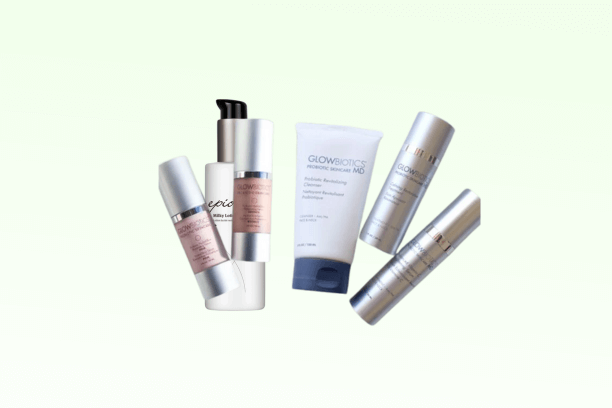
GlowBiotics centers its offerings around the use of topical probiotics and prebiotics to support skin barrier function, clarity, and radiance. The brand’s offerings emphasize gentle cleansing, calming hydration, and gradual skin renewal rather than aggressive exfoliation or stripping actives. Its product lineup includes cleansers, serums, lotions, exfoliating pads, and tinted skincare products intended to integrate into daily routines without excessive layering. However, are the brand’s probiotic-forward offerings safe to include in your daily skincare routine?
This brand review will examine the brand’s formulation philosophy, its probiotic and microbiome-focused approach, and range of offerings. It also explores the associated advantages and potential limitations of the brand.
About GlowBiotics
Founded by Christine Watson and David Watson, Glowbiotics is a skincare brand built around the concept of topical probiotics and microbiome balance. The brand offers formulations designed to address inflammation, barrier disruption, hormonal skin fluctuations, and sensitivity by supporting the skin’s natural microbial ecosystem.
The brand highlights a proprietary component, Probiotic Derived Bioactives (PDBs), which is described as supporting skin barrier integrity, inflammatory signaling, and collagen and elastin support. The brand also highlights the use of patented actives such as glyceryl diretinoate (GDR) in its offerings, alongside lipo-oligopeptides.
Some signature offerings include the Probiotic line, featuring multiple products like the HydraGlow Illuminating Serum, Gentle Probiotic Calming Lotion, Soothing + Revitalizing Eye Cream, Clarifying + Refining Serum, Advanced Vitamin C Brightening Serum, and Probiotic Clarifying Lotion. According to its official website, all offerings are positioned as free from harmful ingredients, such as parabens, phthalates, sulfates, artificial dyes, and mineral oils.
GlowBiotics Bestsellers
-
Probiotic HydraGlow Illuminating Serum
Probiotic HydraGlow Illuminating Serum may support skin hydration with a subtle light-reflecting finish. It contains a probiotic- and antioxidant-based balancing complex, vitamin C from Kakadu plum, beta-glucan, hyaluronic acid, and plant oils such as shea butter and Abyssinian seed oil. As per its official website, the serum is available in three shade options, including pink, bronze, and pearl.
It contains Lactococcus ferment lysate (ProRenew) that interacts with epidermal renewal pathways by signaling keratinocyte turnover. Such effects may help improve surface smoothness over time. The serum also has Indufence (Alisma plantago-aquatica extract) with bioactive peptides that could stimulate innate immune signaling in the skin, helping reinforce barrier defense without triggering inflammation.
Probiotic HydraGlow Illuminating serum also contains ingredients like Superox-C (Terminalia ferdinandiana, Kakadu plum). It may help lower reactive oxygen species generated by UV exposure and pollution. Beta-glucans like SymGlucan could bind to receptors on fibroblasts and immune cells in the skin, supporting collagen synthesis, improving moisture retention, and helping calm stress-related skin responses.
-
Probiotic Revitalizing Cleanser
Probiotic Revitalizing Cleanser could help cleanse the skin surface from impurities such as dirt, makeup, and excess oil without stripping. As per the manufacturers, the cleanser is formulated for use across different skin types, including sensitive and dryness-prone skin.
The cleanser contains Lactobacillus/Saccharomyces-derived probiotic strains, which interact with keratinocytes and immune signaling pathways in the epidermis. Such effects may help suppress inflammatory responses and reinforce the skin’s natural defense mechanisms.
Probiotic Revitalizing Cleanser features Smart Peptide 189 (Myristoyl Nonapeptide-3), which is designed to act as a time-released biomimetic signal. It influences gene expression involved in the enzymatic conversion of retinoid precursors into retinoic acid within the skin. These effects may help support skin smoothness and brightness over time.
The cleanser also contains aloe vera that has polysaccharides to support hydration and reduce inflammatory signaling, supporting immediate comfort after cleansing. Lauric acid and safflower-derived fatty acids may help maintain lipid integrity in the stratum corneum, limiting transepidermal water loss and preserving skin softness.
-
Gentle Probiotic Calming Lotion
Gentle Probiotic Calming Lotion is formulated to support skin comfort, hydration, and barrier resilience across varied skin types, including sensitive and irritation-prone skin. It may help maintain hydration while reinforcing the skin’s natural protective functions, without relying on heavy occlusives or aggressive actives.
The formulation contains phospholipids, such as safflower seed oil, shea butter, and squalene. Such ingredients closely mimic skin-identical lipids found in the stratum corneum. These lipids could help restore lamellar structure between corneocytes, reducing transepidermal water loss and improving skin flexibility without clogging pores. Hyaluronic acid in the formula binds water within the epidermis to support softness, elasticity, and wound-healing processes at the cellular level. Bisabolol and chamomile could influence inflammatory mediators, contributing to reduced visible redness and improved skin comfort.
Gentle Probiotic Calming Lotion includes niacinamide (vitamin B3), which supports multiple skin functions simultaneously by improving barrier protein synthesis, regulating sebum activity, and moderating inflammatory signaling.
-
Advanced Vitamin-C Brightening Serum
Advanced Vitamin-C Brightening Serum may support skin brightness, hydration, and barrier comfort. The formulation combines stabilized vitamin C derivatives, probiotic-derived components, and moisture-binding agents to support a more even-looking tone.
Stabilized vitamin C derivatives gradually convert to active ascorbic acid within the skin, where they interact with keratinocytes and fibroblasts to help limit oxidative stress and support enzymatic processes associated with collagen structure. Magnesium ascorbyl phosphate and ascorbyl glucoside serve as water-soluble, stable vitamin C sources in the formula. They could provide antioxidant support and influence pigment-related pathways through interactions with melanin synthesis.
Advanced Vitamin-C Brightening Serum also has sodium hyaluronate, which could support hydration through water-binding activity. The makers added bearberry leaf extract and hydroxyphenyl propamidobenzoic acid (SymCalmin®), which contribute antioxidant and soothing effects by interacting with oxidative and neurogenic inflammation pathways.
-
Anti-Wrinkle Illuminating Eye Cream
Anti-Wrinkle Illuminating Eye Cream may support hydration, surface smoothness, and visual brightness around the delicate periocular skin. Probiotic-derived fractions in the formula interact with epidermal immune signaling pathways, which may support skin renewal processes and help lower inflammation in thin eye-area skin.
Terminalia ferdinandiana (Kakadu plum) extract in the cream provides a vitamin C–rich antioxidant source, which may support oxidative balance and skin tone signaling. The formulation also contains reflective minerals such as mica, titanium dioxide, and iron oxides. Such minerals could influence light scattering at the skin surface, contributing to immediate visual brightness.
Anti-Wrinkle Illuminating Eye Cream also includes botanical and peptide complexes, including Alisma plantago-aquatica extract, zerumbone, and tapioca starch. These ingredients may support circulation near the eye areas, firmness, and surface smoothing.
-
Clarifying + Refining Serum
Clarifying + Refining Serum is formulated to support pore clarity, oil balance, and surface refinement in acne-prone and congestion-prone skin. The serum combines exfoliating acids, probiotic-derived components, calming agents, and skin-conditioning actives.
Salicylic acid in the formula penetrates pores due to its lipophilic nature, where it disrupts corneocyte buildup and helps clear follicular congestion. Alpha hydroxy acids such as glycolic acid and ammonium lactate could promote desquamation and encourage more uniform cell turnover.
Clarifying + Refining Serum also contains potassium azeloyl diglycinate, which influences sebaceous activity and pigment-related pathways while supporting hydration. It also features myristoyl tetrapeptide-13, which interacts with neurogenic inflammation pathways associated with skin discomfort and redness.
-
Ultimate Youth Restoring Serum
As per the official site, the Ultimate Youth Restoring Serum helps maintain skin structure, surface smoothness, and radiance while minimizing common retinoid-associated discomfort. Biomimetic peptides in the formula interact with cellular signaling mechanisms involved in retinoid metabolism and extracellular matrix production. Such effects may support the skin’s structural density and elasticity.
Magnesium ascorbyl phosphate and vitamin E provide antioxidant support and contribute to collagen-related enzymatic activity, which may support skin firmness and help fade the appearance of wrinkles and fine lines.
Ultimate Youth Restoring Serum also contains ingredients like Actiwhite®, Chromabright, and dimethylmethoxy chromanyl palmitate. These ingredients could influence pigment-related pathways and photo-response signaling, supporting a more even-looking skin tone.
GlowBiotics Advantages
-
Claims Across-the-Line Clean Standards
Glowbiotics highlights a clean formulation philosophy by applying the same standards across its entire product portfolio, rather than limiting clean criteria to select products. The brand states that all formulations consistently exclude a wide range of ingredients commonly associated with irritation or long-term safety concerns, including parabens, phthalates, sulfates such as SLS, artificial dyes, mineral oils, hormone-disrupting compounds, DEA/MEA/TEA derivatives, isopropyl myristate, and formaldehyde-releasing preservatives. This uniform exclusion framework supports the brand’s emphasis on high skin tolerance, particularly for sensitive, compromised, or post-procedure skin. The brand frames its approach as precaution-driven rather than trend-led, prioritizing avoidance of known or suspected sensitizers over fragrance-forward or aggressively active formulations.
Glowbiotics further aligns these standards with its microbiome-focused positioning, highlighting the use of probiotics, peptides, and selected botanicals intended to support barrier function and overall skin comfort. The brand also states that its clean criteria are reinforced through clinical testing and professional use, with products evaluated across common concerns such as acne, rosacea, and visible aging while maintaining a low-irritation profile.
-
Longstanding Professional Channel Presence
Glowbiotics claims a longstanding professional channel presence based on more than a decade of continuous use within medical aesthetic and dermatology settings. The brand traces its professional roots to 2011, when its initial formulations were developed specifically for practitioner use. This establishes approximately 14 years of ongoing presence in medspas, dermatology clinics, and licensed aesthetic practices.
The brand claims that its professional visibility expanded meaningfully with the Glowbiotics MD rebrand in 2016. During this period, the brand’s formulations were integrated into professional condition management protocols, particularly around chemical peels, laser procedures, and post-session recovery, where skin tolerance and inflammation management are critical.
The brand further claims that its long-term professional relevance is closely tied to its founding leadership. Developed under the direction of David Watson and Christine Watson, Glowbiotics was shaped to address clinical priorities such as microbiome balance, barrier support, and reduced irritation.
GlowBiotics Limitation
-
Limited Retail Footprint
Glowbiotics operates under a deliberately selective distribution model that emphasizes professional credibility and controlled access rather than broad retail saturation. Product availability is centered on the brand’s direct-to-consumer website and a limited group of authorized specialty retailers, including Dermstore, LovelySkin, AskDerm, and Beautified You, as well as dermatology clinics and medical spas supported through a provider locator. This approach reflects the brand’s clinical origins, including its earlier Glowbiotics MD line developed for physician-dispensed use.
From a market access and visibility perspective, the brand does not have placement in major national beauty chains such as Ulta or Sephora. While this strategy supports education, professional guidance, and consistency in how products are positioned, it also reduces opportunities for mass-market discovery, in-store sampling, and casual trial.
Pros
- Emphasizes clean ingredient positioning, with the offerings positioned as free from parabens, phthalates, sulfates, artificial dyes, and mineral oils.
- Offers lightweight, non-irritating formulations, with tinted options offering improved coverage.
- The brand’s formulations claim to tackle the root causes of skin concerns like hormonal disruptions and microbiome imbalance.
- Provides free U.S. shipping on purchases worth $49 or more.
Cons
- Relies heavily on brand-reported clinical validation without extensive independent studies to back safety or efficacy claims of offerings.
- A few users experienced delays in refunds and shipments.
GlowBiotics Alternatives
-
Tula
Tula and Glowbiotics both build their identities around microbiome-aware skincare, but they approach the concept from distinctly different scientific depths, brand narratives, and use cases. Tula’s positioning is rooted in the idea of everyday skin balance for modern lifestyles. The brand frames skin issues as the result of stress, dehydration, and environmental overload, and presents prebiotic-powered skincare as a way to gently support hydration, calmness, and skin equilibrium. Glowbiotics builds its positioning around a more explicit medical-grade and professional skincare framework. Founder backgrounds are central to the brand story, with Christine Watson’s personal health journey and David Watson’s history in medical skincare used to justify the brand’s heightened focus on safety, inflammation control, and microbiome repair.
Tula positions prebiotic skincare as an everyday balancing resource and expresses this through a wide, routine-driven catalog built for daily cosmetic use. Some offerings from the brand include the Cult Classic Purifying Face Cleanser, 24-7 Moisture Hydrating Day & Night Cream, Brightening Treatment Drops Triple Vitamin C Serum, Beauty Sleep Overnight Repair Treatment, and Protect + Glow Daily Sunscreen Gel Broad Spectrum SPF 30. They highlight Tula’s emphasis on glow, hydration, and preventative care rather than corrective intervention. Eye and lip care are developed as signature subcategories through products like ’Spresso Energizing Eye Balm and ’Glaze Plumping Lip Treatment.
Glowbiotics, meanwhile, presents a more condition-aware and clinically oriented product ecosystem, with individual offerings explicitly mapped to inflammation, hormonal imbalance, and microbiome disruption. Its most recognizable product, Probiotic HydraGlow Illuminating Serum, is offered in both Pink and Bronze shades and functions as a multifunctional product targeting hydration, luminosity, and barrier support. Cleansing options such as Probiotic Revitalizing Cleanser and Probiotic Clarifying Cleanser are positioned to support microbiome balance while addressing acne-prone and sensitized skin. Lotion formats, including Gentle Probiotic Calming Lotion and Probiotic Clarifying Lotion, extend this approach into leave-on products that emphasize tolerance and inflammation control. It also covers other offerings like the Advanced Vitamin-C Brightening Serum, Clarifying + Refining Serum, Ultimate Youth Restoring Serum, and Probiotic HydraGlow Cream Oil Pearl.
The difference is also evident in how each brand defines and uses microbiome science. Tula describes its formulations as prebiotic-focused, relying on probiotic extracts and prebiotics alongside familiar cosmetic actives such as hyaluronic acid, vitamin C, peptides, and retinal. Such ingredients are positioned to support hydration, brightness, and calmness, with claims focused on balancing the skin microbiome at a surface level. Clinical testing is referenced, but generally in broad terms aligned with cosmetic performance rather than mechanistic or gene-level outcomes.
Glowbiotics highlights a far more detailed scientific framework. Its formulations are built around Probiotic Derived Bioactives (PDBs), which are positioned as influencing gene expression, cellular communication, and microbiome rebalancing rather than simply soothing or hydrating the skin. The brand references DNA microarray assays, 3D cultured skin models, and patented technologies such as glyceryl diretinoate to support claims of efficacy while reducing irritation.
-
LaFlore
LaFlore and Glowbiotics both frame their skincare systems around the skin microbiome, but they approach this concept through different scientific models, product architectures, and brand narratives.
In terms of positioning and approach, LaFlore is positioned as a microbiome-focused skincare brand centered specifically on the topical use of LIVE probiotics delivered through patented technology. The brand presents skincare as a biologically active system designed to restore barrier function and microbial balance rather than as a conventional cosmetic regimen. Meanwhile, Glowbiotics positions itself as a medical-grade skincare brand built around probiotic technology and microbiome-focused skin health, framing probiotic skincare as a foundational response to inflammation, hormonal disruption, and microbial imbalance.
Brand identity development differs clearly between the two brands. LaFlore does not list individual founders or executive leadership by name. However, the brand references an explicit connection to Dakota Biotech that suggests a broader biotechnology or research ecosystem supporting product development and validation. Glowbiotics explicitly foregrounds its founders, Christine Watson and David Watson, integrating personal and professional histories into the brand story.
Product scope and architecture represent one of the clearest contrasts. LaFlore maintains a focused lineup intended to function as a complete routine rather than an expansive catalog. Its core offerings include the Live Probiotic Concentrated Serum, Enzymatic Cleanser, Daily Defense Moisturizer, Vitality Eye Cream, Discovery Kit, and a bundled 3-Step Kit combining cleanser, probiotic serum, and moisturizer. The Skin Health Testing Kit is offered as a standalone product, positioning LaFlore as a system-based skincare approach that integrates at-home microbiome assessment with topical product selection.
Meanwhile, Glowbiotics offers a broad but tightly organized range of products covering cleansers, exfoliators, eye care, kits and sets, and a dedicated GLOWBIOTICS MD line. Skin concerns addressed across this range include acne-prone skin, redness and rosacea, fine lines and wrinkles, sun damage, estrogen depletion, and hormonal acne. The brand’s product catalog is expansive, covering products like the Gentle Probiotic Calming Lotion, Probiotic Clarifying Cleanser, HydraGlow Illuminating Serum, Probiotic Revitalizing Cleanser, Advanced Vitamin-C Brightening Serum, and Anti-Wrinkle Illuminating Eye Cream. Other offerings include options such as Tinted Sunscreen SPF 30 Broad Spectrum UVA/UVB, Clarifying + Refining Serum, Probiotic HydraGlow Cream Oil Pearl, and Ultimate Youth Restoring Serum.
Scientific framing further differentiates the two brands. LaFlore centers its framework on encapsulated LIVE probiotics that remain dormant until application, enabled by patented technology protected under U.S. Patent 10,959,950. The brand states that this technology may help living microorganisms activate upon contact with the skin without refrigeration, positioning this approach as distinct from probiotic extracts, ferments, or prebiotic-only formulations. Meanwhile, Glowbiotics does not emphasize live microorganisms. Instead, its scientific framework is built around proprietary Probiotic Derived Bioactives (PDBs), which are described as rebalancing the microbiome and strengthening barrier function without the complexities associated with maintaining live cultures. The brand highlights clinically validated ingredients, including patented retinoid technology such as glyceryl diretinoate (GDR), formulated to deliver retinoid activity with reduced irritation.
Testing and validation approaches reflect each brand’s scientific priorities. LaFlore references third-party lab validation, certification as skin-microbiome friendly, and rigorous handling protocols designed to preserve probiotic viability. Glowbiotics emphasizes laboratory testing, clinically validated ingredients, and gene-expression analysis through DNA microarray assays, alongside before-and-after imagery framed around cosmetic and appearance-related outcomes.
How Did We Evaluate?
-
Brand Credibility
In evaluating Glowbiotics, we looked at the brand’s operational history, core background, and ratings across authentic review platforms. On TenereTeam, the brand holds a 4.3 out of 5 score based on a limited number of reviews, indicating generally favorable sentiment among users. Many users viewed the brand positively, particularly in relation to product variety, skincare focus, and perceived value. However, the limited number of ratings did not account for factors like long-term product performance, customer service consistency, or subscription handling.
Beyond TenereTeam, the brand maintains a minimal presence across reputable review forums such as Trustpilot and the Better Business Bureau. Such absence makes it difficult to assess how the brand handles complaints, billing issues, or customer escalations when problems arise.
-
Real User Feedback
While evaluating Glowbiotics, we analyzed the real consumer feedback of two of the brand’s signature offerings on Amazon. The Probiotic HydraGlow Illuminating Serum carries a 4.3 out of 5 score based on 212+ global reviews. Many users described their skin as appearing rosier, more radiant, and smoother after application. The serum’s texture is commonly described as lightweight despite being oil-based, with several users noting that it absorbs well and does not leave skin feeling greasy. However, a few users noted difficulty dispensing the product, stating that the serum was too thick for the bottle design and that droppers or twist mechanisms failed over time. Texture and finish also received divided opinion, with some users disliking the shimmer or sparkly effect, describing it as too noticeable for everyday wear.
Soothing + Revitalizing Eye Cream has a 3.9 out of 5 score, which is based on over 20 reviews. Many users highlighted reduced puffiness, under-eye bags, and a cooling sensation, largely attributed to the metal applicator tip. Users also appreciated the applicator’s glide and temperature, describing it as soothing and easy to use during morning routines. However, a few users expressed that the results did not meet expectations or were not noticeable enough to justify continued use.
Based on the available feedback, our evaluation suggests that many users appreciated the brand’s products for supporting glow, hydration, and sensory experience. However, packaging reliability, shimmer preference, and price sensitivity appear to be common points of concern.
Frequently Asked Questions
- Are Glowbiotics offerings compatible with all skin types?
The brand claims that its skincare offerings are compatible across all skin types, including normal, dry, oily, and sensitive skin. However, this is a brand claim rather than independent clinical proof of its products. Outcomes might vary depending on skin biology, usage frequency, and pre-existing sensitivities. - Does Glowbiotics offer guidance on pairing multiple products?
To an extent. The brand offers guidance to stack different offerings, such as Probiotic Revitalizing Cleanser and Gentle Probiotic Calming Lotion, through blog articles on layering and product pairing. Content explains application order (thinnest to thickest), compatible combinations, and routine sequencing. - Are Glowbiotics products safe for sensitive skin?
Glowbiotics markets many products as suitable for sensitive skin, citing pH-balanced, non-inflammatory formulas free from sulfates, parabens, and artificial colors. However, these are brand claims, and individual reactions can still occur, so patch testing is recommended.
Conclusion
Glowbiotics positions itself as a microbiome-focused skincare brand that pairs formulation with probiotic science. The brand’s long-standing presence in professional dermatology and medical aesthetic settings reinforces its emphasis on skin tolerance, post-procedure compatibility, and condition-aware formulation practices.
However, much of the brand’s scientific credibility is derived from brand-reported testing, internal laboratory models, and ingredient-level validation rather than large-scale, independently published clinical trials assessing finished products. Packaging design, refund timelines, and perceived value have also emerged as recurring points of friction in independent feedback.
It is important to note that personal experiences with Glowbiotics products might vary depending on skin type, tolerance to botanical extracts, and how products are layered within an existing routine. Despite positioning around sensitivity and barrier support, reactions such as irritation, texture dissatisfaction, or underwhelming results may still occur.

Rachel has been a freelance medical writer for more than 18 years. She graduated from the University of Tennessee at Knoxville in 2005 and is currently practicing as a Certified Registered Nurse Anesthetist at a Level I trauma center.
Leave a Reply