

No products in the cart.
Contents
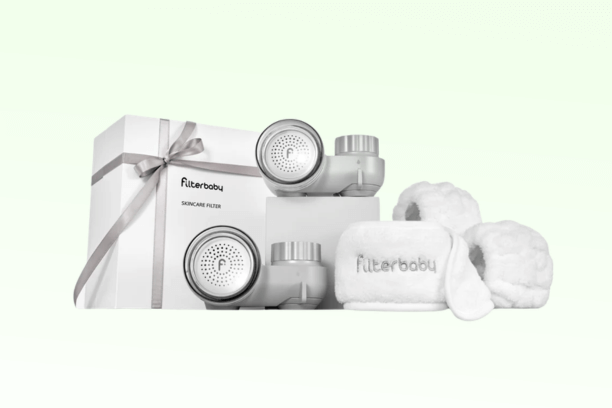
FilterBaby offers faucet and shower filtration systems intended to reduce exposure to common tap water contaminants that may influence skin and hair condition. Municipal water is typically treated with disinfectants such as chlorine and chloramines, and it can also contain traces of heavy metals and other residual compounds. The brand states that its systems are designed for point-of-use filtration, meaning the water is filtered immediately before it comes into contact with your skin during washing or showering.
In this review, we will examine the brand’s core offerings and evaluate its technical and functional advantages. We will also assess its user feedback to provide a structured understanding of how the brand fits within the broader water filtration and skin health category.
About FilterBaby
As per the official website, FilterBaby is a skincare-focused water filtration brand, and its core product line includes the Skincare Water Filter 2.0. It also offers shower filters, extending its filtration approach to full-body exposure.
The brand also operates on a refill-based model, providing Skincare Filter Refill 2.0 and 1.0 cartridges in single units, two-packs, and four-packs. Bundles, including a two-pack faucet filter set marketed for couples or multi-sink households, are part of its product ecosystem.
According to the official site, it offers faucet filters in multiple color options such as white, black, blue, and light pink. The company references the use of FDA-approved parts sourced from Japan, Switzerland, and Germany. FilterBaby emphasizes in-house testing and the avoidance of materials such as calcium sulfite.
FilterBaby Offerings
-
Filters
Filterbaby offers multiple filtration devices designed for different exposure points. Its Skincare Faucet Filter 2.0 is a sink-mounted unit focused specifically on facial cleansing. It uses activated carbon fiber and an ultrafiltration membrane to reduce chlorine, chloramine, heavy metals, microplastics, and contaminants as small as 0.00001 mm. The device includes filtered and unfiltered water modes, maintains water pressure, and requires cartridge replacement every 90 days. It comes with 10 adaptors to fit most U.S. faucets and is built with FDA-approved Tritan material.
As per the official website, FilterBaby also offers Showerhead Pro, which might help reduce chlorine, chloramine, lead, microplastics, mercury, arsenic, copper, hydrogen sulfide, microorganisms, and hard minerals.
The showerhead range also features the Pro Series Titanium Aluminum Shower Filter, co-developed with Dr. Robert Dorfman, which uses a titanium-aluminum exterior for increased durability while maintaining similar contaminant removal claims.
On the other hand, the Diamond Series Shower Filter uses high-quality plastic housing and emphasizes reduced plastic use per refill, offering a more design-focused alternative within the shower category.
For broader coverage, the brand offers a Faucet and Pro Series Shower Bundle that combines the Skincare Faucet Filter 2.0 with the Pro Series shower model. This option addresses both sink-based facial exposure and full-body shower exposure, with replacement filters.
FilterBaby Advantages
-
Dermatologist Supported Brand Identity
FilterBaby established its Scientific Advisory Board in August 2025. The board includes board-certified dermatologists Dr. Mamina Turegano, Dr. Lindsay Zubritsky, Dr. Jenny Liu, and Dr. Anthony Youn. According to the company, these physicians contribute to research direction, educational content, and claim development related to the effects of tap water on skin health.
The brand states that its advisory board helps shape product messaging and scientific framing. Their input connects filtration benefits to specific contaminants such as chlorine and heavy metals, which are commonly linked to dryness, irritation, and disruption of the skin barrier. This keeps the brand’s positioning centered on dermatological concerns rather than broad water purification claims. This can give you a clearer context about why the brand’s product is positioned as skincare-focused rather than purely mechanical filtration. Seeing named dermatologists associated with research and messaging may help you better understand how specific water contaminants could relate to your skin concerns. It can also provide a more defined framework for evaluating whether a water filter aligns with your skincare priorities.
-
Dermatology-Driven Filtration Identity
FilterBaby presents its faucet attachment as a skincare-focused device rather than a general water filter. It states that the ultrafiltration technology in its products is designed to reduce contaminants that come into direct contact with the skin during daily cleansing. The emphasis stays on facial washing, not whole-home water purification.
Most standard faucet filters focus on improving taste, odor, or sediment levels. FilterBaby centers its messaging on hydration support, reduced sensitivity, and barrier health. It reinforces this dermatology-driven focus through references to clinical testing and guidance from its Scientific Advisory Board.
This approach changes how you may view tap water exposure. Instead of treating water as a neutral step, you are encouraged to consider it as a factor that can affect skin comfort and barrier stability. If you prioritize irritation prevention or barrier support, this concept may help you decide whether a dedicated facial filter aligns with your specific skincare needs.
FilterBaby Limitation
-
Brand Trust Influenced by Reviews
FilterBaby’s public review profile significantly influences how the brand is perceived. On Trustpilot, customer feedback includes reports of non-delivery despite tracking confirmations, requests for additional reshipment fees, subscription refills billed before shipment, and packages marked as awaiting carrier drop-off for extended periods. Several users describe extended email exchanges, repeated troubleshooting steps, delayed replacement timelines, difficulty canceling subscriptions before dispatch, and return shipping charges. Although the company posts public replies directing customers to support channels, some users state that resolutions were slow or incomplete.
Product-specific concerns also appear in customer accounts. Some users claimed replacement filters differed from earlier versions or challenged the technical explanations provided about micron filtration and chlorine reduction. This means your experience may depend not only on product performance but also on fulfillment reliability and customer support responsiveness. If issues arise, resolution timelines and subscription management policies could directly impact your costs, convenience, and overall confidence in the brand.
FilterBaby Alternatives
-
Jolie
Jolie centers its offering on a redesigned filtered showerhead that replaces a standard shower fixture. Its product includes the showerhead unit and an internal replacement filter that is designed to be changed every 90 days. The brand’s structure revolves around this single shower-based system. FilterBaby, on the other hand, offers both a Skincare Faucet Filter 2.0 intended for sink use during facial cleansing and separate shower filter options. This expands its application beyond bathing to routine face washing at the tap.
The filtration systems differ in composition and emphasis. Jolie claims to use a proprietary blend of American-made KDF-55 and Calcium Sulfite and states that its system exceeds NSF-177 certification standards. Its materials focus primarily on chlorine and heavy metal reduction. The brand explains how chlorine can strip natural oils from hair and skin, dissolve hair lipids, break down amino acids, react with melanin, and contribute to dryness or irritation. On the other hand, FilterBaby combines carbon filtration with ultra-filtration membranes composed of 4,000 nano threads. The membrane structure is described as capable of trapping contaminants significantly smaller than the width of a human hair. The brand lists chlorine, chloramine, microplastics, certain heavy metals, arsenic, rust, and dozens of additional physical contaminants among those targeted by its system. Compared to Jolie’s narrower focus on chlorine and heavy metals, FilterBaby presents a broader contaminant-removal scope.
The brands also differ in how they present medical association. Jolie emphasizes independent third-party lab testing and references expert trust but does not prominently feature individual physicians. Meanwhile, FilterBaby displays several named dermatologists and medical professionals and describes itself as dermatologist-recommended within the skincare filter category. It also references a multi-generational medical background among its founders.
From a construction standpoint, Jolie provides detailed physical specifications. It states that its showerhead is made of high-impact ABS, weighs 1.56 pounds, measures 5.3 inches in diameter and 5.4 inches in length, fits U.S. shower standards, and complies with California and New York water regulations at 1.8 gallons per minute. The brand highlights pressure optimization without clogging. In comparison, FilterBaby emphasizes a metal-based construction in key components and includes a built-in water limiter along with a two-mode toggle that allows switching between filtered and unfiltered water. It also states that its refill system uses substantially less plastic compared to conventional refills.
Performance emphasis further distinguishes the two brands. Jolie places significant attention on hair-related outcomes, including reduced hair shedding, fewer split ends, less tangling in curly hair, and improved scalp comfort. Its educational content focuses on how water contaminants affect hair proteins and structural integrity. On the other hand, FilterBaby concentrates more heavily on acne, redness, dermatitis-related irritation, and hydration changes, particularly in the context of facial cleansing and hard water exposure.
Jolie operates as a shower-focused filtration brand centered on chlorine and heavy metal reduction to address hair shedding and dryness. FilterBaby functions as a broader skincare-oriented filtration brand that includes faucet and shower options, and includes membrane-based filtration.
-
Canopy
As per their official website, Canopy operates across humidification, water filtration, air purification, and aromatherapy. Its catalog includes the Bedside Humidifier 2.0 and Nursery Humidifier 2.0, Portable and Large Room Humidifiers, and filtered showerheads. The brand’s product range also features faucet filters, bathtub filters, Baby Bath Tub Filters, and multiple air purifier filter variants. On the other hand, FilterBaby concentrates on skincare-focused water filtration. Its core product is the Skincare Water Filter 2.0, supported by faucet bundles, shower filters, and refill cartridges.
The ecosystem structure further differentiates the brands. Canopy builds an interconnected device and replacement system, offering 1-year supply bundles for showerhead filters, bathtub cartridges, humidifier filters, and faucet cartridges. It also features a Bedside Humidifier Filter 2.0, which combines a cylindrical blue antimicrobial design with a textured honeycomb pattern and wood pulp construction. Compatibility is clearly segmented across showerheads, faucet filters, bathtub filters, and humidifiers. Meanwhile, FilterBaby structures its model around device-plus-refill continuity. It offers Skincare Filter Refills in 1.0 and 2.0 versions, with 2-pack refills and 4-pack refills. Subscription refill options are also available.
Air purification represents a category present only in Canopy’s portfolio. Canopy offers Protect Plus Air Purifier Filters consisting of a pre-filter, HEPA 13 layer, and activated carbon component, along with Odor Control (HEPA 12) and Coverage Max (H-11) variants. Testing references include ISO 29463 standards and AHAM AC-4 gas testing benchmarks involving ammonia, formaldehyde, and toluene. On the other hand, FilterBaby does not operate in air purification or humidification categories and does not offer HEPA-class filtration systems.
Aromatherapy integration is present within Canopy’s system but absent from FilterBaby’s. Canopy combines aroma samples within showerhead duos, offers aroma diffuser bundles, and markets scent variations such as Vanilla Noir. It also provides Baby Care Bundles combining humidifiers, tub filters, and aroma components. FilterBaby does not integrate fragrance or aromatherapy elements into its filtration products.
Manufacturing and testing claims are framed differently. Canopy references antimicrobial filter construction and third-party testing standards for air filters. In comparison, FilterBaby emphasizes Triple Tested performance, use of FDA-approved parts, and sourcing materials from Japan, Switzerland, and Germany. It also explicitly states that it avoids calcium sulfite and other materials it considers questionable, focusing on component selection and manufacturing control.
Canopy operates as a multi-category wellness hardware brand integrating humidification, air purification, water filtration, and aromatherapy within a single ecosystem supported by device-specific replacement systems. FilterBaby maintains a narrower focus on faucet-level skincare filtration supported by refill continuity and safety-oriented manufacturing claims.
Pros
- Focuses specifically on face-washing water quality.
- Offers both sink and shower filtration systems.
- Claims to use multi-stage filtration technology.
Cons
- Clinical claims are summarized rather than fully published on-site.
- Some users in independent reviews mentioned that they found the brand’s pricing to be premium compared to standard faucet filters.
How Did We Evaluate?
-
Brand Credibility
FilterBaby operates primarily through online sales and a subscription model for replacement filters. We examined the company’s Better Business Bureau record, which shows an F rating and indicates that it is not BBB accredited. The brand has received several complaints, with highlighted concerns including delayed shipments, refund delays, challenges with subscription cancellations, billing disputes, and warranty-related issues. In several cases, customers reported difficulty reaching support or receiving timely responses. While some complaints were resolved with refunds, others remain unanswered. On Tenereteam, FilterBaby maintains a 4.5 score across more than 12+ reviews. Based on this evaluation, FilterBaby appears to have achieved market traction and customer approval at the product level, but may face ongoing challenges related to fulfillment processes, subscription transparency, and customer support consistency.
-
Real User Experiences
We evaluated FilterBaby by analyzing Trustpilot reviews posted primarily between 2025 and 2026, where the brand currently holds a 4.6 rating. Many users claimed to notice improvements in their skin and hair within days or weeks of installing either the sink or shower filters. Several customers highlighted experiences in dormitories, older apartment buildings, and areas known for hard water, indicating that the brand is frequently used by people attempting to address mineral-heavy or chlorine-treated tap water.
When assessing reported product performance, many users mentioned their skin felt softer, less tight after cleansing, and less irritated overall. Several highlighted smoother hair texture, reduced dryness, and improved manageability. Some users mentioned calmer redness, fewer breakouts, and better absorption of skincare products after switching to filtered water.
Many users claimed the setup required only a few minutes and no professional assistance. They also highlighted the addition of multiple faucet adapters, QR-based video instructions, and strong water pressure retention after installation. Some customers mentioned appreciating aesthetic features such as color options, sleek finishes, and packaging presentation, suggesting that design and convenience contribute to satisfaction.
Based on these reviews, FilterBaby seems to get strong general approval, while the broader patterns indicate both performance strengths and operational areas that may require improvement.
Frequently Asked Questions
- Is FilterBaby suitable for extremely hard water conditions?
The brand uses PRODermis™ technology to bind minerals like calcium and magnesium, which can help reduce hard water effects on your skin. However, it does not list specific hardness levels or claim to work as a full home water softener for extremely hard water. - Are FilterBaby products travel-friendly?
Yes. The brand offers the Diamond Series Travel Shower Filter as a portable option. It installs in under two minutes without tools and fits standard showerheads. However, other products in the lineup, such as sink filters, are not specifically designed for travel use. - Can FilterBaby remove all possible water contaminants?
No. The brand claims to use a three-stage system with woven mesh, carbon fiber, and a hollow fiber membrane to target chlorine, chloramine, select heavy metals like lead, and particles as small as 0.1 to 0.2 microns. However, it does not claim to remove dissolved solids, fluoride, nitrates, viruses, or all minerals.
Conclusion
FilterBaby emphasizes dermatologist association, targeted contaminant reduction, and a refill-based cartridge system designed for ongoing maintenance. However, the performance of the brand offerings may vary based on local water composition, water pressure, and adherence to timely cartridge replacement, which means results are not uniform across households.
At the same time, publicly reported feedback has highlighted concerns related to order fulfillment timing, billing cycles, replacement coordination, and support responsiveness. These operational factors may influence your experience alongside the filtration claims.
If you are considering FilterBaby, it is essential to consider faucet compatibility, review your local water quality data, and follow recommended replacement intervals to maintain filtration efficiency.
While the brand presents a clearly defined approach to facial water exposure, its narrow application range, dependence on subscription logistics, and reported service concerns remain important considerations before making a decision.

Rachel has been a freelance medical writer for more than 18 years. She graduated from the University of Tennessee at Knoxville in 2005 and is currently practicing as a Certified Registered Nurse Anesthetist at a Level I trauma center.
Leave a Reply