

No products in the cart.
Contents
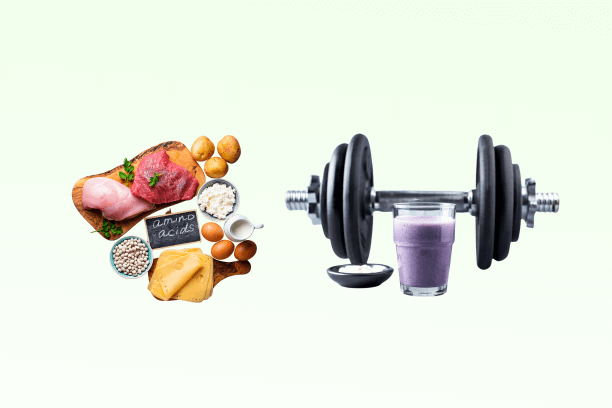
Essential amino acids (EAAs) and creatine are two of the most consumed products in sports nutrition. They both are widely used, but they work in different ways. EAAs may support muscle repair and growth, while creatine can boost your strength and power by fueling short bursts of energy.
This article explores the scientific differences and similarities between EAAs and creatine, highlighting their molecular actions, physiological benefits, side effects, practical usage strategies, and natural sources. It will give you a detailed understanding of how these supplements function and whether they might complement one another in a training or nutritional strategy.
What Are Essential Amino Acids (EAAs)?
Proteins are made from 20 amino acids, and among them, 9 are known as essential amino acids or EAAs. They are “essential” because your body cannot make them on its own.
You must get them from food or supplements. The nine essential amino acids are isoleucine, phenylalanine, leucine, lysine, methionine, threonine, histidine, tryptophan, and valine. Each of these amino acids has a critical role in your body. Leucine, isoleucine, and valine are called as the branched-chain amino acids (BCAAs). They directly stimulate muscle protein synthesis through a pathway called mTOR, which is important for muscle growth.
Methionine is needed for methylation reactions that support DNA function and neurotransmitter production. Histidine may help make histamine and also supports carnosine production, which works as a buffer to control muscle pH. Tryptophan aids in serotonin production, which affects mood and helps reduce fatigue.
EAAs could provide your body with additional amino acids, especially during times of muscle repair, growth, or immune stress. They could be useful if your diet does not provide enough protein or if your body’s needs are higher due to training or recovery demands.
What Is Creatine?
Creatine is known as a nitrogen-containing organic compound, which is derived from the amino acids arginine, glycine, and methionine.
Approximately 95% percent of creatine in the body is stored in the skeletal muscle, mostly in phosphocreatine form, while the remaining 5% percent is distributed in the brain, liver, and kidneys. It may work as an energy buffer in high-intensity, short-duration exercise by potentially restoring adenosine triphosphate (ATP) levels in your body.
Creatine could be consumed through diet, with red meat and fish being the richest natural sources. However, the amount typically obtained from food (about one to two grams per day) is insufficient to maximize intramuscular creatine stores.
Creatine may help your body achieve saturation levels that can enhance performance and recovery. At the cellular level, creatine supplementation primarily supports the phosphagen energy system, which is responsible for supplying energy during explosive activities such as sprinting, jumping, or heavy resistance training.
How EAAs Work?
EAAs may work by stimulating muscle protein synthesis. Once consumed, EAAs enter circulation and are transported into muscle tissue through specialized amino acid transporters.
Leucine, in particular, may function as a signaling molecule that activates the mTORC1 pathway, which then initiates the translation of new muscle proteins. Without sufficient levels of leucine and the other EAAs, the anabolic signaling cannot proceed effectively.
EAAs may also provide the raw substrates for new proteins. This is critical because, even if anabolic signaling is active, protein synthesis could be delayed without the full complement of building blocks. Beyond muscle synthesis, EAAs might also aid in neurotransmitter production, immune cell function, and energy metabolism. They also work as regulators of nitrogen balance in your body. This makes them potentially helpful for optimal recovery, adaptation, and physiological balance.
How Creatine Works?
Creatine may function through its critical support in ATP regeneration. During high-intensity exercise, ATP is broken down rapidly to provide energy. Once ATP loses a phosphate molecule, it becomes adenosine diphosphate (ADP). Phosphocreatine donates its phosphate group to ADP through the action of the enzyme creatine kinase, restoring ATP levels. This rapid regeneration may help generate sustained power output.
Creatine supplementation might also help increase total intramuscular creatine stores, allowing your muscles to perform more work over time. It might also contribute to cell volumization by drawing water into muscle cells, a process that may serve as an anabolic signal and increase protein synthesis.
Research also shows that creatine works to support neurological function by enhancing energy metabolism in neurons, potentially providing cognition and neuroprotection.
Benefits of EAAs
-
Might Stimulate Muscle Protein Synthesis
When you consume essential amino acids, they can trigger the pathways that directly stimulate muscle protein synthesis. They give you the raw materials needed to build and repair muscle tissue. After training, your muscles experience small tears that require reconstruction, and EAAs can help provide additional support for that process. You could be able to recover more effectively, and your body can adapt to training at a faster rate. This effect may help you build stronger muscles, improve your performance, and support steady long-term growth by fueling the anabolic response.
-
May Help Preserve Lean Muscle Mass
During calorie restriction or fasting, your body often turns to muscle tissue as an energy source. EAAs supply your body with amino acids that might protect against this breakdown. This could help in preserving your lean muscle mass, allowing you to maintain strength, metabolism, and performance even in a calorie deficit. Practicing intermittent fasting might also become easier as EAAs may provide support without adding unnecessary calories. Preserving muscle while targeting fat might help ensure a leaner, healthier body composition.
-
Might Support Healthy Aging
As you age, you naturally experience a decrease in muscle mass and strength, also called sarcopenia. EAAs might help counteract this process by stimulating muscle protein synthesis more effectively than standard protein foods alone. Your muscles remain stronger, and you maintain independence and mobility for longer. This might also support metabolic health, as muscle tissue plays a key role in regulating glucose and energy balance.
Benefits of Creatine
-
Might Increase Strength And Power
Creatine might help increase your body’s stores of phosphocreatine, which is crucial for rapid energy production. This may help your body to regenerate ATP more quickly, fueling explosive movements like sprinting, jumping, or lifting heavy weights. With more immediate energy available, you can push harder during high-intensity efforts, extend the number of repetitions, and sustain challenging training sessions. This ability to perform more total work leads to noticeable improvements in strength and performance.
-
Might Enhance Training Adaptations And Muscle Growth
Creatine may improve your ability to train harder and longer, which could lead to faster progress. It might increase both intensity and volume by giving you the energy to complete extra sets and reps, raising the total workload your muscles can handle. This steady overload may drive muscle growth and adaptation, helping you build strength and size more efficiently than training alone. Creatine could also speed recovery between sets, allowing you to sustain higher-quality workouts without fatiguing as quickly. When this is repeated consistently over weeks and months, the cumulative effect might result in greater muscle size, more strength, and improved endurance.
-
Might Support Recovery And Reduce Muscle Damage
After intense workouts, muscles often experience soreness and microscopic damage that can slow recovery. Creatine might provide your cells with energy that could accelerate repair processes and reduce inflammation. This could help your muscles bounce back faster, allowing you to train again sooner with less discomfort. It may improve your consistency and also help lower the risk of overtraining or plateauing. Creatine might help keep your body more resilient by supporting muscle cell health and minimizing oxidative stress.
-
Might Improve Hydration And Thermoregulation
Creatine might help pull more water into your muscle cells, which may improve hydration and strengthen muscular endurance. You could feel less fatigued during prolonged or high-heat workouts because your body regulates temperature more effectively. This cellular hydration not only boosts performance but might also enhance the look and feel of your muscles, making them appear fuller and stronger. Training in hot or demanding environments becomes more manageable, as your body adapts better to thermal stress. With improved fluid balance and cooling efficiency, you could be able to maintain energy longer, recover faster, and push through intense workout sessions.
Side Effects Of EAAs
-
Might Trigger Gastrointestinal Problems
When you start using EAAs (essential amino acids) in doses higher than your body can comfortably process, your digestive system is usually the first to react. The most common issues include bloating, nausea, cramping, and diarrhea. This might happen because the concentrated influx of free-form amino acids can create an osmotic effect, pulling extra water into the intestines and accelerating transit time.
For example, taking 20–30 grams at once is much more likely to cause problems compared to splitting the same total amount into 5–10 gram servings spread throughout the day. These symptoms don’t mean your body rejects EAAs completely, but they’re a sign the serving size is too high for your current tolerance.
-
Might Cause An Amino Acid Imbalance
Sometimes, a poorly formulated EAA blend or improper intake of a certain amino acid can disrupt the absorption and utilization of others. For instance, too much leucine might hinder the uptake of valine and isoleucine, while excess methionine without enough glycine can strain methylation pathways. This imbalance may not cause immediate symptoms, but over time can reduce the effectiveness of supplementation and even interfere with normal protein metabolism. You should look for EAA blends that mimic the natural ratios found in high-quality protein sources (like whey or egg protein). This might help ensure that your amino acid pool stays stable and efficient.
Side Effects Of Creatine
-
Might Cause A Stomach Upset
Creatine can cause stomach upset if you take large single doses. In one study, 39% of athletes reported diarrhea and 23.8% stomach discomfort after a 10-gram dose. When you consume too much at once, your body may not absorb it fully, leaving excess creatine in your intestines, which pulls in water and causes bloating, cramping, or diarrhea. The loading phase (20 g/day) raises this risk, while steady daily doses of 3–5 grams are typically well tolerated. Staying hydrated and using micronized creatine may further reduce gastrointestinal side effects.
-
Might Cause Nausea
Creatine consumption could make you feel nauseated, especially if you use large single doses, such as 10 grams at once, or follow a rapid loading phase of around 20 grams daily. Nausea often appears with other digestive issues like diarrhea and bloating, which are most common when dosing is high. In one rare case, an 18-year-old developed nausea, vomiting, and stomach pain that progressed to acute renal failure while supplementing with creatine, though this condition was reversible after stopping use.
Comparing Sources: Food vs Supplements
EAAs are said to be available in foods like meat, poultry, eggs, dairy, soy, and legumes. For example, a large egg gives you about 6 grams of protein that includes all nine essential amino acids, while a cup of 100 grams of cooked lentils provides around 18 grams of protein but in different ratios. As each food varies, you may need a mix of sources throughout the day to cover all nine essentials in balanced amounts. In supplement form, EAAs are available in set ratios, often around 3–6 grams per serving, with no added calories.
Creatine is also present in food. A 4-ounce serving of beef or salmon usually includes around 0.5 to 1 gram of creatine. Since your daily diet often gives you just 1–2 grams, it’s below the 3–5 grams per day commonly linked with fully saturating your muscle stores. Supplements might help bridge that gap, though timing isn’t critical, you can add it any time of day since it doesn’t depend on when you exercise.
EAA vs Creatine: The Full Comparison
| EAAs | Creatine |
|---|---|
| Building blocks for protein synthesis | Energy regeneration and performance |
| Stimulates mTOR, provides amino acids for new proteins | Increases phosphocreatine, enhances ATP resynthesis |
| Can be taken around workouts, fasting, and low-protein intake | Daily supplementation for consistent stores |
| Sources include protein-rich foods (meat, eggs, soy, legumes) | Sources include red meat, fish (low amounts) |
| Improves recovery, muscle retention, supports growth | Improves strength, power, and training capacity |
Frequently Asked Questions
- Does Creatine Improve Cognitive Function?
Yes. Creatine plays a critical role in cellular energy metabolism, including in the brain. It may improve short-term memory, attention, and also help reduce mental fatigue. - Can Creatine Affect Hydration Status?
Yes. Creatine helps pull water into muscle cells, which can slightly increase intracellular water retention. Adequate hydration is essential to prevent potential cramps or mild dehydration, especially during high-intensity training. - Do EAAs require a “loading phase” like creatine?
No. EAAs can be consumed daily without a loading phase. Consistent intake around training or meals is sufficient to maintain amino acid availability for muscle protein synthesis. - Can creatine affect bone health?
Indirectly, yes. By increasing muscle mass and strength, creatine might place beneficial mechanical stress on bones, supporting bone density over time, particularly when combined with resistance training. - Do free-form EAAs need different dosing than whole protein for effect?
Yes. Free-form EAAs (3–15 g) rapidly absorb, producing higher plasma amino acid peaks than intact protein, thus stimulating muscle protein synthesis more efficiently. Optimized EAA blends, especially when combined with whole protein, maximize both rapid anabolic signaling and sustained availability.
Final Words
EAAs and creatine may support your muscle health in different ways. Creatine increases phosphocreatine stores in your muscles, giving you more energy for short, high-intensity efforts. EAAs supply the building blocks, leucine, isoleucine, valine, and the others, that drive protein synthesis, repairing, and grow muscle tissue after exercise.
Used together or separately, they each play a role in improving lean muscle mass, strength, recovery, and training performance. Both are considered safe when you use them responsibly, but you still need to be aware of potential effects. Large doses of EAAs can cause mild stomach discomfort.
Creatine can lead to temporary water retention and, in rare cases, digestive upset. If you already have kidney issues, you should speak with your doctor before using creatine. For both, staying hydrated is important. You should also pay attention to product quality and proper dosing to avoid contaminants and unnecessary risks.
Before deciding to use EAAs or creatine, take into account your goals, diet, training intensity, and health status. EAAs could be useful if you want to reduce muscle breakdown or improve recovery. Creatine is better suited if you’re focused on increasing strength, power, or performance in high-intensity training.

Rachel has been a freelance medical writer for more than 18 years. She graduated from the University of Tennessee at Knoxville in 2005 and is currently practicing as a Certified Registered Nurse Anesthetist at a Level I trauma center.
Leave a Reply