

No products in the cart.
Contents
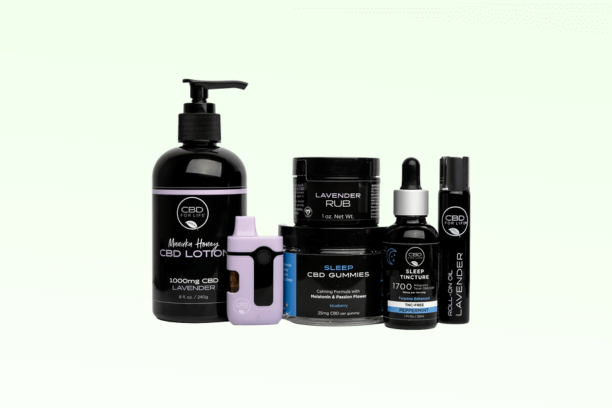
CBD for Life focuses on hemp-derived formulations designed to support everyday balance and physical comfort. It claims that its products may help manage routine stress, occasional discomfort, sleep irregularities, or low energy levels.
The brand’s product range covers gummies, capsules, sprays, and tinctures, alongside an extensive lineup of topical options including roll-ons, gels, creams, and muscle rubs. These offerings are structured to support relaxation, rest, physical recovery, and general body comfort.
In this review, we take a closer look at the brand’s full product lineup, its positioning, and key advantages. We will also discuss the limitations and the legal considerations that surround the brand’s offerings.
About CBD For Life
As per the official website, CBD For Life features a broad catalog that may support relaxation, recovery, focus, and balance throughout the day. The brand’s lineup has Pure Gummies, Sleep Gummies, and Energy Gummies. These are supported by oil tinctures available in multiple strengths and oral sprays. It also offers Rubs, Roll-On Oils, and Topical Sprays, which are designed for targeted application. These formulas commonly combine hemp-derived compounds with plant-based ingredients like menthol, arnica, peppermint, and essential oils, positioning them for localized comfort and post-activity recovery.
According to the official site, the brand extends into skincare and daily body care. Its lineup includes Face Cream, Eye Serum, Lip Balm, Foot Cream, and a Face and Body Cleanser. CBD For Life highlights that it sources hemp from Colorado-grown, organically certified suppliers and works with a range of hemp-derived compounds, including broad-spectrum extracts and isolated components, depending on the purpose of each product.
CBD For Life Bestsellers
-
Sleep Gummies
Sleep Gummies are said to be formulated with a combination of cannabidiol, melatonin, L-theanine, and passion flower. It could support sleep timing, nervous system regulation, and relaxation. Cannabidiol in these gummies may help regulate functions such as stress response, sleep–wake cycles, and neural signaling balance. It does not directly induce sleep, but it may influence sleep indirectly by supporting neurotransmitter regulation, reducing excessive nervous system activation, and modulating cortisol-related stress signals that can interfere with nighttime rest.
The makers also added melatonin, which could help regulate circadian rhythm by signaling to the body when it is time to prepare for sleep. It might help reinforce sleep timing, which may be useful when the natural melatonin cycle is disrupted due to irregular schedules, light exposure, or travel.
As per the official website, Sleep Gummies also has l-theanine, which can influence alpha brain wave activity that may promote a relaxed but alert mental state. L-theanine may help balance excitatory neurotransmitters such as glutamate while supporting calming pathways involving GABA, dopamine, and serotonin, which can reduce mental restlessness before sleep.
-
Pure CBD Gummies
As per the official website, Pure Gummies are formulated using cannabidiol isolate and a minimal ingredient base that focuses on delivery rather than stimulation. The product is available in regular and extra strength options in flavours like blackberry, strawberry, guava, pink lemonade, and passionfruit blue raz.
Cannabidiol isolate is a purified form of cannabidiol that contains no measurable THC and no additional hemp compounds. It could influence receptor activity indirectly, helping modulate neurotransmitter release and enzymatic activity linked to homeostasis. As isolate contains only cannabidiol, it does not produce entourage effects associated with full- or broad-spectrum hemp extracts. This means its activity remains focused on specific pathways.
-
Energize Gummies
Energize Gummies may support cellular metabolism, nervous system signaling, and alertness regulation. It combines folate (vitamin B9), which could support DNA synthesis and cellular replication. It is required for the formation of red blood cells and supports methylation pathways that influence neurotransmitter production and energy metabolism. The makers also added vitamin B12 in these gummies, which acts as a cofactor in converting nutrients into usable cellular energy (ATP) and supports the maintenance of nerve cells and myelin sheaths.
Energize Gummies also has caffeine, which blocks adenosine receptors in the brain that normally accumulate during waking hours and promotes feelings of tiredness. It could also increase neuronal firing and the release of dopamine and norepinephrine neurotransmitters, which are associated with alertness and attention.
-
Relief Gel
Relief Gel is designed for topical application, where ingredients act locally on the skin and underlying tissues rather than through systemic absorption. It contains menthol, which functions by activating TRPM8 receptors in the skin. This activation alters sensory nerve signaling and creates a cooling sensation that can temporarily shift pain perception.
As per the official website, camphor in this gel acts on sensory nerve endings and interacts with both cold- and heat-sensitive receptors. It produces a warming or cooling sensation depending on concentration and works through counterirritation, which may temporarily reduce awareness of localized soreness or stiffness.
The Relief Gel also has organic aloe vera, which contains polysaccharides, enzymes, and water-binding compounds that support skin hydration and barrier function. It might help maintain moisture balance in the outer layers of the skin and may support local tissue comfort by reducing dryness and surface irritation.
-
Oral Spray
Oral Spray is formulated for sublingual or oral use, where ingredients come into contact with the tissues of the mouth before swallowing. This route of administration is commonly used to allow faster interaction with the oral mucosa compared to standard ingestion.
As per the official website, the spray contains glycerin, which attracts and retains moisture, helping maintain liquid consistency and prevent drying in the oral cavity. Xylitol in this formula provides mild sweetness without significantly raising blood glucose levels. Its presence may improve palatability while supporting oral moisture balance during use.
CBD For Life Limitation
-
Heavy Dependence on Online Reviews
CBD For Life operates within a highly restricted regulatory environment, where federal guidelines limit allowable health claims and reduce access to large-scale advertising and third-party visibility.
The brand relies primarily on customer reviews published on its own website as key trust indicators. While these reviews may offer surface-level insight when independent platforms such as Trustpilot are unavailable, they are not externally verified.
Individual experiences can vary based on dosage, product format, expectations, and personal physiology. For a brand already operating within regulatory gray areas, this reliance on internally hosted reviews can raise reliability concerns if you are seeking transparent, independently verifiable quality signals.
Are CBD for Life products legal?
CBD for Life products are claimed to be legal in the United States, but their legality depends on federal standards, state regulations, and how the products are formulated and marketed.
As per the 2018 Farm Bill, hemp and its compounds, such as cannabidiol, are legal at the federal level if they contain no more than 0.3 percent delta-9 THC on a dry-weight basis. Products that meet this threshold are not classified as controlled substances under U.S. federal law. As per its official website, the brand states that its products are derived from hemp and formulated to remain within the federally permitted THC limit.
State laws also add a layer of oversight. Most states permit the sale of hemp-derived CBD products that meet the federal THC limit. These include California, Texas, Florida, New York, Illinois, Colorado, Arizona, Nevada, Washington, and Pennsylvania, where CBD is commonly sold through both physical and online retailers.
Some states apply stricter requirements. Idaho requires cannabidiol products to contain zero THC rather than allowing trace amounts. Indiana and Louisiana enforce detailed labeling and testing standards.
While most states allow the sale of hemp-based cannabidiol, a smaller number apply tighter rules related to THC content, labeling, or product classification. The legal framework continues to evolve, making both federal standards and state-level regulations relevant when assessing product legality.
CBD For Life Alternatives
-
Joy Organics
Joy Organics positions itself as a USDA-certified organic brand, emphasizing formal standards, ingredient sourcing, and cannabinoid precision. In comparison, CBD for Life prioritizes sensory experience and customer-led outcomes.
Joy Organics builds its catalog around clearly defined product categories and cannabinoid structures. Its lineup includes Organic Gummies No THC, 10mg THC Gummies (Blackberry Lime), Mood Gummies, and Delta-9 THC Gummies such as Cherry Bliss. These are supported by strength-specific labeling ranging from 10mg to 30mg per serving. CBD for Life centers its lineup around Pure Gummies, Sleep Gummies, Energy Gummies, and the LoHi Gummies line, where the emphasis is placed more on mood, relaxation, or social ease than on precise cannabinoid breakdowns.
The tincture category also reflects some differences. Joy Organics offers multiple USDA organic tinctures, including Organic Tincture, Full Spectrum Tincture, Organic 30mg CBG Tincture, and Organic THC Tincture. Each option is available in clearly defined strengths such as 30mg, 45mg, and 75mg. On the other hand, CBD for Life maintains a smaller tincture presence with products like Sleep Tincture and LoHi Drops.
In capsule and softgel formats, Joy Organics offers CBD Softgels in 10mg, 25mg, and 100mg strengths, Full Spectrum Softgels, CBD Softgels with Curcumin for joint support, CBD Sleep Softgels with CBN, CBG Softgels, and Organic 25mg Capsules. CBD for Life does not emphasize capsules or softgels to the same extent and focuses more on faster-acting or sensory formats such as gummies and sprays.
As per their official website, Joy Organics places strong emphasis on cannabinoid structure and user understanding. It clearly distinguishes broad spectrum (THC-free), full spectrum (≤0.3% THC), CBD+THC, CBG+CBD, and high-THC products, supported by dosage guidance, QR-code-linked third-party lab reports, educators, and a product-matching quiz. CBD for Life adopts a more simplified approach, offering third-party testing disclosures but relying more heavily on outcome-based messaging.
The brands also highlight some differences in their THC strategy intent. Joy Organics integrates THC as part of a structured cannabinoid lineup, offering products such as 10mg THC Gummies, Mood Gummies, and Organic THC Tincture with clear potency labeling. CBD for Life introduces THC primarily through its LoHi line, positioning LoHi Drops and LoHi Gummies as low-dose, mellow options.
-
Medterra
Medterra and CBD for Life differ in how they structure their product ecosystems and define the role of cannabinoids within daily use. As per their official website, Medterra follows a system-based wellness model, organizing its catalog around specific functional goals such as sleep, mood, relief, relaxation, focus, and pet care. Its products are segmented by cannabinoid spectrum, including isolate (THC-free), broad spectrum, and full spectrum CBD + THC. On the other hand, CBD for Life claims to support physical comfort, skincare, stress management, and social relaxation through its offerings.
Medterra relies on defined cannabinoid structures, with cannabidiol + THC products commonly containing fixed THC amounts of 2 mg or 5 mg per serving. These formulas often combine additional functional ingredients such as melatonin, L-theanine, or saffron, aligning products with specific timing or use scenarios. CBD for Life places less emphasis on standardized cannabinoid ratios and instead focuses on blended formulations that prioritize sensory experience. Its LoHi line introduces low-dose THC through drops and gummies positioned for lighter intake rather than structured cannabinoid balancing.
Transparency and credibility are communicated through different methods. Medterra prominently emphasizes third-party lab testing, Certificates of Analysis, and US Hemp Authority certification, supporting a compliance- and testing-focused identity. CBD for Life also states that its products are third-party tested and hemp-derived, though testing visibility is less central to user experience.
Medterra highlights working as a structured platform built around formulation consistency, spectrum clarity, and guided routines. Meanwhile, CBD for Life functions as a broader lifestyle brand that integrates cannabidiol and low-dose THC into varied formats.
Pros
- Offers a broad product catalog including gummies, tinctures, topicals, sprays, and body care.
- Maintains a dedicated relief-focused product category.
- Offers roll-on formats for targeted topical application.
Cons
- Brand offerings contain cannabidiol, which some users may associate with dependency-related concerns.
- The brand offerings operate within a complex and evolving regulatory environment.
Frequently Asked Questions
- Does CBD for Life disclose the exact cannabinoid ratios in its products?
The brand does not disclose exact cannabinoid ratios on its official site. It emphasizes pure cannabidiol isolate sourced from USDA-certified organic hemp and lists only total CBD amounts per product, but does not provide minor cannabinoid breakdowns or ratio details. - Does CBD for Life specify hemp strain sources?
The brand states that its isolate is derived from USDA-certified organic, Colorado-grown hemp with documented traceability and quality certifications, but it does not identify specific hemp strains, cultivars, or plant varieties used. - Does CBD for Life confirm THC absence across all products?
The brand offers both THC-free and THC-containing options. Its THC-free products use CBD isolate and are clearly labeled, with third-party COAs required to verify THC status for each option.
Conclusion
CBD For Life emphasizes Colorado-grown hemp, plant-based additives, and third-party testing. However, as with most CBD-focused brands, risk considerations remain significant.
The brand offerings containing cannabinoids may contribute to side effects such as fatigue, digestive discomfort, dry mouth, or changes in alertness. Interaction risks with medications metabolized through liver pathways remain a documented concern. Its topical formulas containing menthol, arnica, or essential oils may also increase the likelihood of skin sensitivity.
Legal and regulatory factors are equally important to consider. Regulations vary by country, state, and local jurisdiction, and possession or use may still be restricted in certain regions despite federal hemp allowances.
Labeling standards are not uniformly enforced, and products marketed as THC-free may still contain trace cannabinoids detectable in drug screenings. As CBD oversight continues to evolve, you must remain responsible for understanding local laws and regulatory limitations.

Rachel has been a freelance medical writer for more than 18 years. She graduated from the University of Tennessee at Knoxville in 2005 and is currently practicing as a Certified Registered Nurse Anesthetist at a Level I trauma center.
Leave a Reply