

No products in the cart.
Contents
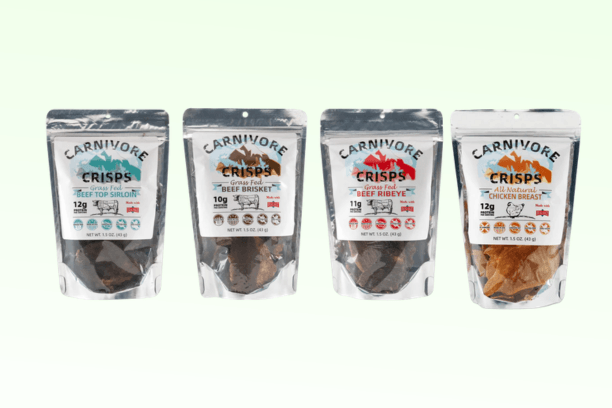 Carnivore Crisps offers meat-based snack products and positions them as alternatives to conventional packaged snacks. The brand’s offerings tend to support low-carbohydrate eating patterns and keto or carnivore-style snacking.
These meat-based snacks are described as containing minimal processed ingredients and may also help suppress hunger cravings, contribute to muscle repair, and promote satiety. However, does the brand’s snack approach provide enough variety and flexibility for long-term use?
In this review, we explore the brand’s offerings, its quality standards, and dietary positioning. The review also compares Carnivore Crisps with other meat-based snacking brands.
About Carnivore Crisps
Founded by Hans Hippert, Carnivore Crisps offers animal-based snack products made primarily from dehydrated meat cuts. The brand operates as a small family-run operation with the manufacturers having experience in meat processing and jerky production.
The brand structures its catalog across multiple categories, including beef crisps, poultry crisps, crumbs made from dried meat pieces, flour and tallow, and bundles. According to its official website, the crisps are typically produced from whole cuts of meat that are sliced and dehydrated to create a rigid, chip-like texture. The brand also references the use of salt as a primary preservation and flavor component.
The manufacturers state that the brand sources meat from pasture-raised or grass-fed animals within the United States. It also notes that some products are positioned as compatible with low-carbohydrate or animal-based diets, due to their macronutrient composition.
Meat Crisps
Carniovore Crisps offers snacks in the form of crisps made using dried animal-based foods. The brand segments this range mainly by animal source and specific cuts of meat rather than by flavor profiles or seasoning variations. Snacks are categorized around beef brisket, beef ribeye, beef top sirloin, beef eye of round, chicken breast, and leg of lamb.
The brand’s range also features related animal-based food formats, including options like Grass Fed Beef Tallow, Chicken Breast Flour, Beef & Organ Blend Flour, Carnivore Crumbs Elk, and Carnivore Crisps Chicken Skin. Bundled offerings, such as the Organ Bundle, the Five Beefs Bundle, the EAT MEAT Bundle, and Find Your Favorite, are also available.
Animal-based meat snacks from the brand use meat cuts from beef liver, chicken breast, and pork loin. These sources supply the nine essential amino acids required for muscle protein synthesis. Leucine, which is abundant in animal protein, activates the mTOR signaling pathway that regulates muscle repair and growth after protein intake.
Meat Snacks might also increase satiety, which contributes to fullness. High protein density from the snacks may also increase the thermic effect of food, meaning more energy is used by the body during digestion compared with carbohydrate-based snacks.
Pros
- Claims compatibility with keto and carnivore diet plans.
- Emphasizes a small-batch preparation method.
- Free U.S. shipping on purchases worth $99 or more.
Cons
- Premium price positioning may limit accessibility.
- Maintains a narrow product variety.
Advantages
-
Whole-Muscle Meat Utilization Model
Carnivore Crisps follows a whole-muscle meat utilization approach rather than using processed meat blends. The brand states that it sources cuts, such as ribeye, brisket, top sirloin, eye of round, pork loin, chicken breast and skin, and leg of lamb from pasture-raised, grass-fed animals supplied by U.S. family farms.
The use of multiple muscle cuts and organ meats also expands the product range beyond standard jerky formats. Organ meats like liver and heart add variety within the lineup and reflect a nose-to-tail utilization philosophy. Such an approach could support simpler ingredient selection and protein-focused snacking.
-
Keto and Carnivore Diet Compatibility
Carnivore Crisps positions its brand as compatible with both keto and carnivore dietary frameworks. The brand’s products typically provide around 11 grams of protein per one-ounce serving while containing zero carbohydrates, sugars, and gluten. Its product pages and packaging highlight claims such as carnivore diet approved, keto-friendly, sugar-free, and high-protein.
The brand’s offerings are intended to fit easily within strict low-carbohydrate or animal-based diets. If you follow keto or carnivore eating patterns, you can consume the snack without needing to track carbohydrate intake or worry about hidden sugars, grains, or plant ingredients.
Potential Limitations
-
Limited Flavor Portfolio
Flavor variety across offerings from Carnivore Crisps is limited. The brand seasons its products primarily with Redmond salt, without using additional spice blends or flavor coatings. As a result, differences in taste come mainly from the natural characteristics of each meat cut, such as the marbling of ribeye or the stronger mineral notes of liver, rather than from varied seasoning profiles.
The brand’s lineup does not currently include common snack flavors, such as BBQ, teriyaki, spicy, or smoked varieties that are widely available in other meat snack categories. A narrow seasoning approach can make the lineup feel repetitive, especially if you are looking for more diverse flavor options.
-
Limited Retail Availability
Physical retail access to Carnivore Crisps products remains limited. The brand sells primarily through its official website and selected Amazon listings rather than widespread placement in grocery or convenience stores.
This structure reduces opportunities for in-store discovery. Products are generally not available for purchase during routine shopping trips, and there is no broad retail footprint that allows you to evaluate products in-hand. Ordering through online channels may require planning and waiting for delivery, which might be less convenient than buying products directly from retail stores or trying them before purchase.
Alternatives To Carnivore Crisps
-
Carnivore Snax
Carnivore Snax and Carnivore Crisps both offer meat-based snacking products to support satiety, energy levels, and fullness. In terms of positioning, Carnivore Snax presents itself as a broad snacking brand with multiple meat categories and specialty offerings. Meanwhile, Carnivore Crisps highlights a more focused positioning tied to crunchy meat-based snacks with minimal ingredients.
Product variety reflects a point of difference between the brands. Carnivore Snax maintains a wide catalog that includes pork loin, ribeye, New York strip, brisket, bison, lamb, and chicken options. The brand’s portfolio also features products like beef tallow and mixed bundles. Meanwhile, Carnivore Crisps keeps a more limited selection focused mainly on crispy meat snacks such as beef top sirloin, beef brisket, chicken breast, beef ribeye, grass-fed beef tallow, and beef & organ blend flour. Beyond singular offerings, the brand also offers bundled packs, including the Find Your Favorite Bundle, Organ Bundle, the EAT MEAT Bundle, and Five Beefs Bundle.
Differences are also visible in how both brands describe their sourcing standards. Carnivore Snax highlights the use of grass-fed and finished meat, with the exception of Wagyu, and states that sourcing comes from farms that follow regenerative agriculture practices. The brand also connects its sourcing practices to animal welfare and environmental considerations. Meanwhile, Carnivore Crisps focuses more on a simple ingredient approach. The brand states that its products feature pasture-raised, grass-fed beef from U.S. family farms and contain only meat and Redmond salt, with messaging centered on basic formulations without additives.
In terms of pricing structure, there are further differences between the brands. Most snack offerings (5-oz packs) from Carnivore Snax are typically priced at around $24-$40. The brand also offers free shipping on orders worth $125 or more. On the other hand, products from Carnivore Crisps maintain a lower entry price structure, where single packs are typically priced between $8 and $15. Free shipping within the continental United States is applicable to orders above $99.
-
Lineage Provisions
When comparing the brands, Lineage Provisions and Carnivore Crisps both operate in the animal-based food category, but their product range, formulation standards, and quality standards reflect different priorities.
Lineage Provisions presents itself around ancestral nutrition ideas supported by testing transparency and structured nutrition categories. Meanwhile, Carnivore Crisps presents itself around strict carnivore diet alignment, simple meat-based snack formats, and low-carb compatibility.
In terms of catalog breadth, Lineage Provisions keeps an organized product range built around meat-based snacks and performance nutrition products. The core offerings include Grass-Fed Beef Meat Sticks in Original, Spicy Southwest, and Garlic & Onion variants, along with Air-Dried Steak. The range also features products like Raw Organic Honey, Animal-Based Complete Protein Powder, Creatine Monohydrate, and Grass-Fed Beef Tallow.
Meanwhile, Carnivore Crisps maintains a diverse selection within the meat crisp category. Some core product formats include whole-muscle crisps, such as Chicken Breast, Beef Brisket, Eye of Round, Top Sirloin, Pork Loin, and Leg of Lamb. The brand also expands across other snack formats, including Carnivore Crumbs, Chicken Breast Flour, Grass-Fed Beef Tallow, and Grass-Fed Beef Flour.
Differences also appear in how both brands approach production. Lineage Provisions relies on a slow air-drying process that uses salt and vinegar instead of traditional cooking methods. Meanwhile, Carnivore Crisps uses dehydration to create crunchy whole-muscle meat snacks with limited added ingredients.
Quality positioning also follows different directions. Lineage Provisions highlights lab verification as part of its operating model. The brand reports working with Light Labs for batch testing using methods such as GC-MS, LC-MS, and ICP-MS. Testing covers screening for heavy metals, microbes, mycotoxins, glyphosate, pesticides, and label claim checks. Meanwhile, Carnivore Crisps focuses more on sourcing statements, such as sourcing from pasture-raised and grass-fed meats. The brand emphasizes the use of simple ingredients like salt, with less visible emphasis on public batch testing details.
How Did We Evaluate?
-
Real User Feedback
To evaluate how Carnivore Crisps offerings perform in everyday use, we reviewed authentic Amazon feedback for its two core products, focusing on factors like taste, texture, convenience, pricing perception, and dietary suitability.
Grass-Fed Beef Brisket carries a 3.4 out of 5 score based on more than 1,270 reviews. Many users appreciated the product’s simplicity of ingredients and compatibility with carnivore or keto diets. Some also described the crisps as a convenient high-protein snack with a crunchy texture similar to chips. While some users enjoyed the crisp texture and natural beef flavor, others described the taste as bland or the texture as unusual compared with traditional jerky. A few users described the packaging as containing relatively small quantities, which affected perceived value.
Chicken Breast Flour holds a 4.0 out of 5 score based on 300+ reviews. Most users described it as a functional alternative to traditional flour for low-carbohydrate cooking. Reviews frequently mentioned its use as a breading, thickener, or binder in recipes such as meatloaf or sauces. However, a few users noted that the flavor did not suit all recipes.
The available feedback indicates that the brand’s products appealed strongly to users following carnivore or low-carb diets who prioritize ingredient simplicity and convenience. However, pricing, portion size expectations, and individual taste preferences are highlighted as common drawbacks.
-
Brand Reputation
When evaluating the brand, we looked at its market positioning, operational history, and presence across independent review platforms. Carnivore Crisps presents itself as a niche U.S. meat snack brand focused on animal-based and low-carb eating styles. However, information about its operating history remains undisclosed on its official website.
On TenereTeam, the brand carries a 4.2 out of 5 score based on a limited number of reviews. Reviews on the platform highlight factors like high protein content, use of grass-fed beef, gluten-free positioning, and suitability for keto and carnivore diets. However, unfavorable feedback points to limitations around texture preferences, questions about price perception based on bag size, and differences in taste expectations.
Beyond TenereTeam, the brand currently has little to no review presence on other review forums, such as Trustpilot, Better Business Bureau, and ThingTesting. As a result, the limited third-party presence could make it difficult to understand the brand’s long-term reputation.
Frequently Asked Questions
- Are Carnivore Crisps offerings similar to standard jerky products?
No. The brand’s offerings, such as Beef Ribeye and Pork Loin Crisps, differ from typical jerky in texture and formulation. They are thin, crunchy meat slices made from whole cuts with basic ingredients like meat, water, and salt. Standard jerky is usually chewy, marinated, and may include sugars, sauces, or preservatives. - Does Carnivore Crisps use preservatives?
No added preservatives are listed. The brand’s offerings mainly contain meat cuts, water, and Redmond salt. Product descriptions state no added sugars, MSG, or artificial preservatives. Salt appears to be used as the primary preservative ingredient. - Does Carnivore Crisps offer portion control guidance?
No specific portion control guidance is described. The brand lists standard serving sizes on nutrition labels, but does not provide intake limits or portion recommendations beyond these label values.
Final Words
Carnivore Crisps is built around meat-based products. Its catalog remains primarily focused on dried meat crisps and organ meat snacks, with no fiber-inclusive options.
However, it is important to note that the available flavor variety mainly comes from different meat sources rather than seasoning differences. As a result, you may experience repetitive taste profiles with frequent consumption. As with most dried meat products, factors like sodium content, individual tolerance to high-protein foods, and metabolism may influence the suitability of the brand’s offerings for your needs. Excessive protein intake from the brand’s meat-based snacks might also contribute to digestive discomfort.

Rachel has been a freelance medical writer for more than 18 years. She graduated from the University of Tennessee at Knoxville in 2005 and is currently practicing as a Certified Registered Nurse Anesthetist at a Level I trauma center.
Leave a Reply