

No products in the cart.
Contents
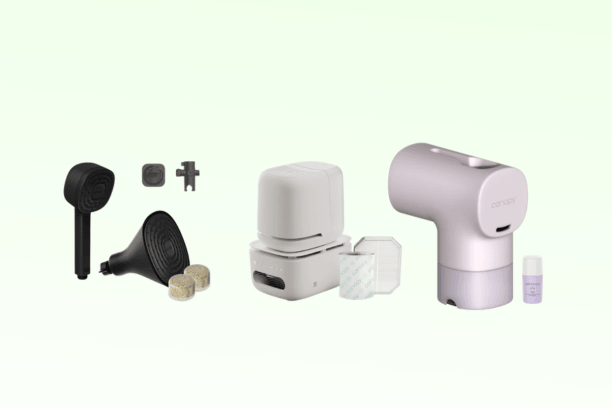
Canopy focuses on supporting skin, hair, and comfort by addressing air and water quality. Its core offering centers on humidifiers designed to add clean moisture to indoor air, helping reduce dryness and support a more balanced environment for both the skin and respiratory system.
The brand positions its products as part of a home-based wellness system, where its devices work together to filter impurities. In this review, we look at Canopy’s core offerings, compare the brand with similar options, and evaluate its credibility along with real user experiences.
About Canopy
Canopy presents itself as a hybrid beauty-tech brand focused on humidification, water filtration, air purification, and aromatherapy categories. Offerings include the Bedside Humidifier 2.0, Filtered Showerhead, Faucet Filter, Air Purifier, along with supporting items such as replacement filters and aroma kits. These products are made for use across different areas of the home, including bedrooms, bathrooms, nurseries, and living spaces.
The brand’s offerings depend on evaporative technology and filtration methods intended to improve indoor air and water quality. Canopy states that this approach helps with skin hydration, maintains the skin barrier, and reduces transepidermal water loss. According to the brand, it may also help with concerns such as dryness, congestion, or throat irritation.
Bestsellers
-
The Shower System
The Shower System is a dual-filtered showerhead setup that may reduce chlorine and other contaminants in your water. The system includes both a fixed and handheld filtered showerhead, allowing you to switch between or combine water outputs depending on your preference.
The filtration mechanism is composed of granular activated carbon, copper-zinc, and calcium sulfite. These materials are associated with reducing chlorine and some other impurities, which may help limit oxidative effects on hair proteins and skin lipids.
-
All-in-One Humidifier & Purifier
All-in-One Humidifier & Purifier could improve indoor air conditions by reducing airborne particles while adding moisture to the air. The product consists of a Bedside Air Purifier and a Bedside Humidifier designed to function together. According to the brand, managing both air quality and humidity may address common indoor concerns such as dryness, airborne allergens, and particulate buildup.
The air purifier component uses a multistage filtration system that has a pre-filter, a HEPA-13 filter, and activated carbon. HEPA-13 filtration can capture fine particles such as dust, pollen, dander, and smoke down to 0.3 microns, while activated carbon may adsorb odor-related compounds and gaseous pollutants. The system also includes real-time air quality monitoring and adjustable fan speeds, which may allow you to modify airflow based on environmental conditions.
The brand states that the humidifier component provides up to 36 hours of runtime with a 2.5-liter water tank, dispersing moisture within spaces up to 500 square feet. The device includes a filter system that combines a MERV 5 pre-filter with an antimicrobial-treated core, which is intended to capture particles and inhibit mold growth within the unit.
-
Baby Bath Tub Filter
Baby Bath Tub Filter may reduce chlorine and other contaminants from tap water. The product is designed to attach directly to a bathtub spout, where it filters water as it flows into the tub.
The device includes a color-changing temperature indicator, which may help you monitor water temperature to avoid overheating, while the soft spout cover may reduce the risk of impact during bathing.
-
Nursery Humidifier 2.0
Nursery Humidifier 2.0 might add moisture to indoor air, which could help reduce dryness-related discomfort in your child’s skin, nasal passages, and sleep environment. The product is created for nursery use.
The system includes a multi-stage filtration process that treats both air and water before evaporation. The filter combines a MERV 5 pre-filter with an antimicrobial-treated core to capture dust, particles, and waterborne contaminants while helping inhibit mold growth in the device. The unit also includes UV light exposure before water is released into the air, which may reduce microbial presence within the system itself.
-
Handheld Filtered Showerhead
Handheld Filtered Showerhead might reduce chlorine and other contaminants in your water, which could influence how your hair and skin respond during washing. The filtration system is composed of granular activated carbon, copper-zinc, and calcium sulfite. These materials are commonly associated with reducing chlorine and certain impurities.
The system includes a scalp massager faceplate to stimulate the scalp during use, which may influence circulation at the surface level. The product also comes with an aroma diffusion feature, allowing the addition of scent elements to the shower environment.
-
Filtered Showerhead
Filtered Showerhead includes a built-in filtration system that operates as water flows through the unit. The brand states that the filter media may help reduce substances such as magnesium, calcium carbonate, iron, hydrogen sulfide, mercury, chromium, and chloramine.
The showerhead includes three adjustable stream settings described as wide, narrow, and dual, which may allow you to modify water flow depending on preference. According to the brand, the unit can be installed without specialized tools. It includes components such as a replacement filter, wrench, and plumber’s tape to support setup.
Canopy Advantage
-
Design-Led Company Positioning
Canopy emphasizes a low-maintenance system design, where usability and cleaning efficiency are built into its product architecture. The brand offers products like humidifiers, filtered showerheads, air purifiers, and aroma diffusers as integrated home objects. It focuses on reducing upkeep friction.
The brand’s humidifiers are designed to avoid standing water and actively dry internal components, which helps limit mold and mildew buildup. Components are often dishwasher-safe, and the designs minimize tight crevices that are difficult to clean. This same approach extends to its water filtration products, where showerheads and faucet filters can be used with a simple installation and everyday usability. Products require less frequent and less intensive cleaning, which may make it easier to maintain regular use over time.
Canopy Limitation
-
Proprietary System Trade-Offs
Canopy’s entire product ecosystem relies on proprietary filters and cartridges that must be replaced on a fixed schedule. It uses Anti-Microbial Wood Pulp Filters with Smart Persistent Airflow (SPA) technology for humidifiers and Tri-Media Filter Cartridges for showerheads. The brand’s air purifiers have a Protect Plus HEPA-13 system, while its aromatics are said to be based on proprietary Ceramic Aroma Stones.
Humidifier filters typically need to be changed every four to six weeks, while showerhead cartridges require replacement approximately every three months. It creates a recurring cost structure that can reach around $90–$120 per year per device. These costs accumulate quickly and become a long-term financial commitment.
The operational design introduces additional trade-offs. As the humidifiers use an evaporative system, they rely on continuous airflow, which produces a steady level of background noise. While some may perceive this as white noise, it can be noticeable in quiet settings such as bedrooms. The same airflow can also create a slight cooling effect, which may feel uncomfortable in colder environments.
Canopy devices are built specifically for their own filters, which means third-party options are not viable. This creates a dependency on the brand’s offerings, where any delay or lack of availability can directly affect usability.
Pros
- Emphasizes the use of UV filtration and layered cleaning technology.
- Features a subscription model for filters and refills for added convenience.
- Offers a 60-day refund policy on purchases.
- Mist-free humidifier design from the brand could reduce mold risk.
Cons
- Shipping delays noted across independent reviews.
- Some independent platforms highlight unsatisfactory customer service.
Canopy Alternatives
-
Jolie
When comparing Jolie Skin Co and Canopy, both focus on showerhead filters to support the skin and hair environment. However, the brands differ in their core positioning, breadth of offerings, support ecosystem, and pricing structure.
Jolie Skin Co presents itself through a single perspective that focuses on how unfiltered shower water, particularly chlorine and heavy metals, may influence dryness and irritation. The brand shapes its identity around improving water quality before it comes into contact with skin and hair. Meanwhile, Canopy expands its scope beyond water quality alone, framing its approach around both air and water exposure within indoor environments. It positions humidity balance and filtered airflow as part of daily living conditions.
In terms of offerings, Jolie Skin maintains a focused lineup that includes the Jolie Filtered Showerhead alongside replacement filter cartridges. This narrower structure may allow the brand to maintain consistency in usage and purpose across its offerings. Meanwhile, Canopy presents a broader product ecosystem that includes the Bedside Humidifier 2.0, Handheld Filtered Showerhead, and All-in-One Humidifier & Purifier, alongside accessories like aroma diffusers and replacement components.
In terms of accessibility and pricing, Jolie Skin Co typically positions its Filtered Showerhead at around $165, with replacement filters in the $30 to $40 range. This reflects a structure built around a one-time hardware setup followed by periodic replacements. Meanwhile, Canopy operates across a wider pricing spectrum, where humidifier models generally range from $90 to $360, while filtered showerheads are priced between $75 and $125.
Jolie Skin offers a focused system around its showerhead filter with low ongoing complexity, though this also limits its ability to address broader environmental factors beyond water exposure. Meanwhile, Canopy offers a wider ecosystem that addresses both air and water exposure factors, though this broader scope introduces additional maintenance steps and operational involvement.
-
FilterBaby
Filterbaby and Canopy both focus on supporting improved water quality and personal environment. However, their foundational direction differs in how each brand interprets exposure and daily routine impact.
Co-founded by Lynn Shui and Xin Shui, Filterbaby is focused specifically on how unfiltered tap water at the sink may influence facial skin concerns such as dryness, irritation, and breakouts. The brand maintains a narrow and precise positioning that aligns closely with facial cleansing routines. Meanwhile, Canopy approaches the same category through a broader lifestyle perspective, connecting both air and water exposure to skin and hair comfort.
Filterbaby maintains a tightly focused product lineup, built primarily around the Filterbaby Faucet Filter, which attaches directly to bathroom faucets, alongside replacement filters and a limited set of supporting accessories. This structure reflects a single use case tied specifically to facial washing, without extending into adjacent categories such as shower filtration or air quality devices. Meanwhile, Canopy presents a more diversified range that includes the Nursery Humidifier 2.0, Mini Filtered Showerhead, and Bedside Air Purifier, along with consumables such as paper filters and aromatherapy accessories.
Filterbaby’s approach remains closely tied to explaining how tap water components like chlorine and heavy metals may affect skin condition. Its messaging is focused on supporting the relevance of faucet-level filtration within daily skincare routines. The brand keeps the experience product aligned, with limited emphasis on interactive tools or personalization systems. Meanwhile, Canopy extends its content beyond product explanation into routine-based guidance, including materials around humidity balance, sleep environment, and skin hydration. Additional functional elements, such as light sensor-based day and night operation and maintenance-driven filter replacement cycles, introduce a habit-oriented layer.
How Did We Evaluate?
-
Brand Credibility
We reviewed publicly available information from the Better Business Bureau (BBB) to evaluate the brand credibility of Canopy. On the platform, the brand currently holds an F rating.
A recurring concern across complaints is customer service responsiveness. Many users report delayed or inconsistent replies, lack of phone support, and difficulty getting clear resolutions. Subscription and billing-related issues also appear frequently. Customers have reported difficulty canceling subscriptions, including inactive or inaccessible cancellation options on the website.
There are also reports of refunds being delayed or requiring repeated follow-ups. Delivery and fulfillment issues have also been noted. Customers have described missing packages, incorrect deliveries, or being redirected to carriers.
Canopy’s BBB profile reflects a relatively high complaint volume with recurring issues across customer service, billing, product performance, and fulfillment. This indicates a need for more consistent and reliable customer experience practices in order to achieve better credibility.
-
Real User Experiences
We evaluated user experiences for Canopy by checking customer feedback and ratings for some of its products on Amazon. For products like the Bedside Humidifier 2.0, which holds a 4.1 out of 5 rating from 950+ ratings, users often describe improvements in air moisture, skin hydration, and comfort during sleep. Many highlight its quiet operation and design, noting that it fits well into bedroom environments. However, a few report concerns around ongoing maintenance, such as frequent filter replacements or added costs over time.
A similar pattern appears with the Filtered Shower Head, rated 4.3 out of 5 from almost 700 ratings. Users frequently note improvements in hair and skin feel, with some describing softer hair or reduced dryness after consistent use. Ease of installation is also commonly mentioned as a positive. However, some users report mixed experiences with water pressure, noting that it may feel reduced compared to standard showerheads.
For the Nursery Humidifier 2.0, which has a 4.0 out of 5 rating from more than 40 ratings, users generally highlight quiet performance and suitability for smaller spaces. However, feedback for this product is more limited. We observed that while many users report benefits related to usability and comfort, there are recurring concerns around maintenance, cost of ownership, and variability in performance.
Frequently Asked Questions
- Does Canopy’s humidifier performance vary by room size?
Yes. The brand’s humidifiers are designed with specific coverage limits. For instance, its Bedside Humidifier is suited for spaces up to around 500 sq ft, while the Large Room model extends to around 1,000 sq ft. If the room exceeds these ranges, humidity output may feel less effective, making proper sizing an important factor. - Can Canopy’s shower filters replace full water softening systems?
No. Shower filters from the brand use multi-stage filtration (e.g., activated carbon and KDF-55) to reduce chlorine, odors, and some impurities. However, they do not perform ion exchange and therefore do not remove calcium and magnesium. - Do Canopy’s offerings provide visual feedback on humidity changes?
No. The brand’s humidifiers, such as Bedside Humidifier and Portable Humidifier, use internal sensors to adjust operation but do not display real-time humidity levels. Visual elements like LEDs and nightlights indicate status, not humidity changes.
Conclusion
Canopy provides a home-environment system built around humidifiers and shower filtration, with a focus on improving air moisture and reducing some water contaminants that come into contact with skin and hair.
However, showerhead filters from the brand require timely replacement to maintain effectiveness, as hard water may shorten filter lifespan. The brand’s humidifiers feature a mist-free airflow, which produces subtle changes. Outcomes from the brand’s offerings build gradually and can be different based on factors like room size, layout, and local water and air quality. When considering the brand, consistent upkeep remains central to use. Monitoring filter condition and cleaning internal components can improve your experience with its offerings.

Rachel has been a freelance medical writer for more than 18 years. She graduated from the University of Tennessee at Knoxville in 2005 and is currently practicing as a Certified Registered Nurse Anesthetist at a Level I trauma center.
Leave a Reply