

No products in the cart.
Contents
Founded in 2020 by Alex Vitchenko, Calmerry is an online therapy platform. Its services offer support for multiple mental health concerns, including anxiety, depression, stress, grief, relationship difficulties, and low self-esteem.
To access the services, you must complete a quick assessment that helps determine a suitable match. You can choose messaging, live video sessions, or a combination of both through a subscription plan. The brand claims to use HIPAA-compliant technology to protect communications and your personal information.
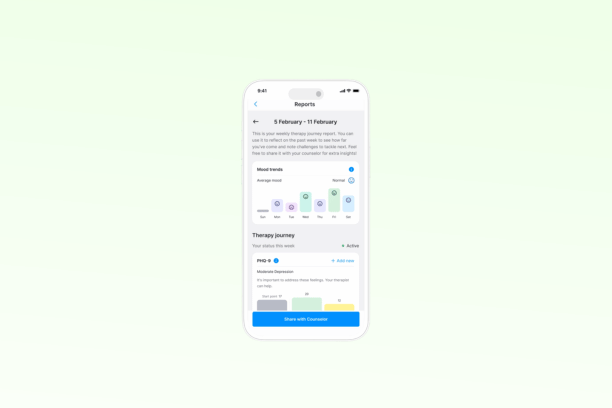
Beyond scheduled appointments, it also provides self-help resources to support your progress. Its daily mood tracker lets you record your feelings, symptoms, and activities to identify patterns. The brand offers a library of articles, courses, and worksheets, which provide exercises for building coping skills and understanding mental health concerns.
Primary Services
Calmerry offers digital counseling to help you address emotional, behavioral, and relationship concerns with a licensed mental health professional. Its services may help tackle concerns like obsessive-compulsive disorder (OCD), stress, grief, addiction, maternal mental health, and relationship difficulties.
The text-based plans and mental health tests help you reflect on your symptoms and identify areas that need support. As per its official website, the platform typically matches you with a licensed professional within 24 hours of the intake. Depending on your plan, you may communicate through text messaging or video consultations, access journaling and mood tracking tools, or arrange consultations around your schedule.
The brand also provides an option to change therapists if the initial match does not meet your needs. It lists several therapeutic approaches that can be used based on your concerns and goals. Cognitive behavioral therapy (CBT) examines how thoughts, emotions, and behaviors influence one another. It may help you identify these patterns and practice more balanced responses. Dialectical behavior therapy (DBT) focuses on emotional regulation, distress tolerance, and mindfulness. It could teach practical skills that might help you manage intense emotions, pause before reacting, and respond more constructively during conflict.
As the program progresses, you and your therapist can establish practical goals, including managing anxious thoughts, improving communication, or rebuilding self-confidence. Depending on your circumstances, your recommendations may include recording anxiety triggers, tracking mood changes, practicing coping skills, or reflecting on recurring thoughts.
Calmerry Advantages
-
Personalized Therapist Matching
Calmerry uses your answers to an initial mental health questionnaire to match you with an available, licensed therapist in your state. Depending on your needs, you may be matched with a clinical psychologist, licensed clinical social worker (LCSW), licensed professional counselor (LPC), or marriage and family therapist (LMFT). The matching process also considers the concerns you want to address, including anxiety, grief, trauma, or relationship challenges.
The brand also allows you to request a change at any time at no extra cost if the first match does not feel right. It is important to note that the initial match cannot guarantee that the therapist’s communication style or approach will meet your expectations. However, the personalized matching approach aims to minimize such gaps.
-
Offers Guided Support
Calmerry pairs counseling support with tailored planning and digital resources that may help track your emotional state. Its app provides access to mood tracking, guided journal prompts, mental health assessments, and weekly progress reports. You also get a self-help library with articles, reflective exercises, worksheets, and mental health courses to support learning between sessions.
Such features could help you recognize changes in your mood, reflect on your experiences, and follow your progress throughout the journey. They also help you organize your thoughts and identify topics to discuss with your provider, so you can make better use of scheduled consultations. It could provide a more structured approach to understanding your own progress.
Calmerry Limitation
-
Short Standard Video Sessions
Calmerry limits standard video counseling sessions to 30 minutes, which may leave you with less time to discuss complex concerns. You may need more time to explain what you are experiencing, discuss your feelings, and explore possible next steps with your provider.
The platform allows you to schedule back-to-back sessions or add extra to extend the discussion. However, these options can increase your costs and make scheduling more difficult. Such a strict time limit might feel restrictive when you have several issues to discuss or need more time to work through a difficult topic. You may finish a discussion before fully exploring a concern or clarifying your next steps, leaving part of the discussion unresolved until another appointment.
Pros
- Combines text-based therapy and video sessions under one subscription.
- Provides free mood tracking and guided journaling tools.
- Allows cancellation without requiring a long-term commitment.
Cons
- You can access the therapist profile only after subscribing.
- Added video consultations increase costs beyond membership fees.
Calmerry Alternatives
-
Grow
When comparing the platforms, both Grow and Calmerry offer online mental health support through virtual consultations, flexible appointment options, and tailored matching. However, the platforms differ in how they handle affordability and access to care.
Grow’s services include more than 90 specialties, covering support for concerns like anxiety, depression, ADHD, trauma, grief, family conflict, and couples issues. You may filter providers by specialty, identity, language, and availability, with virtual and in-person appointments available. The platform pairs mental health care with medication management as part of its services. Similarly, Calmerry offers support for many overlapping concerns, including OCD, grief, anxiety, trauma, depression, addiction, and anger management. Its model emphasizes remote communication, allowing you to message your provider on any day or schedule live video discussions from home. It also provides access to 24/7 customer support.
In terms of pricing, there are further differences between the brands. According to its official website, Grow focuses strongly on using insurance to reduce session costs, stating an average cost of $21 per session with coverage. The actual costs might vary with your plan. It also claims to work with more than 125 insurance plans, including Medicaid.
Calmerry emphasizes subscription-based access through messaging, live video, or a combination of both. As per its official website, plans start at $50 per week via messaging, with added fees payable for live consultations. However, the platform does not accept insurance, which might contribute to increased costs.
Grow may be a stronger fit when insurance-covered pricing, a large provider network, and the option of in-person care are the priorities. Calmerry may be particularly appealing when looking for a weekly subscription with ongoing messaging, remote access, and built-in self-help tools.
-
SonderMind
SonderMind and Calmerry both offer access to digital care services around common mental health concerns. However, they have some nuances in terms of their service scope, program structures, and support ecosystem.
Co-founded by Mark Frank, SonderMind provides therapy and psychiatry services through a broad network of licensed professionals, with virtual and in-person appointments available. You may choose from plans for emotional, behavioral, or relationship concerns. The platform further allows you to consult psychiatry providers for medical assessments and medication evaluation when appropriate.
According to its official website, Calmerry offers access to online care through messaging, live video programs, or a combination of both. Its services may offer support for tackling common mental health concerns like self-esteem issues, relationship difficulties, depression, OCD, addiction, and grief counseling. However, it does not offer psychiatry services, unlike SonderMind.
SonderMind starts with a matching quiz or questions about care preferences, helping you find a suitable professional before scheduling appointments. Depending on your needs, the plans may involve approaches like Cognitive Behavioral Therapy, DBT, or Acceptance and Commitment Therapy. As per its official website, its psychiatry assessment begins with a 45–60 minute evaluation, followed by shorter, less frequent appointments when appropriate.
Calmerry uses a subscription-based approach that begins with a brief assessment and a 10-minute mental health survey. You can select a plan, get matched with a provider, and begin messaging or arranging video sessions. The service also includes self-help resources to support work between sessions, and you may even request a different provider without an added switching fee.
SonderMind pairs online counseling and psychiatry with insurance-accepted program options. Calmerry emphasizes subscription-based online support with flexible messaging and video access.
How Did We Evaluate?
-
Real User Feedback
For evaluation, we looked at the available user experiences of Calmerry on Trustpilot, where the brand currently holds a 3.7 out of 5 rating from more than 45+ reviews. The feedback highlights both the convenience of its services and concerns about its reliability.
Many users expressed that their counselors helped them recognize unhealthy thought patterns and manage everyday challenges. A user also reported successfully switching providers with the brand’s help. Several users further shared positive experiences with flexible scheduling, messaging, video sessions, and self-help resources.
Billing, cancellations, and customer service account for many of the negative experiences. One user reported an initial charge of $250 after a therapist missed four appointments and canceled a fifth. A separate complaint involved a user paying for a full month despite limited communication over 14 days. Missed appointments, unanswered messages, brief replies, and unresponsive providers added to these concerns. These user experiences show that you may find the support helpful, but you should also be aware of potential issues with appointment reliability and customer service.
Conclusion
Calmerry offers a structured approach to online therapy, with personalised therapist matching, flexible messaging, and self-help resources to support your progress between sessions. The option to change therapists without an additional fee also gives you flexibility if your initial match does not meet your needs.
However, the service’s text-based plans restrict therapist replies to 1–2 times per active working day, which may leave you waiting for feedback. Standard video sessions last 30 minutes, and extending a consultation to 60 minutes costs an additional $120 per hour, potentially increasing your overall expenses.
Before subscribing, review the plan details, included sessions, and cancellation and billing policies so you know what to expect. The brand offers convenient online access and ongoing messaging, but reported issues with appointment reliability and billing may make it harder to rely on the service for consistent support.

Rachel has been a freelance medical writer for more than 18 years. She graduated from the University of Tennessee at Knoxville in 2005 and is currently practicing as a Certified Registered Nurse Anesthetist at a Level I trauma center.
Leave a Reply