

No products in the cart.
Contents
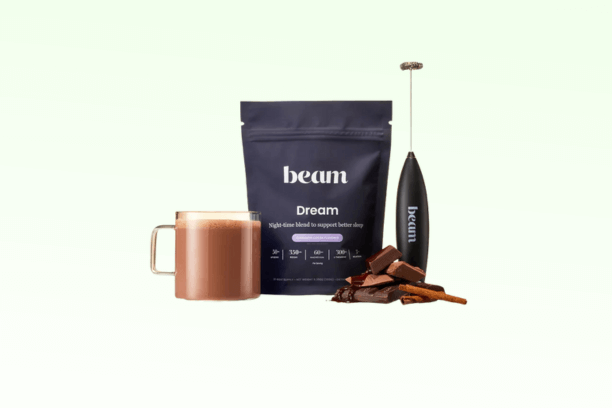
Beam Dream might help you fall asleep, stay asleep, and wake up without feeling overly tired. According to the brand, Beam Dream may also have effects beyond sleep, such as supporting mood regulation, daytime energy, memory, and reducing nighttime wake-ups. However, can Beam Dream support your nightly routine?
This review outlines the ingredients used in Beam Dream and explains how it may affect your nervous system or sleep cycle. It also covers how the powder is used, what customers have reported about its effects, and what limitations or considerations may apply before deciding whether to include Beam Dream in your routine.
What Is Beam Dream?
As per the official website, Beam Dream supports your evening wind-down routine and promotes a more restful sleep experience.
The company states that Beam Dream can help you in falling asleep easily and wake up feeling mentally clearer. Beam Dream could work with your body’s natural circadian rhythms. It may also reduce overnight awakenings and support a more restorative sleep phase, which in turn could lead to improved alertness upon waking.
The makers claim that Beam Dream is free from added sugars, artificial sweeteners, gluten, and dairy. It comes in several flavor options, including Original Cinnamon Cocoa, Chocolate Peanut Butter, Brownie Batter, Sea Salt Caramel, Blueberry Crumble, Salty Dark Chocolate, and Iced Cherry Berry. Its variety pack containing single-serve stick packs is also available for sampling or travel.
In addition to its standard formulations, Beam Dream also comes in a melatonin-free version of the Original Cinnamon Cocoa flavor. This version is intended for those who may be sensitive to melatonin or wish to avoid it while still looking for the same general sleep-supportive experience.
How Does Beam Dream Function?
As per the manufacturers, Beam Dream functions through a multi-compound formulation that can support the biological processes that guide your transition from wakefulness to sleep. Its mechanism involves ingredients that may work together to influence neural relaxation, circadian signaling, and sleep architecture.
The makers added L-theanine to their Beam Dream formula. This amino acid may influence brain wave patterns associated with calmness without sedation. It could help with increased alpha wave activity, which may support a mentally relaxed yet wakeful state prior to sleep.
The Beam Dream formula also has apigenin, which could potentially interact with GABA-A receptors, possibly modulating inhibitory signaling in the brain that governs sleep onset.
Magnesium, present as a combination of citrate and malate forms in Beam Dream, may support muscle relaxation and neural signaling by acting as a cofactor in neurotransmitter regulation.
Beam Dream also contains reishi mushroom extract, which may help in modulating stress responses that interfere with sleep. Its mechanism is centered around these neuromodulatory, adaptogenic, and circadian-regulating components that may support smoother and more consistent nightly sleep cycles.
Ingredients In Beam Dream
-
Magnesium
Magnesium has a fundamental role in neuromuscular and neurochemical processes. It may serve as a cofactor in the synthesis of melatonin and in the regulation of GABA, which reduces neuronal excitability. Citrate and malate are two highly bioavailable forms that allow for faster absorption. Magnesium may bind to NMDA (N-methyl-D-aspartate) receptors to reduce excitatory signaling, while simultaneously enhancing GABAergic tone, promoting a calmer state that supports sleep initiation.
-
Sodium
Sodium’s impact on hydration and cellular excitability has an indirect role in sleep physiology. The sodium content in Beam Dream comes from Himalayan rock salt, which contains trace minerals. At low doses (60 mg per serving), sodium may help maintain the osmotic balance required for neural signaling without promoting overexcitation. During sleep, electrolyte balance contributes to stable heart rate and blood pressure regulation, while insufficient sodium intake in the evening has been linked in some studies to nocturnal wakefulness or muscle cramping.
-
Reishi Mushroom Extract
Reishi mushroom contains bioactive compounds like triterpenes and polysaccharides that could influence the hypothalamic-pituitary-adrenal (HPA) axis by modulating cortisol levels and reducing physiological responses to stress. Chronic stress might lead to overactivation of the HPA axis, which may delay the onset of melatonin release and disturb the sleep-wake cycle. Reishi’s immunomodulatory and neuroprotective effects may also impact sleep indirectly by promoting systemic balance, reducing nighttime inflammation, and enhancing vagal tone.
-
L-Theanine
L-theanine readily crosses the blood-brain barrier and is known to increase alpha brain wave activity. It may modulate several neurotransmitters, including GABA, serotonin, and dopamine. This modulation may lead to a reduced perception of stress, lower heart rate, and enhanced subjective sleep quality. L-theanine does not cause drowsiness directly but instead promotes a state of calm that may improve sleep latency and efficiency.
-
Apigenin
Apigenin could bind to the benzodiazepine site on GABA-A receptors, enhancing GABAergic signaling without the sedative potency of pharmaceutical GABA agonists. This receptor-level activity may help reduce neuronal excitability and promote tranquility without impairing cognitive function. Apigenin also has antioxidant and anti-inflammatory effects, which might indirectly support brain health and reduce stress-related disruptions in sleep. Due to its affinity for GABA-A receptors, apigenin might aid in sleep onset and relaxation.
-
Melatonin
The melatonin hormone is secreted in response to darkness and may regulate the circadian rhythm by signaling to the suprachiasmatic nucleus (SCN) that it is time to initiate sleep processes. Beam Dream’s melatonin variant has melatonin at a 3 mg dose in its 1 scoop 6 gram serving, which may shift circadian timing. It binds to MT1 and MT2 receptors in the brain, promoting sleep initiation and improving subjective sleep quality. However, melatonin helps regulate the timing of sleep rather than inducing sedation directly.
How To Take Beam Dream?
As per the makers, Beam Dream is intended to be consumed as a warm nightly beverage approximately 30 to 45 minutes before bedtime. To prepare it, adt one scoop6 gramsam) of the powder into a mug with hot water or warm milk, whichever you prefer, as a base.
Where To Buy Beam Dream?
Beam Dream is sold exclusively on the official Beam website and is not distributed through third-party retailers, online marketplaces, or brick-and-mortar stores. To guarantee that you receive an authentic product, with the correct formulation, proper shelf life, and access to subscription pricing or customer service, Beam recommends placing your order directly through its official site. Purchasing from unauthorized sellers may risk receiving counterfeit or outdated items.
Benefits Of Beam Dream
-
May Help You Fall Asleep Faster
Beam Dream might help initiate sleep more efficiently. According to the brand, the product may ease the mental and physiological transition from wakefulness to rest. The combination of ingredients is selected to support relaxation and reduce internal stimulation that often delays sleep onset. If you frequently find yourself lying awake or struggling to fall asleep despite feeling tired, Beam Dream may help you shorten sleep latency, which is the time it takes to actually fall asleep.
Beam Dream could make it easier for your mind and body to disengage from daily stressors by potentially lowering neural excitability and fostering a more relaxed internal state. This benefit may be especially useful if your sleep issues stem from overstimulation or difficulty mentally winding down at night.
-
Might Support Restorative Sleep
Beam Dream may promote sustained and restorative sleep throughout the night. The formulation may influence both sleep architecture and quality by interacting with the body’s natural circadian rhythm. While the ingredients aren’t intended to sedate you, they may help support deeper stages of non-REM sleep, which are essential for physical and cognitive recovery. If you tend to wake up multiple times during the night or feel unrefreshed in the morning, Beam Dream could help by encouraging longer stretches of uninterrupted rest. This may allow your body to spend more time in slow-wave sleep, which plays a key role in muscle repair, immune function, and memory consolidation.
-
Could Reduce Nighttime Restlessness
Beam Dream may help quiet mental chatter and reduce physical restlessness that often interferes with sleep. The formula could promote a calm internal environment, potentially lowering the stress-related signals that keep your nervous system alert at night. While it’s not a treatment for anxiety, Beam Dream may support a more relaxed mental state that’s conducive to sleep. Beam Dream might help your nervous system shift away from high-alert mode, making it easier to stay still, both physically and mentally. This might lead to a smoother transition into sleep without the need for stronger interventions or habit-forming substances.
Side Effects Of Beam Dream
-
Might Lead to Gastrointestinal Upset
Beam Dream contains both magnesium citrate and magnesium malate, forms known for their higher bioavailability. While these can support muscle relaxation and nervous system balance, they might also lead to side effects like loose stools or mild stomach discomfort. This occurs because magnesium, particularly in citrate form, can act as an osmotic laxative, especially if you’re already consuming magnesium from other sources.
-
Might Trigger Sensitivities
Reishi mushroom extract (350 mg per 6 g serving) is included in Beam Dream for its potential to promote sleep and relaxation through adaptogenic activity. However, fungal extracts can sometimes cause digestive discomfort, allergic reactions, or even dry mouth. If you have a known sensitivity to mushrooms or if you begin experiencing skin irritation or respiratory symptoms, it may be linked to this ingredient.
-
Could Lead to Sedation
Beam Dream has 50 mg of apigenin in each 6-gram serving. This is a natural compound often taken from chamomile and is meant to help you relax by calming brain activity. But if you’re sensitive to herbal ingredients, it might make you feel more sleepy than expected or leave you feeling groggy the next morning. Some people might experience mild nausea or an upset stomach when Beam Dream is taken regularly.
Alternatives To Beam Dream
-
Thirdzy
Beam Dream and Thirdzy both target improved sleep quality and recovery, but they differ significantly in formulation, delivery style, and intended use.
Thirdzy is a melatonin-free powder designed especially to enhance natural sleep and support physical recovery without morning grogginess. Its formula has 10 grams of hydrolyzed collagen per serving that may promote joint and muscle repair. This is paired with 250 mg of magnesium bisglycinate for muscle relaxation and natural melatonin support, along with calming neurotransmitters GABA (300 mg) and L-theanine (200 mg) to reduce stress and promote restful sleep without sedation. Thirdzy is consumed as a cool, flavored drink, offering a refreshing “Relaxed” Strawberry Lemonade taste.
Beam Dream Powder offers two formula options, including one containing 3 mg of melatonin and one melatonin-free version for those sensitive to hormones. Its 6-gram serving is said to provide you with 350 mg of reishi mushroom extract, 300 mg of L-theanine, and 50 mg of apigenin, adaptogenic and calming compounds to help you fall asleep faster and maintain relaxation. Magnesium is included as citrate and malate (a total of 60 mg), but at a lower dose than Thirdzy. Unlike Thirdzy, Beam Dream provides about 1 gram of protein per serving but lacks collagen as a major component.
The powder has a rich flavor profile with organic coconut milk powder, cocoa, monk fruit extract, and cinnamon powder, and it is typically mixed with water or warm milk to make a soothing bedtime ritual.
In pricing, Thirdzy provides flexible bundle options, including a 7-night travel pack ($3.43/night), a 30-night supply subscription ($2.07/night), and a 3-month subscription reducing costs to about $1.70 per night. Free shipping and a 30-night risk-free trial are also included. Beam Dream’s subscription costs $68 per month after a 20% discount from $85 retail and includes a free frother and free shipping, with the convenience of pausing or canceling anytime. Beam’s pricing reflects its premium positioning and focus on a comforting ritualistic experience.
Thirdzy may suit you better if you want a melatonin-free supplement and is more focused on physical recovery and collagen support. Beam Dream Powder offers either a melatonin or melatonin-free option, with added herbal adaptogens, and is meant to be mixed into a warm beverage. Both products target sleep support with a difference in their approach, format, and ingredients.
-
Noocube Sleep Upgrade
NooCube Sleep Upgrade comes in a capsule form and is claimed to be melatonin-free. It has a blend of magnesium bisglycinate, lemon balm extract, lavender, and Lutemax® 2020, which is a specialized ingredient that supports circadian rhythm and may help decrease the negative effects of blue light exposure on sleep.
Pricing for NooCube Sleep Upgrade is flexible and designed to meet different usage budgets and needs. The smallest option, a 1-month supply containing 60 capsules, can be purchased for $64.99. For those who prefer longer supply commitments, the 3-month supply is the most popular choice, priced at $129.99. For maximum savings, the 5-month supply is discounted to $194.99, allowing you to stock up and reduce the per-capsule cost substantially. Subscriptions are flexible with up to a 15% discount with no long-term commitment, and you can cancel anytime.
Meanwhile, Beam Dream Powder offers a different experience with a flavored powdered supplement you mix into warm milk or water. Its formula contains melatonin alongside magnesium citrate and malate, reishi mushroom extract, L-theanine, and apigenin, targeting relaxation and the natural sleep cycle.
Melatonin may help you fall asleep faster, while ingredients like reishi and apigenin promote calming effects on the nervous system without heavy sedation.
The powder is available in flavors such as Chocolate, Sea Salt Caramel, and Cinnamon Cacao, and there is a melatonin-free version for those sensitive to the hormone. The act of preparing and sipping the warm drink can itself become a relaxing nightly ritual.
Beam Dream’s pricing is structured around a subscription model priced at $68 per month after a 20% discount from the regular $85 price. Like NooCube, Beam Dream subscriptions allow you to pause or cancel anytime, providing flexibility without long-term obligations.
NooCube Sleep Upgrade is a melatonin-free capsule made to support your natural sleep cycle and mental recovery. Beam Dream comes in both powder and capsule forms and includes melatonin along with herbal ingredients like adaptogens. The powder is meant to be mixed into a warm drink, while the capsule offers a quicker option.
Both products differ in ingredients and how they’re used. Your decision may depend on whether you prefer a melatonin-free formula, a capsule or drink format, and what fits best into your evening routine.
Pros
- Available with or without melatonin, catering to different preferences.
- Contains adaptogens like reishi mushroom and apigenin for relaxation.
- Includes magnesium, L-theanine, and sodium to support sleep onset.
- Subscription offers 20% off, free shipping, and a free frother.
- Made in GMP-certified U.S. facilities.
Cons
- Higher price point (~$68/month subscription).
- Melatonin may cause grogginess for some.
- Requires mixing, less convenient than capsules.
- Contains coconut, a potential allergen.
- Minimal protein, less focused on muscle recovery.
How Did We Evaluate?
-
Real User Reviews
Across platforms like Amazon and Reddit, Beam Dream has received mixed feedback, especially regarding taste, ingredient effects, pricing, and long-term usefulness.
On Amazon, many verified reviewers praise Beam Dream for its ability to help them fall asleep more quickly and wake up feeling rested.
Several users highlighted the chocolate-based flavors, such as Sea Salt Caramel and Chocolate Peanut Butter, as enjoyable and comforting, contributing to a relaxing bedtime routine. For users who avoid melatonin due to grogginess, Beam Dream’s melatonin-free formula was seen as a plus.
However, not all feedback was positive. Some users noted that Beam Dream’s sleep benefits declined with continued use, suggesting a tolerance effect. A few reviewers experienced side effects like nausea or headaches, while others reported that the product had no effect at all. Packaging issues, such as fewer servings than advertised, especially with the Brownie Batter flavor, were also flagged.
Pricing was a recurring concern, with several users stating that the $65–$70 price tag felt steep given the inconsistent outcomes. Despite generally high star ratings, many reviews were lukewarm in tone, indicating limited repeat purchase intent.
On Reddit, discussions were more critical. Some users described Beam Dream as part of the over-marketed “podcast supplement” category and expressed disappointment after trying it. One Redditor who bought it out of curiosity concluded it was just a pricey cocoa mix with minor calming effects.
While a few users did report reduced nighttime awakenings and a sense of routine, many questioned the efficacy of its ingredients. Apigenin was often cited as the most promising component, while others, like reishi mushroom and L-theanine, were considered underdosed or ineffective in sleep support.
The inclusion of melatonin drew concern from users who experienced next-day grogginess or headaches. One user discontinued Beam Dream after consistent morning headaches during the first week of use.
Taste and preparation convenience were also debated on Reddit. Some users preferred mixing the powder with oat milk or creamer for better flavor, while others found it unpalatable in water. Capsule versions of Beam Dream were preferred by those who disliked hot drinks or needed a portable option.
Cost and subscription practices drew strong criticism, with multiple users reporting being automatically enrolled in subscriptions and facing difficulty canceling or getting refunds.
Several Reddit users were deterred from even trying the product after reading these negative experiences and questioned the product’s cost-to-benefit ratio.
Thus, the real-world feedback from both Amazon and Reddit paints a subtle picture of Beam Dream. While the product appears to help some people fall asleep faster and potentially improve sleep quality without morning grogginess, its benefits are far from universal.
On Amazon, users who enjoy flavored nighttime beverages and appreciate a gentle, non-melatonin approach to sleep have found Beam Dream useful in establishing a calming bedtime habit.
However, even among positive reviewers, long-term satisfaction is less common, as some report reduced effectiveness over time, possible tolerance development, and occasional side effects like nausea or headaches. Issues like serving count discrepancies and steep pricing also affect customer confidence.
-
Brand Reputation
Beam Organics has a mixed standing on public review platforms, with differences between user satisfaction ratings and the volume of unresolved complaints.
On Trustpilot, the brand holds a 2.3 out of 5 rating, which is based on a small number of reviews. Some users mention positive interactions with customer service and note that certain products helped improve their sleep quality. However, other reviews raise concerns about delayed shipments, unexpected subscription renewals, and difficulties obtaining refunds. A few customers also report unclear labeling and unmet expectations from promotional deals during checkout or subscription sign-ups.
On the Better Business Bureau (BBB), Beam Organics is not accredited and has received an F rating, which is the lowest possible. This rating stems mainly from unanswered complaints. The company is listed at a Rockland, Massachusetts address, and Kevin Moran is named as CEO.
Beam has not responded to multiple formal complaints on the BBB platform and has not completed the BBB’s verification or transparency process.
These two sources suggest that while Beam receives some favorable product feedback, inconsistencies in customer support and refund handling could affect your experience. Trustpilot and BBB both point to patterns in fulfillment and subscription-related concerns.
Frequently Asked Questions
- What is the significance of using both magnesium citrate and magnesium malate in Beam Dream?
Magnesium citrate is well-absorbed and can promote muscle relaxation, while magnesium malate is involved in energy production pathways. Combining these forms in Beam Dream may provide balanced support for relaxation and metabolic energy, aiding both calmness and physical recovery. - Could Beam Dream help reduce sleep latency in individuals with anxiety?
The combined anxiolytic effects of L-theanine, apigenin, and melatonin may help lower the time to fall asleep by calming your nervous system. - Can Beam Dream cause morning grogginess?
Yes. It might, especially with Beam Dream’s melatonin version, since melatonin can linger and affect next-day alertness in sensitive individuals, but the melatonin-free formula minimizes this risk. - Does Beam Dream contain any common allergens?
Yes, Beam Dream contains coconut-derived ingredients, which may be an allergen for some people sensitive to tree nuts. - Does Beam Dream support muscle recovery?
Not directly, as Beam Dream contains minimal protein and no collagen; its focus is primarily on relaxation and sleep quality.
Final Words
Beam Dream may help with relaxation and aid in your sleep-wake cycle. It may promote a sense of calm in the evening and make it easier for you to unwind before bed. Beam Dream could also ease mental tension and reduce nighttime overactivity.
However, Beam Dream might cause minor morning grogginess and digestive discomfort. Your factors, such as age and metabolism, will also significantly influence how effective and tolerable Beam Dream is for you.
It’s also important to remember that long-term sleep improvement depends on more than taking Beam Dream alone. You can support your sleep-wake cycle by keeping a consistent bedtime, avoiding screens close to lights-out, and protecting your natural melatonin rhythm.
Stress management techniques, such as mindfulness, slow breathing, or light evening movement, can further ease the transition into rest. Other options, like chamomile or valerian root tea, may also offer mild calming effects.
Moreover, habits like regular physical activity and a nutrient-rich diet that includes magnesium and B vitamins may help reinforce your sleep architecture over time. Beam Dream can be one part of this broader routine, but it works best when paired with supportive lifestyle practices.

Rachel has been a freelance medical writer for more than 18 years. She graduated from the University of Tennessee at Knoxville in 2005 and is currently practicing as a Certified Registered Nurse Anesthetist at a Level I trauma center.
Leave a Reply