

No products in the cart.
Contents
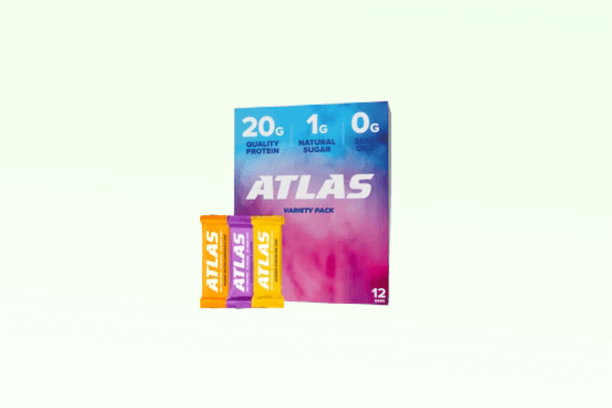
Atlas Bar operates within the functional nutrition and high-protein snack niche, focusing on providing convenient options with minimal heavily processed ingredients.
The brand claims to address concerns such as excess sugar, artificial sweeteners, seed oils, and overly complex ingredient lists that are common in many snack bar brands. Its range includes whey-based protein bars and plant-based protein bars, offering multiple flavor options designed for daily snacking or workout support.
This review covers the brand’s formulation approach, product range, flavor considerations, nutritional value, pricing structure, and brand transparency. It also discusses verified user reviews that may help you gain a clearer sense of how Atlas Bar fits within the broader market and whether it could match your preferences.
About Atlas Bar
Founded by James Oliver, Atlas Bar is a nutrition-focused brand that provides high-protein, low-sugar convenience offerings. It focuses on creating simple, nutrient-dense bars that depend exclusively on whole-food ingredients.
Atlas Bar’s current product range centers on its protein bar line, available in multiple flavors crafted to deliver balanced macros and minimal sugar without sacrificing taste. The lineup includes options like Peanut Butter Chocolate Chip, Dark Chocolate Almond, Almond Chocolate Chip, and Salted Peanut Butter. These bars are claimed to be high protein, low sugar, and ingredients derived from natural sources such as almond butter, whey proteins, cacao, coconut oil, monk fruit, and Himalayan salt.
Atlas Bar Bestsellers
-
Protein Bars
As per the makers, their Protein Bar range contains 20g of protein, 0-1g of total sugars, no seed oils, and no artificial sweeteners. They come in four flavors, including Dark Chocolate Almond, Peanut Butter Chocolate Chip, Almond Chocolate Chip, and Salted Peanut Butter. These bars are said to be made with ingredients like peanuts, tapioca fiber, vegetable glycerin, sunflower lecithin, and coconut oil. Peanuts naturally contain plant proteins and fats that may support satiety and energy. Tapioca fiber comes from the cassava root and could support digestive function as a fermentable fiber. Coconut oil contains medium-chain fats that might be used quickly by the body for energy. The Protein Blend combines whey protein isolate and milk protein isolate sourced from Wisconsin dairy farms, offering complete proteins that could support muscle repair and fullness.
Protein Bars also include dark chocolate chips made of unsweetened chocolate, allulose, and cocoa butter. Unsweetened chocolate contains natural cocoa compounds that may provide antioxidant activity, while allulose is a low-calorie sweetener that the body might metabolize minimally. The makers also added cocoa butter, which adds natural fats that may contribute to smoothness and structure. They also include Himalayan salt that may support electrolyte balance.
-
Variety Pack
The Variety Pack offers a mixed selection of Atlas Bars, allowing you to sample multiple flavors within a single box. As per its official site, the pack provides four bars each of the Almond Chocolate Chip, Peanut Butter Chocolate Chip, and Dark Chocolate Almond flavors.
Pros
- Claims to support active lifestyle and fitness goals.
- Offers free U.S shipping on purchases worth $50 or more.
- The brand’s offerings exclude fillers, preservatives, or added sugars.
Cons
- Premium positioning may limit accessibility.
- It has a niche market focus.
Atlas Bar Advantages
-
Athelete Founded Brand
Atlas Bars was founded in 2017 by James Oliver, a certified sports nutritionist who participated in endurance sports such as triathlons and ultra-events. The brand is said to be built around his stated principles that you need adequate protein, excess sugar is undesirable, and real food is preferable to processed ingredients.
The company describes these principles as the foundation for its formulation approach for making its protein bars, which are 20 g of protein from whey and milk protein sources, 1 g or less of naturally occurring sugar from monk fruit, and natural ingredients such as peanuts and almonds.
The brand consistently frames its identity around Oliver’s sports-nutrition credentials, his endurance-training experience, and his personal motivations for creating a high-protein, low-sugar bar.
This means the brand’s nutritional choices and product positioning are presented as being shaped by the founder’s sports-nutrition training and by his own experiences managing protein intake, sugar levels, and ingredient quality during endurance training. This may give you a clearer context for why the company emphasizes specific macronutrient targets, ingredient selection, and a real food framework.
Any perceived relevance, such as seeing the brand’s offerings as aligned with athletic routines, higher-protein eating patterns, or lower-sugar preferences, would stem from how the founder describes his rationale, not from independent verification or clinical performance data. While this does not guarantee performance results, it signals that formulation choices were decided by someone with athletic experience.
-
Sugar-Conscious Approach
Atlas Bars claims that its entire product line, including its Peanut Butter Chocolate Chip, Dark Chocolate Almond, and Almond Chocolate Chip varieties, adheres to a low-sugar formulation rule, limiting each bar to about 1 gram of sugar.
The company claims it avoids sugar alcohols, artificial sweeteners, and added sugars, instead relying on ingredients such as nut butters (peanut butter, almond butter), whey and milk proteins, tapioca fiber, coconut oil, dark chocolate chips, cocoa powder, and natural sweetening from monk fruit extract.
According to its own Read Our Label section, the ingredient list includes monk fruit extract as a natural sweetener alongside the nut-butter base and natural cocoa/chocolate components. This means that if you check an Atlas Bar’s ingredient panel, you will likely find nut butters, dairy proteins, tapioca or other natural fibers, cocoa or dark chocolate, and monk fruit extract listed rather than conventional added sugars or sugar alcohols.
The brand claims that the sweetness and texture come from these ingredients rather than conventional sweeteners. However, if you are monitoring sugar intake, it is important to note that monk fruit extract is used as a natural, low-calorie sweetener, and that naturally occurring sugars from nuts and dairy proteins may contribute to the total sugar content.
Potential Disadvantage
-
Limited Product Range
Atlas Bars offers a notably narrow product catalog on its official site, centered around a very small set of protein-bar flavors. The primary offerings consist of Peanut Butter Chocolate Chip, Dark Chocolate Almond, and Almond Chocolate Chip, which represent the core of the brand’s lineup.
There are no additional bar categories, seasonal rotations, limited editions, functional variants (such as “energy,” “meal,” or “breakfast” bars), or alternative product formats like bites, minis, powders, or ready-to-drink protein beverages.
This stands in contrast to brands such as Kind Snacks, which maintains multiple bar lines with distinct formulations and dozens of flavor variations, including Protein Max bars, Seeds, Fruits and Nuts bars, soft-baked bars, savory-leaning varieties, and school-friendly children’s options, all positioned across different functional and flavor profiles.
Aloha also offers a larger plant-based variety that includes protein bars, mini bars, protein powders, and ready-to-drink protein beverages, with numerous flavors such as Chocolate Cherry, Peppermint White Chocolate, Banana Bread Chocolate Chip, and recurring seasonal editions. Relative to these broader product ecosystems, Atlas Bars operates with a notably minimal lineup.
This means that your choices within Atlas Bars can be limited to three core flavor options and a single product format. If you prefer variety across ingredients, taste profiles, or functional categories, Atlas’s catalog may offer fewer options compared to brands with larger portfolios. There are no options to switch between different bar styles, protein sources, sugar levels, or format types.
Alternatives To Atlas Bar
-
Kind Snacks
Kind Snacks frames its identity around simplicity, recognizability, and sustainability. Meanwhile, Atlas Bar approaches its brand narrative from a more product-centric, founder-led perspective. Its focus lies in providing protein support, highlighting a strict formulation philosophy built around 20g of complete protein, 1g of natural sugar, and the absence of seed oils or artificial sweeteners.
Where Kind positions itself within a broader ecosystem of environmental responsibility and ingredient transparency, Atlas positions itself as a precision nutrition brand driven by clean macronutrient profiles and straightforward, minimally processed components.
In terms of product range, Kind Snacks offers a wide assortment of snacks spanning bars, granolas, breakfast items, and school-friendly options that reflect a portfolio designed to accommodate various dietary needs and daily eating occasions.
Examples include Almond and Coconut, Almond Butter, Almond Butter Dark Chocolate Bars, and Dark Chocolate Almond Coconut. Granola and cluster offerings include Almond Butter Granola Clusters and Apple Cinnamon Nut Granola.
Breakfast and on-the-go options are represented by Apple Caramel, Apple Cinnamon Protein, and Banana Peanut Butter with Dark Chocolate Chunks.
On the other hand, Atlas Bar maintains a tighter, more specialized catalog centered almost exclusively on protein bars. Its flavors include Dark Chocolate Almond, Almond Chocolate Chip, and Peanut Butter Chocolate Chip varieties, with its Pro Bundle and Subscribe and Save options supporting multi-box purchasing and recurring orders. While KIND encourages exploration across multiple snack formats and occasion uses, Atlas highlights consistency in formula and purpose across its concentrated set of bar flavors.
Kind may appeal to everyday consumers seeking convenient, recognizable snacks that balance taste, whole food ingredients, and some level of environmental responsibility. Meanwhile, Atlas Bar attracts a more performance-oriented people who value ingredient minimalism, macronutrient clarity, and the reliability of predictable protein and sugar levels. Its messaging focused on steady energy, transparency of sourcing, and clean labeling standards.
-
Aloha
When comparing Aloha and Atlas Bar, both operate in the same clean-label protein space, serving those who want straightforward nutrition, simple ingredient lists, and alternatives to heavily processed bars. However, they differ in their certifications, sourcing philosophies, product range breadth, and the type of nutritional identity each chooses to highlight.
Aloha frames its entire brand around USDA Organic and Non-GMO Project Verified standards, presenting these certifications as the foundation of The Aloha Way. This value system is strengthened through B Corp Certification, sustainability pages, and a distribution footprint spanning 20,000+ stores supported by resources like the Find a Store locator and community engagement.
Meanwhile, Atlas Bar builds its identity around a minimalistic ingredient approach centered on Protein Without Compromise, consistently using 20g clean protein, 1g natural sugar, 0g seed oils, and no artificial sweeteners or sugar alcohols. It reinforces transparency through its sourcing transparency.
Aloha’s product range is broad and structured across multiple protein formats, with specific nutritional pillars for categories like bars, drinks, and powders. Its lineup is more varied, featuring bar sampler packs like the Protein Bar Sampler Variety Pack and Protein Bar Sampler2, seasonal flavors such as Peppermint White Chocolate and Pumpkin Spice, and core items like Chocolate Chip Cookie Dough and Almond Butter Cup.
On the other hand, Atlas Bar maintains a deliberately narrow portfolio centered solely on 12-bar boxes with flavor options such as Peanut Butter Chocolate Chip, Dark Chocolate Almond, Almond Chocolate Chip, and Salted Peanut Butter.
Aloha’s accessibility strategy leans on a wide retail presence and its Autoship & Save program that offers up to 25% savings, flexible delivery schedules, and reward incentives, though subscription totals vary by product category. Meanwhile, Atlas Bar offers a uniform pricing model that makes cost predictability straightforward, providing one-time purchases and subscription options.
Both brands maintain strong commitments to clean nutrition but express their philosophies differently. Aloha differentiates through certified organic sourcing, product variety, and sustainability storytelling. Meanwhile, Atlas differentiates through ingredient provenance, high protein per bar, and a single-format approach.
How Did We Evaluate?
-
Brand Reputation
Based on its background, Atlas Bars positions itself as a brand focused on offering high-protein snacks without artificial additives. The company emphasizes transparency in ingredient quality, highlighting the absence of added sugars, GMOs, gluten, seed oils, and artificial sweeteners. When considering external feedback, the brand’s reputation appears generally positive, though not without nuance.
On TenereTeam, Atlas Bars holds a 4.4 out of 5 rating, supported by 1,894+ ratings, indicating strong consumer engagement. The platform also notes significant coupon usage, suggesting that affordability and savings play a role in customer interest.
At the same time, some users noted drawbacks, such as the occasional sour aftertaste and extra shipping costs for smaller orders, highlighting areas where experiences vary.
This indicates that Atlas appears to be a dependable option for clean, high-protein products. However, individual taste preferences and purchasing logistics may influence overall satisfaction.
It is also essential to note that at the time of writing this review, there was limited information available for the brand on platforms like Trustpilot and Better Business Bureau.
-
Real User Feedback
To understand consumers’ experience of Atlas Bar’s offerings, we reviewed verified customer ratings across Amazon. The Dark Chocolate Almond holds a 3.9 out of 5 rating from 788 global reviews. Meanwhile, the Peanut Butter Chocolate Chip maintains a 4.3 out of 5 rating across 1,073 global reviews.
Reviewers frequently refer to specific flavors such as Peanut Butter Chocolate Chip, Salted Peanut Butter, and Dark Chocolate Almond, and feedback often varies depending on the flavor purchased and the condition of the box received.
Many customers point to the bars’ clean ingredient profile, 20 grams of protein, and 1 gram of sugar as the primary reasons for choosing Atlas. Users commonly describe the bars as filling enough for post-workout recovery, busy mornings, or mid-day snacking.
Several reviewers also appreciate the subtle sweetness from monk fruit and the lack of sugar alcohols, noting that the bars feel easy to digest and do not cause bloating. Positive feedback also highlights the generally soft or chewy texture, depending on the flavor.
However, some users shared texture inconsistencies, oiliness, and milder-than-expected flavors. While some reviewers say the bars are not oily at all, others said that certain boxes arrived greasy or slick, making the bars messy to handle. Price is another mixed area, where some consumers consider the bars fair for their ingredient quality, while others feel they are on the higher end compared to similar products.
Thus, the customer feedback across both of the flavor options of the brand shows a generally positive response, but it also highlights recurring concerns about texture consistency and value for money.
Frequently Asked Questions
- Are Atlas Bars unsuitable for strict keto diets due to net carb levels?
Yes. Atlas Bars remain low in sugar, but total carbohydrates generally include 20-21g per bar, exceeding strict ketogenic intake limits. Net carbs vary by flavor, and whey protein can trigger insulin release, which may further impact ketosis. - Are Atlas Bars free from cross-contamination risks?
No. Atlas Bars are produced in facilities where common allergens, including dairy, peanuts, tree nuts, and coconut, are present. Standard sanitation protocols may reduce but cannot eliminate cross-contact allergen risks. - Does the brand provide amino-acid transparency beyond total protein?
No. The Atlas Bar brand does not provide amino-acid transparency beyond the total protein content listed on their website. Their formula page and ingredient descriptions emphasize 20g of quality protein per bar (from grass-fed whey and milk protein isolates) but do not disclose an amino acid profile or specific breakdown of individual amino acids.
Final Word
Atlas Bar focuses on a sugar-conscious positioning, with all of its offerings following the same low-sugar framework supported by monk fruit extract, nut butters, dairy proteins, and natural cocoa or chocolate components. It claims to support energy levels that may aid in helping your performance during or after workouts.
However, the narrow product range remains a noticeable limitation. With only three core flavors and a single product format, Atlas Bar’s catalog is significantly smaller and also lacks seasonal varieties or functional offerings in different formats.
While the brand maintains clarity and consistency in its offerings, anyone seeking broader flavor diversity or different bar styles may find the selection restrictive. It is important to remain mindful of potential allergen-related sensitivities, as the brand’s offerings contain nuts, coconut oil, or other potential allergens, which may trigger allergic reactions.

Rachel has been a freelance medical writer for more than 18 years. She graduated from the University of Tennessee at Knoxville in 2005 and is currently practicing as a Certified Registered Nurse Anesthetist at a Level I trauma center.
Leave a Reply