

No products in the cart.
Contents
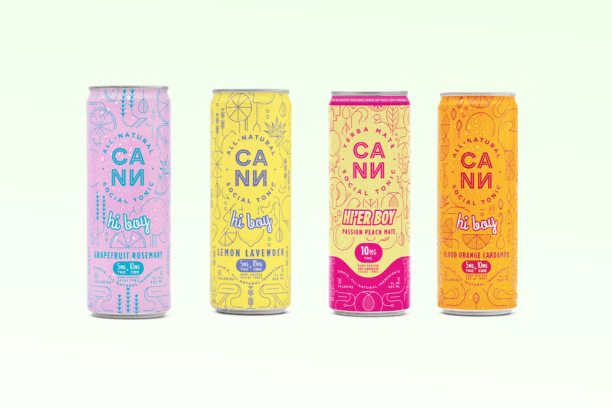
Cann specializes in hemp-derived drinks designed for social consumption. The company has built its identity around lower-dose formulations and a product portfolio that emphasizes convenience, flavor variety, and controlled serving options.
In this review, we examine the brand’s drinks’ lineup, formulation approach, ingredient transparency, and brand positioning. We also explore factors such as regulatory considerations, product availability, testing practices, and potential limitations associated with hemp-derived products.
About Cann
Founded by Jake Bullock and Luke Anderson, Cann offers a range of hemp-derived drinks organized around different potency levels and consumption preferences. According to the company, its flagship sparkling social tonics contain 2 mg of THC per can and are available in flavors such as Blood Orange Cardamom, Lemon Lavender, Grapefruit Rosemary, Ginger Lemongrass, and Yuzu Elderflower.
According to Cann, its drinks are formulated with reverse-osmosis filtered sparkling water, all-natural flavors, agave nectar, fresh citrus juice, and hemp-derived THC. The company also provides consumer resources such as a dosage quiz, publicly available Certificates of Analysis (COAs), and a retail store locator.
Core Offerings
-
Sparkling Drinks
Sparkling drinks are formulated with hemp extract, agave nectar, and botanical flavor combinations. The brand offers several product lines, including Cann, Hi Boy, Roadie, HI’ER BOY, and Spritz with different serving sizes and potency levels.
According to the brand, hemp extract serves as the primary active ingredient across many of its drinks, while agave nectar is used as a sweetener. Depending on the product, formulations may also include various botanical flavors and ingredients intended to create distinct taste profiles and consumption experiences. The range is designed to provide you with multiple formats and potency options, allowing you to choose products that align with your flavor preferences, serving-size needs, and desired experience.
Cann Limitation
-
Regulatory Uncertainty
Cann operates in the hemp-derived THC beverage market, a category facing ongoing regulatory pressure across the United States. The brand’s products depend on hemp-derived THC, making its business highly vulnerable to changes in federal and state laws. In November 2025, Congress passed legislation that introduced stricter THC limits for hemp products. If the current framework moves forward as planned, it could significantly restrict the sale of many hemp-derived THC products and reshape the market in which Cann operates.
The brand has expanded rapidly and built distribution across dozens of states, but its future depends on regulatory decisions outside of its control. It has actively lobbied lawmakers and supported efforts to create a dedicated legal framework for THC beverages, underscoring how important the issue is to its model. Changes in the legal landscape could affect where products are available, which formulations remain available, and how the brand operates across different markets.
Pros
- Multiple drink formats available.
- Features distinct botanical flavor combinations.
- Alcohol-free alternative positioning.
- Highlights low sugar formulations.
Cons
- State legality remains inconsistent.
- Future regulatory changes may impact availability.
Cann Legality Framework
Cann operates within a layered legal framework that is controlled by federal hemp laws, state-specific regulations, and product formulation standards. The brand’s drinks are generally marketed under hemp regulations established by the 2018 Farm Bill, which legalized hemp containing less than 0.3% delta-9 THC on a dry-weight basis. However, federal agencies, including the U.S. Food and Drug Administration (FDA), continue to evaluate the safety, labeling, and marketing of hemp-derived products, creating ongoing regulatory uncertainty for manufacturers operating in this category.
At the federal level, lawmakers have increasingly scrutinized intoxicating hemp products and chemically converted cannabinoids. The brand may face evolving compliance obligations, including reformulation requirements, revised labeling standards, and additional testing expectations as regulations continue to develop.
State laws also add a layer of complexity because hemp-derived drinks are not regulated uniformly across the United States. States such as Minnesota have established regulated frameworks that permit low-dose hemp-derived drinks with specific serving limits and labeling requirements. In comparison, states including Idaho maintain stricter restrictions on THC-containing products, while California has introduced evolving rules governing hemp ingredients in foods and drinks. New York and Colorado have implemented licensing, testing, and packaging requirements for hemp products, whereas Texas has periodically considered legislation that could alter the legality and distribution of intoxicating hemp products. Consequently, a product that is legally sold in one state may be restricted, reformulated, or unavailable in another.
Product-specific compliance is equally important in determining legal status. Regulators often assess THC concentration, total cannabinoid content, ingredient sourcing, manufacturing methods, and third-party laboratory testing. Many states require certificates of analysis (COAs), child-resistant packaging, accurate labeling, and clear disclosure of cannabinoid content. Products that exceed state or federal thresholds may become subject to stricter regulatory frameworks or be removed from certain markets altogether.
Although hemp products meeting federal definitions may generally move across state lines, brands must still comply with the laws of the destination state. Some jurisdictions restrict online sales, impose retailer licensing requirements, or prohibit the shipment of certain hemp-derived products.
The brand’s legal framework is shaped by a combination of federal hemp regulations, state-specific laws, and evolving oversight of hemp-derived drinks. As regulatory standards continue to change across jurisdictions, it’s important to monitor local laws, review product testing documentation, and verify labeling information before exploring these products.
Cann Alternatives
-
WYNK
WYNK and Cann both operate in the hemp-derived category, but they differ in their product strategies, portfolio breadth, and consumer positioning. As per its official website, WYNK primarily presents itself as an alcohol-free alternative designed to replicate the experience of beer, wine, or hard seltzer while eliminating calories and sugar. The brand states that its drinks deliver a light social effect within approximately 10–15 minutes and are intended for use across different occasions, from daytime gatherings to evening events. Cann, in comparison, emphasizes low-dose formulations designed for social settings and modern lifestyles, often associating its products with casual experiences such as outdoor activities, travel, and social gatherings.
The scope of each brand’s product lineup highlights another major difference. WYNK maintains a relatively streamlined portfolio centered on drinks available in 2.5mg, 3mg, 5mg, and 10mg strengths. It also offers gummies, Experience Packs, and Lemonade Variety Packs. However, Cann operates a broader product ecosystem that includes Cann, Hi Boy, HI’ER BOY, Roadie, Naked Hi Boy, Lo Boy, and Spritz, an infused apéritif. Its catalog also extends to Starter Packs, Seasonal Starter Packs, Pride Bundles, gift sets, and seasonal subscriptions, indicating a wider range of product formats and use occasions.
Ingredient emphasis further distinguishes the two companies. WYNK highlights its zero-calorie and zero-sugar formulations as key characteristics and states that it manufactures its own drinks. However, Cann places greater emphasis on ingredient sourcing, listing reverse osmosis filtered sparkling water, all-natural flavors, fresh citrus juice, and 100% agave nectar among its ingredients. The brand also notes the use of naturally derived ingredients intended to maintain potency over time and emphasizes the absence of artificial flavor essences.
Flavor development reflects different approaches to formulation. WYNK focuses on familiar fruit-forward profiles such as black cherry fizz, lime twist, tangerine, juicy mango, and the seasonal mandarin pomelo release. These offerings align closely with conventional flavored sparkling options. Cann adopts more botanical and culinary-inspired flavor combinations, including blood orange cardamom, lemon lavender, grapefruit rosemary, ginger lemongrass, cranberry sage, and yuzu elderflower. The use of herbs, spices, and citrus combinations gives its portfolio a broader range of flavor profiles compared with WYNK’s simpler fruit-focused offerings.
-
Cycling Frog
Cycling Frog presents itself as a lifestyle-oriented brand built around recreation, relaxation, and varied experiences. It frequently references enjoying the moment, unwinding, and social experiences while offering products designed for different preference levels. Cann, in comparison, places stronger emphasis on social occasions and drink culture. The brand frames its products around gatherings, parties, outdoor activities, and evenings with friends while emphasizing experiences intended to fit into everyday social settings and maintain next-day functionality.
The two brands differ in the breadth of their product portfolios. Cycling Frog offers a wide range of categories, including seltzers, gummies, rosin gummies, nighttime formulations, mints, softgels, subscriptions, and variety packs. Its lineup includes products such as Wintergreen 1mg THC Mints, Chocolate Brownie 50mg THC Brownies, Variety 8-Pack Seltzers, and softgels available in 100–200mg strengths. Cann maintains a more drink-centered portfolio organized around product families such as Cann, Hi Boy, HI’ER BOY, Roadie, Naked Hi Boy, and Spritz. The company offers starter packs, seasonal packs, bundles like the Pride Bundle and Pops’ Gift Set, along with apparel. Compared with Cann’s narrower focus, Cycling Frog covers a wider variety of product formats.
Ingredient sourcing and production practices also differ between the two companies. Cycling Frog highlights its Seed to Sip model, stating that it controls the production process from Oregon-grown hemp to the finished product. The brand also references independently tested PNW-grown hemp. Cann focuses more heavily on ingredients, emphasizing reverse osmosis filtered sparkling water, all-natural flavors, 100% agave nectar, and fresh citrus juice sourced in part from local citrus farms. While Cycling Frog emphasizes supply-chain ownership and manufacturing oversight, Cann places greater attention on drink formulation and ingredient selection.
Cycling Frog also offers greater diversity in formulations and product formats. Its catalog includes nighttime gummies formulated with THC and CBN, rosin gummies containing THC and CBG, mints, and softgels. The brand also releases limited-edition products such as Ghostshrimp x Cycling Frog Rosin Gummies. Cann differentiates its products more through format and use occasion. Its Roadie products are designed for portability, and Hi Boy products offer stronger servings than the standard line. It reflects Cycling Frog’s emphasis on formulation variety and Cann’s emphasis on drink segmentation. As per their official website, while Cycling Frog emphasizes product breadth, formulation diversity, and supply-chain control, Cann focuses more narrowly on drink experiences, curated flavor combinations, and structured dosage tiers.
Conclusion
Cann promotes measured serving sizes, lower-calorie formulations, and clearly labeled content as features intended to support a more controlled consumption experience. However, the broader category continues to face several limitations that also apply to the brand. Scientific research on its hemp-derived formulations remains limited, particularly regarding long-term use, real-world consumption patterns, and variability in individual responses.
As it operates in a highly regulated and evolving market, factors such as shipping restrictions, state-specific availability, and changing compliance requirements can affect accessibility. You should also be aware that low-dose products are not necessarily risk-free, as onset times, tolerance levels, potential impairment, and drug-testing considerations can vary. While the brand provides a focused drink portfolio, the regulatory complexities surrounding hemp-derived products remain important considerations.

Rachel has been a freelance medical writer for more than 18 years. She graduated from the University of Tennessee at Knoxville in 2005 and is currently practicing as a Certified Registered Nurse Anesthetist at a Level I trauma center.
Leave a Reply