
No products in the cart.
Contents
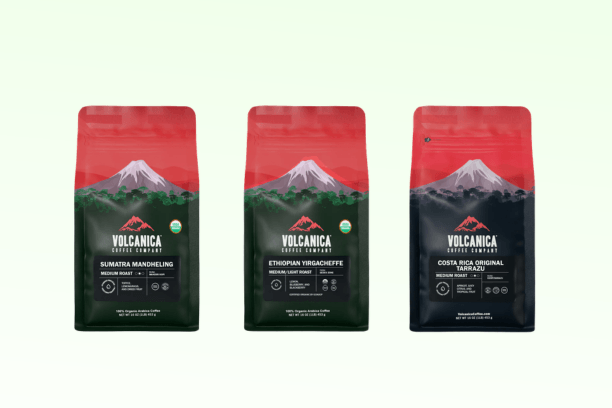
Volcanica Coffee is known for sourcing beans from volcanic growing regions around the world. The brand offers a diverse selection of coffees that appeal to a wide range of flavor preferences, roast levels, and brewing styles.
In this review, we examine the brand’s product lineup, sourcing practices, quality standards, and overall value proposition. We also explore the factors that distinguish the company within the competitive specialty coffee market.
About Volcanica Coffee
Volcanica Coffee is a family-owned coffee roaster that specializes in single-origin Arabica coffees sourced from volcanic regions worldwide. Its catalog includes coffees from origins such as Ethiopia, Costa Rica, Sumatra, Colombia, Kenya, Jamaica, and Kona, alongside espresso blends, flavored coffees, decaffeinated options, and low-acid selections.
The company organizes its offerings by roast level, specialty category, and growing region, allowing you to browse products according to flavor preferences and brewing needs.
According to the brand, many coffees include detailed tasting notes that highlight characteristics such as blueberry, citrus, caramel, chocolate, floral, honey, spice, and dried-fruit flavors. It also offers USDA Organic selections, sample packs, gift cards, and subscription options through its Coffee Club program, which provides recurring deliveries and member benefits.
Beans are roasted weekly in Atlanta and shipped shortly after roasting to support freshness. The brand also states that its coffees undergo phytosanitary and mycotoxin testing, including screening for ochratoxin A, alongside quality-control measures intended to support product safety and consistency.
Top Offerings
-
Coffee
The coffee range focuses on specialty Arabica coffees sourced from volcanic growing regions across Africa, Central and South America, and the Indonesian Pacific. Volcanica also highlights flavor notes such as citrus, berry, caramel, chocolate, spice, and floral tones to distinguish different coffees within its catalog. The brand’s coffee is segmented across roast level, region, and specialty categories.
Light roast coffees such as Ethiopian Yirgacheffe Coffee USDA Organic, and Kenya AA Coffee feature brighter acidity and fruit-forward flavor notes. Medium roast options include Costa Rica Coffee, Original, Tarrazu, and Colombian Supremo Coffee, which focus more on balanced body and chocolate or caramel notes.
Dark roast coffees such as Espresso Dark Roast Coffee, Costa Rican Dark Roast Coffee Reserve, and Sumatran Dark Roast Coffee provide fuller body, earthy tones, and lower perceived acidity.
The specialty section further organizes the Coffee range through categories such as Peaberry, Organic, Reserve, and Low Acid coffees. Some examples include Tanzania Peaberry Coffee, Low Acid Coffee, and Sumatra Mandheling Coffee.
Coffee products across the range naturally contain a rich source of antioxidants, such as chlorogenic acids and polyphenols, which might protect cells from oxidative stress and inflammation. Research also suggests that regular coffee consumption could support cognitive, metabolic, and cardiovascular health, although more studies are needed to confirm many of its proposed anti-aging effects.
Volcanica Coffee Advantages
-
Single-Origin Sourcing Depth
Volcanica Coffee offers single-origin and exotic coffees from volcanic growing regions, with the company stating that it carries more than 150 coffees across single-origin, estate, peaberry, decaf, and flavored categories. The brand’s sourcing model names origins such as Ethiopian Yirgacheffe from the Gedeo Zone, Brazil from Minas Gerais, Kona from the Kona region of Hawaii, and Flores-grown Komodo Dragon coffee from Indonesia. It also identifies farm or producer details on many listings, including Cancino Family Farm for Kona and Mandiri Kopi for a Sumatran reserve release.
Volcanica extends that origin detail into technical product metadata. Many coffees list process, altitude, roast level, flavor notes, and farm type, with examples such as washed-process Ethiopian coffee at 7,500 feet and semi-washed Flores coffee from various smallholder farms. The brand also states that it works directly with small farms and local cooperatives, and that its sourcing focuses on small, intentional batches from high-altitude volcanic regions.
You may find this useful if you care about traceability and want to shop by country, region, or farm context instead of choosing from generic house coffees. You can also compare coffees using concrete details such as altitude, process, and origin structure when deciding what to buy.
-
Fresh-Roast Operating Model
Volcanica Coffee states that it fresh roasts coffee every week in its Atlanta facility and usually ships within one business day. The brand also describes its coffee as fresh-roasted on demand and says its roast team is trained by the Specialty Coffee Association.
Coffee Club shipments are roasted fresh before each shipment, and you can choose recurring delivery frequencies while changing coffee type, grind, and quantity through your account. The brand also runs its own Suwanee, Georgia, facility that has stated pickup hours, which points to a centralized roasting and fulfillment operation.
You may prefer this setup if you want coffee that is less likely to have sat in inventory for long periods. The fresh roast model also provides more flexibility if you buy on subscription and want recurring deliveries tied to recent roasting with control over grind and shipment timing.
Volcanica Coffee Limitations
-
Extensive SKU Portfolio
Volcanica Coffee’s catalog includes more than 100 coffees across single-origin, estate-grown, peaberry, organic, decaf, flavored, blended, and specialty categories. The size of the selection can make the shopping experience difficult, especially if you are new to specialty coffee.
The website presents a large number of options at once, requiring you to sort through differences in origin, processing methods, roast levels, flavor profiles, certifications, and specialty designations on your own. There is limited guidance for narrowing choices or identifying a clear starting point.
Comparing coffees across multiple countries and categories can become time-consuming, especially if you are unfamiliar with specialty coffee terminology or regional flavor distinctions. As the number of options increases, it can become harder to identify meaningful differences between products.
When several coffees appear similar, you may struggle to determine which option may best fits your preferences. Without a prominent recommendation system, curated shortlist, or clearly defined flagship products, identifying the brand’s standout offerings can be challenging.
The large number of choices may feel overwhelming and make the purchasing process more complicated. You may need to spend additional time researching products before making a decision.
-
Shipping Speed Ceiling
Volcanica Coffee roasts and ships orders from a single facility in Georgia, which can result in longer delivery timelines than you may expect from large-scale e-commerce retailers. Orders often need to be roasted, packaged, and handed off to a carrier before transit begins, adding processing time before shipment.
As the company operates from one location, shipping times can vary significantly based on your distance from the roasting facility.
Order-processing timelines can also be affected by roasting schedules and production workflows. Your fulfillment may depend on when specific coffees are scheduled for roasting, making delivery speeds less predictable. Depending on location, product selection, and order volume, fulfillment and transit times may require additional patience.
Volcanica Coffee Alternatives
-
Life Boost Coffee
When comparing the brands, Lifeboost Coffee and Volcanica Coffee both offer various coffee products. However, they differ in their core philosophy, sourcing emphasis, product breadth, and price positioning.
Lifeboost Coffee prioritizes low-acid coffee, toxin testing, and organic farming practices as part of its broader identity. It places strong emphasis on clean coffee standards, digestive comfort, and reduced exposure to pesticides, mold, and heavy metals through its TRUSTPURE process and third-party testing standards. Volcanica Coffee positions itself more as a specialty coffee retailer focused on international coffee exploration, diverse origin sourcing, and roast variety.
In terms of catalog depth. Lifeboost Coffee maintains a curated lineup built around medium roast, dark roast, light roast, flavored coffee, decaf coffee, and mushroom coffee blends. A few core offerings in its lineup include the Grata Medium Roast, Embolden Dark Roast, Optimist Light Roast, and Cognition Mushroom Coffee. Product formats are generally available as whole bean, ground coffee, go bags, and recurring subscription bundles. Meanwhile, Volcanica Coffee offers a broad specialty coffee catalog that extends across single-origin coffees, estate coffees, flavored coffees, organic coffees, decaf flavored varieties, regional collections, and roast discovery bundles. Some featured products in its portfolio include the Ethiopian Yirgacheffe USDA Organic Coffee, Costa Rica Tarrazu Coffee, Sumatra Mandheling USDA Organic Coffee, and Indian Monsoon Malabar AA Coffee.
Pricing and accessibility further highlight a difference between the brands. Lifeboost Coffee generally operates within a premium pricing range, with individual coffee bags commonly priced at around $20 and $60, depending on roast type, blends, and subscription discounts. Multi-bag bundles are priced between $55 and $200. Meanwhile, Volcanica Coffee offers a Variable pricing range that features single-origin coffees priced at around $18–$160, while bundle packs are priced between $50 and $587.
Lifeboost emphasizes clean coffee standards, low acidity, organic sourcing, and strict quality control practices as defining elements of its identity. Meanwhile, Volcanica Coffee prioritizes specialty coffee exploration through global sourcing diversity, roast experimentation, processing variety, and flavor-driven coffee discovery.
-
Coffee Bros
Coffee Bros and Volcanica Coffee both function within the specialty coffee segment, but they differ considerably in how they position their sourcing philosophy, roasting approach, subscription structure, and specialty coffee identity.
The differences between the brands become more visible across their product portfolios and catalog structure. Coffee Bros maintains a specialty-focused lineup organized around single-origin coffees, signature blends, espresso-focused roasts, seasonal releases, brewing equipment, and rotating subscription programs. Some featured coffees and collections include Espresso Roast Coffee, Dark Espresso Roast Coffee, Ethiopia Daye Bensa Natural, and Holiday Blend Coffee. The brand also extends beyond coffee beans through equipment such as the Breville Barista Express and Lelit Bianca V3 Espresso machine.
Meanwhile, Volcanica Coffee offers a broad origin-driven catalog with greater emphasis on international sourcing variety and specialty coffee accessibility. Its portfolio includes single-origin coffees, espresso coffees, decaf coffees, estate coffees, flavored coffees, and curated coffee subscriptions. Some featured coffee products from the brand include the Costa Rican Dark Roast Coffee Reserve, Kenya AA Coffee, Colombian Supremo Coffee, and Brazil Coffee.
Their subscription structures also reflect different brand philosophies. Coffee Bros emphasizes rotating specialty experiences through programs such as Roaster’s Pick, Espresso Rotation, and Signature Shuffle, where coffees rotate regularly, and you can pause, swap, or manage subscriptions directly through account tools. Volcanica Coffee structures subscriptions around customizable Coffee Club-Style Boxes that let you mix and match selections across three coffee or six coffee subscription formats.
Manufacturing philosophy and quality control standards further separate the brands. Coffee Bros highlights specialty-grade sourcing, fresh roasting practices, and seasonal coffee rotation. The brand also emphasizes roast development and processing innovation through naturally processed coffees, honey processed coffees, and co-fermented offerings. Meanwhile, Volcanica Coffee highlights fresh weekly roasting, production in state-of-the-art roasting facilities, involvement of experienced roast masters, and Kosher certification through the Atlanta Kosher Commission. The brand also consistently emphasizes 100% Arabica coffee sourcing and origin-based quality distinctions tied to volcanic soil regions.
Pros
- Features an extensive flavored coffee lineup.
- Swiss Water decaf options available.
- Offers multiple grind customization choices.
Cons
- Occasional shipping delays reported.
- Some roast inconsistencies were reported in independent reviews.
How Did We Evaluate?
-
Brand Reputation
Our evaluation of Volcanica Coffee was based on the brand’s market presence, operational transparency, and public consumer sentiment across review platforms. On Trustpilot, the brand currently holds a 4.8-star rating based on more than 8,000 reviews. Customer feedback consistently highlighted fresh roasting, smooth flavor profiles, broad coffee selection, and reliable packaging. We also considered recurring complaints to evaluate the brand more critically. The most common issues involved shipping delays, USPS handling problems, subscription-related account issues, and occasional website usability frustrations. However, most negative experiences appeared to be tied to logistics and fulfillment. The company’s willingness to publicly respond to critical reviews also reflected a level of customer engagement and reputation management.
Meanwhile, it is worth noting that the brand is not currently available on the Better Business Bureau, which limits the availability of additional third-party complaint history or accreditation-based evaluation. Based on our evaluation, we see Volcanica Coffee as a relatively dependable specialty coffee company with a strong niche identity, but one that still feels more product-focused than fully refined as a modern premium coffee experience.
-
Real User Experiences
To evaluate Volcanica Coffee, we analyzed verified Amazon customer reviews across two of the brand’s widely purchased offerings.
Its Low Acid Espresso Coffee holds a 3.8-star rating based on 91 reviews. Several users described the coffee as fresh, smooth, bold, and lower in acidity compared to conventional espresso blends. Some appreciated the flavor profile enough to continue purchasing the product despite preparation issues. However, many users criticised the grind compatibility with home espresso machines. Some consumers reported the coffee being ground either too fine or inconsistently for their equipment, leading to clogged filters, excessive pressure buildup, failed extractions, or machine shutdown warnings. Others felt the flavor became overly bitter during brewing and questioned whether the product justified its premium pricing.
The brand’s Ethiopian Yirgacheffe Coffee maintains a stronger 4.2 rating from 1,667 reviews. Many customers praised the beans for their fruity, floral, bright, and layered flavor profile, with several users specifically mentioning successful results using pour-over setups, Chemex brewers, and French presses. Positive feedback repeatedly highlighted freshness, aromatic quality, and clean flavor separation. Some users also compared multiple Volcanica origins, including Costa Rica Tarrazu and Bolivia Peaberry, indicating that the brand attracts consumers interested in origin-specific tasting experiences. However, some people felt the beans lacked the intensity or complexity typically associated with premium Yirgacheffe coffee, while others described certain bags as stale, over-roasted, or weaker than expected for the price. These mixed experiences suggest that although Volcanica Coffee successfully markets itself around specialty sourcing and regional variety, product consistency may fluctuate between batches.
Based on our observation, Volcanica Coffee clearly understands how to attract specialty coffee users through origin variety, recognizable regional offerings, and flavor-driven marketing. However, it still seems to struggle to consistently deliver a polished premium experience across its catalog. The brand may work best for coffee enthusiasts who are willing to fine-tune brewing variables themselves, instead of users expecting effortless consistency straight out of the bag.
Conclusion
Volcanica Coffee provides you with different coffee origins, flavor profiles, and brewing experiences. As much of the experience is tied to origin characteristics, roast variation, and brewing method, your satisfaction can depend heavily on personal taste preferences and preparation approach.
However, flavor perception, acidity tolerance, roast preference, and brewing outcomes can vary considerably between coffees. Caffeine sensitivity and coffee-related digestive effects may also vary depending on consumption habits and individual tolerance.
The brand’s strength lies in the breadth of its sourcing network and origin variety, although consistency, catalog complexity, and variability between offerings remain factors that can influence your overall experience.

Rachel has been a freelance medical writer for more than 18 years. She graduated from the University of Tennessee at Knoxville in 2005 and is currently practicing as a Certified Registered Nurse Anesthetist at a Level I trauma center.
Leave a Reply