

No products in the cart.
Contents
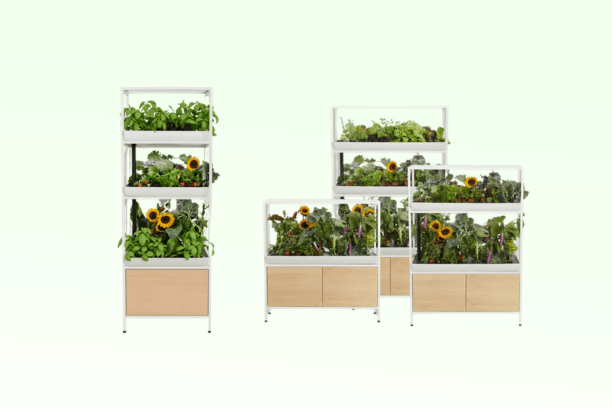
Rise Gardens focuses on helping you grow fresh produce at home through smart, app-connected garden systems. Its product lineup includes modular garden systems, seed pods, nutrient blends, grow lights, and accessories intended to simplify the growing process.
The brand primarily addresses concerns related to limited gardening space, seasonal growing limitations, and the maintenance challenges often associated with soil-based gardening.
In this review, we will explore the different indoor gardening systems and supplies offered by Rise Gardens and examine some of its potential advantages. We will also compare the brand with similar smart gardening companies.
About Rise Garden
Rise Gardens is a smart indoor hydroponic gardening brand that combines hydroponic growing systems with automated technology and guided gardening tools. Its focus is on helping you to grow vegetables, herbs, fruits, greens, and edible flowers directly inside your home while reducing dependence on store-bought produce. Hydroponic growing is commonly used in controlled-environment agriculture, where plants receive nutrients directly through water alongside artificial lighting support.
As per the official website, its product lineup includes systems such as the Rise Garden 3, which supports expandable multi-level growing for up to 108 plants, the Rise Loft, designed with a furniture-inspired setup, and the Personal Rise Garden for smaller countertop spaces.
Rise Gardens also offers over 100 hydroponic seed pod varieties, and the selection also includes plants like Buttercrunch lettuce, Genovese basil, cucumbers, tomatoes, peppers, rosemary, and mini pumpkins.
Rise Garden Offerings
-
Personal Rise Garden
The Personal Rise Garden is designed to grow up to 12 plants in a single-level indoor setup. Measuring 18 inches tall with a built-in water tank, the system is intended for smaller indoor spaces while still supporting herbs, greens, and fruits year-round. It uses 30W full-spectrum LED grow lights and includes manual nutrient delivery instead of a fully automated feeding system. The garden connects to the Rise app through 2.4GHz Wi-Fi, allowing you to monitor the system remotely through iOS and Android devices. The app also provides smart notifications for watering, nutrient additions, and harvesting, along with access to a detailed plant library.
The Personal Rise Garden supports more than 100 seed varieties, including greens, herbs, and fruits. The package includes the Personal Garden unit, a hydroponic nursery, seed starting tray, 8-seed starter set, net cups, and a nutrient starter pack with pH solution and sprouting materials. According to Rise Gardens, the system can produce around 6 lbs of monthly harvests under suitable conditions and is backed by a 3-year limited warranty.
-
The Rise Garden 3
The Rise Garden 3 is designed for higher-volume home growing, with expandable configurations ranging from 1 to 3 levels. Depending on the setup, the system supports between 12 and 108 plants. Its multi-level structure uses 65W full-spectrum LED grow lights per level, reaching up to 195W in the three-level version. Full-spectrum LEDs are commonly used in controlled-environment agriculture because plants rely on different light wavelengths for photosynthesis and vegetative growth.
Rise Gardens states that its horizontal lighting design provides broader and more even plant coverage compared to vertical tower-style systems. The garden also includes an automated drip nutrient delivery system and up to 12 gallons of water capacity to help reduce manual maintenance.
The system connects to the Rise mobile app through 2.4GHz Wi-Fi and Bluetooth connectivity, along with Amazon Alexa voice control support. It supports more than 100 seed varieties, including herbs, leafy greens, and fruits. According to the brand, the fully expanded three-level system may produce approximately 40 lbs of monthly harvests under suitable growing conditions.
-
The Rise Garden 2
As per the official website, the Rise Garden 2 is made for medium-to-large scale indoor growing, combining a two-level structure with expandable growing capacity. The system includes starter growing components such as a 16x Starter Plant Variety Pack, six 4-pod trays, 36 net cups, two Rise Nurseries, and nutrient supplies including pH Balance and Sprout mix.
The garden features a solid wood frame with steel cabinets and shelves, giving it a furniture-style indoor design while supporting hydroponic food production. Its double-garden configuration measures 53 inches high, 36.25 inches wide, and weighs approximately 65 lbs.
Rise Gardens uses a patented gravitational watering system that circulates water through the garden to provide a steady water supply across plants. The system also includes automated self-watering functionality through a 9-gallon circular water system, which the brand states typically requires weekly replenishment.
Rise Garden Advantages
-
Integrated Growing System
Rise Gardens provides a full indoor hydroponic ecosystem built around gardens, seed pods, nutrients, pH management tools, trellis kits, plant stands, replacement parts, and a companion app. Its garden line runs from the Personal Rise Garden to the Rise Garden 3 and the Rise Loft, with configurations covering 8 to 108 plants. The brand also supports crop diversity with more than 100 seed varieties across herbs, little greens, big greens, fruits, flowers, vines, roots, houseplants, and microgreens.
The system design extends beyond the initial hardware purchase. The brand organizes seed pods by growth time, experience level, and garden placement, and it keeps model-specific supplies available for different generations of gardens. Accessories such as the Rise Roma extension for larger crops, trellis kits for vining plants, and plant stands for tall fruiting plants show that the brand has built supporting infrastructure for ongoing use, not just starter kits.
You may find this useful if you want one brand to cover the recurring parts of hydroponic growing instead of piecing together seeds, nutrients, supports, and replacement components from separate sellers. You will have a clearer path for expanding from lettuce and herbs into tomatoes, peppers, cucumbers, and other larger crops.
-
Guided Automation Framework
Rise Gardens pairs hydroponic hardware with automated LED lighting, watering functions, WiFi connectivity, and a free app on iOS and Android. The app handles weekly task reminders, transplant timing, plant-cycle information, and guided care prompts from seed to harvest. The brand also describes smart nutrient dosing inside the app-guided workflow.
The support structure includes more than push notifications. Rise maintains assembly manuals, user guides, pump-specific help resources, and a plant library, and it offers app-based purchasing and member discounts for refills. The brand’s process is standardized into distinct stages, such as nursery start, transplant timing, weekly reservoir maintenance, and harvest timing, which reduces the amount of independent troubleshooting a new grower has to do.
You may benefit from this if you want hydroponics with a defined operating routine. You will spend less time translating generic hydroponic advice into a setup plan, and more of the maintenance schedule is already built into the system you are buying.
Rise Garden Limitation
-
Closed-System Dependency
Rise Gardens operates with a tightly controlled ecosystem that links long-term garden functionality to company-specific nutrients, accessories, trays, and replacement hardware. The platform centers much of its growing infrastructure around proprietary Sprout and Blossom dry nutrient systems, branded seed pods, model-specific trays and lids, and approved replacement components. It maintains a more appliance-style ecosystem where compatibility is more closely tied to company-approved components. The company also states that certain unsupported replacement parts or modifications can affect warranty eligibility. Long-term ownership can involve higher recurring consumable costs, reduced customization freedom, and greater reliance on the brand’s ongoing replacement-part availability and support infrastructure. You may want to factor this in if you prefer highly modular systems with broad third-party compatibility.
Rise Garden Alternatives
-
Gardyn
Gardyn and Rise Gardens both operate in the indoor hydroponic gardening category, although their systems, growing structures, and user experience models differ considerably. As per its official website, Gardyn’s product lineup centers around the Gardyn Home and Gardyn Studio, which use vertical stacking to reduce floor-space usage while maintaining higher plant density. However, Rise Gardens uses a horizontal grow-bed structure instead of a tower-based format. Its Personal Rise Garden is a countertop model that supports 8–12 plants, while the Rise Garden 3 can range from 12 to 36 pods across one to three levels and expand further to support up to 108 plants. The brand also offers the Rise Loft, a 36-pod furniture-style garden intended to blend more directly into indoor living spaces. Compared to Gardyn’s narrow vertical footprint, Rise systems occupy more horizontal space but allow more physical expansion over time.
The two brands also differ in how they use technology within the growing process. Gardyn combines cameras, sensors, and its Kelby gardening assistant throughout the system. Kelby monitors plant conditions continuously, manages watering and lighting schedules, provides refill reminders, and generates care tasks based on plant growth stages. It also includes Kelby Chat, which pulls from the brand’s plant support library to answer user questions through the app. Rise Gardens uses automation more selectively. The brand’s systems include automated LED lighting and watering, but the app functions mainly as a guided tracking tool. You receive reminders for tasks such as transferring seedlings, replenishing nutrients, adding water, and harvesting crops.
The growing focus of both brands also differs. Gardyn emphasizes leafy greens, herbs, salad ingredients, and continuous harvesting cycles. Its marketing materials frequently reference replacing grocery-store greens with homegrown produce and maintaining regular harvests throughout the year. The company offers over 100 non-GMO plant varieties and structures much of its messaging around convenience and reduced maintenance. Rise Gardens promotes a broader crop range that extends beyond greens and herbs into strawberries, cucumbers, tomatoes, peppers, eggplants, edible flowers, broccoli raab, rosemary, and mini pumpkins. It also places stronger emphasis on culinary experimentation and crop diversity, particularly through its recipe content and hydroponic cooking guides. The brand claims its systems can produce up to 40 pounds of produce monthly, while Gardyn focuses more on continuous access to smaller recurring harvests.
-
Lettuce Grow
Lettuce Grow primarily builds its ecosystem around vertical growing towers designed for indoor and outdoor use. Its lineup includes the Original Farmstand, which supports 18–36 plants, the Farmstand Nook for smaller indoor spaces, and the Counterstand Set designed for growing three plants on a countertop. Pricing of these offerings starts at $574 for the Original Farmstand, $799 for the Farmstand Nook, and $99 for the Counterstand Set. Alongside the systems, the brand also offers seedlings, accessories, harvesting tools, nutrients, recipes, journals, and educational content. In comparison, Rise Gardens structures its lineup around modular smart gardens with horizontal grow beds instead of vertical towers. Its product range includes the Rise Garden 3, Rise Garden 2, Family Rise Garden, and Personal Garden countertop model, with multiple systems supporting one, two, or three horizontal growing levels.
As per space usage and system layout, Lettuce Grow relies on upright vertical towers intended for placement in kitchens, balconies, patios, and indoor living spaces. The systems are designed around stacking plants vertically to reduce floor-space requirements while increasing planting capacity. However, Rise Gardens uses freestanding horizontal systems with layered grow beds and more structured hardware components. Its Rise Garden 2 includes circular water-level lights and a lit display button, while the Family Rise Garden uses rectangular water-level lights and an unlit button. Compared to Lettuce Grow’s open-tower layout, Rise Gardens places greater emphasis on enclosed system components, indicator lights, and modular hardware structure.
The growing process also differs between the two systems. Lettuce Grow centers much of its process around pre-grown living seedlings instead of seed pods. The brand states that these pre-sprouted seedlings allow plants to grow two times faster and are intended to reduce inconsistent germination results associated with seeds or pods. Its process is simplified into planting starter plants into the Farmstand, monitoring growth, and harvesting produce in as little as two weeks. However, Rise Gardens places greater emphasis on hydroponic maintenance products and smart-garden management. Its ecosystem includes Sprout Dry Nutrient, Blossom Dry Nutrient, pH Balance solutions, pH strips, seedless pods, and net cups. This reflects a stronger focus on nutrient management and hydroponic maintenance infrastructure compared to Lettuce Grow’s simplified seedling-based growing approach.
Lettuce Grow combines quizzes designed to help you choose suitable Farmstand models and seedling varieties based on household size, climate, growing space, and indoor or outdoor conditions. However, Rise Gardens instead provides a more technical support structure that includes assembly manuals, plant libraries, replacement-part access, and chatbot support through Ask Rise. It appears to focus more heavily on ongoing system management and troubleshooting resources.
Lettuce Grow provides home-grown produce, freshness, and simplified growing workflows. Meanwhile, Rise Gardens focuses more on smart-garden infrastructure, modular system upgrades, hydroponic supplies, and long-term expansion through accessories and additional grow-bed extensions.
Pros
- The brand offers smart nutrient tracking in its offerings.
- Features modern minimalist garden design.
- Provides Wi-Fi-enabled garden management.
- Supports year-round indoor growing.
Cons
- Users reported that customer support responds slowly.
- Some users reported unresolved support tickets.
- Water leaks are reported in Rise Gardens systems.
How Did We Evaluate?
-
Real User Experiences
To evaluate Rise Gardens, we looked at recurring customer experiences shared on Trustpilot, where the brand currently holds a 2.6 rating from more than 250 reviews. Several users described significant delays involving seed pods, nutrients, replacement components, and pre-ordered systems. Many customers reported waiting several months for orders that were already paid for, while others mentioned receiving incomplete shipments or never receiving products at all. Users claimed they had to repeatedly contact support just to get status updates. These repeated complaints suggest operational and inventory management problems that directly affect the overall ownership experience.
We also evaluated how the brand handles customer support and communication. Across many reviews, customers expressed frustration with slow response times, limited access to live support, a lack of proactive updates, and unresolved refund requests. Several users felt left in the dark regarding backorders or replacement timelines, particularly when products remained unavailable for extended periods.
Product performance and long-term reliability were another major part of our assessment. Some customers reported successful harvests with lettuce, herbs, tomatoes, and other plants, particularly during the early stages. However, many users also referenced defective pumps, failing controllers, lighting issues, weak germination rates, algae buildup, and difficulty sourcing replacement parts.
Based on this feedback, we observed that Rise Gardens has an appealing concept and a product ecosystem that some clearly enjoy when everything functions properly. However, the noticeable execution problems may make long-term ownership frustrating, particularly if you are expecting dependable support and steady access to supplies after investing in a premium gardening system.
-
Brand Credibility
Rise Gardens currently holds an F rating on the Better Business Bureau, with complaints repeatedly mentioning delayed shipments, unavailable inventory after purchase, difficulty obtaining refunds, replacement part shortages, and slow customer support communication. Several customers also described receiving templated responses or waiting weeks for updates regarding paid orders.
We also looked at how the company responded to complaints. In some cases, Rise Gardens did provide replies, refunds, partial shipments, or order updates, which indicates the business is active and attempting to address issues. However, many complaints followed similar patterns over an extended period, particularly involving fulfillment delays and inventory management concerns.
Customer experiences shared showed satisfaction with the gardening concept itself, but inconsistent communication, prolonged wait times, and limited access to live customer support appeared across multiple complaint reports.
We believe that Rise Gardens currently comes across as a brand whose operational execution has not kept pace with the expectations created by its product concept and marketing. The recurring nature of the complaints suggests deeper structural issues. While the brand still appears to have consumer interest and a differentiated position, our evaluation suggests that trust, consistency, and long-term customer support remain significant areas the company needs to improve to strengthen its credibility.
Conclusion
Rise Garden features a structured and guided growing framework, which may help maintain more consistent growing conditions. However, its closed-system design may limit flexibility if you prefer third-party nutrients, customizable hydroponic setups, or lower long-term operating costs.
When considering the brand’s systems, you should consider the maintenance requirements that come with indoor hydroponic systems. Regular cleaning, water monitoring, and airflow management remain important to help reduce algae buildup, stagnant water issues, or nutrient imbalance. Since they rely on integrated components, replacement part availability and compatibility may also influence the long-term ownership experience.
You should also be aware that inconsistent pH levels, mineral-heavy water, or prolonged pump interruptions can affect plant growth more quickly in hydroponic systems than in soil-based setups. The brand appears more suitable if you are seeking an indoor system with combined automation features, but maintenance demands and limited customization flexibility remain important factors to consider.

Rachel has been a freelance medical writer for more than 18 years. She graduated from the University of Tennessee at Knoxville in 2005 and is currently practicing as a Certified Registered Nurse Anesthetist at a Level I trauma center.
Leave a Reply