

No products in the cart.
Contents
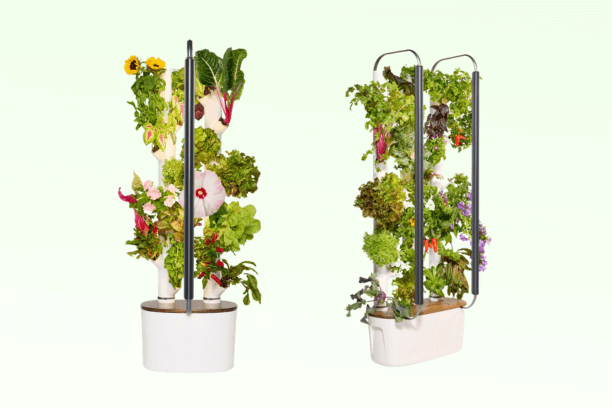
Gardyn is a home technology brand focused on indoor gardening systems designed to grow produce year-round. The brand pairs vertical gardening hardware with app-connected monitoring and automated plant care.
Its core concept revolves around gardening systems that manage lighting, watering, and plant monitoring through sensors, cameras, and automation. The brand also provides access to an AI-based gardening assistant that monitors plant growth and care schedules.
This review will examine the brand’s gardening offerings, aspects of technological integration, associated advantages, and potential brand limitations. It will also compare Gardyn with other indoor gardening systems.
About Gardyn
Founded by FX Rouxel, Gardyn focuses on indoor hydroponic systems. The brand describes its approach as combining LED lighting, hydroponic growing, machine vision, and artificial intelligence to create indoor vertical gardens that operate with minimal manual effort.
According to its official website, the brand emphasizes a hydroponic growing method, which is described as allowing plants to grow vertically without soil. Kelby, the brand’s artificial intelligence gardening assistant, connects through the Gardyn app to provide alerts, care guidance, and harvest reminders.
The main hardware offerings from the brand are categorized into Home and Studio categories. Both systems automate watering and lighting, use inward-facing cameras and sensors to monitor plants, and rely on compostable yCubes containing seeds in rockwool. Beyond these, the brand also offers 100+ non-GMO varieties of plants, including greens, herbs, vegetables, and fruits.
Gardyn Offerings
-
Gardyn Studio
According to its official website, Gardyn Studio is a compact indoor hydroponic plant growing system designed to cultivate up to 16 vegetables, herbs, and leafy greens within a 1.4 square foot footprint. Energy consumption is estimated at 26 kWh per month. The Studio system comes in two versions, namely Studio 1 and Studio 2. Your purchase includes a free plant starter set, Plant Food, a 30-day membership trial, and a two-year warranty.
The system uses vertical hydroponic growing columns paired with automated LED lighting, watering, and monitoring technologies. Hydroponics replaces soil with a nutrient-enriched water solution, allowing plant roots to access oxygen, minerals, and water directly.
Full-spectrum LED grow lights in the system could replicate the wavelengths of natural sunlight required for photosynthesis. Automated lighting schedules provide consistent photoperiod cycles that support plant growth, leaf development, and flowering.
Studio 2 version also includes a sunrise and sunset lighting mode that gradually increases and decreases light intensity to mimic natural daylight transitions, supporting plant circadian rhythms.
Studio’s automated watering system circulates water and nutrients from a four-gallon reservoir to the root system. Sensors track water levels, humidity, and internal temperature to maintain stable growing conditions. Built-in sensors and an inward-facing camera monitor plant growth. The camera captures images every 30 minutes to update the mobile app and generate time-lapse growth records.
-
Gardyn Home
Gardyn Home is a smart indoor hydroponic growing system, which claims to support the cultivation of up to 30 vegetables, herbs, and leafy greens within a two-square-foot footprint. The system is intended to support fresh food production for a family of four through automated plant care and continuous monitoring. It uses hydroponic cultivation, which may improve nutrient uptake efficiency as roots do not rely on soil diffusion.
According to the official website, the unit measures 24 inches wide, 12 inches deep, and 64 inches high and weighs 20 pounds. The system is described as operating on 110–240 volt power at 50–60 Hz and requires a grounded outlet and a 2.4 GHz WiFi connection.
The Home system uses two 40-watt LED light units designed to maintain consistent indoor lighting conditions. It also features cameras that monitor plant growth and capture images for the connected mobile application. An automated watering system circulates water and nutrients from a reservoir to the root zone. Sensors monitor water level, humidity, and internal temperature to maintain stable growing conditions.
Gardyn Advantages
-
Guided Growing Framework
Gardyn presents its Guided Growing Framework as a structured means to manage indoor gardening with step-by-step directions. The Kelby AI assistant works with built-in sensors and cameras to monitor plants in real time. The system tracks water levels, light cycles, and growth progress inside the unit and sends task alerts directly to the mobile app.
Notifications are translated into simple prompts like add water, add nutrients, clean the tank, or harvest now. Instead of presenting raw technical data, the app converts system readings into clear actions. Plant growth stages are also monitored. When greens or herbs reach harvest readiness, a reminder is sent so harvesting can happen at the right time, which may help maintain flavor, texture, and yield consistency.
Such a guided growing framework may reduce uncertainty and simplify routine care, which could make indoor gardening easier to manage without prior experience while keeping tasks organized and timely.
-
Technology-First Gardening Platform
Gardyn builds its indoor gardening system around smart automation and connected hardware. The vertical tower in the unit integrates sensors, built-in cameras, full-spectrum LED grow lights, and a closed-loop watering system. Such components help track water levels, nutrient flow, temperature, humidity, and plant growth in real time.
The unit connects to Wi-Fi and links directly to the Gardyn mobile app for ongoing monitoring. Kelby AI analyzes this live data and automatically adjusts lighting and irrigation. Scheduled light cycles run without daily input, and water circulation is maintained automatically. When action is needed, the app sends clear, task-based alerts, and live feeds allow remote monitoring of system status from anywhere.
Additional features support consistent growing conditions. For instance, Vacation Mode maintains automated schedules while you are away, and the vertical tower supports up to 30 plants in a compact indoor space. Such benefits may help minimize hands-on gardening effort and common mistakes like inconsistent watering or missed light cycles. Automated controls may help maintain stable growing conditions even without prior gardening experience.
Gardyn Limitation
-
No Bundle Discounts
Recurring subscription costs increase with each additional device from Gardyn. It requires a paid membership for every unit to access its core smart features, with plans typically ranging from about $18 to $39 per month, depending on the unit and billing policies. These capabilities remain locked behind ongoing fees instead of being permanently included with the hardware.
A separate membership is required for each unit, and bundled pricing for multi-device households is not widely offered. As more units are added, monthly expenses rise accordingly. If the subscription is canceled, the device shifts to basic manual mode and loses AI guidance, automation settings, notifications, and plant credit access. The membership-driven structure could raise long-term cost and flexibility concerns.
Pros
- Grows on autopilot with full automation
- Fresh produce year-round indoors
- Compact design for small spaces
- Smart AI-powered plant care system
- No gardening experience required
- Pesticide-free, clean, non-GMO produce
- Daily fresh harvests at home
- App-guided real-time support
- Simple setup and maintenance
- Strong eco-friendly sustainability positioning
Cons
- Automation may create unrealistic expectations
- Too tech-focused for traditional gardeners
Gardyn Alternatives
-
AeroGarden
AeroGarden and Gardyn both operate in the indoor hydroponic gardening space, but they differ significantly in scale, technology, and overall user experience. The brand AeroGarden, part of the ScottsMiracle-Gro portfolio, focuses on compact countertop systems designed to grow herbs and vegetables using water, nutrients, and built-in lighting, without soil. Its approach emphasizes simplicity and accessibility, making it suitable for kitchens and small indoor spaces. Gardyn, by contrast, positions indoor gardening as a technology-driven platform. Its systems are built around automation, sensors, and artificial intelligence to reduce manual involvement while enabling year-round food production.Their product ecosystems reflect these differences. AeroGarden offers a range of countertop models such as Harvest, Sprout, Bounty, and Harvest XL, along with compatible seed pod kits and accessories like trellis systems and nutrient solutions. The ecosystem is structured around easy setup and straightforward plant maintenance. Gardyn centers its lineup on vertical smart systems such as Gardyn Home, which supports up to 30 plants, and Gardyn Studio, designed for smaller spaces with capacity for up to 16 plants. The platform also includes a marketplace of over 100 non-GMO plant varieties delivered through proprietary compostable yCubes.
Technology integration marks one of the clearest distinctions. AeroGarden systems rely on built-in lighting and nutrient scheduling, requiring users to plant pods, add nutrients, and perform routine trimming. The experience remains hands-on but simplified. Gardyn uses LED lighting with vertical hybriponic growing technology, along with cameras, sensors, and an AI assistant named Kelby. The system automates watering and lighting schedules, monitors plant health, and provides updates through a connected mobile app, reducing day-to-day manual effort.
Both brands reference sustainability, though with different emphasis. AeroGarden highlights indoor hydroponics as a convenient way to grow fresh produce year-round. Gardyn places a stronger focus on water efficiency, reduced pesticide exposure, and localized indoor food production as part of a broader environmental positioning.
-
Lettuce Grow
Gardyn and Lettuce Grow differ in automation depth, plant sourcing, and overall growing experience. Lettuce Grow focuses on simplifying home food production through automated watering, lighting, and pre-grown seedlings that eliminate the germination stage. Its systems are designed for both indoor and outdoor use, emphasizing accessibility and faster harvest cycles. Gardyn, in contrast, centers on indoor vertical systems enhanced by sensors, cameras, and artificial intelligence to automate plant care and reduce hands-on involvement.Their system designs reflect these priorities. Lettuce Grow structures its lineup around the Counterstand Set, Farmstand Nook, and Original Farmstand. These systems support between three and 36 plants, depending on the model, and can be adapted to different home sizes. Accessories include lighting add-ons, mobility features like a dolly, cleaning kits, harvesting tools, and nutrients. Gardyn focuses on smart vertical systems such as Gardyn Home, which supports up to 30 plants, and Gardyn Studio, designed for smaller spaces with capacity for up to 16 plants. Both include integrated LED lighting, automated watering, built-in sensors, and app connectivity.
Lettuce Grow ships live seedlings that are already sprouted and several weeks old, allowing users to harvest sooner and practice continuous harvesting. Gardyn supplies more than 100 non-GMO plant varieties delivered as proprietary compostable yCubes, with refills ordered through its website or mobile app.
Technology integration further separates the two platforms. Lettuce Grow automates watering and lighting schedules while using an app primarily for reminders and system guidance. Gardyn incorporates machine-vision monitoring and an AI assistant that tracks plant health, adjusts watering and lighting, and provides real-time updates through its mobile app.
Brand positioning also differs. Lettuce Grow emphasizes convenience, faster harvests, and food-focused lifestyle content. Gardyn highlights distributed indoor farming, water efficiency, reduced pesticide exposure, and a technology-driven approach to year-round home food production.
How Did We Evaluate?
-
Real User Feedback
To evaluate the brand, we reviewed verified Trustpilot feedback to understand real-world user experiences, focusing on product reliability, subscription structure, customer service, and long-term usability. Currently, Gardyn maintains a 2.5 out of 5 score based on more than 470 reviews shared between 2025 and 2026.
Positive reviews highlight the appeal of the indoor gardening concept and the convenience of growing fresh produce at home, particularly for apartment living. Several users mentioned enjoying the harvest experience, describing the unit as sturdy and relatively easy to clean once plants are established. Customer support responsiveness was also praised, with some users noting that issues were resolved and replacement assistance was provided when needed.
However, negative feedback appears frequently and revolves around subscription practices and the cost of ownership. Some users described frustration with app updates that moved basic functionality, such as maintenance reminders, behind a monthly membership, which changed the perceived value of the system after purchase. A few users also experienced hardware failures like power supply issues, pump failures, or malfunctioning components that required expensive replacement parts. Reports of frequent maintenance, long cleaning times, and ongoing troubleshooting also appear in critical reviews.
Customer service experiences vary widely. While some reviews praise quick responses and helpful support, others describe slow communication, difficulty reaching support channels, delayed shipping, and unresolved warranty or refund concerns. Germination consistency and seed pod performance are also mentioned, with some reviewers reporting strong harvests and others describing low growth rates or inconsistent results.
Our evaluation of the brand’s Trustpilot reviews indicates that some users valued the indoor gardening convenience provided by the brand. However, recurring concerns about subscription policies, repair costs, reliability, and support consistency are the highlighted critical drawbacks.
-
Brand Credibility
In evaluating the brand, we analyzed Gardyn’s core positioning, standing across independent review forums, and operational consistency. Gardyn holds Better Business Bureau accreditation and maintains an A+ rating on BBB. The complaints primarily center on product reliability issues, including pump failures, lid corrosion, and sensor malfunctions, as well as subscription billing disputes, disagreements over return windows, and dissatisfaction with the performance and expectations of the Kelby AI membership feature.
Gardyn’s BBB profile reflects a formally accredited company with structured complaint handling and documented responsiveness. Although recurring friction appears around hardware durability, subscription clarity, and long-term maintenance expectations, the complaint history does not indicate systemic non-response or unresolved disputes.
Frequently Asked Questions
- Are Gardyn offerings suitable for beginners with no gardening experience?
Yes. The brand positions its hydroponic systems like Home and Studio as beginner-friendly, with automated lighting, watering, and monitoring supported by the Kelby AI assistant. The plug-and-play yCube plant pods and guided app alerts also reduce the need for prior gardening knowledge. However, initial setup and periodic cleaning may require effort. - Do Gardyn systems require maintenance?
Yes. The brand’s hydroponic systems require routine maintenance. Standard instructions include weekly water and nutrient top-offs, periodic pruning and root checks, and occasional tank cleaning or refreshes. The brand’s automation approach reduces daily effort, but you still need to perform basic care and cleaning to maintain plant health and system performance. - How accurate are Gardyn’s growth predictions?
Gardyn’s growth predictions, backed by the Kelby AI, are considered generally reliable. However, the accuracy of growth predictions varies with plant type, environmental conditions, and steps followed. The brand presents predictions as dynamic estimates rather than guarantees, meaning actual harvest timing and yields may differ from projected outcomes.
Conclusion
Gardyn positions itself around indoor hydroponic systems, built around app integration, sensors, and automated watering rather than fully hands-free growing. However, there are some reports of uneven moisture distribution and reduced sprouting rates highlighted in independent reviews.
Pump performance and lighting placement may also affect growth, and stable indoor positioning with extended daily light exposure is necessary to maintain reliable yields. The brand emphasizes AI-driven monitoring to simplify diagnostics, but it still requires manual adjustments, and long-term software support remains uncertain.
When considering the brand’s offerings, you should also consider factors like budget, space efficiency, and ongoing upkeep. Recurring expenses for seed pods, nutrients, and accessories may accumulate monthly. Germination outcomes also depend on consistent maintenance, proper placement, and realistic expectations about automation limits, with no uniform results expected across all crop types or growing environments.

Rachel has been a freelance medical writer for more than 18 years. She graduated from the University of Tennessee at Knoxville in 2005 and is currently practicing as a Certified Registered Nurse Anesthetist at a Level I trauma center.
Leave a Reply