

No products in the cart.
Contents
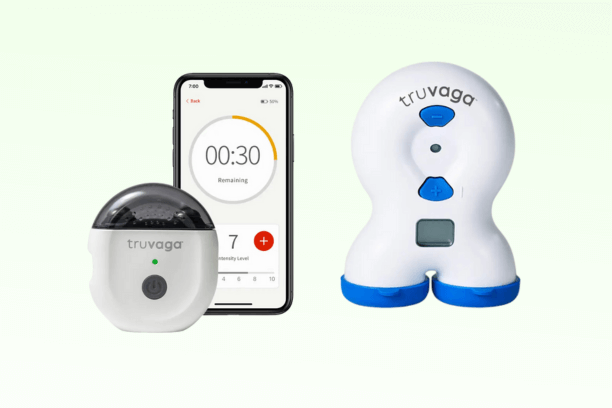
Developed by electroCore, Truvaga offers vagus nerve stimulation (VNS) devices. These devices may stimulate the vagus nerve, which could help lower stress levels, improve sleep quality, and support better focus and mood.
Its VNS offerings might help activate the parasympathetic nervous system, which may positively impact other physiological processes like digestion, immune response, and cardiovascular function. The brand also integrates these devices with a dedicated app ecosystem to support convenience and ease of use.
This review explores multiple aspects of the brand, including its VNS offerings and features, the scientific basis behind its technology, and verified user experiences. To provide a more in-depth understanding, we compared the brand with other wellness technology brands that offer VNS devices.
About The Brand
Founded by JP Errico, Truvaga is a wellness brand that focuses on neurostimulation technology, offering devices that may support vagus nerve stimulation. These devices may deliver controlled energy signals through the skin to your vagus nerve, which is located roughly 1.5 cm beneath the skin surface. Such stimulation might promote a calm state of mind and reduce potential feelings of uneasiness.
Among its primary offerings are the 350 and Plus variants, where 350 is a basic wireless handheld model that the brand claims requires no complicated setups. Meanwhile, the Plus model combines the portability of the 350 model with a durable build, which the brand claims may last at least 3 years and 30,000 sessions when used as recommended.
The brand also provides access to scheduled training sessions and an integrated app-based ecosystem with the brand’s Plus model, which may allow you to customize device settings and track sessions. Via the brand’s support team, you can inquire about any queries, usage instructions, or receive personalized guidance.
Truvaga Offerings
-
Truvaga 350
Truvaga 350 is a handheld vagus nerve stimulator that may support relaxation and balance within the body. As per the official site, each device comes preloaded with 350 sessions, which might provide about six months of daily use without requiring refills. The package includes one unit of the device and four 50 ml tubes of Signagel, a hypoallergenic electrode gel formulated to support conductivity and comfort.
As per the manufacturer, the 350 model requires short, two-minute usage sessions and does not require any app, cords, or complex setup. It operates on the principle of vagus nerve stimulation (VNS), which may help balance the sympathetic and parasympathetic nervous systems. When the sympathetic system is overactive, it may contribute to increased stress and related effects such as trouble sleeping or low motivation. However, the device may stimulate the vagus nerve and help activate the parasympathetic system, which is associated with relaxation and calmness.
Truvaga 350 might support autonomic balance, potentially contributing to calmer moods, improved sleep patterns, and better communication along the gut-brain axis. For use, the makers suggest locating your vagus nerve by placing two fingers on either side of your neck where you can feel your pulse. Once identified, you should remove the two blue caps on the device and apply a pea-sized amount of Signagel to each electrode. Then, position the device on your neck over the vagus nerve area. Use the blue button to gradually increase the intensity until you experience a strong but comfortable tingling sensation. Hold the device in place until you hear two beeps, which signal the end of the two-minute session.
-
Truvaga Plus
Truvaga Plus uses gentle, non-invasive electrical stimulation of the vagus nerve, which may support calmness, gut health, focus, and sleep quality. As per the official site, the device operates on a rechargeable system, removing the need for disposable batteries. The manufacturers claim that the Plus model offers extended use and may last three years or 30,000 sessions when used as recommended.
According to the official site, the package includes one unit of the device, a USB-C charging cord, and a 50ml bottle of Signaspray electrode spray, which may improve conductivity during use. Operation of the Plus model requires the use of the dedicated mobile app. The app could provide an interface to control sessions, adjust intensity levels, schedule sessions, and track progress over time. It is said to be compatible with most Android and iPhone devices.
Truvaga Advantages
-
Personalized Approach
Truvaga maintains a personalized approach by tailoring its vagus nerve stimulator offerings to your specific needs, which may help adjust usage routines based on stress levels, lifestyle patterns, and physiological responses.
It also offers support resources for both its Plus and 350 models, including user manuals, quick start guides, “How to Get Started” videos, FAQs, and dedicated product support. The platform also enables you to schedule virtual training sessions through Calendly, with 30-minute sessions that could guide proper device use and routine adjustments. Through a dedicated Truvaga Plus app (available only with the Plus model), you can customize session intensity, schedule reminders, monitor progress, and plan your routines.
The brand’s personalized support framework pairs educational materials, optional one-on-one training, and app-based guidance. Such support might help you track progress more effectively and maintain consistency in device use.
-
Convenient Access
Truvaga classifies its vagus nerve stimulation (VNS) devices are wellness products, which it claims are not intended to diagnose, manage, or prevent any disease/condition. It implies that you do not require a prescription before purchasing these offerings, avoiding the hassle and time commitments associated with acquiring prescriptions from healthcare providers.
As a result, the brand’s prescription-free model may offer convenience, especially if you are a busy professional or have a hectic lifestyle. Removal of the prescription model may support more flexible, self-directed use of the VNS devices, potentially contributing to your desired wellness goals.
Truvaga Limitation
-
Limited Clinical Validation
Truvaga markets that its devices use vagus nerve stimulation technology, which is clinically studied to stimulate the vagus nerve. However, most of the supporting evidence comes from smaller trials or indirect clinical measures rather than large, randomized controlled studies. The studies conducted are based on the neuromodulation technology, not on any specific devices from the brand. As per the official site, the brand also highlights that its devices do not hold FDA clearance or approval for managing, diagnosing, or preventing any specific conditions or diseases.
Much of the supporting evidence claimed by the brand is based on user-reported outcomes rather than objective clinical data, which may imply that personal experiences with the offerings might vary. The limited clinical validation could also make it harder to trust the effectiveness of the brand’s devices, especially if you prefer products backed by robust clinical evidence.
Pros
- The brand’s devices feature a sleek and portable design, which may support ease of use.
- Maintains a strong visual branding, featuring a clean site design, modern UI, and professional aesthetic.
- Partners with Truemed to provide added cost savings by allowing payments through FSA and HSA cards.
- Offers a 30-day refund policy on devices, limited to first-time purchases.
Cons
- The brand’s claim of “clinically studied” is not backed by published, peer-reviewed trials, indicating potential gaps in credibility.
- Use of the brand’s devices may trigger side effects, such as application site discomfort, redness, muscle twitching, or mild dizziness.
Truvaga Alternatives
-
Pulsetto
Both Pulsetto and Truvaga brands focus on vagus nerve stimulation technology to support relaxation. However, the brands diverge in aspects like their origins and positioning, range of offerings, service models, certifications, and pricing structures.
Pulsetto was established in Lithuania by Povilas Sabaliauskas and Vitalijus Majorovas and positions itself as a wellness technology brand focused on making stress relief more accessible through neuromodulation. The brand reflects a compact European startup model with an emphasis on user-centered design and everyday usability. Meanwhile, Truvaga was founded by JP Errico and operates under electroCore, Inc., a U.S.-based bioelectronic medicine company. ElectroCore has a background in medical-grade neuromodulation and involvement in vagus nerve research.
In terms of core offerings, Pulsetto offers two models of vagus nerve stimulation devices, which use ultra-low radio frequency energy that could stimulate the vagus nerve to support relaxation and improve sleep quality. These include the Pulsetto Lite model, which comes in a compact and portable design, integration with the Pulsetto app for guidance and tracking, and basic VNS functionality. Meanwhile, the Pulsetto Fit model offers up to 12 days of battery life, extra built-in padding to provide a comfortable, snug fit, and free wireless updates support.
Meanwhile, Truvaga’s lineup includes a basic wireless handheld model that comes with no app integration and requires no complicated setup, called Truvaga 350. It also offers a Plus model that comes with added features such as app connectivity, rechargeable operation, and extended usage capabilities up to 30,000 use sessions.
From a quality and certification standpoint, Pulsetto highlights compliance with FCC and CE standards, indicating that its vagus nerve stimulator devices adhere to recognized international safety and electronic benchmarks. The brand presents its devices as clinically informed but still positions them within the general wellness category. Meanwhile, Truvaga also markets its 350 and Plus device models as general wellness products, highlighting that they are not FDA-cleared. However, the brand does not highlight compliance with FCC and CE standards.
Pricing structure may reflect another area of differentiation between the brands. For example, currently the Pulsetto Lite model is priced in the retail range of $460-$480, while the Pulsetto Fit model retails for around $580-$620. On the other hand, the vagus nerve stimulator devices from Truvaga are priced between $270-$299 for the Truvaga 350 model, and between $470-$499 for the Plus model.
-
Hoolest
When comparing Hoolest and Truvaga, there are some differences between the brands in terms of their origins, core focus, range of offerings, and warranty policies.
Founded in 2018 by Nicholas Hool, Ph.D., the brand focuses on supporting drug-free, non-invasive relaxation using patented high-dose vagus nerve stimulation (VNS) technology. Truvaga, on the other hand, was founded by JP Errico and developed by electroCore, Inc., which centers on VNS technology to support calmness, focus, and sleep quality.
In terms of product offerings, there are some differences between the brands. Hoolest maintains a diverse lineup of vagus nerve stimulator devices that may support different needs. For instance, the VeRelief Prime is a pocket-sized device that comes with two pairs of gel tips and 5 usage modes that could target stress, sleep, performance, and panic. For more intense support and broader coverage, the brand offers the Mini Max PEMF device to help activate the entire length of the vagus nerve by delivering more intense electromagnetic fields. As of now, there is a hands-free VNS device that pairs Bluetooth compatibility with noise cancellation features in the production stage, which is known as Hoolest Pro. The brand has made the model available for pre-booking.
Meanwhile, Truvaga takes a more streamlined approach by offering two VNS device models. The brand’s Truvaga 350 model comes with basic VNS functionality and a limited use case that may last 350 sessions. Its Plus model is positioned to last at least 3 years when used as recommended, while also providing app-based integration.
Warranty policies and coverage indicate another point of contrast between the brands. As per the official site, Hoolest provides tiered warranty periods depending on the product version, with VeRelief Prime covered for one year (or 90 days for lower-priced or refurbished models) from the date of delivery. The brand also offers a Hoolest Care Plan that extends a lifetime warranty for up to three devices (including Prime, Pro, and Mini models) while membership remains active, covering repair or replacement of defects in materials and workmanship.
Meanwhile, Truvaga provides a limited out-of-box warranty that covers defects in materials for the purchaser, focusing on repair, replacement, or refund for defective products. The brand’s warranty policy excludes claims on damages due to misuse, unauthorized repair, normal wear and tear, or external factors.
How Did We Evaluate?
-
Reputation of the Brand
In assessing Truvaga’s reputation, we considered the brand’s available background information alongside ratings across independent review platforms. The brand focuses on VNS (Vagus Nerve Stimulation) devices, which it claims may support improvements in sleep quality, focus, and mood.
On Trustpilot, the brand holds a rating of 4.1 out of 5, based on a limited sample size of publicly accessible reviews. Some users acknowledged positive effects from the brand’s VNS devices in supporting sleep quality and a positive mood, while a user stated that the claimed relaxation benefits were not observed.
Meanwhile, TenereTeam has rated the brand 4.5 out of 5, which is based on a limited number of reviews. These ratings on Trustpilot and TenereTeam indicate some level of satisfaction among the users.
Thus, the brand has a limited publicly available reviews, most of which have been positive, but repeated mentions of product and service issues suggest the need for better quality control and more responsive customer support.
-
Real User Feedback
In evaluating Truvaga, we reviewed discussions and verified threads shared on Reddit from 2024 and 2025 to understand authentic consumer experiences. A user stated that after using the Truvaga 350 device, its suction intensity pulled on a muscle near the windpipe, which manifested as physical symptoms like pain in the face and jaw, a tingling sensation, and numbness in the face and neck.
Some stated that adjusting device settings and ensuring proper placement contributed to better relaxation outcomes. Some users on Reddit also expressed that the device may potentially address some discomforts of migraines or chronic pain. Meanwhile, some shared negative experiences, including incompatibility with Android devices, challenges in finding suitable cases, and concerns over usability or durability.
These user feedback suggest that the brand’s products’ effectiveness may depend on careful usage and personal circumstances. Some people have noted positive results, while others have experienced adverse effects regarding the brand’s devices.
Frequently Asked Questions
- Can I Use Truvaga on Body Areas Besides the Neck?
No. The manufacturer and user manuals explicitly suggest neck placement for the devices to target the cervical vagus nerve. No evidence or claim supports use in body areas other than the neck. - Does Truvaga Integrate With Any Health Tracking or Data Platforms?
Yes, the brand’s Truvaga Plus model integrates with Apple Health to enable tracking of health data during sessions. However, the brand’s 350 model lacks such integration. - Do the Truvaga offerings affect heart rate?
Yes. The brand claims its devices stimulate the vagus nerve which could improve heart rate variability. Its gentle, controlled stimulation is generally safe, but people with heart conditions should consult their doctor before use.
Conclusion
Truvaga brand positions itself as a provider of non-drug neuromodulation devices, which may stimulate the vagus nerve and support relaxation. It emphasizes a service model centered on at-home therapy, highlighting digital support resources, proper guidance on device use, and support from the brand’s care team.
At the same time, the clinical validation for the brand’s neuromodulation devices is limited, with most evidence derived from smaller trials or indirect measures of vagus nerve stimulation rather than device-specific randomized controlled studies. These devices are also not FDA-cleared, which may raise some concerns around their efficacy and safety standards.
While the brand’s VNS offerings are marketed as drug-free and well-tolerated, potential side effects may occur, including local discomfort or irritation, mild headaches, dizziness, or muscle twitching in the face or neck. It is advisable to weigh these possibilities alongside your personal wellness needs before making a purchase decision.

Rachel has been a freelance medical writer for more than 18 years. She graduated from the University of Tennessee at Knoxville in 2005 and is currently practicing as a Certified Registered Nurse Anesthetist at a Level I trauma center.
Leave a Reply