

No products in the cart.
Contents
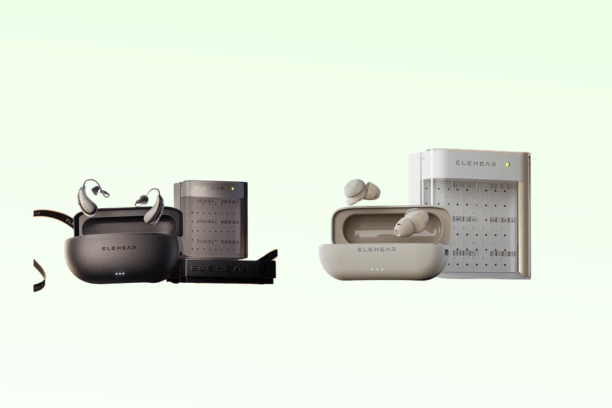
Elehear is a hearing device brand that focuses on making OTC hearing care more accessible through connected technology and app-based controls. Its product range is designed around everyday hearing support, with devices available in compact, earbud-style formats.
In this review, we examine the brand’s hearing device lineup, overall technology approach, usability, and support features. We also explore the brand’s strengths, potential limitations, and how its products fit within the OTC hearing device market.
About Elehear
Founded by Eric Miao, Elehear operates within the OTC hearing device market, with its product development rooted in audio and sound processing technology. Its lineup includes the Beyond Pro, Beyond, and Delight hearing devices, along with accessories such as dry boxes, wax guards, ear domes, and receiver replacement kits.
The brand’s Vocclear® technology uses deep neural network processing to analyze environmental sound and distinguish speech from surrounding noise. Other features highlighted by the company include hybrid feedback cancellation, background noise reduction, wind noise management, and impulsive noise control.
According to its official website, the brand’s products are manufactured in China. The accompanying app provides adjustable volume and frequency controls, personalized sound profiles, tinnitus masking with 20 natural sounds, and real-time AI translation across 20 languages. The ElePro remote support feature also allows hearing professionals to assist with device adjustments and personalized settings without requiring an in-person clinic visit.
Top Offerings
-
Beyond Pro
Beyond Pro is FDA-registered as an OTC hearing device to target mild to moderate hearing loss. According to its official website, the device weighs around 4.8 grams, features two microphones per piece, and has a 95mAh battery that may provide up to 20 hours of runtime on a single charge.
It uses the brand’s Vocclear® 2.0 technology to process incoming sound and distinguish speech from surrounding noise, with an extended 125Hz–8500Hz frequency range intended to provide greater detail across voices, music, calls, and other everyday sounds.
Beyond Pro integrates a Directionality Enhancer that refines spatial processing, helping emphasize speech in environments where multiple sounds are present. The device also features AI Noise Reduction, which analyzes competing background signals and reduces selected unwanted sound components, while the Speech Enhancer feature provides greater processing priority to speech characteristics.
-
Beyond
According to the official website, Beyond comes with four preset hearing modes, including general, restaurant, music, and TV. Each mode applies a different balance of amplification and sound processing for its intended environment, with each device weighing around 4.8 grams and measuring approximately 1.29 × 0.65 × 0.36 inches. Bluetooth 5.3 enables compatible iOS and Android devices to stream phone calls and audio directly to the hearing device.
Beyond comes with the AI feedback control feature that continuously monitors the relationship between amplified sound and the microphones to help limit acoustic feedback and reduce whistling. Its Directionality feature uses the two microphones in each hearing device to determine the direction sound is coming from and to prioritize signals from selected directions.
The device also includes a tinnitus-masking function with more than 20 sound options, including rain, white noise, and thunderstorm sounds. They provide an alternative auditory signal that might help minimize tinnitus discomfort.
-
Delight
Delight combines an earbud-style form with AI-based sound processing, Bluetooth 5.3 compatibility, rechargeable power, and smartphone controls. As per its official website, the device’s smaller 3.5-gram design measures approximately 0.93 × 0.73 × 0.62 inches, giving it a more compact profile than the RIC-style Beyond and Beyond Pro models.
The earbud-style housing features a soft Ear Wing intended to hold the device in place during movement. It comes with three pairs of Ear Wings and six pairs of Ear Domes in two types, allowing the fit to be adjusted around different ear shapes. As per the makers, Delight also carries an IP67 rating, indicating resistance to dust and temporary water exposure under the specified testing conditions. The device has a listed maximum gain of 35 dB, a frequency range of 125Hz–7000Hz, and a maximum AI noise reduction level of 24 dB.
Elehear Advantages
-
Adaptive Audio Processing Framework
Elehear makes AI-assisted speech processing a core part of its brand approach. The brand employs the Vocclear® AI technology to distinguish speech from background sounds. As per the official website, the system analyzes audio 500 times per second and performs up to 450 million operations per second, intended to help you hear speech more clearly when competing sounds make conversations harder to follow.
Its use of AI noise reduction technology can lower background noise by up to 24 dB, according to the makers. Vocclear® combines AI noise reduction with speech enhancement, directionality, feedback control, and other sound processing functions. These features work together to separate voices from competing sounds. Such features could help suppress the impact of background noise during everyday conversations, thereby promoting a better sound experience.
-
Professional Support Integration
Elehear includes remote professional support in its hearing-care approach, giving you access to hearing specialists alongside its app-based hearing assessment and device adjustments.
Through ElePro™, you can complete a guided hearing assessment, submit your listening preferences, and have your results reviewed by a hearing specialist who can fine-tune your settings remotely.
The brand extends this support through ElePro Plus, which includes a 45-minute one-on-one video consultation with a licensed hearing professional. During the session, the professional can review your hearing profile, discuss your listening goals, and make real-time adjustments to your hearing settings, with the updated settings delivered through the app.
The approach also lets you discuss listening difficulties while using the device in your normal environment, such as difficulty hearing the TV or managing background noise. You can address these situations with professional guidance without making every adjustment dependent on an in-person clinic visit. The access to professional guidance alongside the device and app can give you additional support when assessing your hearing needs and fine-tuning your settings.
Elehear Limitation
-
Warranty-Related Constraints
Elehear’s warranty structure provides limited protection for the everyday risks associated with using hearing aids. The standard one-year warranty covers product defects, but incidents such as accidental drops, liquid damage, loss, theft, and normal wear fall outside that coverage. The warranty also applies only in the country where the device was purchased. It offers an additional Protection Plan for some of these situations, but the coverage has its own limits. It lasts for 12 months, accidental damage is covered on a one-time basis, and a lost or stolen device requires a $149 replacement fee. The plan also ends after a covered benefit is used, meaning later repairs or replacements may require separate payment.
Compared with OTC brands such as Jabra Enhance and Audien Hearing, which also provide additional protection options for their devices, Elehear’s approach leaves more conditions around coverage for accidents, loss, and replacement.
The added protection can help with unexpected damage or loss, but the one-year warranty, limited protection period, one-time coverage, and replacement fee can make long-term ownership costs less predictable.
Pros
- App-based personalization extends beyond hardware.
- Combines in-app hearing assessment with expert fine-tuning via ElePro™.
- Offers technical assistance and app updates as part of its Lifetime Support.
- Provides a free online hearing test to assess hearing loss severity.
Cons
- Limited retail accessibility.
- Some users noted delays in order shipment and refunds.
Elehear Alternatives
-
Audien Hearing
Audien Hearing and Elehear operate in the same OTC hearing device category, but their brand level differences are most visible in their founding background, product philosophy, technology, personalization, and approach to accessibility.
As per its official site, Audien Hearing is developed around providing access to affordable hearing devices, straightforward operation, compact hardware, and broader access through online and retail channels. Elehear presents a newer technology-focused identity built around a team of engineers, designers, audiologists, and caregivers, with the brand emphasizing accessible AI hearing technology and simplified operation.
The product ranges further distinguish the brands through their breadth, formats, and technology profiles. Audien Hearing offers a progression that includes Atom Air, Atom X, ION Air, and ION Pro 2, covering compact in-ear designs alongside a lightweight behind-the-ear format. Elehear has a more concentrated hearing assist device range built around Delight, Beyond, and Beyond Pro models, with its technology profile placing greater emphasis on AI noise reduction, Bluetooth 5.3 compatibility, app-based customization, and connected functions.
Pricing shows another difference between the brands. Audien Hearing has a broader price range, with Atom Air at $149 per pair, Atom X at $389 per pair, ION Air at $489 per pair, and ION Pro 2 at $689 per pair. Elehear’s hearing devices have a variable pricing range, with its compact Delight model starting at $321 per pair, Beyond priced at $399 per pair, and Beyond Pro extending to $599 per pair.
Audien Hearing provides a simple progression between manual and digital controls. Atom Air is pre-tuned and intended to work without an app, while Atom X provides touchscreen controls without requiring a smartphone. More advanced customization appears with ION Pro 2, which provides smartphone-based personalization and six hearing profiles or modes. Elehear places more of the adjustment process within its app. Its app supports volume control, frequency fine-tuning, personalized profiles, listening modes, tinnitus masking sounds, real-time translation, and OTA updates.
Audien Hearing keeps its identity around affordability, compact hardware, straightforward operation, multiple control methods, and retail accessibility. Elehear emphasizes the combination of AI sound processing, app-based frequency customization, multiple listening modes, and remote licensed professional support within a concentrated product range.
-
Jabra Enhance
Jabra Enhance and Elehear both offer hearing assist devices, but they differ in their core identities across positioning, product range, technological approach, and accessibility.
The product ranges indicate differences in breadth and format. Jabra Enhance maintains a focused Select range consisting of the Enhance Select 700, Enhance Select 300, and Enhance Select 50R. Similarly, Elehear features three variants of hearing devices, including the Beyond Pro, Beyond, and Delight. Jabra Enhance offers a more concentrated range of RIC hearing devices supported by an added earbud-style product, while Elehear offers both RIC and in-canal formats across its current range.
Service models provide another direct difference between the brands. Jabra Enhance offers access to an online hearing assessment, remote audiology appointments, remote adjustments, and technical support. Eligible orders typically include a 100-day return period, three years of Audiology Team support, and a three-year warranty with three-year loss and damage coverage. Elehear pairs standard OTC support with remote audiologist care through ElePro and app-based self-service. Beyond Pro includes remote audiologist adjustments and lifetime customer support, while the dedicated app provides hearing settings, personalization, firmware updates, and other controls.
Jabra Enhance promotes discreet hardware, particularly through the Enhance Select 700, which uses a small receiver-in-ear construction and offers color choices intended to blend with hair, skin, or personal style. Its devices emphasize greater attention to speech clarity, hearing in noise, Auto Focus, connectivity, and ongoing audiology support. Elehear places more visible emphasis on stylish and discreet design, particularly through its Delight model. The product uses an in-canal structure with no component positioned behind the ear, giving it a different visual profile from the RIC products.
Jabra Enhance presents a more care-oriented brand structure that connects hearing technology with extended audiology involvement, while Elehear presents a more technology- and design-oriented structure that pairs AI processing, app-based control, remote audiologist care, and multiple device formats.
How Did We Evaluate?
-
Brand Credibility
In assessing Elehear’s brand reputation, we considered its operating history, business identity, and ratings across review platforms. The brand has built its identity around AI-based audio processing and OTC hearing technology, with activities covering product development, manufacturing, and customer support across China and the United States.
On Trustpilot, the brand carries a 4.3 out of 5 rating from more than 55 reviews. The feedback supports the brand’s growing position in the accessible hearing technology segment, with recurring references to hearing performance, Bluetooth connectivity, long-term ownership, and customer support.
However, unfavorable feedback points to concerns about sound character, with one experience describing limited lower frequencies and an unusually strong high-frequency response. Other concerns point to battery life falling short of the stated capacity, repeated electronic defects, and difficulties obtaining replacements. Concerns were also raised about warranty coverage and support after the 45-day trial period.
Elehear has a developing reputation with some degree of independent credibility, particularly due to a lack of available independent reviews. We suggest examining warranty coverage, trial conditions, replacement procedures, and support commitments before relying on the brand’s reputation alone.
-
Real User Experiences
To assess Elehear through real-world experiences, we reviewed Reddit discussions covering its hearing devices, app functions, connectivity, comfort, and after-sales experiences.
Feedback on the Beyond device was often favorable for hearing clarity, phone calls, streaming, and ease of setup. One user with moderate hearing concerns was satisfied after paying $411 for the Beyond, while another described more than 1,000 hours of use and preferred its sound and features over other brands. Another user reported smooth phone streaming and easy setup, with around six hours of streaming followed by about ten hours of hearing device use. Users also discussed the brand’s Delight and Beyond Pro models, sharing that they helped with tinnitus masking, with one user expressing that the app made it easy to control volume and sound.
Concerns about size, comfort, battery duration, sound in certain environments, and connectivity accompanied these positive experiences. Some described the devices as large and noticeable, with one user noting difficulty getting a comfortable fit around glasses. Battery performance was described as acceptable for mixed daily use, though streaming and longer phone calls often lead to a low battery warning.
Another user experienced repeated failures with a Beyond device and its replacement, followed by pairing and streaming problems that prevented both devices from working properly. Recent comments also included claims of devices stopping after about a month and complaints about refunds, including one user who stated they were scammed out of $500.
The user experiences shared for the brand and its offerings should be understood with some caution, as the feedback is self-reported, uneven in detail, and shaped by individual hearing needs, device fit, usage patterns, and expectations.
Conclusion
Elehear provides a connected hearing care experience that pairs AI-based sound processing, app-based controls, hearing assessment, and remote professional support. You can also create personalized sound profiles and receive firmware updates through the app.
The brand highlights a maximum operational window of up to 20-21 hours for its hearing devices. However, these devices use an AI processing engine, and excessive use and media streaming can drain the battery while decreasing the operational window. Independent reviews indicate some recurring concerns around shipping delays, refunds, connectivity, and battery performance, which may warrant caution.
The brand offers a technology-focused hearing ecosystem with meaningful personalization and remote support. However, warranty coverage terms, service accessibility, sound performance, and price positioning remain important factors in assessing whether the brand’s offerings fit your needs.

Rachel has been a freelance medical writer for more than 18 years. She graduated from the University of Tennessee at Knoxville in 2005 and is currently practicing as a Certified Registered Nurse Anesthetist at a Level I trauma center.
Leave a Reply