

No products in the cart.
Contents
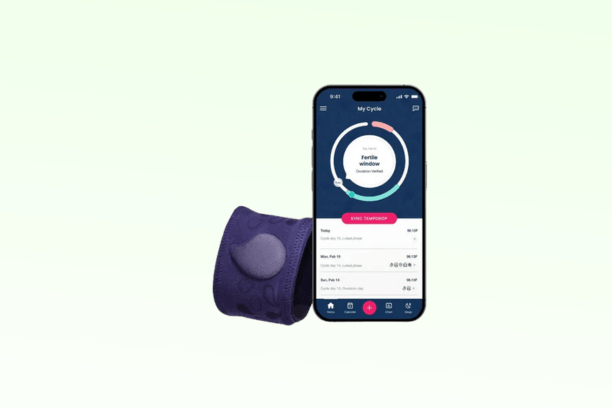
Tempdrop focuses on simplifying cycle tracking through a wearable approach. Its core offering allows you to access temperature patterns and cycle data without relying on strict wake-up routines or manual logging.
The brand offerings may support if you are trying to conceive or gain a clearer understanding of your cycle through continuous, data-backed tracking. In this review, we will explore what Tempdrop offers in detail and where it stands in terms of advantages and limitations. We will also see how the brand compares with similar options, helping you assess whether its features align with your specific tracking needs.
About Tempdrop
Founded in 2017, Tempdrop is a fertility tracking brand that claims to help you understand your menstrual cycle and ovulation patterns. At its core, the brand offers an integrated ecosystem that combines a wearable sensor, a mobile charting app, and supporting accessories. It also offers armbands and related accessories designed to improve comfort and consistent placement during use.
As per the official website, Tempdrop’s digital platform is available in both a free version and a premium subscription tier. The premium version adds features such as ovulation confirmation, personalized cycle insights, sleep tracking with breakdowns of deep and light sleep stages, and a calendar view.
Core Offering
-
Tempdrop 2.0
The Tempdrop 2.0 helps you monitor fertility by continuously measuring your sleeping body temperature and identifying ovulation patterns over time. It consists of a wearable sensor placed on the upper arm during sleep and a companion app that displays and interprets temperature data.
The system is based on tracking basal body temperature (BBT), which can help indicate different phases of your menstrual cycle. After ovulation, progesterone release typically causes a sustained increase in resting body temperature, and identifying this shift may help confirm ovulation timing.
The device is used alongside in-app symptom tracking, where you can log additional indicators such as cervical mucus and other cycle-related signs. The app then provides charting tools to help visualize patterns over time.
The wearable is designed for overnight use with a fabric armband and allows data syncing at any convenient time after waking, reducing the need for strict timing. According to the brand, the product may also be suitable for irregular cycles or inconsistent sleep schedules.
Pros
- Combines hardware and software into one integrated system.
- Brand’s offering supports offline data capture with later syncing.
- Focuses on solving the specific problem of an inconsistent sleep schedule.
Cons
- Users report that the brand’s offering fails after a few months.
- Customer support responsiveness is described as inconsistent.
Advantages
-
Algorithmic Temperature Processing
Tempdrop positions the wearable and companion app around adaptive algorithmic temperature processing to support fertility tracking under real-world sleep conditions. It provides continuous overnight data collection and a multi-layered temperature processing structure. The brand states that each Tempdrop sensor continuously measures upper-arm axillary temperature throughout sleep while simultaneously collecting motion data through an integrated accelerometer system.
According to the official site, the brand’s app platform combines temperature readings with accelerometer-derived movement analysis and applies a patented algorithm and Active Temperature-Noise Cancellation (ATNC) filtering to reduce disturbance from environmental changes, tossing, waking episodes, or irregular sleep movement.
The brand also structures around a simplified four-step workflow consisting of wearing the sensor during sleep, syncing the device later, adding fertility symptoms, and reviewing chart results within the app. This algorithmic processing structure may improve practical consistency and usability. You may find this useful if you want basal body temperature tracking without taking an oral reading at the same time every morning.
-
Regulatory and Materials Documentation
Tempdrop emphasizes regulatory documentation, materials transparency, and operational clarity across its wearable fertility-tracking system. It has published information regarding compliance and manufacturing standards. The brand states that its app sensor carries FDA registration and CE mark status.
The company additionally provides detailed material disclosures for users concerned about construction and skin-contact components. According to the official site, the sensor housing uses medical-grade ABS plastic with stainless steel elements, while the armband contains polyester, spandex, nylon, and silicon materials.
Operational guidance is also clearly outlined through support resources and device manuals. Tempdrop states that Bluetooth activates only during manual syncing, and the company also states hat the wearable emits no radiation during sleep sessions.
This level of documentation shows regulatory status, declared materials, wireless communication details, and device-handling specifications. It allows verification of what materials contact the body, how the device transmits data, and which compliance markers the brand publicly associates with its hardware.
Potential Limitation
-
Paid Protection Add-On Structure
Tempdrop structures key ownership protections, refund flexibility, and advanced interpretation features through layered add-ons. Several protections must be selected at the initial checkout stage, creating upfront decision pressure before long-term device compatibility or comfort is fully known. The standard 30-day return policy applies only to unopened and sealed devices, includes a $20 processing fee, and does not refund original shipping costs.
The extended 24-month warranty is only available as an initial-purchase add-on. Tempdrop Insurance costs approximately $45 when bundled with the device or about $89 if added later, while replacement claims still require processing fees of $19 for the first replacement and $49 for additional replacements within the same year.
Automated fertility interpretation, cycle insights, and sleep analysis are included after a recurring Premium subscription, after the included two-month trial period. This can create delays during active fertility-tracking cycles if hardware problems interrupt temperature collection. You may need to budget for add-ons if you want broader refund rights or protection against accidental loss or damage, as most flexible post-purchase coverage is not included in the base purchase.
Alternatives To Tempdrop
-
Helloclue
HelloClue operates as a science-driven digital platform that combines its app with a broader ecosystem that includes the HelloClue encyclopedia. Tempdrop, however, is built around a physical wearable device that is paired with a mobile app, presenting itself as a continuous, sleep-based fertility tracking system supported by accessories like armbands.
This structural difference directly influences how each brand defines its use case. HelloClue supports a wide range of reproductive health needs, allowing you to log symptoms, track cycle phases, anticipate PMS, and understand how your cycle affects mood and daily experiences. It extends across multiple life stages, including conception, pregnancy, perimenopause, and scenarios where you may not have a regular period. The platform also includes features like irregular cycle tracking, health condition logging, and birth control support. In comparison, Tempdrop narrows its focus to fertility awareness, helping you identify ovulation and fertile windows through continuous basal body temperature tracking. Its process is structured into steps such as wearing the device overnight, syncing data when convenient, adding symptoms if needed, and viewing interpreted results through charts or premium insights.
The technological foundation of each brand further highlights its differences. HelloClue relies on user-input data combined with predictive analytics, transforming tracked symptoms, cycle history, and behavioral patterns into forecasts. This includes expected period dates, ovulation windows, and cycle trends. Features like switching tracking modes, pattern recognition, and advanced insights are available through its Clue Plus. Tempdrop, however, uses a multi-sensor wearable system that continuously monitors core temperature throughout the night. It claims to use a patented Active Temperature-Noise Cancellation and an adaptive learning algorithm to filter out disturbances caused by factors like irregular sleep. Their approach to data handling also reflects different priorities. HelloClue emphasizes strict adherence to EU and German data privacy standards, stating that it has never sold or shared user data and applies these protections globally regardless of where you are located. It also allows you to manage and control your data within the app. Tempdrop focuses on data accessibility and flexibility, giving you full access to your recorded data, the ability to download it, and options to integrate with other fertility tracking platforms for broader analysis.
As per their official website, HelloClue functions as a comprehensive, research-backed menstrual health platform that combines tracking, education, and global research initiatives to support you across different life stages. Tempdrop offers a specialized, device-driven fertility tracking system that prioritizes continuous physiological measurement and focused ovulation insights through its wearable technology.
-
Natural Cycles
Natural Cycles and Tempdrop differ in how each brand structures its overall offering and defines its role within fertility and reproductive health. As per its official website, Natural Cycles functions around a comprehensive reproductive health ecosystem. It aims to support multiple stages through five dedicated modes, including NC° Birth Control, Plan Pregnancy, Follow Pregnancy, Postpartum, and Perimenopause. This allows you to move across different phases, such as preventing pregnancy, tracking pregnancy, or understanding hormonal shifts later in life. In comparison, Tempdrop centers on a focused fertility tracking system. Its core offering includes a wearable sensor and a companion app, available in both free and premium versions, and is primarily designed to support ovulation tracking, fertility awareness methods, and conception-focused use.
The tracking approach used by each brand further reinforces this distinction. Natural Cycles claims to use a personalized algorithm that combines basal body temperature data measured overnight through the NC° Band or compatible wearables with user inputs to determine daily fertility status. It highlights that its system helps identify a six-day fertile window and provides clear outputs indicating whether you are fertile or not on a given day. The platform also gives access to the app that enables you to log emotional and physical changes, compare cycle patterns, and receive alerts for irregularities. Tempdrop approaches tracking through continuous overnight temperature monitoring using its upper-arm wearable equipped with multiple sensors. It claims to use patented Active Temperature-Noise Cancellation and build individualized temperature profiles over time. Instead of focusing on direct daily fertility labels, it presents chart-based insights, with premium features offering ovulation confirmation and automated interpretation.
Their use cases show a clear difference in intent and scope. Natural Cycles extends into regulated contraception and positions its offering as the only FDA-cleared birth control app. The brand provides direct guidance on when to use protection or attempt conception, and expands further into pregnancy monitoring, postpartum recovery tracking, and perimenopause tracking for hormonal changes. Tempdrop focuses on supporting fertility awareness by helping you identify ovulation, log symptoms, and understand cycle phases.
The role of technology within each brand also differs in execution. Natural Cycles operates as an app-first brand where the wearable serves primarily as a data collection tool. Meanwhile, the core experience takes place within the app through automated analysis, fertility status updates, and downloadable reports that can be shared with clinicians. Tempdrop, however, claims that its device has a wearable sensor that forms the foundation of the experience, requiring you to activate it before sleep, wear it overnight, and sync data whenever convenient.
Regulatory positioning and scientific framing further separate the two brands. Natural Cycles emphasizes clinical validation as a core part of its identity, highlighting that its devices are FDA-cleared for eight years, certified in more than 35 countries, and supported by 27 published studies. Tempdrop, while grounded in scientific methodology, focuses more on technological reliability and usability. It claims that its device is FDA registered and CE marked, and the brand emphasizes safety features such as having zero radiation during sleep. As per their official website, Natural Cycles aims to deliver a regulated, multi-stage reproductive health option with automated and actionable guidance. Meanwhile, Tempdrop focuses on offering more control over interpretation without positioning itself as a contraceptive or full lifecycle platform.
How Did We Evaluate?
-
Brand Reputation
We evaluated the reputation of Tempdrop using reviews from Trustpilot. The brand holds a TrustScore of 2.9 out of 5 based on 140+ reviews, indicating mixed user sentiment. The reviews highlight concerns around customer support and product reliability.
Several users report that support is limited to email communication, with slow response times or unhelpful replies. In some cases, customers mention that communication stopped before their issues were resolved. There are also mentions of devices failing after a few months, raising concerns about durability.
The brand also has a limited presence on consumer affairs platforms such as the Better Business Bureau, which restricts access to broader complaint data and resolution patterns.
Our evaluation points to inconsistent customer experience and support challenges that you should carefully consider before choosing the brand.
-
Real User Experiences
We assessed Tempdrop by reviewing discussions for its device on Reddit. The feedback reflects a mix of positive experiences along with some recurring limitations.
Many users describe the device as improving consistency in tracking. Those with irregular sleep schedules or night shifts often note that wearing the device overnight removes the need to wake at the same time each day. This convenience is frequently mentioned as reducing stress and helping maintain long-term tracking habits.
However, accuracy and timing are common concerns. Some users report that temperature shifts may appear delayed compared to oral basal body temperature readings, which can affect how quickly ovulation patterns are identified.
There are also mixed experiences related to reliability and usability. Some users mention inconsistencies across cycles, while others report occasional issues with the app or device performance.
Our assessment shows that TempDrop’s device delivers convenience and reduced effort compared to manual tracking. However, satisfaction depends on personal priorities, as there are concerns documented around delayed readings, variability in accuracy, and cost.
Frequently Asked Questions
- Does the Tempdrop app offer support for people with irregular sleep schedules?
The platform states that its device offers support for irregular sleep patterns, including shift work and disrupted nights, by continuously tracking temperature and filtering out disturbances. It requires at least three hours of wear and two hours of detected sleep, which do not need to be consecutive. - Can multiple users rely on a single Tempdrop setup for tracking?
The brand does not support multiple users on a single setup, as its device algorithm learns one person’s nightly temperature patterns. Sharing a sensor can mix data and reduce accuracy, since it relies on one-to-one syncing with a single user’s physiological trends. - Can Tempdrop help track perimenopause cycles?
The brand claims that its device tracks basal body temperature to identify cycle changes and confirm ovulation during perimenopause, even with irregular patterns. It also helps monitor trends like shortened luteal phases and longer cycles, though clarity of insights can vary across users.
Final Words
Tempdrop focuses on improving consistency with an emphasis on identifying ovulation patterns. Its approach aligns with established physiology, where progesterone-driven temperature increases can help confirm that ovulation has occurred. However, this method remains retrospective in nature. Since BBT rises after ovulation, Tempdrop’s data supports confirmation instead of predicting fertile windows in advance.
Temperature readings can also be influenced by external and physiological factors such as illness, fever, sleep disturbances, or lifestyle variables, which are not fully mitigated by the app’s algorithm. The system may offer limited clarity if you deal with irregular cycles, as consistent ovulatory patterns are required for reliable interpretation. In such cases, the absence of predictive functionality further narrows its applicability. When considering Tempdrop, you may need to interpret the data alongside additional fertility indicators and avoid relying on readings during periods of physiological disruption.

Rachel has been a freelance medical writer for more than 18 years. She graduated from the University of Tennessee at Knoxville in 2005 and is currently practicing as a Certified Registered Nurse Anesthetist at a Level I trauma center.
Leave a Reply