

No products in the cart.
Contents
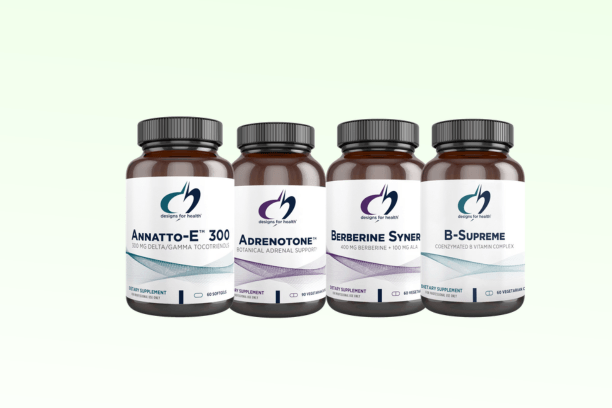 Design for Health structures its offerings around targeted concerns, with many products made to be used as part of a broader, personalized plan. Its product range includes both single-ingredient and more complex products, depending on your goals.
The brand claims to address specific needs, such as digestive health, immune function, hormonal balance, and metabolic support. Its product range combines vitamins, minerals, probiotics, digestive enzymes, and specialty formulas. In this review, we discuss the brand’s offerings and also examine its advantages and limitations. We also compare the brand with similar options and discuss real user experiences.
About Designs For Health
Designs for Health was founded in 1989 with a focus on transparency and evidence-based nutrition. The brand states that it is FDA-inspected, with cGMP-compliant facilities and comprehensive testing protocols. Its key products, like Adrenotone™, are formulated with adaptogenic herbs and nutrients to support stress response, while B-Supreme provides bioactive B vitamins.
Other products, such as CoQnol™ 100, focus on heart health and energy. The brand claims that it applies strict supplier qualification processes and third-party laboratory testing to ensure consistency, potency, and alignment with label claims.
Top Offerings
-
Adrenotone™
Adrenotone™ may support how your body responds to stress and maintains adrenal balance. The formula combines American ginseng, which may support stable energy levels by influencing how your body uses glucose and manages fatigue. Instead of acting as a stimulant, it works more gradually, which can help you stay alert without the sharp spikes and crashes linked to caffeine.
Ashwagandha in this formula could support a balanced stress response. It helps regulate cortisol, which in turn can influence sleep quality, mood, and overall energy levels. The makers state that this formula helps you feel steadier during periods of ongoing mental or physical strain.
Adrenotone™ also combines vitamin B6, which supports normal adrenal function by participating in metabolic processes that convert food into usable energy. This can help your body maintain consistent energy levels while coping with daily stressors.
-
Annatto-E® 300
Annatto-E® 300 provides vitamin E in the form of tocotrienols, a group of vitamin E isomers that differ slightly from the more common tocopherols. They combine into cell membranes and help protect them from excess oxidative damage caused by free radicals.
Tocotrienols may support cardiovascular health by helping maintain normal cholesterol balance and supporting healthy blood vessel function. Their antioxidant activity works at the cellular level, where they can help limit oxidative stress that affects the heart and circulatory system over time.
As per the official website, vitamin E isomers in this formula help protect delicate tissues from environmental stressors such as UV exposure and pollution. They may support skin integrity and help maintain normal visual function, particularly as these tissues are more vulnerable to cumulative damage.
-
B-Supreme
According to the official website, B-Supreme supports how your body processes nutrients and produces energy. The formula may support metabolic activity and cellular function.
B-Supreme also contains vitamin B1 (thiamine), which can help convert carbohydrates into usable energy. It supports enzymes involved in energy metabolism, which helps your cells generate fuel more efficiently. The formula might also contribute to normal nerve function, as nerve cells rely on a steady energy supply to transmit signals properly.
The makers added niacin in B-Supreme, which is involved in the formation of coenzymes like NAD and NADP that are essential for cellular energy production and repair processes. Through these pathways, niacin helps your body break down fats, proteins, and carbohydrates. It also supports healthy circulation and skin by maintaining proper cellular turnover and function.
-
Berberine Synergy™
Berberine Synergy™ combines berberine HCl with alpha lipoic acid to support how your body regulates blood sugar and responds to insulin. The formulation focuses on metabolic pathways that influence glucose uptake, energy use, and cellular insulin sensitivity.
Berberine HCl may help regulate blood sugar by activating enzymes involved in energy balance, particularly pathways linked to glucose metabolism. It can support how your cells take in and use glucose, which may help maintain more stable blood sugar levels throughout the day.
The formula also has alpha lipoic acid, which could promote mitochondrial energy production, where glucose is converted into usable energy. It may also help reduce oxidative stress, which can interfere with insulin signaling.
-
Acetyl-L Carnitine
As per the official website, Acetyl-L-Carnitine supports a more stable and efficient nervous system. It is a form of carnitine that is absorbed and crosses the blood–brain barrier, allowing it to directly support brain and nerve function.
Acetyl-L-carnitine may support the production of acetylcholine, which is linked to memory, focus, and learning. It helps maintain mental clarity and support day-to-day cognitive performance by contributing to neurotransmitter balance and energy availability in brain cells.
The formula also helps maintain the integrity of nerve cells and supports communication between them. It regulates cellular stress within neurons, which can influence how consistently your nervous system functions.
-
CoQnol 100
CoQnol 100 may support cellular energy production, particularly within the mitochondria, where nutrients are converted into usable energy that powers tissues like the heart. The formula combines ubiquinol, which is the active, reduced form of CoQ10 that your body can use directly. It has a critical role in the electron transport chain that generates ATP. As the heart requires a constant and high supply of energy, maintaining ubiquinol may support consistent cardiac function. It also works as an antioxidant, helping protect cells from oxidative stress that can affect blood vessels and overall cardiovascular health. As per the official website, Trans-geranylgeraniol in CoQnol 100 supports your body’s ability to maintain CoQ10 levels by contributing to the same biological pathway that produces it.
-
Complete Mineral Complex
Complete Mineral Complex could help support how your body maintains mineral balance and carries out enzyme-driven processes. The makers added boron to this formula, which may support bone strength by helping regulate mineral deposition and retention. It could also support hormone activity, which can indirectly affect bone health, cognitive function, and inflammatory balance.
As per the official site, CoQnol 100 also includes zinc, which supports immune function, skin integrity, and cellular repair. It is a cofactor for enzymes that are involved in DNA synthesis, protein production, and wound healing. Zinc also contributes to normal taste, smell, and hormone signaling, making it important for both metabolic and sensory functions.
The formula also combines manganese, which might support enzyme systems involved in metabolism, particularly those that process carbohydrates, amino acids, and cholesterol. It can also help in the formation of connective tissue and bone.
-
Creatine Monohydrate Powder
According to the official website, Creatine Monohydrate Powder supports muscle performance, energy production, and cognitive function. Creatine monohydrate in this formula works by increasing the availability of phosphocreatine in muscle cells. This compound helps regenerate ATP, which your body uses during activities like lifting weights.
Creatine also supports brain energy metabolism. The brain depends on a supply of ATP, and creatine may help maintain energy balance in nerve cells, which can influence focus, mental clarity, and overall cognitive performance.
Creatine monohydrate powder also contributes to physical performance and cognitive function by supporting energy production at the cellular level in both muscles and the brain.
-
Amino Acid Synergy
Amino Acid Synergy could support protein metabolism, muscle maintenance, and lean body mass. It may support energy production and amino acid utilization, helping your body use nutrients more efficiently for repair and growth.
The makers added Alpha-ketoglutarate in this formula, which could support the formation of new amino acids, which are needed for muscle repair and maintaining protein balance. L-arginine is added to help relax blood vessels and improve circulation. It also contributes to protein synthesis and may support recovery by helping remove metabolic waste products.
As per the official website, Amino Acid Synergy also combines l-lysine, which promotes collagen formation that may support connective tissues, and helps with calcium absorption. The formula could also support interconnected processes such as energy production, circulation, and protein synthesis, helping maintain lean muscle mass and support recovery without relying on stimulants.
Pros
- Brand uses bioavailable forms of ingredients.
- Strong quality controls with GMP manufacturing standards.
- Focuses on metabolic health support.
Cons
- Higher pricing compared to mass-market brands.
- Not widely available in retail stores.
Advantages
-
Hybrid Access Model
Designs for Health combines open direct-to-consumer purchasing with practitioner-gated clinical pathways within the same ecosystem. You can directly explore from a catalog of 300+ offerings without prior approval, establishing a fully accessible entry point. The platform also has a practitioner-controlled system where you can connect with licensed providers for customized protocols and guided plans that are not available through standard access.
This dual structure extends into services like Spotlight™ functional testing, which is restricted to practitioner authorization and positioned outside traditional insurance coverage. The brand supports multiple user roles alongside tools such as virtual dispensaries, e-prescribing (eScripting), and protocol management systems. You can purchase products immediately, without needing a practitioner upfront. However, to access more advanced benefits, you need to engage with a provider within the platform. This reduces barriers to entry while still offering a pathway to deeper personalization.
-
Protocol-based Product Architecture
As per the official site, Designs for Health products are designed to function as components within structured, multi-product routines. The lineup has three coordinated layers, such as single-ingredient products (e.g., Acetyl L-Carnitine, Betaine HCl), synergistic blends (e.g., 5-HTP Synergy™, Berberine Synergy™), and specific complexes (e.g., Adrenal Complex, Acnutrol™, ArthroSoothe™) positioned around stress response, skin health, and joint support. These products are grouped within system-level categories such as Gut Health, Hormone Health, and Stress, Mood, and Sleep, reinforcing a clinical, use-case-driven selection model. This structure is supported by practitioner-facing guidance and educational materials that frame products as parts of customized protocols, where multiple formulations are combined to address interconnected biological pathways. You can start with individual products, but the full value emerges when they are combined into a structured protocol, often with practitioner guidance. This can lead to a more targeted and comprehensive approach.
Potential Limitation
-
Financial and Complexity Barrier
Designs for Health encourages combining multiple formulations into customized protocols. While individual options may start in the $30–$50 range (e.g., Adrenal Complex around $35), the model inherently drives stacking behavior, where a typical 3-product protocol can exceed $100+ per month, with more advanced routines increasing further. The architecture mixes single-ingredient capsules with multi-ingredient blends, which expands the total number of daily doses required when protocols are followed as intended. This increases cost accumulation, dosing volume, and complexity, particularly given a catalog that exceeds 300+ products. This means following the system fully can become expensive and operationally demanding over time. Instead of taking one or two products, you may end up managing multiple products with overlapping dosing schedules, leading to fatigue. This can reduce consistency and make long-term adherence more difficult. If you are navigating the catalog without practitioner support, the breadth of options can also introduce decision friction. It may be challenging to determine which combinations are necessary versus redundant, increasing the risk of overlapping ingredients or unnecessary spending. It can feel cost-intensive and complex to sustain.
Alternatives To Designs For Health
-
Pure Encapsulations
Pure Encapsulations and Designs for Health differ in how they structure and present their product ecosystems, starting with the breadth and categorization of their product lines. As per its official website, Pure Encapsulations offers products across blood sugar support, bones and musculoskeletal health, cardiovascular health, vision support, weight management, and gender-specific formulas. It also features products like Magnesium (glycinate), O.N.E. Multivitamin, B-Complex Plus, Vitamin D3 & K2, NAC 600 mg, and Zinc 30. On the other hand, Designs for Health provides products across a more clinically segmented catalog. Its categories include mitochondrial energy, GLP-1 support, detox, and protein and amino acids, alongside branded formulations like 5-HTP Supreme, Berberine Synergy, Amino-D-Tox, and Adrenotone.
The approach to personalization highlights a contrast where Pure Encapsulations builds its system around a 5-minute vitamin quiz created by a team of medical and nutritional experts, where you answer structured questions about your health, lifestyle, and wellness goals. The platform then uses questionnaire-based analysis to generate a personalized plan made specifically for your needs, with recommendations validated by science and supported by healthcare professionals. Designs for Health, however, does not provide a direct-to-consumer personalization tool. Instead, it relies on practitioner-led guidance and a DTC model, where key product protocols and decisions are shaped by healthcare providers. Certain offerings, like the Spotlight functional wellness tests, must be ordered or authorized by qualified professionals.
Ingredient philosophy further distinguishes how each brand approaches formulation. Pure Encapsulations emphasizes products that are free from unnecessary additives and many common allergens, focusing on clean-label formulations and transparency from start to finish. Meanwhile, Designs for Health takes a more technically rigorous approach, using scientifically validated ingredients and applying strict specifications to evaluate identity, purity, quality, strength, and composition. It goes beyond basic verification by assessing whether the correct plant part is used, whether active compounds are present at clinically relevant levels, and whether documentation reflects true quality.
Pure Encapsulations provides highly detailed, transparent documentation on its quality control, matching with Designs for Health’s multi-stage testing claims from their site. This includes raw material identity, potency, microbial tests, extensive contaminant screening (heavy metals, solvents, pesticides), and finished product verification per batch. Their NSF-GMP certification, USP-exceeding standards, and strict allergen SOPs also align closely with DFH’s ISO-certified lab protocols and GMP focus.
According to their official website, Pure Encapsulations supports a structured yet self-directed approach where you can use guided tools, expert-backed quizzes, and clean-label formulas to build your wellness routine. Meanwhile, Designs for Health operates within a more clinically controlled framework, where products are developed, tested, and distributed with a strong emphasis on practitioner oversight.
-
Metagenics
Metagenics and Designs for Health both operate in the professional space, but their ecosystems and products differ in practical ways. As per its official website, Metagenics offers a structured catalog organized around broad fitness areas like digestion and probiotics, immune health, stress and mental health, sleep, and women’s health. It categorizes its offerings, such as Gut & Digestion, Stress & Sleep Aids, and bundled options like Bundle & Save, along with daily packs like Wellness Essentials® Men’s Vitality Daily Packs. Single products such as PhytoMulti® Multivitamin for cellular health, and UltraFlora® Balance Probiotic for everyday gut health are positioned as easy entry points. On the other hand, Designs for Health presents a larger catalog with a more clinically segmented structure that includes categories like mitochondrial energy, blood sugar metabolism, hormone health, and functional wellness testing. Alongside this, you see practitioner-focused segments such as Designs for Sport®, Designs for Beauty®, and even specialty options like Fx Chocolate, creating a more detailed, protocol-oriented navigation.
The difference becomes more evident in how products are formulated and delivered. Metagenics offers a wide variety of formats, including tablets, capsules, powders, softgels, gummies, chewables, liquids, soft chews, and bars, allowing you to choose based on convenience and preference. Many of its formulations combine multiple benefits into one product, such as UltraFlora® Complete Probiotic, supporting gut, immune, and skin health. Even targeted products like Magnesium Glycinate are positioned for multiple outcomes like muscle, nerve, sleep, and stress support. Meanwhile, Designs for Health takes a more targeted formulation approach, offering products like Berberine Synergy™, ADK Evail™, Amino Acid Supreme™, and Arterosil® HP, often in capsules, powders, or softgels with multiple dosage strengths and sizes. This allows you to fine-tune intake levels and combine products based on specific needs.
Quality and testing are emphasized by both brands, but the way they communicate this differs. Metagenics highlights third-party validation and transparency through SuppCo’s TrustScore system, along with certifications like Non-GMO Project Verified and gluten-free labeling. It specifies extensive testing for heavy metals, microbial contaminants, pesticides, solvents, physical attributes, and clean excipients, along with transparent batch-specific Certificates of Analysis. On the other hand, Designs for Health focuses on a science-first quality framework rooted in FDA current Good Manufacturing Practices, with strict supplier qualification programs and oversight across company-owned and global manufacturing facilities. It applies USP-informed specifications and emphasizes that every product is designed to deliver exactly what the label states, relying more on internal scientific controls than external scoring systems.
Sustainability and brand values introduce another contrast. Metagenics operates as a Certified B Corporation, highlighting commitments to responsible sourcing, sustainable packaging, and reducing waste and emissions through audited facilities. In comparison, Designs for Health does not highlight sustainability certifications within the shared details, instead maintaining a stronger focus on scientific validation.
As per their official website, Metagenics offers a more structured and accessible experience with multi-benefit formulations, diverse delivery formats, bundled options, and visible third-party validation. Meanwhile, Designs for Health provides a more expansive and clinically segmented catalog, with targeted formulations.
How Did We Evaluate?
-
Brand Reputation
We evaluated Designs for Health based on its brand history, third-party credibility indicators, and the availability of independent consumer feedback. The brand holds an A+ rating from the BBB, although it is not accredited. This rating indicates a structured approach to handling complaints and maintaining business transparency. However, it has a minimal presence on Trustpilot, with no meaningful visibility on platforms like Tenereteam, which further highlights the lack of a strong consumer feedback ecosystem.
Designs for Health reflects a mix of strong institutional credibility and limited consumer transparency. Its long-standing presence and BBB rating support reliability, but with a lack of widespread, accessible consumer reviews, it makes it harder to consistently evaluate real-world experiences, product satisfaction, and service quality.
-
Real User Experiences
We evaluated Designs for Health based on customer reviews on Amazon. The Magnesium Glycinate Complex, rated 4.6 from 4,301 reviews, demonstrates consistent outcomes related to sleep support and physical comfort. Users frequently mention improved sleep quality when taken at night, along with relief from muscle cramps and better digestion without the common digestive side effects associated with other magnesium forms.
Its Vitamin D Supreme has received a 4.7 rating from 3,944 reviews, reflecting strong customer satisfaction tied to wellness support. Users commonly associate it with improved energy balance, immune support, and bone health, supported by its combination of D3 with K1 and K2. Many consumers also emphasize ease of consumption, lack of aftertaste, and recommendations from healthcare professionals, which strengthens trust in the product.
The brand’s Methylated Multivitamin, rated 4.6 from 1,208 reviews, is discussed for its formulation approach. Customers highlight the addition of methylated nutrients and non-synthetic sources as key differentiators. Reported benefits from users include gradual improvements in energy, sleep, and measurable health markers, suggesting consistent support for long-term nutritional balance.
Based on these reviews, Designs for Health reflects a pattern of reliable product performance supported by consistent customer experiences. The feedback indicates a focus on formulation quality and tolerability, with results that tend to build over time.
Frequently Asked Questions
- Does Designs for Health provide allergen transparency across all products?
The brand supports allergen transparency by clearly labeling major allergens and noting when products are free from gluten, dairy, or soy. Detailed product sheets also outline ingredient specifics, including enzyme sources, though consistency in depth of information can vary across products. - Does Designs for Health offer guidance on cycling product usage?
The brand does not provide a defined consumer guide for cycling. Its content focuses more on nutrient timing for performance and supporting natural biological cycles. - Can Designs for Health products be used for sleep-related concerns?
The brand offers Melatonin SRT and Magnesium Buffered Chelate, which may help target relaxation and circadian rhythm support. Formulations may also include L-theanine, GABA, and botanicals to promote calmness and stress balance.
Final Words
Designs for Health is centered on targeted nutrition. It claims to support specific physiological processes using clinically studied ingredients. The product formulations combine multiple compounds to influence various interconnected systems, which suggests a systems-based approach.
However, this model can be difficult to understand without practitioner guidance, especially when multiple products are used together. The brand also tends to be priced higher and has more limited retail availability, which potentially affects accessibility.
The offerings come with multi-ingredient formulas that may increase the risk of nutrient overlap or excessive intake if combined without guidance. Ingredients such as berberine or adaptogens can interact with medications or underlying problems, so consulting a healthcare provider is important before starting a routine.
Designs for Health offers complex, science-backed formulations that can sometimes be difficult to understand and require practitioner guidance for optimal use. That said, its hybrid model, blending practitioner support with direct-to-consumer access, still carries a higher cost and some reliance on professional input, which you should weigh carefully.

Rachel has been a freelance medical writer for more than 18 years. She graduated from the University of Tennessee at Knoxville in 2005 and is currently practicing as a Certified Registered Nurse Anesthetist at a Level I trauma center.
Leave a Reply