

No products in the cart.
Contents
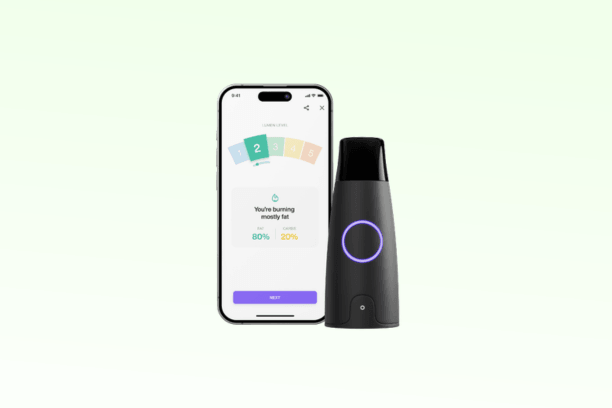 The Lumen device is a handheld metabolism tracker that focuses on how your body uses energy, rather than just tracking weight or calories. It aims to show whether your body is burning carbohydrates or fats at a given moment.
It measures carbon dioxide in your breath after you exhale into the device. The device gives you daily guidance based on your readings, including suggestions on food intake and timing.
In this review, you’ll look at the device’s design, benefits, consistency, and user experiences to understand whether the details it provides are actually useful over time.
What Is Lumen Device?
As per the official site, Lumen measures your metabolism through breath analysis. The device is based on respiratory gas analysis, which involves calculating the respiratory exchange ratio (RER), which compares carbon dioxide (CO₂) produced to oxygen (O₂) consumed. Lower values are linked to fat burning, while higher values approach carbohydrate use.
As measuring oxygen requires specialized lab equipment, the device uses CO₂ levels as a proxy. It includes multiple sensors, such as a CO₂ sensor, flow meter, barometric pressure sensor, and temperature sensors, to help standardize each breath sample.
The measurement follows a guided breathing method where you inhale, hold briefly, and then exhale steadily into the device. It stabilizes gas exchange in the lungs so the captured breath better reflects actual metabolic activity rather than shallow or inconsistent breathing. The data is sent to a companion app, which turns it into guidance such as daily macronutrient targets, meal timing, and fasting suggestions.
It focuses on metabolic flexibility, or how well your body switches between fuel sources, and connects those patterns to daily habits. It also integrates with other fitness data for added context.
Benefits
-
Provides Real-Time Metabolic Feedback
As per the makers, the Lumen device gives you a measurable output immediately after each breath session, typically within about 20 seconds. This reflects whether your body is leaning toward using carbohydrates or fats for energy at that specific time. As you test multiple times a day, such as in the morning, before a workout, or after eating, you directly observe how different inputs affect your body’s response. A high-carb dinner the night before may show up in your morning reading, while a fasted state or workout may shift your result in the opposite direction. It creates a clear cause-and-effect link between your actions and your body’s response. You learn faster about your eating patterns and also make necessary adjustments, which improves consistency, manages hunger patterns, and makes better day-to-day decisions.
-
Simplified Food Tracking
Lumen has built-in tools that reduce the effort required for tracking food intake. It has an AI-powered food logging feature that records meals with minimal input. You log meals in seconds rather than minutes, which lowers the friction. It helps you stay consistent without feeling overwhelmed. You become more aware of your food patterns, which supports better decisions and more sustainable progress without the burnout that usually happens with strict tracking methods.
-
Integration With Fitness Ecosystems
The Lumen device connects with a range of health and fitness platforms to combine metabolic data with other aspects of your daily routine. Through its app, it syncs with Apple Health and Google Fit, which act as central hubs for aggregating data from multiple apps and devices. It also combines Garmin Connect, Oura, WHOOP, and Strava to extract information related to workouts, strain levels, recovery status, and sleep quality. The device tracks exercise, daily movement, food intake, and sleep, which influence your metabolic readings. It relates a high-intensity workout or poor sleep to changes in how your body uses energy the next day. Your results are not viewed in isolation but alongside the habits that influence them.
Potential Drawbacks
-
Steep Learning Curve
The Lumen device requires a precise breathing sequence—typically a steady inhale, a 10-second breath hold, and a controlled exhale lasting several seconds. If your exhale is too fast, too slow, or uneven, the device may reject the reading and ask you to repeat it. This means taking multiple attempts per session, especially in the first week. In real use, this becomes noticeable during rushed mornings or before workouts, where repeating tests feels inconvenient and slows down your routine.
-
Limited Flexibility in Meal Planning
The Lumen device builds daily nutrition guidance around a single morning reading, which makes it harder to adapt when your day doesn’t go as planned. For example, if you’re assigned a low-carb day but end up at a birthday dinner or last-minute outing, the plan doesn’t easily adjust in real time.
This creates an all-or-nothing feeling, to either follow the plan closely or ignore it altogether. This causes frustration, especially during travel, social events, or busy schedules. Constantly trying to match real-life situations with fixed daily targets feels limiting and may reduce how consistently you use the device.
Pros
- Provides understanding of fat and carb burning.
- A portable device with simple daily breath measurements.
- Builds awareness of metabolism and nutrition habits.
Cons
- Requires consistent use and food logging discipline.
- Subscription needed for full features and coaching.
Real User Experiences
User experiences for Lumen on Reddit reflect detailed, experience-based criticism rather than general skepticism. Technical reliability is a recurring issue. One user reported that the device stopped working within a few days, received a replacement, and then found the new unit would not pair with the app, making it unusable. These types of issues highlight concerns around product consistency and setup reliability.
Accuracy is also a major point of criticism. A user describes inconsistent or repetitive readings, including cases where results did not change despite different diets or routines. Some report getting similar outputs regardless of what they ate, leading to concerns that the data may not reflect real metabolic changes.
From a usability standpoint, users point out the effort needed to use the Lumen device consistently, including repeated breathing sessions and keeping up with app recommendations. For some, this is harder to maintain over time, especially when trying to build habits that feel sustainable day to day.
User feedback suggests that while the Lumen device offers a different way to track metabolism, the experience is often shaped by concerns around cost, reliability, accuracy, and how useful it remains over time.
Frequently Asked Questions
- Does Lumen device directly measure calorie burn?
No. The device measures which fuel source your body is using (carbs or fat) based on breath CO₂, not total calories burned. It provides metabolic insights, not a direct calorie count. - Can I replace my nutrition coach with the Lumen device?
No, as it can provide metabolic insights and general nutrition guidance, but cannot replace the personalized assessment, medical context, and tailored planning of a human coach or dietitian. It works best as a support and not a substitute. - Does hydration level affect Lumen readings?
Yes, indirectly. The devices’ readings can be influenced by hydration because it affects breathing patterns and metabolic state. For accuracy, consider taking readings under consistent conditions, including adequate hydration levels. - Can Improper sleeping habits impact my Lumen results?
Yes. Readings are influenced by sleep quality because poor sleep alters hormones and metabolism (e.g., glucose use, fat burning). As a result, readings after a bad sleep may reflect a temporary state rather than your normal baseline.
Final Words
The Lumen device approaches metabolism differently by focusing on how your body uses fuel instead of tracking calories or weight. It gives you an estimate of whether you’re using fats or carbohydrates and uses that to guide daily decisions. Its value is mainly in awareness. It helps you connect your habits, like eating, training, and sleep, with how your body responds, which is useful if you stay consistent.
However, it requires effort. Regular breathing sessions, proper technique, and consistent use are necessary, and missed or failed readings disrupt the experience. There are also reliability concerns. Inconsistent results or technical issues affect how much you trust the data, especially since small usage differences change outcomes. It also feels restrictive at times. Focusing on daily scores may lead to rigid choices that don’t always fit real-life situations. It is useful if it fits your routine, but ultimately it depends on consistency, correct use, and how practical it is to maintain over time.

Rachel has been a freelance medical writer for more than 18 years. She graduated from the University of Tennessee at Knoxville in 2005 and is currently practicing as a Certified Registered Nurse Anesthetist at a Level I trauma center.
Leave a Reply