

No products in the cart.
Contents
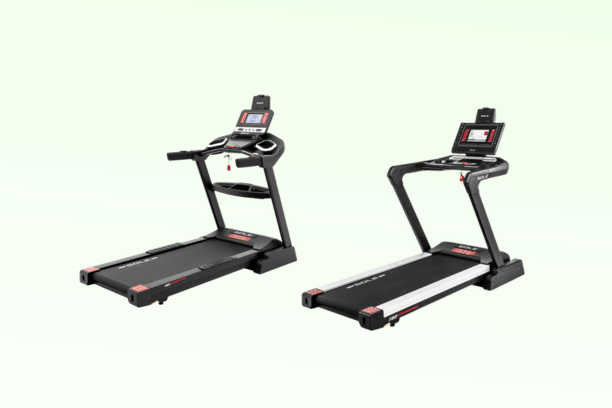 Sole Fitness focuses on home cardio equipment designed to deliver gym-like performance in a residential setup. Its product range primarily includes treadmills, ellipticals, and exercise bikes, with multiple models built around varying performance levels and feature sets.
Across its lineup, you will find an emphasis on durability and consistent performance through commercial-grade components and cushioning systems intended to reduce impact during workouts.
In this review, we will take a closer look at what Sole offers across its equipment range, how it compares with similar fitness equipment brands in terms of features and value. We will also evaluate how its reputation holds up based on user experiences and long-term reliability.
About Sole Fitness
Sole Fitness is a US-based fitness equipment brand headquartered in Salt Lake City, Utah, focused on designing and manufacturing durable, performance-driven products. Its equipment was originally engineered for hotel use, which continues to shape its emphasis on long-term reliability, stability, and consistent performance across its lineup.
The brand covers a wide range of categories, including treadmills, ellipticals, exercise bikes, rowers, strength equipment, and accessories. Within these categories, Sole Fitness offers multiple models suited to different fitness levels, allowing you to build a complete home workout setup with gym-quality machines that balance performance and affordability.
As per the official website, Sole Fitness includes a digital training component through the SOLE+ app. This app provides hundreds of free fitness video classes ranging from 10 to 60 minutes, covering activities like running, cycling, boxing, and rowing.
Top Offerings
-
Treadmills
Sole Fitness treadmills are built for indoor cardiovascular exercise, supporting activities such as walking, jogging, and sustained running. These movements may engage lower-body muscle groups, including the quadriceps, hamstrings, and glutes.
The brand states that treadmill use can contribute to cardiovascular conditioning within a controlled indoor environment, where variables such as speed and incline can be adjusted to match your fitness level. This controlled setting may reduce variability associated with outdoor terrain while allowing consistent training conditions.
As per the official sites, Treadmills are available in both folding and non-folding models, with differences in space usage and build design. Folding models, including the SOLE F63 Treadmill and SOLE F65 Treadmill from the F6X series, use mechanisms that allow the deck to be stored vertically when not in use. These units typically feature running surfaces of about 20 to 22 inches in width and 60 inches in length, which may accommodate a range of stride patterns during walking or running.
Models such as the F80, F85, and F89 Treadmill in the F8X series include expanded feature sets. These involve larger touchscreen displays ranging from approximately 10.1 inches to 21.5 inches, which can display workout metrics such as speed, distance, incline, and heart rate. Some of these models also include decline functionality with up to six levels, which may simulate downhill movement and shift mechanical load toward the quadriceps due to increased eccentric control during descent.
Incline functionality across the range may increase the demand on the posterior chain, particularly the glutes and hamstrings, by requiring greater hip extension during movement. Adjusting incline and speed together may allow gradual changes in workout intensity, from lower-impact walking to more demanding running sessions.
Non-folding models, such as the TT8 and ST90 Treadmill, include heavier frames and other elements intended for stability, such as larger rollers or specialized belt constructions. The TT8 includes both incline and decline settings, while the ST90 uses a slat belt system, which may influence running feel and durability.
Sole Fitness Advantages
-
Commercial Hotel Design Origins
Sole Fitness traces its design approach back to commercial hotel environments, which helps explain its emphasis on durable construction, stable performance, and long-term reliability. The brand states that its machines were developed to handle frequent daily use by a wide range of users, forming the basis for its gym-quality or commercial-grade positioning. According to Sole, this results in equipment built to higher durability standards than typical entry-level home machines.
This focus on robust engineering continues across its current lineup, with heavier frames and more durable components designed to support consistent performance over time, particularly in settings with repeated use. Many of its models are described as suitable for both home use and light commercial environments, such as small studios or office fitness areas, where equipment may face higher usage than in a standard household.
At the same time, the brand includes models intended specifically for general home use, creating a mix of higher-usage-oriented and more basic options within its portfolio. This may support more stable and slower performance decline over time, although outcomes still depend on how consistently the equipment is used and maintained.
-
Longstanding Industry Presence
Sole Fitness states that it has been operating in the fitness equipment industry since 2001, with some records pointing to business activity beginning in late 2000. The brand is based in Salt Lake City, Utah, and indicates that it initially focused on building durable treadmills for hotel use, according to the brand.
Based on this timeline, Sole reports more than 25 years of experience and frames itself as a long-running provider of fitness equipment. It connects this longevity to its overall brand credibility and market recognition. This may support confidence in product consistency and long-term performance, although your actual experience will still depend on factors including usage patterns and maintenance.
Sole Fitness Limitations
-
Limited Digital Fitness Ecosystem Expansion
Sole Fitness builds its digital experience primarily around the SOLE+ app, where the focus remains on basic workout tracking. The ecosystem is not fully unified, which means you may need to rely on multiple interfaces, such as SOLE+, SRVO on compatible bikes, or the machine’s built-in console. These elements do not consistently function within a single central hub, which can make the overall experience feel more fragmented compared to more integrated platforms.
There are also some limitations in syncing and automation. In certain cases, you may need to manually sync workout data or reconnect apps, and updates may not always happen in real time. This suggests that while the system supports basic connectivity and select integrations, it does not offer the same level of automation or consistency seen in more advanced digital fitness ecosystems.
You may find yourself switching between apps, checking data across different interfaces, or managing syncing manually. If you prefer a more seamless system where everything updates automatically in one place, this setup may feel less streamlined in day-to-day use.
-
Minimal Smart Training Differentiation
Sole Fitness equips most of its machines with 10+ built-in programs, including HIIT, hill climbs, and fat-burning routines, along with the option to save a limited number of custom workouts. These programs follow fixed structures and do not adapt in real time to factors such as heart rate, recovery, or progress, so you handle most adjustments manually rather than relying on automatic personalization.
There is also relatively limited depth in interactive features and content. It offers fewer elements, such as real-time coaching feedback, immersive route simulations, or structured multi-week adaptive programs. In many cases, you may need to rely on screen mirroring or third-party apps to create a more engaging experience, which reflects a system designed around consistency rather than continuous adaptation.
Sole Alternatives
-
DeerRun
DeerRun and Sole Fitness take different approaches to home fitness, starting with the type of equipment they prioritize and how you’re expected to use it. As per its official website, DeerRun centers its lineup around compact cardio options such as 2-in-1 foldable treadmills, under-desk walking pads, and incline-based walking systems. Models like the 2026 A1 Pro Move+ include a 6% incline, while options like the Q2 Urban walking pad (7% incline) and Z10 are built for casual, space-conscious use. On the other hand, Sole Fitness offers a more traditional, full-range fitness catalog that includes treadmills like the F63, F65, F80, and F85, along with ellipticals, bikes, rowers, and strength equipment, positioned to fully replace a gym setup at home.
As per the design approach, DeerRun builds its products for compact living, emphasizing foldability, portability, and ease of storage. Its Z20 treadmill, for instance, uses a suitcase-style design with a foldable running belt, retractable handle, and wheels, allowing you to store it upright and move it easily. Even higher-performance models like the X20 retain a space-saving foldable frame while offering a 15% auto incline, extra-wide belt, and Bluetooth app control. Sole Fitness, on the other hand, focuses on stability and long-term durability. Its equipment, originally engineered for hotel environments, features larger frames, full running decks, and a heavier build that prioritizes consistent performance over portability.
Performance capabilities also reflect this contrast. DeerRun equipment is designed for accessible, daily movement. Most models support speeds between 7.5 mph and 11.3 mph, and incline ranges from 5% to 15%. These specifications align with walking, light jogging, and moderate cardio routines. In comparison, Sole Fitness offers machines, such as the F80 and F85 treadmills, which are built for more intensive use, offering stronger motors, larger running surfaces, and advanced console systems that support sustained running and higher training loads. Technology integration further separates the two. DeerRun combines features like upgraded smart chips, NFC support, Bluetooth connectivity, and the PitPat app. Sole Fitness, in comparison, combines the SOLE+ app across its equipment, providing access to hundreds of structured video workouts ranging from 10 to 60 minutes. These sessions use heart rate metrics and equipment data to guide training, making the experience more program-driven and performance-focused.
Pricing highlights one of the clearest differences between the brands. DeerRun positions itself as a budget-friendly option, with products like the Q2 Urban walking pad priced around $149-$269 and foldable treadmills like the A6 Plus or A1 Pro Move+ typically ranging between $249 and $329. Meanwhile, Sole Fitness operates in a significantly higher price bracket, with treadmills such as the F65 priced around $1,299.99, the F80 at $1,799.99, and the F85 reaching $2,299.99, reflecting its emphasis on premium build quality and long-term use. DeerRun leans toward affordability, compact design, and flexible everyday use, while Sole Fitness prioritizes durability, structured training, and a more traditional, gym-grade fitness experience at home.
-
GoPlus
As per its official website, GoPlus operates as a large-scale manufacturer with a catalog of over 1,600 products. It highlights categories like sports equipment, home décor, automotive tools, water sports, toys, and business or industrial goods. The brand includes options such as inflatable tandem kayaks with 507 lbs capacity, rooftop cargo carriers, gaming recliner chairs, and rollator walkers. Sole Fitness, on the other hand, remains tightly focused on fitness equipment, offering treadmills, ellipticals, bikes, rowers, strength machines, and accessories, with a clear emphasis on building a complete fitness-focused product ecosystem.
This difference extends into product structure and depth. GoPlus offers a wide selection of treadmills, like 2-in-1 and 3-in-1 folding models, under-desk walking pads, and compact machines with motors ranging from 2.25HP to 4.75HP. These include features such as LED displays, HD touch screens, Bluetooth speakers, remote controls, app connectivity, and dual display panels, with weight capacities reaching up to 340 lbs in certain models. However, these treadmills are part of a broader mixed catalog. Meanwhile, Sole Fitness builds depth within its category through defined product lines such as the F63, F65, F80, and F85 treadmills, along with ellipticals like the E95. The brand highlights consistent engineering and progressive performance upgrades across models.
GoPlus is built around affordability, variety, and compact options that combine fitness into daily routines alongside other lifestyle products. On the other hand, Sole Fitness focuses on a specialized, performance-oriented ecosystem with durable equipment, guided training support, and a clear emphasis on long-term fitness commitment.
Pros
- Strong commercial-grade treadmill construction.
- Features a free SOLE+ workout app.
- Ergonomic design across models.
- Supports intense interval training.
Cons
- Slow customer service response times.
- Delayed replacement parts shipping.
- Poor communication during service requests.
How Did We Evaluate?
-
Brand Reputation
We have evaluated Sole Fitness’ brand reputation using publicly available information from the Better Business Bureau and customer discussions on Reddit. The brand has received an A- rating on BBB, where reviews have highlighted recurring issues. Some users have reported delays in warranty fulfillment, including wait times for replacements and the need to perform installations themselves. Others have noted challenges related to servicing, such as high costs for technician visits after warranty expiration or limited availability of service providers. These concerns suggest potential gaps in after-sales support and service logistics.
Customer discussions on Reddit have shown similar concerns, particularly around delivery and setup experiences. Some users have reported receiving non-functional equipment upon delivery, with issues attributed to assembly errors or defective components. There have also been complaints about third-party delivery teams arriving late, providing poor service, or leaving customers to resolve issues independently. In some cases, customers have reported that returns or replacements involved additional fees, such as restocking or pickup charges, even when the product was not functioning as expected. The brand shows moderate brand credibility, and recurring concerns highlight inconsistencies. It appears reliable in standing but uneven in customer experience and service execution.
-
Real User Experiences
We evaluated the real user experiences for Sole Fitness by reviewing publicly available customer feedback and ratings from Trustpilot. The company holds a TrustScore of 2.9 out of 5 based on over 1,100 reviews.
Across the reviews, users describe positive experiences with equipment performance and staff interactions. Customers occasionally highlight that machines such as treadmills feel sturdy, quiet, and capable of delivering effective workouts. On the other hand, there are recurring issues with product reliability.
Many report receiving faulty or damaged equipment, including treadmills that stopped working shortly after purchase or developed mechanical or technical issues such as malfunctioning screens, inaccurate sensors, or sudden shutdowns.
Delivery and order fulfillment problems are also frequently mentioned. Customers describe incomplete shipments, missing accessories, or delays in receiving equipment or replacement parts. Assembly and setup challenges are occasionally noted as well, particularly when instructions or support are unclear.
The feedback suggests that while the company’s equipment may perform well under certain conditions, there are clear opportunities for improvement in quality control, logistics, and support consistency.
Frequently Asked Questions
- Do Sole Fitness machines require professional assembly?
No. The brand designs machines like the F63, F80, F85, and TT8 treadmills for self-assembly using included manuals and basic tools. Most users can complete the setup themselves, though it may take time and effort. Optional third-party assembly services are available but not required. - Does Sole Fitness support app-based workout tracking?
The brand supports app-based workout tracking through the SOLE+ app, which syncs via Bluetooth to track workout history, real-time metrics, and trends. It also combines with platforms like Apple Health, with limited wearable support. - Does Sole Fitness provide heart rate monitoring features?
Yes. The brand includes heart rate monitoring on its machines through built-in contact grip sensors and optional chest strap compatibility. However, chest straps provide more accurate readings than grip sensors.
Conclusion
Sole Fitness focuses on delivering stable, gym-like performance in a home setting, with an emphasis on durability, structured workouts, and consistent mechanical output. However, preset programs and heart rate tracking remain fixed and do not adapt to your performance, recovery, or fatigue levels.
The system relies on your understanding of training variables rather than automated feedback or data-driven coaching. The lack of adaptive programming and limited digital integration may affect long-term engagement, particularly if you expect responsive feedback or structured progression.
If you are considering Sole Fitness, it works best as a mechanically focused system rather than a fully connected training platform. You may need to use external programs or apps to introduce progression and variation.
Paying attention to proper setup and alignment is important, as it can influence movement mechanics and joint loading over time. Monitoring training intensity independently is also necessary, since the equipment does not adjust based on physiological feedback.
While Sole claims to support consistent performance, limited adaptability, basic digital features, and service-related concerns remain important constraints.

Rachel has been a freelance medical writer for more than 18 years. She graduated from the University of Tennessee at Knoxville in 2005 and is currently practicing as a Certified Registered Nurse Anesthetist at a Level I trauma center.
Leave a Reply