

No products in the cart.
Contents
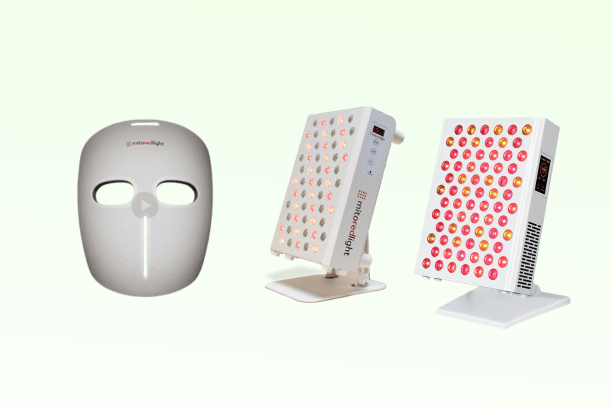 Mito Red Light offers devices designed for use at home or in more advanced setups. Its product range includes full-body panels, targeted devices, and wearable options like belts and facial masks.
The brand also offers both smaller, targeted devices and larger panel systems, giving you flexibility in how you approach light therapy. Its range is built to cover different use cases, whether you want a focused application on specific areas or broader coverage across the body.
In this review, we will look at Mito’s product offerings, its key advantages, and its limitations. We will also analyze how the brands compare with other similar options in the same category.
About Mito Red Light
Mito Red Light focuses on delivering at-home and professional-grade photobiomodulation devices across multiple formats. Its core offering centers on light-based systems designed to expose the body to specific wavelengths, commonly used for areas like recovery, skin support, and general physiological function.
The brand’s product lineup is built around panel-based light therapy systems, which form its primary category. It also extends into topical formulations under its BioPhotonic Skincare™ line, including products like the MitoAURA serum, body spray, and scalp-focused formulations.
As per the official website, Mito Red Light states that its devices undergo independent third-party testing to verify power output and spectral accuracy. The brand highlights certifications such as ETL certification for electrical safety (tested by Intertek) and notes that its devices are FDA Class II registered, alongside compliance with standards like FCC, CE, and RoHS.
Bestsellers
-
MitoPRO+
MitoPRO+ is a red and near-infrared light therapy panel series intended to support general wellness by delivering light energy to the body, which the brand claims may help with temporary increases in local blood circulation, minor muscle and joint stiffness, skin health, relaxation, and cellular function. The device emits a combination of red light at 630nm and 660nm and near-infrared light at 830nm and 850nm. These wavelengths fall within spectral ranges that are commonly associated with photobiomodulation, where light may penetrate the skin and interact with mitochondria.
The panel uses a mix of 50% red and 50% near-infrared LEDs, which the company claims allows you to target both surface-level tissues and deeper structures. Red light is generally understood to interact more with the outer layers of the skin, while near-infrared light is described as penetrating deeper into tissues, which the brand associates with muscle and joint applications.
-
MitoPRO X
MitoPRO X could support general wellness by delivering multi-wavelength light exposure that the brand claims may help with circulation, minor muscle and joint stiffness, skin health, relaxation, and cellular function.
The panel uses dual-chip LED technology, which allows the device to operate in different output configurations, including 100% red light, 100% near-infrared light, or a combination of both. This may give you flexibility in how you apply the device, depending on whether you are focusing on surface-level areas like skin or deeper regions such as muscles and joints. The inclusion of the 590nm wavelength may expand coverage across different biological targets.
-
MitoADAPT 4.0
As per the official site, MitoADAPT 4.0 provides multi-wavelength light exposure across the body, which may help with skin appearance, circulation, muscle recovery, joint comfort, and broader systemic functions.
The panel includes a multi-circuit design with TruDual™ chip technology, which the brand states allows you to access eleven distinct operating modes that combine red, amber, and near-infrared wavelengths in different configurations. These modes could address varying use cases, such as skin tone and fine lines, collagen-focused exposure, joint and muscle support, circulation, metabolic activity, and full-body recovery.
The brand also states that the MitoADAPT 4.0 is described as a Class II registered device with certifications such as FCC, CE, and RoHS, and that it undergoes third-party testing and quality control processes.
-
MitoGLOW LED mask
MitoGLOW LED Red Light Therapy Mask may aid skin appearance by emitting multiple wavelengths of light that the brand claims may help with acne management, wrinkles, skin tone, and complexion. The mask uses four specific wavelengths, including blue light at 465nm, amber light at 590nm, red light at 630nm, and near-infrared light at 830nm. According to the company, these wavelengths may interact with the skin at different depths, where shorter wavelengths, such as blue light, are useful for surface-level effects, while red and near-infrared light are associated with deeper tissue exposure that could influence cellular activity and skin structure.
The device includes five preset modes that combine these wavelengths in different ways depending on the intended outcome. The anti-aging mode uses 630nm red light, which is associated with smoothing, firming, and revitalizing the skin, potentially through stimulation of processes like collagen activity. The purify mode uses 465nm blue light, which could address acne-related concerns. The calm mode uses 590nm amber light, which the company claims may help reduce visible redness and support more even skin tone.
The deep renewal mode combines 630nm red light with 830nm near-infrared light, which may provide surface-level and deeper tissue exposure. The brand states that its product is FDA 510(k) cleared for the treatment of mild to moderate acne vulgaris and for use on full-face wrinkles, which frames its positioning within over-the-counter skincare devices.
Pros
- Multi-wavelength technology is used.
- Offers full-body panels in its lineup.
- IEC safety compliance is mentioned.
- Includes recovery-focused devices.
Cons
- Limited device-specific clinical trials.
- Relies on general RLT research.
- Delayed support responses are reported in independent reviews.
Advantages
-
High‑Output Light Therapy Technology
Mito Red Light shares quantified performance metrics across its product line, giving you clearer insight into device output. The brand reports irradiance levels often exceeding 100–140 mW/cm² at 6 inches, along with fluence rates of around 3 J/cm² per minute for several panels. This places the MitoMAX series in the category of high-power, full-body therapy devices.
These figures are backed by testing from independent ISO-accredited labs, which helps separate the brand from others that rely on vague or unverified claims. You can better measure how powerful a device is and estimate session duration with more accuracy.
Higher irradiance also means you may achieve the desired fluence in less time or deliver more energy at depth when used at appropriate distances. This makes the brand’s devices more suitable if you are aiming for efficiency and performance-focused use.
-
Third‑Party Tested Device Validation
Mito Red Light states that key panels are evaluated by independent, ISO-accredited laboratories such as LightLab International and ITL. These labs measure total radiant power, spectral output, and irradiance, and the brand shares selected results along with brief methodology details to support its claims.
Instead of presenting testing as a one-time certification, the brand treats validation as a routine part of product development. This gives you more context around how performance figures are generated rather than relying solely on brand-reported data.
As irradiance and fluence values are supported by external lab testing, you can have more confidence that the devices perform as described. This also helps reduce concerns about exaggerated claims or inconsistencies, especially when you are comparing high-output, at-home red light therapy devices.
-
Engineering‑Driven Product Development
Mito describes its product development as engineering-driven, with a focus on refining power supplies, thermal management systems, and LED configurations over time.
The brand highlights in-house design, long-term reliability testing, and iterative upgrades across product lines such as MitoPRO, MitoMAX, and MitoADAPT. This reflects a continued effort to improve performance consistency and device durability rather than relying on a fixed design.
This approach is also visible in the use of higher duty-cycle power supplies and more stable output across the lineup. It means the devices are built to maintain consistent performance over repeated sessions, with a lower likelihood of early dimming or component failure.
-
Safety‑Compliant Device Engineering Standards
Mito states that its devices are developed in line with recognized electrical safety and performance standards. For instance, the brand highlights that its MitoPRO X series is certified to IEC 60601-1 and related requirements. The MitoPRO+ and MitoADAPT 4.0 panels are described as ETL-certified for electrical safety and independently tested. Mito also features the MitoGLOW LED mask, which is FDA 510(k)-cleared as a Class II device, with built-in controls for wavelength accuracy, thermal regulation, and eye protection. These measures indicate that safety is integrated into both design and testing, helping reduce risks related to electrical faults, overheating, or inconsistent output. This translates to more predictable performance and safer handling during repeated at-home use.
Potential Limitation
-
Category-level Scientific Skepticism
Mito Red Light operates within a category that still faces scientific skepticism. Red light therapy (RLT) is generally viewed as a promising but not fully established approach, with ongoing research exploring its effects on areas like pain, recovery, skin health, and hair growth.
Although studies on photobiomodulation continue to grow, results remain inconsistent, and there is limited standardization in dosing, procedure protocols, and outcome measures. This means setting realistic expectations is essential. Even if the devices are technically well-built and clearly specified, outcomes are not guaranteed or universally validated. You may also want to review independent research or seek additional reassurance before relying on the technology for specific results.
Alternatives For Mito Red Light
-
Kineon
Kineon and Mito Red Light differ clearly in how they approach red light therapy, including their core focus. As per its official website, Kineon centers its offering around targeted joint support, with devices like the MOVE+ Pro designed to address specific areas such as the knee, shoulder, or elbow. On the other hand, Mito Red Light builds a much broader ecosystem that extends beyond localized support into full-body wellness, skincare, brain-focused applications, and even commercial-grade systems. Its lineup includes large therapy panels, facial masks, intranasal devices, helmets, and full-body beds, indicating a more expansive, multi-use approach.
As per their product range, Kineon maintains a relatively focused portfolio that includes the MOVE+ (LED + laser device), HEAL+ (infrared laser therapy), RELIEF+ (trigger point tool), and joint support formulas. The brand states that each product is aligned with physical recovery and joint function. Mito Red Light, on the other hand, offers layered product categories such as panel systems, BioPhotonic skincare, specialized devices, and commercial setups. This creates a wider application range that moves beyond recovery into daily wellness routines and aesthetic use cases.
The underlying technology also reflects a distinct contrast. Kineon emphasizes a dual-technology system combining 660nm red light and 808nm near-infrared laser, specifically engineered to penetrate deeper into joints and tissues. It highlights the use of medical-grade lasers alongside LEDs to deliver precise, localized energy. Meanwhile, Mito Red Light relies primarily on multi-wavelength LED systems, with devices combining anywhere from 4 to 8 wavelengths (including 450nm, 650nm, 810nm, and 1070nm, depending on the product). Mito’s approach leans toward variability and customization, allowing different modes and configurations based on user preference.
Their procedure delivery formats further support this distinction. Kineon offers devices that are wearable, wrap-around, and hands-free, designed to secure directly around joints and deliver a consistent, pre-determined dose of light. The modular design even allows up to three connected modules for expanded but still localized coverage. In comparison, Mito Red Light primarily uses panel-based systems and stationary devices, where you position yourself in front of or near the light source. While it does include portable options like the MitoQUAD belt, many of its flagship products are plug-in systems intended for stationary use, including large panels and full-body installations.
Customization is another area where the two brands diverge. Kineon keeps the experience relatively simple, focusing on fixed protocols and optimized dosing, typically recommending usage of 5–15 minutes per session, multiple times per week. The emphasis is on consistency rather than user-controlled variation. In contrast, Mito Red Light integrates advanced customization features, such as multiple wavelengths, up to eleven operating modes (in MitoADAPT 4.0), and even app connectivity in devices like the MitoPRO X. This allows you to personalize sessions based on goals like recovery, skin appearance, or general wellness. In terms of use cases, Kineon remains tightly aligned with pain management, injury recovery, mobility improvement, and joint health, with applications covering knee pain, arthritis, and post-workout recovery. On the other hand, Mito Red Light expands into a wider spectrum, including skin support, brain wellness, sinus and immune support, and full-body exposure through panels and beds.
Kineon is built around precision, clinical relevance, and targeted recovery, aiming to deliver consistent results for specific physical concerns. Meanwhile, Mito Red Light leans toward versatility, scalability, and ecosystem-driven wellness, offering a wide range of devices that can be combined into different aspects of daily routines.
-
Novaalab
NovaaLab centers its offering around portable, body-specific recovery tools that you can strap onto targeted areas like the knees, back, shoulders, or feet. Devices such as the Novaa Light Pad, Knee Ultra, and Light Boot are built for flexibility and daily convenience, with sessions designed to fit into short routines. On the other hand, Mito Red Light leans toward a structured, system-based setup, where larger panels like the MitoPRO+, MitoPRO X, and MitoADAPT 4.0 are used in a stationary position. This provides high-intensity light across broader areas of the body.
The difference becomes more apparent in how both brands structure their product ecosystems. NovaaLab stays focused on localized recovery options, offering wearable pads, joint-specific wraps, oral care devices, and even a full-body Recovery Pod with thousands of LEDs (2320 red and 2320 infrared lights). The brand states that each product is tied to a specific use case, such as joint discomfort, post-training soreness, or mobility support. Mito Red Light, on the other hand, expands beyond core devices into a multi-category ecosystem, combining large panels with skincare products, specialized tools like the MitoMIND helmet, and even intranasal systems using blue (450nm), red (650nm), and near-infrared (1070nm) light. This creates a broader, more integrated approach that goes beyond physical recovery alone.
In terms of technology, NovaaLab maintains a relatively standardized wavelength approach, primarily using 660nm red light and 850nm near-infrared across most devices. Some of its products introduce additional wavelengths, like the Novaa Light Switch, which includes blue (460–470nm) and yellow (585–595nm), but the setup remains simple and consistent. In comparison, Mito Red Light takes a more layered and customizable approach, with devices offering 4, 6, or even 8 wavelengths and multiple operational modes. Higher-end systems also include precision controls and app integration, allowing you to tailor sessions more precisely based on your preferences.
Pricing and value perception also reflect these differences. NovaaLab’s range covers from around $169 for smaller tools to $2,500 for full-body systems. This highlights affordability per session as low as $0.50, along with a 60-day money-back guarantee. On the other hand, Mito Red Light starts at approximately $369 for entry-level panels and scales upward for more advanced systems, pairing this with financing options, certifications (FCC, CE, RoHS, FDA registration), and a similar 60-day trial. The emphasis here is less on per-session cost and more on long-term performance and build quality.
NovaaLab delivers a simplified, targeted, and portable recovery experience, built around ease of use and specific body applications. Mito Red Light, in comparison, offers a technically advanced, customizable, and system-driven ecosystem, where broader coverage, higher output, and multi-functional integration take priority.
How Did We Evaluate?
-
Brand Reputation
We evaluated Mito Red Light’s brand reputation using publicly available information from the Better Business Bureau (BBB) and Reviews.io. Mito Red Light has been BBB accredited and holds an A- rating. Customer feedback across these platforms identified recurring issues related to product durability, warranty limitations, shipping completeness, and customer service responsiveness. Some have reported devices failing after extended use, missing components in delivered orders, or confusion about warranty eligibility once coverage periods expire. There have also been concerns about communication delays, limited support outside business hours, and dissatisfaction with how refund or return terms are applied, particularly for international orders involving additional fees. These repeated issues have negatively impacted the brand’s reception among users.
Areas for improvement have included strengthening quality control to reduce product defects or missing components, improving consistency and clarity in customer communication, and ensuring smoother handling of warranty claims and international shipping expectations.
-
Real User Experiences
We assessed the real user experiences of Mito Red Light based on publicly available customer feedback from Trustpilot, where the brand has a TrustScore of 4.4 out of 5 based on 700+ reviews.
Across reviews, many customers describe strong satisfaction with product quality and usability, particularly for red light panels and masks. Users frequently mention that devices feel well-constructed, easy to set up, and simple to use in daily routines. Some reviewers noted early improvements such as reduced muscle pain, better recovery, increased energy, or clearer nasal passages, while others emphasized that results may take longer. Specific products like the MitoPRO X panels were described as comfortable and effective, with features such as adjustable intensity, timers, and flexible positioning being highlighted.
The brand’s customer service experiences highlight that many users report that support staff is easy to reach, responds quickly, and helps resolve issues such as incorrect orders, damaged units, or warranty claims. Some customers noted that representatives proactively corrected order mistakes before shipping or arranged replacements promptly when products arrived defective. At the same time, a few users indicate inconsistencies, with some saying their questions were not fully answered or that interactions felt slow or frustrating.
The company has also received negative feedback, which tends to focus on accessories, delivery delays, and product expectations. Some users reported issues with stands and mounts, describing them as scratched, poorly engineered, or not aligning properly with panels. A few customers mentioned missing parts, unclear assembly instructions, or la ack of setup guidance, especially for stands. There are also concerns about product usability, such as settings being too strong and causing discomfort, unclear charging instructions for devices like the MitoGLOW mask, or confusion about what is included in a purchase.
Customer experiences appear positive but not without limitations, with consistent product performance balanced against operational and support-related concerns.
Frequently Asked Questions
- Does Mito Red Light offer portable options for travel?
The brand offers portable options like the MitoPRO Mobile, Mito Mobile, and MitoGLOW LED mask, along with compact panels such as the MitoMIN. These devices are designed for travel use and support universal voltage compatibility for use across different regions. - Are Mito Red Light products used during nighttime routines?
The brand’s products can be used in nighttime routines, typically for 15–30 minutes, about 1–2 hours before bed. They use low-brightness settings and specific wavelengths that avoid blue light, which may support relaxation and natural melatonin production. - Does Mito Red Light support hands-free operation?
The brand supports hands-free operation through wearables like the MitoQUAD belt and MitoGLOW mask, along with panel mounting options. These setups allow you to use the devices while seated or standing without needing to hold them during sessions.
Final Words
Mito Red Light offers various light therapy devices, from small, targeted units to large panel systems designed for broader coverage. However, research in this area is still inconsistent. Some studies show benefits for skin and recovery, but there is no clear standard for usage, so results can differ from person to person.
You get a wide selection of devices and clear performance data, but the setup can feel more involved. There are no fixed, clinically standardized protocols, so you have to figure out what works based on general guidance.
If you plan to use Mito Red Light and its offerings, treat it as a system that needs careful handling. Keep sessions consistent, maintain the right distance from the device, and avoid extending exposure time beyond recommended ranges.
Use proper eye protection, especially with high-output panels, and avoid stacking multiple long sessions in a short period. The brand offers flexibility and detailed specs, but outcomes are not guaranteed, and the experience depends on how well you manage both the setup and the limits of the technology.

Rachel has been a freelance medical writer for more than 18 years. She graduated from the University of Tennessee at Knoxville in 2005 and is currently practicing as a Certified Registered Nurse Anesthetist at a Level I trauma center.
Leave a Reply