

No products in the cart.
Contents
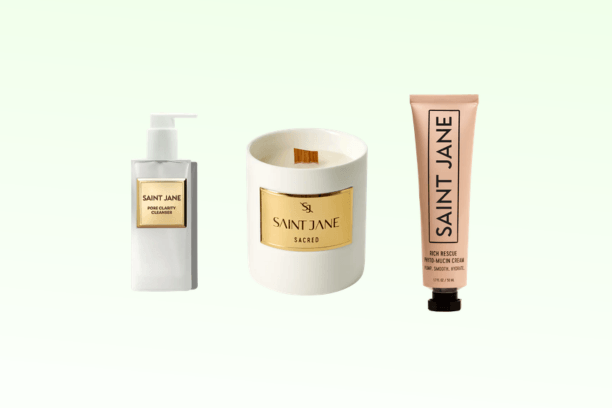 Saint Jane Beauty claims to use botanical ingredients combined with clinically studied actives. It focuses on formulations that target redness, irritation, dryness, and uneven texture, while also addressing the impact of environmental stress on the skin.
The brand’s range covers face serums, moisturizers, cleansers, sunscreens, and targeted formulas. It states that its offerings are personalized toward skin that appears stressed, reactive, or lacking radiance.
In this review, we will explore what Saint Jane offers and how its formulations align with different skin concerns. We will also evaluate how users perceive its performance, and how it compares with similar skincare brands in the same category.
About Saint Jane
Founded by Casey Georgeson, Saint Jane Beauty states that its formulations are centered around active flower blends, featuring ingredients such as sea buckthorn, calendula, rosehip, and sacred lotus. These are paired with modern actives like niacinamide, hyaluronic acid, and retinol to help calm irritation, support hydration, and improve the appearance of uneven texture and fine lines.
The brand’s product range covers multiple categories, including face care, lip care, and body care. Within facial skincare, it offers the Luxury Beauty Serum, Sacred Sleep Retinol Repair, and the Pore Clarity Cleanser. Moisturizers such as the Rich Rescue Phyto Mucin Cream and Hydrating Petal Cream focus on barrier support and hydration, while Sun Ritual Mineral SPF 30 provides mineral-based sun protection. In body care, the brand also includes additional products like Deep Sleep Bath Salts, facial tools such as the Obsidian Smoothing Stone, and curated sets.
Bestsellers
-
Luxury Beauty Serum
Luxury Beauty Serum includes sunflower seed oil, grapeseed oil, jojoba oil, and marula oil, which may contribute to maintaining the skin barrier by reducing water loss. These oils are composed of skin lipids such as linoleic acid and oleic acid, which may integrate into the skin and influence hydration and softness. The product could help retain moisture, which may affect skin texture and the appearance of dryness.
The product also has full-spectrum hemp extract, which, when topically applied, could modulate sebaceous gland activity and barrier homeostasis. Such effects might help with improved regulation of lipid production in your skin and stabilization of epidermal function, which might contribute to improved skin equilibrium.
The formulators include plant extracts such as pomegranate seed extract, rosehip seed extract, and sea buckthorn extract. These ingredients may contain compounds like polyphenols, carotenoids, and vitamin E, which could play a role in limiting oxidative stress, associated with visible signs of aging such as uneven tone or fine lines. Shea butter and caprylic/capric triglyceride are included as lipid components, which may contribute to moisture retention.
-
Sun Ritual Mineral SPF30
Sun Ritual Mineral SPF 30 may provide broad-spectrum protection against ultraviolet (UVA and UVB) radiation while also functioning as a moisturizing and priming layer on your skin.
The formulation is based on 10% zinc oxide as the active ingredient. This mineral UV filter may reflect and scatter incoming ultraviolet radiation, limiting its interaction with skin cells where it could otherwise contribute to DNA damage and oxidative stress.
The formulators have also included caprylic/capric triglyceride, dimethicone, and cetearyl alcohol. These components may help reduce transepidermal water loss, which could support short-term hydration and influence the appearance of skin smoothness.
Sun Ritual Mineral SPF 30 also has green tea, hibiscus, and jasmine. Green tea contains polyphenols that may interact with reactive oxygen species caused by UV exposure, while hibiscus and jasmine may contribute mild conditioning effects at the skin surface.
-
Rich Rescue Phyto Mucin Cream
Rich Rescue Phyto Mucin Cream may support skin hydration, surface smoothness, and the appearance of elasticity. The formulators include plant-derived mucin from Dioscorea japonica (yam root), which may create a viscous, film-like layer on your skin to retain moisture levels.
Niacinamide is also present and could influence multiple skin processes by supporting barrier function and promoting ceramide synthesis, which may reduce transepidermal water loss over time. The makers have also added soothing and conditioning agents such as panthenol and allantoin, which may support barrier comfort and reduce visible irritation through mild anti-inflammatory effects.
-
Deep Sleep Bath Salts
Deep Sleep Bath Salts are intended for use in baths, where they may condition the skin, influence surface texture, and contribute to a sensory experience associated with relaxation.
The formulation is based on mineral salts, including sea salt and magnesium chloride, which dissolve in water to create an ion-rich solution. These salts may alter the osmotic balance at the skin surface, which could contribute to a temporary softening of the skin.
The formulators include sodium bicarbonate, which may influence water pH and could have mild cleansing or softening effects on the skin. This may alter how the skin surface feels after soaking, particularly by reducing roughness through loosening of superficial dead skin cells.
According to the official website, the product also includes plant-derived oils such as sweet almond oil and evening primrose oil, which may reduce water loss after bathing and contribute to a smoother skin feel. Botanical extracts, including lavender, chamomile, jasmine, hibiscus, and lotus, are also included, which may provide mild conditioning effects and contribute volatile aromatic compounds that influence the sensory profile.
-
Pore Clarity Cleanser
Pore Clarity Cleanser might remove surface impurities, excess oil, and debris while also providing mild exfoliation and short-term hydration.
The formulation consists of cleansing agents such as sodium C14-16 olefin sulfonate and cocamidopropyl hydroxysultaine, which may solubilize oils and particulate matter on the skin surface.
The makers include multiple exfoliating acids, including glycolic acid and mandelic acid (AHAs), salicylic acid, and polyhydroxy acids like gluconolactone and lactobionic acid. AHAs could promote the shedding of dead skin cells and contribute to a smoother surface. Meanwhile, salicylic acid may interact with sebum within pores and could assist in loosening debris.
-
The Sex Elixir
The Sex Elixir could provide hydration and surface lubrication for delicate skin areas. The formulation is centered on glycerin and hyaluronic acid. Glycerin could draw water into the outer layer of your skin, which could increase surface hydration and contribute to a smoother, more lubricated feel. On the other hand, hyaluronic acid may bind water molecules and form a thin, hydrated film on the skin, which could enhance moisture retention over short periods.
The formulators include citric acid, which might help maintain the pH of the formulation. A pH-balanced environment could reduce the likelihood of disruption to the skin’s natural acid mantle, particularly in sensitive areas.
Saint Jane Advantages
-
Prestige Retail Distribution Network
Saint Jane launched in Sephora on January 10, 2020, with placement in over 280 stores across 22 U.S. states. This rollout reflects broad early retail distribution rather than a limited or pilot-scale launch, though it still suggests the brand may have been in a growth-oriented phase within Sephora’s portfolio.
Its placement aligns with Sephora’s selection criteria, which focus on innovation, product quality, clear brand positioning, and digital performance. Based on Sephora-facing materials and product listings, Saint Jane appears to have met these requirements at the time of entry.
The brand also states that its products comply with Sephora’s Clean at Sephora standard, which involves ingredient screening and ongoing transparency around restricted substances. It means you can access the brand’s products through Sephora’s in-store and online channels, where ingredient details and customer feedback are available within the retailer’s standard information framework.
-
Founder-Led Creative Direction
Saint Jane presents itself as a founder-led brand, with Casey Georgeson directly guiding product development and overall brand vision. The brand states that she previously contributed to launching brands within Sephora, including Marc Jacobs Beauty, Disney collaborations, and Elizabeth and James, suggesting hands-on industry experience shaping its direction.
The brand further claims active founder involvement throughout development, including collaboration with chemists, toxicologists, and botanists. It states that products undergo months of research, safety testing, and refinement under what it calls the Saint Jane Standard, indicating a structured and closely managed process.
Georgeson’s background in brand building, including her work with Cupcake Vineyards, appears to influence how Saint Jane connects product design with storytelling and positioning. The brand suggests that this integrated approach ensures consistency across formulations, messaging, and ingredient philosophy, reflecting a unified founder-led vision.
Saint Jane Limitation
-
Evolving Regulatory and Transparency Dynamics
Saint Jane Beauty uses full-spectrum hemp-derived extracts as a core ingredient across its products, like Luxury Beauty Serum and Luxury lip oil. However, ingredients derived from hemp still exist within a developing regulatory landscape. In the United States, the FDA does not yet provide a clear, product-specific framework for its use in cosmetics as of 2026.
This regulatory uncertainty contributes to limited standardization across the category. While the brand highlights full-spectrum hemp extract, it does not clearly disclose exact concentration levels per product or detailed batch-level consistency data in its main consumer-facing information. Public materials tend to focus on general quality claims rather than specific third-party regulatory alignment, making direct comparisons of strength and consistency less precise.
This means you may need to rely more on brand messaging and ingredient lists when evaluating the brand’s products. There is limited clarity on strength or consistency across options, which can make assessment less straightforward, especially if you are looking for clear information on dosing, reliability, and long-term consistency.
Saint Jane Alternatives
-
Youth To The People
Youth To The People and Saint Jane differ in how they position their offerings within the skincare market. As per its official website, Youth To The People builds its identity around superfoods + science and a conscious approach to product development. It also promotes initiatives like rewards programs, Smart Replenish, and refill systems that support ongoing use. On the other hand, Saint Jane emphasizes a luxury skincare approach, highlighting availability at retailers like Sephora, Credo, Neiman Marcus, and Revolve.
The formulation philosophy further separates the two brands. Youth To The People builds its products around antioxidant-rich superfoods and clinically relevant actives, combining ingredients like vitamin C, peptides, and hyaluronic acid. For example, its Superfood Daily Face Cleanser is described as a pH-balanced, non-drying formula that removes makeup, SPF, and excess oils that could otherwise clog pores. The brand also offers the 15% Vitamin C Bright Cell Serum, which combines an N.A.D.+ complex and the Superfruit Gentle Exfoliating Cleanser, positioned as a gentle exfoliating formula that brightens and cleanses in one step. In comparison, Saint Jane focuses on luxury active florals, blending botanicals such as Sea Buckthorn, Rosehip, and Calendula with modern actives. Its Luxury Beauty Serum contains over 20 botanicals. At the same time, the brand also offers Star Flower Niacinamide Serum, which combines niacinamide, hyaluronic acid, and Sacred Lotus with micro pearls that burst on contact to hydrate, brighten, and plump.
Their approach to product range and routine building also highlights key differences. Youth To The People offers a broader, routine-based system that includes cleansers, serums, moisturizers, masks, and sets. Its products, like the Superfood Air-Whip Moisture Cream, are designed to lock in long-lasting moisture without feeling heavy or greasy. The brand structures its offerings around steps such as cleanse, treat, and moisturize, and also provides tools like a skin quiz to help build a routine. Saint Jane, on the other hand, maintains a more curated portfolio across face, lip care, and body care, with products like Luxury Beauty Serum, Sun Ritual Mineral SPF30, and Pore Clarity Cleanser. Instead of emphasizing multi-step routines, it leans toward multitasking products that address multiple concerns, such as calming, brightening, hydration, and anti-aging within a single formulation.
Pricing and value perception reinforce these differences. Youth To The People operates within a mid-premium range, with products like the Superfruit Gentle Exfoliating Cleanser priced at $39 for 5 fl oz and $68 for a 10.1 fl oz refill. It also promotes value through refill options such as the 16.9 oz Superfood Cleanser refill pouch, described as a six-month supply. Saint Jane, however, sits in the luxury segment, with the Luxury Beauty Serum priced at around $125, alongside Rich Rescue Phyto Mucin Cream, priced at around $45-$58. This reflects a focus on premium formulation, botanical complexity, and brand prestige rather than refill-based value.
As per their official website, Youth To The People focuses on delivering accessible, science-driven skincare designed for daily routines, supported by a wide product range and functional benefits. Meanwhile, Saint Jane centers on a more refined approach, using botanical-rich formulations and luxury positioning to address concerns like irritation, sensitivity, and skin stress.
-
True Botanicals
True Botanicals builds its identity around The Science of Wellbeing®, focusing on plant-based formulations that are clinically validated and MADE SAFE® certified, meaning they are formulated without over 15,000 toxic ingredients. Its products are also described as vegan, cruelty-free, EWG Verified, microbiome-friendly, and pregnancy-safe. On the other hand, Saint Jane positions itself through luxury active florals, combining botanical ingredients with modern actives. Its formulas highlight blends of over 20 botanicals such as Sea Buckthorn, Rosehip, and Calendula, alongside niacinamide and hyaluronic acid, with a focus on calming skin stress, soothing irritation, and detoxifying pores.
The formulation approach further separates the two brands. True Botanicals uses its PI⁴ Plant Intelligence system, which includes bio-compatible absorption through smaller molecular sizes and bioactive potency from concentrated plant ingredients. The brand states that its formulas are designed to regenerate, replenish, and repair skin at a cellular level without synthetic fillers or chemicals. Meanwhile, Saint Jane does not highlight molecular size or cellular repair frameworks. Instead, it focuses on combining traditional floral ingredients with science-backed actives, as seen in its Star Flower Niacinamide Serum with micro-pearls that burst on contact to hydrate and brighten.
True Botanicals highlights an extensive and routine-based lineup. It includes products like Renew Pure Radiance Oil priced between $72 and $102, and Clear Pure Radiance Oil discounted to $102 from $120. It also provides structured routines such as the 3 Step Glowy Skin Reset priced at around $258, and the Renew Glowy Skin Confidence Set at the same price point, both designed as multi-step systems. Saint Jane presents a more curated portfolio across face, lip care, and body care. Its key products include the Luxury Beauty Serum at around $125, Pore Clarity Cleanser at $36-$40, and Deep Sleep Bath Salts at $58, indicating a focus on hero products rather than full routine systems.
According to their official site, True Botanicals offers a structured, routine-driven experience supported by certifications, clinical testing, and multi-step systems designed for long-term skin improvement. On the other hand, Saint Jane provides a more curated, product-focused experience built around floral-infused formulations and sensorial appeal.
Pros
- Combines antioxidant-rich botanicals.
- Uses sustainably sourced botanicals.
- Claims to address skin hydration needs.
Cons
- Ingredient sourcing lacks full clarity.
- Limited clinical evidence transparency.
How Did We Evaluate?
-
Brand Reputation
We evaluated Saint Jane Beauty’s brand reputation using customer feedback from Thingtesting and Trustpilot. On Thingtesting, the brand holds a 4.6 out of 5 rating based on a limited number of 5+ reviews. Customers highlight the hydrating and glow-enhancing effects of the products, particularly the serums, with some describing them as lightweight, fast-absorbing, and suitable for regular use.
However, some users noted that while products deliver hydration and skin feel benefits, they show limited effectiveness for targeted concerns like hyperpigmentation. Others mentioned issues such as breakouts, strong fragrance, or high pricing, suggesting that performance and tolerance may vary depending on skin type.
On Trustpilot, the profile shows a TrustScore of 2.9 out of 5, but the review count is extremely limited, highlighting concerns around strict return policies and added fees, along with the user criticizing the product quality. The small number of reviews across platforms makes it difficult to understand the brand’s overall reputation.
-
Real User Experiences
We evaluated the user experiences of Saint Jane by analyzing customer feedback for its key offerings on Amazon. The brand’s Luxury Sun Ritual Pore Smoothing SPF 30 holds a rating of 4.6 out of 5 from 150+ ratings. Many describe it as lightweight and easy to apply, noting that it blends well into the skin with minimal to no white cast. Some also mention a subtle tint that provides a natural-looking finish and reduces the need for additional base products. However, some users reported skin irritation, such as rashes.
Rich Rescue Phyto Mucin Cream is rated around 4.6 out of 5 from 40+ ratings, and users commonly describe the cream as moisturizing without being greasy, with a lightweight consistency that absorbs quickly. Certain drawbacks are also mentioned, including a slightly sticky texture immediately after application and a noticeable fragrance.
The Pore Clarity Cleanser has a lower rating of around 4.3 out of 5 from 35+ ratings. Some users suggest a moderate level of satisfaction. However, there is variability in the perception of its effectiveness and experience relative to expectations. The user experience appears to be favorable but not uniform across these offerings of the brand.
Frequently Asked Questions
- Does Saint Jane Beauty support acne-prone skin concerns?
The brand may support acne-prone skin through Blue Tansy, which helps calm inflammation and balance the skin barrier. It offers Pore Clarity Cleanser and Superflower Detox Serum with exfoliants like salicylic acid, mandelic acid, and gluconolactone, both formulated to decongest pores, reduce visible redness, and purify acne-prone skin. - Does Saint Jane Beauty offer fragrance-free options?
The brand has limited fragrance-free options, including the Rich Rescue Phyto Mucin Cream, which is explicitly formulated without added fragrance. Many products feature subtle natural scents from botanicals like Hibiscus or Desert Rose, but this cream prioritizes clean, unscented hydration while supporting skin barrier health. - Does Saint Jane Beauty offer options for hyperpigmentation?
The brand offers products targeting hyperpigmentation using ingredients like 20% Vitamin C in Vitamin C Glow Drops and retinol in Sacred Sleep Overnight Repair. Options like Bright Repair Eye Cream and Mineral Sunscreen may help brighten uneven tone and reduce sunspots.
Conclusion
Saint Jane focuses on supporting hydration, barrier function, and skin comfort. Its formulations often include plant oils, antioxidants, niacinamide, and hyaluronic acid, which are commonly associated with supporting moisture retention and reducing visible signs of irritation. However, it provides limited detail on ingredient concentrations and formulation stability.
The brand also uses multiple botanical extracts and fragrance components that may trigger sensitivity, particularly for reactive skin types.
Patch testing of its products remains important due to the density of plant-derived ingredients within single formulas. Tracking product usage can help identify potential triggers, as layered actives may complicate how your skin responds over time.
The brand highlights a limited transparency around ingredient concentrations, reliance on complex botanical blends, and potential sensitivity from fragrance components. Whether the brand fits into your routine depends on how you prioritize formulation experience versus clarity, control, and effects.

Rachel has been a freelance medical writer for more than 18 years. She graduated from the University of Tennessee at Knoxville in 2005 and is currently practicing as a Certified Registered Nurse Anesthetist at a Level I trauma center.
Leave a Reply