

No products in the cart.
Contents
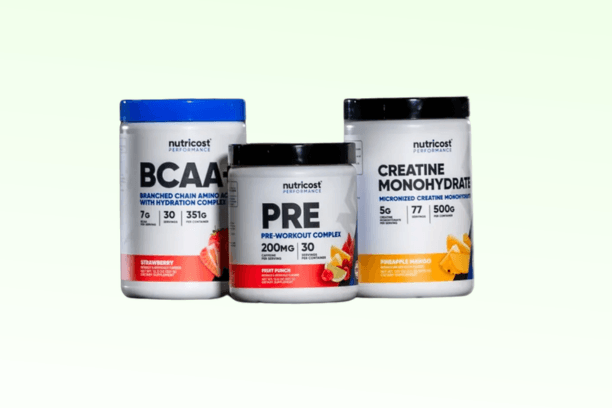 Nutricost offers a wide selection of products that include commonly used nutrients like multivitamins and vitamin D, along with creatine, NAC, and NMN. The brand organizes its products around energy support, cognitive function, immune health, digestion, and physical performance. Its lineup includes amino acids, herbal extracts, and single-nutrient formulas, with each category aligned to workout recovery, focus, or metabolic support.
This review takes a closer look at what Nutricost offers and how its products and positioning compare with similar brands. It also reviews consumer feedback to understand its overall reliability, product quality, and customer experience.
About Nutricost
Nutricost claims to support both everyday fitness-related goals. Its catalog is organized into antioxidants, cognitive health, heart health, immune support, joint support, sleep, and sports nutrition.
As per the official website, Nutricost highlights that its products are available in different formats, such as capsules for convenience and powders for flexible dosing. Some options are also offered in larger or bulk sizes. The brand states that its products are made in an FDA-registered, GMP-compliant facility and are third-party tested for quality and safety.
Bestsellers
-
Creatine Monohydrate
Creatine Monohydrate contains micronized creatine monohydrate, offered in both unflavored and flavored options such as Blue Raspberry, Fruit Punch, and Watermelon.
Creatine may help replenish ATP, which can support sustained muscle contractions during repeated efforts. This process may contribute to improved strength output, better performance during high-intensity training, and the ability to complete more repetitions over time. Creatine also influences cellular hydration. It helps draw water into muscle cells, which can create a more hydrated intracellular environment. This shift may support muscle volume and can play a critical role in signaling pathways that are related to muscle repair and growth.
-
N-Acetyl L-Cysteine
As per the official website, N-Acetyl L-Cysteine (NAC) supports internal antioxidant processes and cellular balance. NAC primarily works as a precursor to glutathione, which helps neutralize reactive oxygen species that are generated during the normal metabolism process and exposure to environmental stressors. It may also help maintain more consistent antioxidant availability within cells, which can support how your body manages oxidative stress at a cellular level.
-
Nitric Oxide Booster Capsules
Nitric Oxide Booster Capsules combine multiple amino acid forms that are involved in nitric oxide production. It contains l-Arginine, which may support improved circulation that can influence how oxygen and nutrients are delivered to muscles during physical activity. The HCl form helps improve stability and absorption, while Arginine AKG combines arginine with alpha-ketoglutarate, which supports cellular energy cycles. This pairing may support both nitric oxide production and aspects of energy metabolism during exercise. The makers also added L-Citrulline in Nitric Oxide Booster Capsules, which might help reduce fatigue by supporting ongoing energy production at the cellular level.
-
Whey Protein Isolate Powder
Whey Protein Isolate Powder could support muscle repair and maintenance. It provides all essential amino acids, including branched-chain amino acids, which may support muscle protein synthesis. The makers state that this formula could help activate pathways such as mTOR, which helps initiate the process of repairing muscle tissue after physical activity. It might also support recovery following exercise or periods of increased physical demand. Cocoa powder processed with alkali in this product, often referred to as Dutch-processed cocoa, is used primarily for flavor. The alkalization process reduces the natural acidity of cocoa, resulting in a milder taste.
-
NMN
According to the official website, Nutricost NMN formula supports cellular energy metabolism. Inside the body, NMN is converted into NAD⁺, which participates in redox reactions that help convert nutrients from food into usable cellular energy. NAD⁺ is essential for processes that take place in the mitochondria, where energy production occurs. The formula could help manage how cells respond to damage, inflammation, and metabolic changes. It may also support cellular repair mechanisms and metabolic balance, particularly in tissues with high energy demands like muscles and the brain. The NMN formula could also help maintain DNA integrity by supporting enzymes that repair damaged DNA strands.
-
Fenugreek Capsules
Fenugreek Capsules may support blood sugar regulation by slowing carbohydrate absorption through its soluble fiber content, which can help maintain steadier glucose levels after meals. It also contains diosgenin and 4-hydroxyisoleucine, which are associated with metabolic activity, particularly in how the body handles insulin and glucose. The formula could also promote hormonal support, particularly in relation to testosterone and lactation. The saponins in fenugreek are thought to interact with hormone-related pathways.
-
Colostrum Capsules
Colostrum Capsules contain bovine colostrum, which includes proteins, immunoglobulins, growth factors, and small amounts of vitamins and minerals. Bovine colostrum contains immunoglobulins, particularly IgG, which help recognize and bind to foreign particles such as bacteria and viruses. They may support immune function at the gut level by interacting with microbes in the digestive tract.
As per the official website, colostrum also contains growth factors like IGF-1 and TGF-β, which are involved in cellular repair and tissue maintenance. It may help regulate how cells grow, repair, and respond to stress.
-
L-Glutamine Powder
L-Glutamine Powder may support muscle metabolism, gut function, and cellular repair. Glutamine is involved in nitrogen transport, which is important for maintaining a positive nitrogen balance that promotes muscle repair and maintenance.
As per the official website, the formula may help support recovery by contributing to protein synthesis and reducing muscle breakdown over time. The makers state that this formula might also help maintain intestinal barrier integrity, which plays a role in digestion and how nutrients are absorbed.
Nutricost Advantage
-
End-to-End Production Control
Nutricost states that it operates its own manufacturing facility, Nutricost Manufacturing, LLC, located in Vineyard, Utah. The brand reports that this facility is NSF-certified and FDA-registered, and that it manages key processes such as blending, dry formulation, encapsulation, mixing, and bottling in-house.
According to the site, the brand handles production internally, which allows for closer oversight of each stage. This setup may support tighter control over ingredient handling, improve batch-to-batch consistency, and enable faster quality checks with clearer accountability across operations. This may reduce variability, highlighting more uniform standards across its product lineup.
Nutricost Limitation
-
Label Accuracy Lawsuit History
Nutricost has faced class action lawsuits related to label accuracy and product claims. In 2023, the case Cohen v. Nutricost, filed on August 25 with settlement still pending approval, questioned the labeling of its magnesium glycinate capsules. The complaint argued that a two-capsule serving could not realistically provide 420 mg of magnesium based on its elemental composition, which is typically around 14.1% by mass. It also suggested the possible addition of lower-cost magnesium oxide. A similar case in 2024, Kurtz v. Nutricost, raised the same concerns even after the brand updated its labels. While some claims, including fraud allegations, were dismissed, there has been no final ruling confirming all allegations. This history points to ongoing concerns around label accuracy. You may find it harder to fully rely on the stated ingredient amounts or nutritional details when comparing products. If you closely track dosage, macros, or ingredient quality, this can make your decision-making less precise and may require extra effort to verify what you are actually getting.
Nutricost Alternatives
-
Now Foods
Now Foods places strong emphasis on visible third-party certifications, including USDA Organic, Non-GMO Project Verified, Informed Sport, and Certified Gluten-Free, which are presented directly as part of its product credibility. It also references ISO 17025 accreditation expansion in both chemical and biological testing scopes. On the other hand, Nutricost highlights that its products are produced in an FDA-registered, GMP-compliant facility and undergo third-party testing. However, it does not list specific certification programs or display comparable verification badges.
Their product ecosystems also highlight a clear contrast in how each brand approaches structure and usability. As per its official website, Now Foods organizes its products by categories such as aloe, amino acids, antioxidants, probiotics, omega fatty acids, vitamins, and green foods. It also includes tools like a probiotic finder and features content such as articles, recipes, and ingredient explainers. Meanwhile, Nutricost presents a much larger catalog, with over 700 listed products, including options like Alpha GPC capsules, beta-alanine powder, and creatine monohydrate powder. However, its structure is more straightforward, relying on standard categories like sports nutrition, general health, keto, and workout products without the same level of guided navigation or health-based segmentation.
In terms of product range, Now Foods extends beyond formulas into beauty and health products, essential oils, natural foods, sports nutrition, and pet health, creating a broader lifestyle-oriented portfolio. On the other hand, Nutricost remains more focused on powders, capsules, and softgels across areas like cognitive support, immune health, digestive support, and workout nutrition.
Now Foods provides structured quality signals, manufacturing control, and educational support, giving you multiple layers of information to evaluate products. Meanwhile, Nutricost focuses on simplicity and large product availability, offering you direct access to products with fewer supporting layers around certifications, content, or guided product discovery.
-
Micro Ingredients
Micro Ingredients and Nutricost take distinctly different approaches to how their product ecosystems are organized and scaled. As per its official website, Micro Ingredients builds its products by combining multiple functional ingredients into a single formula. Its multi-collagen peptides include types I, II, III, V, and X along with hyaluronic acid, biotin, and vitamin C. On the other hand, Nutricost follows a more direct formulation style, offering products centered on single compounds such as creatine monohydrate, N-acetyl L-cysteine, fenugreek, and whey protein isolate.
Pricing structure reflects another clear contrast. Micro Ingredients presents products with higher reference prices, such as an NMN complex, priced around $89.90, or collagen powders adjusted from $38.95 to $34.95. This approach aligns with its emphasis on multi-ingredient formulations and perceived value through composition. Meanwhile, Nutricost maintains lower price points across its offerings, with examples including NAC capsules at $9.97, nitric oxide boosters at $11.97, and creatine powder at $16.97. Promotional codes, like a 35% sitewide discount, appear as periodic incentives rather than the primary pricing structure.
Ingredient positioning further separates the two. Micro Ingredients leans into multifunctional compounds such as liposomal NAD+, NMN, hyaluronic acid powders intended for DIY skincare, lion’s mane, and astaxanthin sourced from microalgae. Nutricost centers its offerings around widely recognized staples, including protein powders, nitric oxide boosters, amino acids, and general wellness capsules. Where some similarity exists, such as NMN or saffron extract, Micro Ingredients integrates these into broader blends, while Nutricost keeps them as standalone ingredients. Format flexibility also differs. Micro Ingredients extends beyond standard delivery by offering powders, capsules, softgels, and customizable ingredients like hyaluronic acid for topical use. Meanwhile, Nutricost remains focused on conventional formats such as capsules and powders designed for straightforward consumption, without extending into customizable or dual-use applications.
Micro Ingredients builds its identity around multi-ingredient formulations, layered functionality, and pricing tied to formulation complexity. On the other hand, Nutricost operates with a broader, accessibility-driven model centered on single-ingredient clarity, lower pricing, and wide category coverage.
Pros
- Wide product catalog availability.
- The brand also offers single-ingredient products.
- Offers bulk-sized options.
Cons
- Limited clinical backing on formulations.
- Occasional product variability complaints.
How Did We Evaluate?
-
Brand Credibility
We evaluated Nutricost based on its brand background, third-party credibility data, including Better Business Bureau ratings, customer reviews, and complaint history. On the Better Business Bureau, it has received a B rating, which indicates it meets basic business standards but does not consistently deliver a high level of service or reliability.
Customer reviews and complaints highlight more specific issues. Many users report slow or missing responses from customer support, problems with shipping or delivery, and difficulties with refunds. The complaint data also shows that while the company often resolves issues, it usually happens after delays or multiple follow-ups.
Based on our evaluation, Nutricost appears as a widely available brand with a strong emphasis on product variety and affordability. However, the available data suggests that delays or challenges with customer support, shipping, and refunds can occur.
-
Real User Feedback
Based on customer feedback from Trustpilot, Nutricost holds a 1.7 rating from 50+ reviews between 2025 and early 2026. Multiple users question whether products match their advertised form or potency, such as whey isolate being perceived as regular whey or products not delivering expected effects. Requests for Certificates of Analysis (COAs) often result in incomplete documentation or limited disclosure, which weakens confidence in ingredient authenticity and standardization.
Customer support appears as a major point of friction throughout the reviews. Many users highlighted concerns related to delayed responses, unanswered emails, and non-functional contact channels. In several cases, users report being unable to resolve missing options, incorrect shipments, or even simple product-related queries.
On the other hand, several customers also highlighted shipping delays, partial deliveries, incorrect orders, and fulfillment inconsistencies. Return experiences add to this concern, with customers describing added costs, insurance requirements, and unclear or restrictive policies.
Safety and product handling concerns are also reflected in the feedback. A few users mention damaged packaging, possible contamination, or adverse reactions. While these cases may not represent every purchase, they influence overall perception, especially when combined with limited transparency and inconsistent support.
Frequently Asked Questions
- Does Nutricost support workout endurance?
The brand offers pre-workout, BCAAs, and L-citrulline malate formula, which are associated with improved blood flow and reduced fatigue. However, they might work better when combined with a balanced diet and consistent exercise routine. - Does Nutricost provide guidance for stacking multiple formulas?
No. The brand does not offer a comprehensive stacking guide on its website, but it does highlight specific combinations like Vitamin K2 + D3 for targeted use. It also promotes unflavored, single-ingredient powders as easily stacked, while advising you to follow serving sizes and consult a physician before combining products. - Are Nutricost herbal products standardized?
The brand standardizes some of its herbal products, such as Evening Primrose Oil with 10% GLA and Bamboo Extract with 70% silica. However, this is not consistent across its range, so reviewing each product’s labels or pages is necessary to confirm standardization.
Conclusion
Nutricost claims to support better recovery, sleep, and immunity through its offerings. It primarily focuses on single-ingredient products such as creatine, NAC, NMN, amino acids, and vitamins, alongside staple formulations like whey protein and nitric oxide boosters. This may support flexible use, particularly if you prefer to build your own routine.
At the same time, past legal challenges related to label accuracy also introduce scrutiny around ingredient representation, particularly if precise dosing and formulation integrity are important considerations. Variations between labeled and actual contents can affect both efficacy and intake tracking, particularly for nutrients with defined dosage ranges.
When considering the brand and its offerings, it is essential to take some precautions. If you follow a structured nutrition plan or use multiple overlapping ingredients, verifying exact nutrient totals and avoiding unnecessary stacking can help reduce the risk of unintentional overconsumption.
The brand may be suitable for you if you prioritize straightforward options. However, you may need to take a more careful approach by reviewing available testing information, checking product-specific details, and being mindful of cumulative intake.

Rachel has been a freelance medical writer for more than 18 years. She graduated from the University of Tennessee at Knoxville in 2005 and is currently practicing as a Certified Registered Nurse Anesthetist at a Level I trauma center.
Leave a Reply