

No products in the cart.
Contents
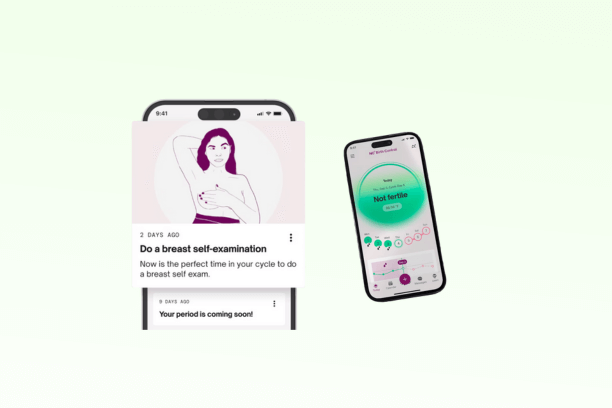
The Natural Cycles app is said to be built around a single biological input, which is the basal body temperature. The company claims that its app uses an algorithm to identify fertile and non-fertile days. A key differentiator is the app’s integration of biometric tracking, privacy controls, and support across multiple reproductive stages.
Does the app effectively deliver consistent control and reliability in real-world conditions, or whether its performance fall short of its stated claims?
This review examines how the app functions, how accurate and manageable it is in everyday use. Key features, advantages, limitations, pricing, usability, and lifestyle compatibility are also covered in this review.
What Is Natural Cycles?
As per the official site, the Natural Cycles is a non-hormonal, FDA-cleared birth control and fertility tracking app intended to help manage the reproductive cycle. According to the company, the app is designed to identify fertile and non-fertile days so pregnancy can be avoided or planned based on your goals.
The makers present the app as a long-term reproductive health option that includes NC° Birth Control, NC° Plan Pregnancy, NC° Postpartum, and NC° Perimenopause modes. Cycle-related data, such as mood, energy levels, and physical symptoms, can also be logged, which the company indicates is used to generate personalized insights and educational content. The app can also be downloaded on iOS and Android devices.
How Does It Work?
As per the official site, Natural Cycles works by analyzing nightly basal body temperature to determine daily fertility status based on reproductive physiology. The app relies on the biological fact that ovulation causes a hormone-driven rise in resting body temperature, which can be measured accurately during sleep.
You can measure your temperature overnight using approved devices such as the NC° Band, Apple Watch, or Oura Ring. Nighttime measurement is required because basal body temperature reflects the body’s true resting state and is less affected by external factors such as movement or food intake. The temperature data is automatically synced to the app, where it is processed by the algorithm.
The app’s algorithm analyzes temperature trends over consecutive days to identify a sustained temperature increase. This increase is caused by the progesterone hormone, which is released after ovulation, and acts on the brain’s temperature-regulating center and raises resting body temperature. As this rise occurs after ovulation, the app confirms ovulation retrospectively rather than detecting it in real time. Using confirmed ovulation data along with historical cycle patterns, the algorithm estimates the fertile window. Each day is assigned a fertility status based on probability calculations that account for individual cycle length, variability, and data consistency.
When data is incomplete or disrupted by factors such as illness, poor sleep, or irregular cycles, the algorithm increases caution by marking more days as fertile to reduce unintended pregnancy risk.
Natural Cycles Advantages
-
Alerts For Atypical Cycle Metrics
Natural Cycles app highlights that logged cycle data is automatically reviewed against established medical reference ranges rather than only against your past cycles. The system checks for patterns such as unusually short or long cycles, absence of confirmed ovulation, or phase lengths that fall outside typical expectations. These comparisons are informed by clinical guidelines commonly referenced in gynecological care, including those from the American College of Obstetricians and Gynecologists.
When similar deviations appear across multiple cycles, the app labels the cycle history as irregular. This status becomes available after at least one ovulatory cycle has been recorded and unlocks additional review tools, including access to historical trends, symptom correlations, and downloadable PDF summaries. These reports consolidate cycle length, ovulation timing, and logged symptoms into a format suitable for sharing with a healthcare provider.
The app does not provide medical conclusions or guidance, but it does surface deviations that may otherwise go unnoticed in day-to-day tracking. This might help identify when your cycle metrics differ consistently from typical ranges and support more informed, data-backed discussions with clinicians.
-
Cycle Irregularity Adaptation
As per the makers, the Natural Cycles app can adapt to cycle Irregularities. The algorithm does not assume a standard 28-day cycle. Instead, it analyzes the data you log, including basal body temperature, period start dates, and optional inputs, to reflect real cycle behavior. The product is said to handle common forms of irregularity.
According to in-app guidance, this includes handling cycles that are shorter than roughly 21 days, longer than about 36 days, or that vary by more than 10 days between cycles. Rather than discarding atypical data points, the system retains them and includes them in ongoing predictions. When cycle timing varies, the app adjusts how it assigns fertile days. The irregular patterns highlight a higher number of fertile red days, reflecting a more conservative approach to ovulation uncertainty.
Natural Cycles Limitations
-
Takes Months To Learn Cycle
Natural Cycles requires a non-trivial adjustment period before its predictions reflect your cycle patterns. The algorithm needs approximately 1–3 full cycles (roughly 1–3 months) of consistent data before outputs become meaningfully personalized. During this phase, predictions are intentionally conservative, resulting in a higher number of uncertain or restricted days. This learning period can be extended due to irregular cycles or recent hormonal birth control history, as well as conditions such as PCOS or endometriosis. In these cases, the algorithm may require multiple confirmed ovulation patterns before narrowing fertile windows, which can translate into several months of reduced precision. This delay affects early usability, and you may experience prolonged periods of limited actionable insight while the system calibrates, making the app less immediately helpful, especially if you are looking for short-term clarity or rapid personalization.
-
Self-Reporting Accuracy Dependent
Natural Cycles only works when you enter clean, consistent data. Core algorithm predictions require daily basal body temperature logged immediately upon waking, before movement, alcohol intake, disrupted sleep, or illness can affect the subtle post-ovulation temperature rise, as well as accurate period start dates and optional inputs like cervical mucus or LH levels. Inconsistencies in these entries lead to flagged or low-confidence data, more precautionary (Red) days, and less reliable predictions. This dependency on active self-reporting becomes especially limiting for people with irregular routines, such as shift workers, frequent travelers, or those with inconsistent sleep patterns, who often struggle to record data at the same time each morning. When logging slips, typical use performance drops noticeably compared with ideal (perfect adherence) conditions.
Pros
- Clean, intuitive app interface that clearly displays fertile and non-fertile days.
- Integrates with thermometers, Oura Ring, and Apple Watch to reduce manual data entry and improve daily tracking consistency.
- Provides educational insights on cycle patterns, symptoms, mood, and energy trends.
Cons
- Requires paid subscription after download, with some reporting confusion around auto-renewals, refunds, and cancellation processes.
- Learning period can last several months, especially for irregular cycles, stress, illness, or postpartum hormonal changes.
- Effectiveness depends heavily on correct and consistent use, making user discipline a critical limiting factor.
How Did We Evaluate?
-
Real User Reviews
To evaluate real-world customer experience with Natural Cycles, we analyzed user feedback on Trustpilot. The app currently holds a TrustScore of 4.2 out of 5 based on 1,740+ reviews.
Favorable experiences highlight that the app helps users understand their bodies, menstrual cycles, and fertility patterns. Ease of use, educational content, and clear cycle insights are frequently praised, particularly when the app is paired with wearables such as the Oura Ring or Apple Watch for automatic temperature tracking.
Numerous users also report using the app successfully for several years without unintended pregnancy, while others highlight precise predictions for ovulation, period start dates, and early pregnancy timing. Its dual function as both a contraceptive and a fertility planning tool is repeatedly mentioned.
However, some shared concerns regarding the subscription pricing and billing practices. Common complaints include automatic annual renewals, unexpected price increases, and difficulty obtaining refunds after renewal. Some also report reduced effectiveness in terms of highly irregular cycles, particularly during the initial learning phase. These reviews suggest that Natural Cycles delivers an effective experience for cycle tracking, pregnancy prevention, and fertility planning. While overall satisfaction is high, clearer pricing transparency, more explicit renewal communications, and greater flexibility for irregular cycles are the most commonly cited areas for improvement.
-
Brand Reputation
To understand the brand credibility of Natural Cycles, we reviewed the Better Business Bureau, which aggregates customer complaints, billing disputes, and company response behavior over time. Natural Cycles currently holds an F rating and is not BBB accredited. This rating is primarily driven by the company’s failure to respond to multiple filed complaints, alongside a relatively high volume of billing-related disputes for a subscription-based digital service.
The majority of issues relate to automatic subscription renewals, unexpected annual charges, price increases, and refund denials. Many users report being charged after believing they had canceled their subscription, while others cite insufficient or unclear renewal notices before billing. While the company does respond to some complaints and, in certain cases, issues refunds or exceptions after escalation, BBB records indicate that response consistency remains a concern.
Natural Cycles’ brand reputation reflects ongoing trust and transparency challenges, particularly around billing practices, subscription management, and post-purchase support, rather than issues tied to the app’s underlying concept or intended use.
Frequently Asked Questions
- Is Natural Cycles suitable for irregular cycles?
Yes, with constraints. The app is designed to handle irregular cycles using basal body temperature data rather than fixed calendars. Accuracy depends on consistent daily measurements. Irregular users may see more fertile or red days and slower confidence buildup. - Does Natural Cycles inform about other cycle symptoms?
Yes. The app lets you log optional symptoms like mood, pain, PMS, and libido. The app visualizes patterns across cycles, but this data is informational only. It supports fertility awareness and planning, not diagnosis or clinical symptom management. - Can Natural Cycles detect ovulation in real time?
No. The app does not offer real-time ovulation detection. It identifies ovulation retrospectively using sustained basal temperature rises, then adjusts fertile (Red) and non-fertile (Green) days. This limits immediacy but improves reliability versus predictive-only calendar apps. - Can My Illness Affect the Natural Cycle’s Reliability?
Yes. The official site states that the illness can disrupt basal temperature and reduce the accuracy of the app. Fever or poor sleep may trigger extra Red Days. You should log the illness and exclude affected readings. Frequent or chronic disruptions may warrant a different method or medical advice.
Conclusion
Natural Cycles may support fertility awareness and informed decision-making by clarifying cycle patterns and highlighting fertile windows. The emphasis is on active participation and personal responsibility. The product may help you understand your fertility signals through managing daily inputs and behavioral choices.
However, the fertility status is estimated rather than identified in real time, which might lead to more fertile days and fewer low-risk days. Disruptions such as illness, poor sleep, stress, travel, alcohol use, or postpartum hormonal changes could also reduce accuracy and confidence. Missed or inconsistent measurements can directly weaken the app’s reliability.
It is also essential to remember that the app does not provide support for details regarding sexually transmitted infections, restricting its role strictly to fertility management. Irregular cycles, hormone-related conditions, recent pregnancy, or unstable routines further narrow the margin for error and can increase the chance of reduced effectiveness. Your expectations should also remain realistic. Regulatory clearance does not remove biological variability or user responsibility, and it does not guarantee pregnancy prevention. The app can support informed fertility decisions, but it is not a substitute for lower-maintenance, higher-certainty contraceptive options.

Rachel has been a freelance medical writer for more than 18 years. She graduated from the University of Tennessee at Knoxville in 2005 and is currently practicing as a Certified Registered Nurse Anesthetist at a Level I trauma center.
Leave a Reply