

No products in the cart.
Contents
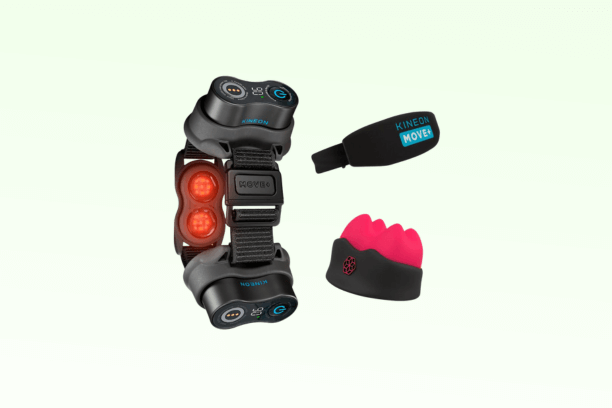
Kineon is a pain-management and mobility technology brand focused on wearable, at-home products designed to support daily physical movement. Its products are built around red and near-infrared light technologies intended for managing inflammation, stiffness, or limited mobility.
The brand’s core offerings could address musculoskeletal concerns through circulation support and cellular repair processes. It positions its technology for use across chronic joint discomfort, post-exertion recovery, and movement restrictions.
This review examines the brand in detail, including its approach to pain management, scientific framework, and product lineup. We also explore potential benefits and limitations, discuss real user experiences over time, and compare it with other brands currently available on the market.
About Kineon
Kineon claims to focus on non-invasive, wearable red and near-infrared light therapy designed to support pain relief, joint recovery, and mobility. The brand positions its approach around photobiomodulation for managing chronic pain and supporting tissue recovery.
The company was founded after its CEO and co-founder, Forrest Smith, explored red light therapy while addressing his own chronic knee pain following an MCL injury. Kineon’s primary device, the MOVE+ Pro, combines 660 nm red LED light with 808 nm near-infrared laser technology in a portable, battery-powered wearable.
Beyond the MOVE+ Pro, the brand has expanded into a broader recovery ecosystem that includes additional laser-based devices and a trigger-point management tool. Kineon also offers HSA/FSA eligibility for its at-home joint care and recovery devices, emphasizing consistent use.
Kineon Offerings
-
Relief+
As per the makers, Relief+ is a handheld myofascial release device designed to reduce localized muscle tension, address trigger points, and support recovery through controlled deep-pressure therapy. It could help in addressing muscle stiffness, knots, or mobility limitations.
The tool may function by applying sustained, targeted mechanical pressure to muscle tissue and surrounding fascia. This pressure could desensitize trigger points, improve local blood flow, and encourage relaxation of contracted muscle fibers.
RELIEF+ features a four-hump contact design engineered to distribute pressure across multiple points or focus force into a smaller area depending on orientation. This geometry enables effective engagement of dense or stubborn muscle knots while reducing the need for excessive force. The ergonomic shape is optimized to access hard-to-reach areas such as the neck, upper back, lower back, hips, feet, and calves without assistance.
Relief+ has a rigid, durable construction that may provide a stable platform for deep tissue work and resists deformation under load, ensuring consistent pressure transfer. Its modular configuration allows portions of the tool to be used independently or together, increasing versatility across different body regions and recovery needs. As it is fully mechanical, RELIEF+ requires no batteries, charging, or maintenance beyond basic cleaning.
-
Move+ Pro
Move+ Pro may help reduce joint and muscle pain while supporting tissue repair through targeted photobiomodulation. It could help in managing chronic joint discomfort, soft-tissue strain, and potential aid in recovery. The device is said to work by emitting specific wavelengths of red and near-infrared light that interact with cellular mitochondria, the structures responsible for energy production. When these wavelengths reach tissue, they support mitochondrial activity, improve local circulation, and help regulate inflammatory signaling.
MOVE+ Pro uses a hybrid light system that combines 660 nm deep-red LEDs with 808 nm near-infrared, class-1 laser diodes. The red LEDs primarily support surface-level circulation, collagen activity, and superficial inflammation, while the near-infrared lasers penetrate deeper into joints, tendons, and connective tissue. This dual-wavelength approach allows both surface and deeper structures to receive a therapeutically relevant dose of light in a single session.
The system is built around three independent light modules, each containing multiple LEDs and laser emission points to ensure even coverage and consistent energy delivery. The modules are mounted in an adjustable strap that holds the light sources in direct contact with the skin, minimizing energy loss and maintaining a controlled treatment distance. This wearable configuration allows hands-free use and ensures repeatable positioning across sessions. Power is supplied by integrated rechargeable lithium-ion batteries within each module, supporting multiple short therapy sessions per charge.
-
Extender Straps 2.0
Extender Straps 2.0 are said to work by increasing the circumference and adjustability of the MOVE+ Pro mounting system. This could ensure that the light modules can be secured firmly against the skin across a wider range of body sizes and locations, which is essential for maintaining consistent light dosage and therapeutic contact during use.
Constructed for durability and repeated daily use, the Extender Straps 2.0 are engineered to integrate seamlessly with the existing MOVE+ Pro strap system. Their design maintains even tension and secure fastening, preventing shifting or loosening during movement while preserving the hands-free nature of the device.
By improving fit versatility and comfort, the Extender Straps 2.0 enhance the usability of the MOVE+ Pro system without altering its therapeutic function. They are intended to support consistent application, proper positioning, and performance.
Kineon Advantage
-
Founder-Inspired Product Origin
Kineon positions around founder-led, problem-driven product development. The company states that its original Knee+ prototype, later launched as MOVE+ in 2021, was developed in 2019 after CEO Forrest Smith experienced chronic knee pain from an MCL tear and found existing recovery options insufficiently targeted. Early development reportedly involved hands-on prototyping and real-world testing by Smith and co-founder Tom Sanderson, which drove key design decisions, including the shift from a knee-only brace to a wraparound system adaptable to other joints. This process also informed the choice to use a hybrid light system per module, with 10 medical-grade Class 1 VCSEL lasers (808 nm) combined with 8 LEDs (660 nm), prioritizing functional depth and coverage over lower-cost LED-only options. This could directly influence how the product functions in practice. The founder-led development approach may translate into its offerings that feel purpose-built for joint-specific recovery needs rather than a generic light-therapy device adapted after the fact.
Kineon Limitation
-
Brand Mainstream Presence Still Developing
Kineon’s mainstream visibility is limited by the absence of distribution through major national retail chains such as Dick’s Sporting Goods, GNC, or large-format fitness and specialty recovery stores. The brand operates primarily through its direct-to-consumer website, with some availability through verified Amazon listings, but lacks consistent brick-and-mortar placement, in-store demos, or shelf exposure.
This distribution profile concentrates discovery within performance-driven audiences. Awareness is largely generated through digital channels, such as athlete endorsements, influencer content, and online reviews, rather than casual retail exposure.
Kineon Alternatives
-
DNA Vibe
DNA Vibe and Kineon operate within the same recovery technology category, yet they are built on fundamentally different brand philosophies and strategies. DNA Vibe, founded in 2016, centers on the concept of regeneration, not only at the biological level but also across manufacturing, community impact, and environmental responsibility. Its mission is framed around delivering low-intensity, non-thermal regenerative signaling that can be used safely and repeatedly in daily life without discomfort, downtime, or limitations. Kineon, founded in the mid-to-late 2010s and operating as a direct-to-consumer brand, positions itself more explicitly around pain relief, mobility, and functional recovery. It aligns itself more closely with conventional frameworks and presents its products as at-home analogs to photobiomodulation interventions.
DNA Vibe’s product range is narrow but deep, organized around a single modular platform known as the Jazz Band ecosystem. This includes three models that share the same wearable form factor and core technology but differ in modality layering and use environment. The Jazz Band Light offers red and near-infrared light only, positioned for daily maintenance, circulation support, stress relief, and mild discomfort. The Jazz Band Live Pro adds micro-vibration and magnetic signaling to red and near-infrared light. The Jazz Band Splash extends the Live Pro’s functionality with full waterproofing and hydrodynamic silicone construction for hydrotherapy and bath-based recovery. DNA Vibe emphasizes ergonomic flexibility, non-thermal output, and integration into everyday movement.
Kineon’s product range is broader in functional scope but still centers on a single primary device line, the MOVE+ and MOVE+ Pro. These wearables combine 660 nm red LEDs with approximately 808 nm near-infrared lasers, targeting joints, muscles, and soft tissue for pain reduction and recovery. The MOVE+ system is modular, consisting of multiple light heads attached to adjustable straps, and is positioned as a hands-free solution that allows users to remain mobile during treatment. In addition to the core device, Kineon expands its ecosystem through adjunct products such as the RELIEF+ manual myofascial trigger-point tool, the Extender Strap 2.0 for larger body areas, and bundled packages that combine these elements into comprehensive at-home recovery kits. This approach highlights that Kineon addresses a wider range of pain and mobility scenarios beyond light therapy alone.
From an accessibility standpoint, DNA Vibe operates on a straightforward one-time purchase model with no subscriptions. Pricing ranges from approximately USD $159 for the Jazz Band Light to $289 for the Live Pro and $369 for the Splash, positioning the brand in the mid-range of the wellness technology market. All products are marketed as FSA/HSA eligible and are claimed to be backed by a 60-day money-back guarantee with free returns. Kineon also follows a one-time purchase model but operates at higher price points. The MOVE+ Pro is commonly marketed at around $420 from higher list prices near $699, while bundles combining devices and accessories typically range from approximately $569 to $599. Individual accessories such as the RELIEF+ tool and Extender Strap are available separately at lower price points. Like DNA Vibe, Kineon emphasizes FSA/HSA eligibility and ease of use, but it offers a shorter 30-day relief guarantee.
DNA Vibe positions itself as a lifestyle-integrated regenerative brand rooted in precision, subtle biological support, and ethical production. Kineon positions itself as a practical, at-home therapeutic brand focused on pain relief and mobility. They represent two different strategies where one is oriented toward continuous wellness regulation and long-term adoption, and the other focuses on providing targeted relief and functional improvement.
-
NovaaLab
Novaalab and Kineon highlight differences in scope, form factor, and design philosophy. Although both brands operate within the photobiomodulation category and target at-home usage, they represent different approaches to how light therapy is applied and framed within everyday fitness and recovery.
Novaalab presents itself as a broad home red and infrared light therapy ecosystem that includes pain relief, physical recovery, oral care, skin health, and full-body wellness. Its positioning emphasizes accessibility, portability, and everyday usability. Kineon, by contrast, is built specifically around pain management and mobility. Its scope is comparatively narrower, concentrating on joints, muscles, and soft tissues rather than extending into aesthetic, oral, or full-body wellness categories like Novaalab. While both brands center on photobiomodulation and mitochondrial stimulation as their conceptual mechanism, Novaalab positions this mechanism as applicable across many aspects of fitness, whereas Kineon applies it primarily to musculoskeletal recovery and movement.
This difference in scope is also reflected directly in product architecture and form factors. Novaalab maintains a wide, multi-category catalog that includes targeted pads and wearables such as the Novaa Light Pad, Novaa Knee Ultra, and Novaa Light Boot. It also has handheld and higher-intensity tools like the Novaa Pulse R and Novaa Extra-Strength Healing Laser.
Novaalabs’s official site also highlights Novaa Light Switch, Novaa Deep Healing Pad XL, the Recovery Pod, and oral care and skin-focused devices, including the Novaa Oral Care Pro, Gum Care Sonic Toothbrush, and Novaa Glow Therapy Mask. These products are said to provide support for knees, back, shoulders, wrists and hands, feet and ankles, oral health, skin, and full-body recovery. Kineon, in contrast, is built around a tight and cohesive product range centered on the MOVE+ and MOVE+ Pro wearable devices, which use three modular light heads attached to a strap system. This core offering is supported by the RELIEF+, the Extender Strap 2.0, and Total Relief Duo and Pain to Possible bundles that combine these elements.
The two brands also diverge in design and usability philosophy. Novaalab emphasizes coverage and anatomy-specific hardware, offering flexible, strapable pads designed to cover larger surface areas such as the back, legs, and shoulders, as well as body-area-specific designs like the Knee Ultra for 360-degree joint coverage and the Light Boot for full foot and ankle application. Its products are typically positioned for short, targeted sessions that often involve lying down or strapping a device over a specific area, with options that scale from small, localized tools to immersive, full-body systems like the Recovery Pod. Kineon emphasizes compact, wearable, battery-powered design that keeps users hands-free and mobile during brief sessions, commonly framed around five-minute use intervals. It’s three modular light heads that click into a strap and can be repositioned across different joints and body parts, with extender straps allowing adaptation to larger areas. The design experience is intentionally repeatable and modular, allowing one device to be used across knees, shoulders, ankles, elbows, hips, and some back or neck placements. Novaalab prioritizes coverage and specialization, while Kineon prioritizes modular wearability and movement. While both brands address chronic pain and recovery, Novaalab broadens its scope to include cosmetic and dental options, whereas Kineon maintains a focused identity around physical function and pain-free movement.
Pros
- Focuses specifically on wearable red and near-infrared photobiomodulation devices designed for joint pain, inflammation, and mobility improvement.
- Uses defined wavelengths around 660 nm red light and 808 nm near-infrared lasers.
- Provides a wearable, strap-based modular design in its offerings.
- Focuses on using portable battery-powered system in its devices that gives flexibility compared to stationary red-light panels.
Cons
- Premium pricing positions its devices above many similar brands.
- Multiple reports on individual review platforms report durability and hardware issues in the brand’s devices.
- Customer support experience appears inconsistent, with some users reporting delayed responses or difficulties executing returns or refunds.
- The publicly visible onboarding, indication‑specific protocols for its devices, can be confusing for some.
How Did We Evaluate?
-
Real User Reviews
To assess real customer experience with Kineon products, we reviewed Amazon customer feedback across the brand’s primary devices and accessories. Move+ Pro Red Light Therapy Wrap currently holds a 4.1 out of 5-star rating, which is based on 110+ reviews. Many users claimed to experience pain relief from knee issues, bone bruises, Achilles injuries, and general joint inflammation. They also praise ease of setup, portability, built-in timers, strong light coverage, and solid battery performance. However, some stated wrap slipping during movement, strap design limitations, and mixed build-quality perceptions.
The Relief+ Myofascial Release Tool has a 3.8 out of 5-star rating from 30+ global reviews, reflecting a more divided customer experience. Users describe deep, targeted muscle release, especially for glutes, hips, upper back, and calves. Build quality is consistently described as durable and well-made. On the downside, many emphasize discomfort during use and disappointment with the price.
Extender Strap for MOVE devices has a 3.1 out of 5 star rating, which is from 15+ reviews. While some people find it useful for extending use to the waist or lower back, the majority of people shared that they experienced poor strap durability, fragile plastic clips, and awkward adjustment. Multiple reviewers report breakage shortly after first use.
Amazon reviews suggest that Kineon’s core technology delivers support for many. However, customer satisfaction declines when it comes to accessory design, strap ergonomics, and perceived value. Build consistency, improved strap stability, and better accessory durability emerge as the most frequent areas for improvement.
-
Brand Reputation
To understand the brand credibility of Kineon, we reviewed the third-party consumer feedback platform Trustpilot. The brand Kineon Labs holds a TrustScore of 4.1 out of 5, based on 530+ customer reviews. Positive feedback consistently highlights perceived pain relief benefits, portability and ease of use, and product quality. Many users mention using the brand’s Move+ and Move+ Pro devices for managing chronic joint pain, post-exercise recovery, and rehabilitation.
However, some feedback highlights operational and reliability concerns, including reports of battery performance decline, charging inconsistencies, component durability issues, and occasional synchronization problems between modules. Additional criticism centers on post-purchase processes, with users citing refund delays, strict return policy enforcement, and communication gaps.
The brand’s Trustpilot profile highlights that many shared favorable experiences and meaningful product benefits. The presence of unresolved complaints and inconsistent engagement with negative feedback highlights areas for improvement in customer service responsiveness and warranty execution.
Frequently Asked Questions
- Can Kineon Support Chronic Pain Management?
Yes, but with limits. The brand’s MOVE+ uses 660 nm red LEDs and 808 nm near-infrared lasers for photobiomodulation, which may reduce joint pain with daily use. It may provide short-term symptom relief, not cures, and results vary by condition and adherence. - Are Kineon Devices Better Suited For Experimentation Or Long-Term Commitment?
Yes. The brand states that its devices, like MOVE+, are built for consistent daily use (5–15 minutes) over weeks. Pain relief typically accumulates after 3–6 weeks; single-session results are unreliable. They require repeated use, favoring long-term commitment over casual testing. - Can I Try Kineon If I have Arthirithis And Knee Pain?
Yes, by design. The brand positions its offerings for chronic joint conditions requiring daily PBM use over weeks. Benefits are cumulative, not immediate, and based on broader PBM evidence. The brand recommends physician consultation, especially for severe or post-surgical cases.
Conclusion
Kineon is focused on wearable red and near-infrared photobiomodulation (PBM) for joint pain and mobility support. Its modular, hands-free devices and targeted wavelength delivery place it clearly within the at-home technology category.
However, important use limitations apply. The brand’s devices are intended to support symptom management rather than diagnose or cure underlying severe conditions. Chronic pain related to arthritis, tendon degeneration, nerve compression, or post-surgical recovery typically involves multiple contributing factors.
Consistent PBM use may help reduce inflammation and stiffness over time, but the response varies. These devices are best understood as adjunct tools, not standalone options, particularly for persistent or worsening pain.
Long-term care is more appropriately guided by orthopedic specialists, rheumatologists, or physical therapists. Broader strategies may also include structured exercise therapy, medication, or nutrition and supplements aimed at underlying causes.
Kineon could be most suitable if you integrate its offerings into a comprehensive pain-management approach. Its value depends on consistent and appropriate use, alongside consultation and realistic expectations.

Rachel has been a freelance medical writer for more than 18 years. She graduated from the University of Tennessee at Knoxville in 2005 and is currently practicing as a Certified Registered Nurse Anesthetist at a Level I trauma center.
Leave a Reply