

No products in the cart.
Contents
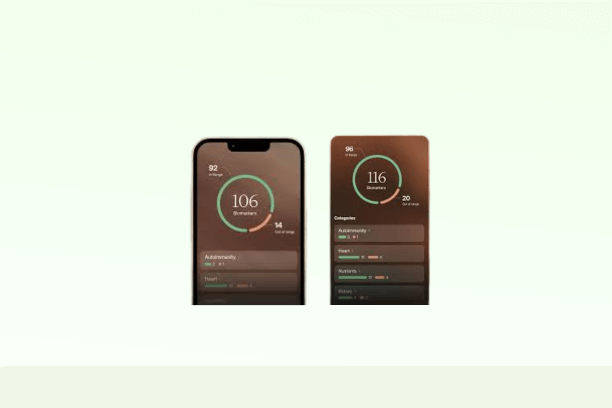
Function Health operates in the preventive health testing and monitoring space, focusing on comprehensive laboratory screening for early risk detection.
The brand claims to help identify underlying health signals linked to chronic disease, metabolic dysfunction, hormonal imbalance, and aging-related changes before symptoms appear.
The platform offers a membership-based service centered on extensive lab testing panels that include blood-based biomarkers across areas such as heart health, metabolism, hormones, inflammation, nutrients, and toxins.
In this review, we look at the brand’s testing scope, clinical review process, data presentation, and usability of the platform. The review also explores the associated advantages and potential limitations of the brand.
About Function Health
Co-founded by Jonathan Swerdlin and Mark Hyman, M.D., Function Health is a healthcare technology platform built around comprehensive, recurring lab testing and longitudinal health tracking.
The platform does not operate as a laboratory or medical provider and instead coordinates access to third-party, medical-grade testing services through established clinical partners. It structures its service around annual and mid-year lab testing that covers more than 160 biomarkers across cardiovascular, metabolic, hormonal, immune, neurological, nutritional, and aging-related categories.
As per the official website, testing is conducted at over 2,000 Quest Diagnostics locations in the United States rather than through at-home kits, prioritizing standardized sample handling and clinical accuracy.
Results are stored in a single longitudinal record to support trend analysis rather than one-time interpretation. Licensed clinicians review each report to flag out-of-range markers and surface patterns that may warrant follow-up with a personal physician.
Medical and scientific oversight is supported by an advisory board that includes clinicians and researchers from preventive medicine, oncology, neurology, cardiology, and radiology backgrounds.
Function Health also offers optional access to advanced imaging and specialized testing beyond routine blood panels. These include MRI and CT scans, Alzheimer’s and brain-related assessments, mold reactivity panels, and extended genetic or metabolic evaluations.
Function Health Offerings
-
Lab Tests
According to its official website, Function Health offers a range of more than 160 lab tests covering various individual biomarkers, selected to assess both current health status and potential future risk across major body systems. These tests are organized by categories, such as heart, metabolic health, thyroid, immune regulation, hormones, liver, kidneys, blood, nutrients, and inflammation
Cardiovascular testing goes beyond standard cholesterol panels by measuring apolipoprotein B (ApoB), LDL particle number, lipoprotein(a), and high-sensitivity C-reactive protein (hs-CRP). ApoB represents the total number of atherogenic lipoprotein particles capable of penetrating the arterial wall, making it a direct indicator of plaque-forming potential rather than cholesterol content alone. LDL particle number and size help distinguish whether cholesterol is carried in many small, dense particles or fewer large ones. It matters because smaller, more numerous particles are more likely to enter the endothelium and become oxidized. hs-CRP measures low-grade systemic inflammation produced by the liver in response to cytokines like IL-6, linking immune activation to vascular injury.
Metabolic testing panel measures biomarkers like glucose, insulin, hemoglobin A1c, and leptin to assess how efficiently the body regulates energy and blood sugar over time.
Fasting glucose reflects immediate circulating sugar levels, while insulin indicates how much pancreatic output is required to maintain those levels. Leptin, a hormone released by adipose tissue, signals energy sufficiency to the brain and helps regulate appetite and metabolism.
Hormone panels are separated into male and female health to account for sex-specific endocrine regulation and measure markers such as testosterone, estradiol, SHBG, DHEA-S, follicle-stimulating hormone (FSH), and luteinizing hormone (LH).
Testosterone and estradiol reflect active sex hormone availability, while SHBG determines how much of these hormones remains biologically free and able to bind receptors. FSH and LH are pituitary hormones that regulate gonadal function, so their levels help distinguish between primary gland dysfunction and upstream signaling issues.
The platform’s Thyroid testing panel includes assessment of TSH, free T3, free T4, and thyroid antibody biomarkers. TSH reflects pituitary feedback to circulating thyroid hormone levels, while free T4 represents the primary hormone released by the thyroid gland. Autoimmunity screening extends the immune assessment through ANA testing, titers, and patterns. These biomarkers help detect antibodies directed against nuclear components of cells, along with rheumatoid factor, an antibody associated with chronic inflammatory joint disease.
Lab Tests range also includes testing for environmental exposures such as lead and mercury, which are measured in blood to reflect cumulative toxic burden and potential interference with neurological, renal, and cardiovascular function.
Detailed omega-3 and omega-6 fatty acid profiles measure membrane-incorporated fatty acids, offering insight into inflammatory balance and cardiovascular risk.
Function Health Advantages
-
Extensive Biomarker Testing Portfolio
Function Health structures its service around a large-scale laboratory testing portfolio built to capture a wide range of physiological signals in a single assessment cycle.
The core annual panel is described as covering more than 160 biomarkers when mid-year testing and optional add-ons are included. These markers cover multiple systems, including metabolic indicators such as HbA1c, fasting insulin, and glucose regulation, and cardiovascular markers like Apolipoprotein B, Lipoprotein(a), and lipoprotein particle characteristics.
Testing also extends into thyroid function with TSH, free T3, and free T4, hormone-related markers such as testosterone, cortisol, FSH, and LH, and nutrient status indicators across key vitamins and minerals. Inflammatory and immune-related measures, including high-sensitivity C-reactive protein and selected immune or autoimmunity indicators, are part of the standard panels.
Heavy metal screening for substances such as mercury and lead is also included. Optional add-ons expand the scope into areas such as cancer-related signals, Alzheimer’s disease risk markers like ApoE genotype, and broader toxin screening.
Such a breadth is positioned as notably wider than what is typically included in standard primary care lab work, which often focuses on a narrower set of metabolic and lipid tests. The model emphasizes viewing interconnected patterns across cardiovascular, metabolic, hormonal, and inflammatory domains at once, rather than assessing these systems through isolated or sequential testing over time.
-
Advisory Board With Established Clinical Experts
Function Health states that a Medical and Scientific Advisory Board guides its platform, made up of clinicians and researchers from established academic and medical institutions. The brand lists advisors with backgrounds in preventive medicine, internal medicine, cardiology, oncology, neuroscience, and radiology.
Named advisors include Mark Hyman, listed as Chief Medical Officer with experience in preventive and functional medicine, JoAnn E. Manson, MD, a preventive medicine specialist affiliated with Harvard, and Andrew Huberman, a neurobiologist at Stanford. Additional advisors are described as coming from oncology programs at institutions such as Columbia and Memorial Sloan Kettering, as well as neuroscience and radiology leadership from academic centers including UCSF and NYU.
According to the brand, advisory involvement centers on methodological oversight rather than direct care. Input is described as shaping biomarker selection, testing protocols, reference range considerations, and how results and educational content are structured. The framework is positioned as a way to align testing panels with current clinical research and preventive health models.
Function Health Limitations
-
Annual Commitment Structure
Function Health uses a yearly membership structure that is typically priced between $365 and $520 and bundles prepaid access to a fixed testing schedule. This schedule is split into two phases: an Annual Test covering more than 100 biomarkers and a Mid-Year Test with roughly 60 additional markers. While this setup promotes consistency, it also requires an upfront financial commitment for a full year, regardless of whether ongoing testing remains relevant to your goals.
Cancellation is technically allowed at any time, but the structure operates as a full-year cycle in practice. Mid-year tests do not roll over, transfer, or convert into credits, which may result in unused value if enrollment ends early, a testing window is missed, or priorities change.
From a scientific perspective, repeated biomarker measurements over time may improve interpretation by accounting for normal biological variability. However, longitudinal tracking across metabolic, cardiovascular, hormonal, nutrient, inflammatory, and heavy metal markers is not always needed. When the objective is a one-time baseline, selective follow-up, or an irregular testing cadence, the fixed annual and mid-year structure may feel excessive and inefficient.
-
In-person Laboratory Visit
Function Health requires in-person laboratory visits, which supports analytical standards but introduces practical limitations around access and convenience. All blood draws are completed at physical Quest Diagnostics locations, making participation dependent on proximity to an approved lab, appointment availability, and the ability to attend during operating hours.
This structure tends to work more smoothly in urban settings with flexible schedules, while presenting challenges in rural areas, for limited transportation situations, or when balancing work and caregiving responsibilities. Additional friction may arise from coordinating visits around fasting requirements, circadian timing for hormone markers, or multiple draws across the year.
While each visit is relatively brief, the combined effort of scheduling, travel, and preparation can outweigh the perceived benefit when the primary interest lies in digital interpretation rather than the clinical process itself.
Compared with services that offer broader home collection options, reliance on physical lab attendance narrows accessibility. Such a requirement reinforces Function Health as a clinically structured system rather than a fully flexible, end-to-end digital model, which may feel restrictive.
Pros
- Tests cover multiple biomarkers across different areas, including heart health, thyroid, hormones, nutrients, and immunity.
- The HIPAA-secure dashboard provides clinician notes, personalized food/supplement guides, and shareable results.
- The platform partners with 2,000+ Quest Diagnostics locations for convenient, often single-visit blood draws.
- Supports add-ons like MRIs, CT scans, Alzheimer’s screening, and mold reactivity testing.
Cons
- Absence of insurance coverage may contribute to increased costs.
- Some users reported difficulty in cancelling membership plans and noted delayed responses from the care team.
Function Health Alternatives
-
Quest Health
When comparing the brands, Quest Health and Function Health both provide access to clinical laboratory data without relying on traditional physician appointments.
However, they have some differences in terms of their testing philosophies, range of test offerings, and service ecosystem.
Quest Health is structured for flexible, on-demand purchasing, allowing you to choose between more than 150 individual tests and panels online without a doctor referral.
Testing is performed using CLIA-certified diagnostics, with most samples collected in person at over 2,000 Quest Diagnostics Centers nationwide, alongside limited at-home or in-home collection options for select tests. After purchase, results are delivered digitally, and each order includes the option to review findings with an independent physician at no additional cost.
Function Health takes a markedly different approach, positioning itself as a preventive health and biomarker intelligence platform rather than a test marketplace.
Access is provided through an annual membership, which includes more than 160 lab tests annually. Testing is performed in person at Quest Diagnostics locations, leveraging the same nationwide lab infrastructure as Quest Health.
In terms of the range of testing options, there are some differences between the brands. Quest Health’s catalog includes entry-level diagnostics such as Complete Blood Count, Hemoglobin A1c, and Comprehensive Metabolic Panel. The platform also offers Cholesterol Panels, Vitamin D Testing, Testosterone Tests, and Thyroid TSH tests.
More advanced offerings include expanded hormone panels such as Comprehensive Men’s and Women’s Profiles and the Elite Health Profile (which measures more than 85 biomarkers). Sexual health testing is a major category, with individual STI tests covering screening for HIV, herpes, chlamydia, gonorrhea, and syphilis.
Function Health’s testing scope is intentionally broad and systems-based. Core panels cover cardiovascular and metabolic risk, hormones and fertility, thyroid function, immune and autoimmune markers, nutrients and electrolytes, liver and kidney health, and pancreatic markers.
Some biomarkers evaluated under these tests include ApoB, lipoprotein(a), insulin, HbA1c, leptin, cortisol, homocysteine, ferritin, magnesium, zinc, thyroid antibodies, and free and total testosterone.
The platform also offers optional add-ons outside the base membership, including expanded autoimmune panels, mold reactivity testing, Alzheimer’s and brain health assessments, and advanced imaging such as MRI and CT scans.
-
Fountain Life
Fountain Life is structured as a premium telehealth platform oriented toward early disease detection and long-term health optimization rather than episodic or symptom-driven care. Its services and programs are centered on advanced diagnostics, imaging, and continuous physician involvement. These programs are organized under membership tiers, such as CORE, APEX, APEX Family, and EPIC. These membership tiers expand access to diagnostics, imaging, and clinical resources rather than simply increasing test volume.
Fountain Life is built around AI-guided diagnostics, including expansive blood biomarker panels with hundreds of markers, full-body and brain MRI with AI overlays, DEXA scans, and coronary CT angiography with plaque analysis. It also features low-dose lung CT, electrocardiograms, retinal imaging, sleep testing, neurocognitive assessments, balance and grip strength testing, and epigenetic biological age analysis. Such service offerings extend far beyond standard testing and are intended to identify silent disease processes well before symptoms appear.
A defining feature of Fountain Life is its vertically integrated care model. Members are supported by a dedicated multidisciplinary team that includes a concierge physician, nurse practitioner, health coach, nutritionist, and care coordinator. The team interprets results, builds personalized health roadmaps, and provides continuous guidance through scheduled check-ins and ongoing monitoring rather than isolated consultations. The experience is reinforced by Zori AI, Fountain Life’s proprietary medical assistant that synthesizes imaging, biomarker trends, and historical data to deliver real-time explanations and predictive insights between formal clinical interactions.
Function Health takes a more standardized and accessibility-focused approach to health risk detection and prevention. The platform operates on a single annual membership, which includes access to multiple lab tests, typically conducted twice per year alongside additional retesting when results fall outside optimal ranges. Results are delivered digitally and reviewed by clinicians. They are also accompanied by detailed explanations and non-prescriptive protocols centered on nutrition, lifestyle, and follow-up testing.
The platform’s testing scope is broad but limited to laboratory diagnostics. Core testing panels cover cardiovascular and metabolic health, immune and autoimmune markers, hormones and fertility, thyroid function, environmental toxins, stress indicators, and aging-related markers.
Specific biomarkers assessed in these tests may include leptin, cortisol, thyroid antibodies, free and total testosterone, insulin, lipoprotein(a), HbA1c, homocysteine, and rheumatoid factor. Optional add-ons such as the GRAIL multi-cancer detection test, extended autoimmune panels, and imaging services like MRI and CT scans are available at extra costs.
Contrast between the two platforms is most evident in how care is framed. Fountain Life positions itself as an end-to-end medical ecosystem with continuous physician oversight, advanced imaging, AI-assisted interpretation, and optional therapeutic interventions. Function Health explicitly avoids delivering medical care or prescriptions, focusing instead on organizing data, surfacing early risk signals, and enabling informed discussions with external healthcare providers.
How Did We Evaluate?
-
Brand Reputation
In evaluating Function Health, we looked at its background, operational consistency, and presence across independent review forums, with the analysis centered on brand reputation, transparency, and customer support responsiveness.
On the Better Business Bureau (BBB), the brand currently holds a C- rating, which reflects a pattern of recurring complaints rather than isolated incidents. A major portion of negative feedback centered on post-purchase cost disclosures, including state-specific lab fees, cycle-timing requirements for female hormone testing, and geographic limitations related to Quest Diagnostics availability.
Some users reported continued charges after cancellation, difficulty accessing a live support channel, and delayed or partial refunds. While BBB records indicated that many disputes were eventually resolved, these outcomes frequently occurred after escalation, suggesting resolution rather than prevention.
These details highlight that Function Health provides helpful insights and responsive support, with some concerns around communication, disclosure clarity, and refund friction.
-
Real User Reviews
Our evaluation of the brand’s user feedback is based on reviews from Trustpilot, where it holds a 4.3 out of 5 rating, which is based on over 500+ reviews shared across the platform.
Many users described satisfaction with the breadth of lab testing, clarity of core biomarker data, and the ability to access tests.
Positive feedback often highlighted around detailed blood work and trend tracking over time, supported by the platform. Several users found the app useful for organizing results and sharing them with outside clinicians, dietitians, or specialty clinics, even when follow-up care was sought elsewhere.
At the same time, a major portion of negative feedback centered on transparency, billing, and operational issues. Multiple users described the cancellation process as difficult, citing long forms, chatbot-only workflows, delayed responses, and missing confirmation emails. Billing disputes were another recurring issue, including confusion around Quest Diagnostics charges, duplicate billing, delayed refunds, and, in some cases, accounts being sent to collections despite ongoing support conversations.
Specific features received mixed reactions. The Biological Age score drew sharp criticism from some users who reported extreme swings that did not align with underlying lab markers. A few users also noted the lack of an individualized breakdown, the inability to audit calculations, and limited explanations beyond general references.
Based on such feedback, many users valued the scope of testing services provided by Function Health, noting that they helped uncover issues that traditional care had missed. However, shared concerns are mostly linked to dissatisfaction with administrative friction, unclear pricing structure for add-on tests, and limited transparency around certain metrics.
Frequently Asked Questions
- How does Function Health handle data privacy?
The platform secures data with HIPAA-level encryption, limited access, and state law compliance. It claims not to sell personal health data and shares information only with consent, required partners, or legal authorities. - Are genetic tests part of Function Health services?
No. The platform does not include genetic tests in its core membership services, which focus on blood-based lab tests for multiple biomarkers across hormones, heart, thyroid, nutrients, and metabolism. However, some add-ons may include genetic biomarker screening, such as Genetic Heart Risks and the MTHFR Gene. - How does Function Health decide which biomarkers to include?
Function Health selects biomarkers curated by physicians, including Dr. Mark Hyman, M.D., using peer-reviewed evidence. Tests are chosen for early disease detection, clinical relevance, and coverage across major systems. The panel includes advanced markers, which are often excluded from standard physicals.
Conclusion
Function Health operates as an annual preventive testing program centered on repeat biomarker measurement rather than episodic care. The plan includes two testing rounds per year covering multiple biomarkers. HSA and FSA eligibility applies, and optional add-ons such as imaging and cancer screening may expand diagnostic scope.
However, some operational limitations might impact your experience. For example, two lab visits are required each year, and some hormone panels depend on precise cycle timing, which may complicate scheduling. Live consultations, prescriptions, and ongoing clinical support are not included, so interpretation and next steps rest with you.
Before opting in, timing and logistics deserve attention. Lab availability near your address, ability to meet short testing windows, and comfort reviewing dense reports without real-time support might impact your experience with the platform’s offerings.

Rachel has been a freelance medical writer for more than 18 years. She graduated from the University of Tennessee at Knoxville in 2005 and is currently practicing as a Certified Registered Nurse Anesthetist at a Level I trauma center.
Leave a Reply