

No products in the cart.
Contents
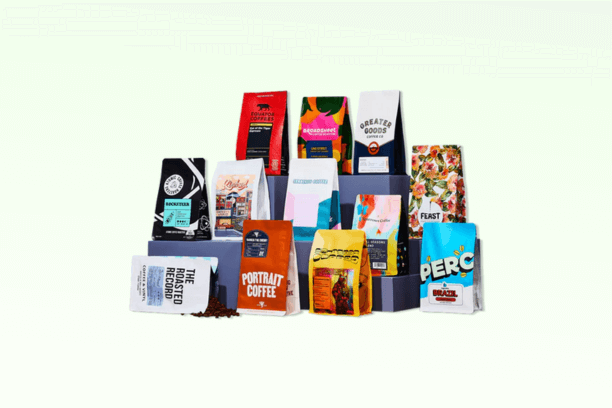
Trade Coffee is a coffee subscription and retail platform that focuses on minimizing the complexity of navigating specialty coffee. It features a rotating selection of whole bean and ground coffees sourced from a wide network of independent roasters across the United States.
Its product catalog includes single-origin coffees, organic options, decaf, espresso roasts, and cold brew styles that align with common brew methods. This range covers different roast levels, origins, and processing styles, with options for single purchases, subscriptions, and gifts.
This review examines the brand’s core positioning, including its coffee selection process, subscription experience, along flavor and roast profile of its coffee blends.
About Trade Coffee
Trade Coffee focuses on sourcing roasted coffee from local and independent roasters, bringing together a wide range of styles, flavor profiles, and roast levels.
The brand uses a guided quiz, which covers questions around your taste preferences, preferred brew methods, and roasting styles. Such personalization may help you select coffee blends that align with your preferences.
As per its official website, the brand partners with more than 50 independent roasters located across different regions, including roasters such as Airship, Sparrows, Wonderstate Coffee, Sightseer, Dune, PERC, ReAnimator, and Huckleberry. Coffee is roasted to order by partner roasters, and the orders are fulfilled directly from the roaster.
Coffee offerings from the brand cover light, medium, and dark roast profiles, single-origin coffees, and blends. Some featured coffee offerings from the brand include the Huckleberry Flores Belas, Atomic Space Cadet, PT’s Flatlander, Common Voice Heirloom, Cuvée Coffee Emporium, and Methodical Brazil Signature Series. The brand also offers coffee brewing equipment and supplies, including cold brew makers, grinders, brewers, and kettles/scales.
Trade Coffee offers both one-time purchases and recurring deliveries, including curated subscriptions, themed subscriptions, and custom subscriptions matched through the quiz.
Delivery schedules can be adjusted through an online dashboard, allowing changes to timing, coffee selection, or order frequency.
Trade Coffee Offerings
-
Bestsellers Coffee Subscription
Best Sellers Subscription offered by Trade Coffee focuses on delivering a rotating selection of the brand’s most popular and consistently well-rated coffees.
As per the official website, the subscription is structured around a bi-weekly delivery cycle, with one standard-size bag of coffee weighing 10.93 ounces per shipment.
Coffees are roasted fresh and shipped within 48 hours of roasting, with tracking provided for every order. While the default delivery interval is every two weeks, you can adjust delivery timing, quantity, and upcoming shipments through the subscriber dashboard at any time.
Taste preference selection plays a central role in the Best Sellers Subscription. Options include Best Sellers, Light Roast, Medium Roast, Dark Roast, and Single Origin. These categories reflect a distinct flavor profile range.
Light roast coffee is exposed to heat for a shorter time, which helps retain more chlorogenic acids and natural organic acids. It results in brighter acidity, fruit-forward flavors, and slightly higher antioxidant activity.
Medium roast coffee develops through deeper Maillard reactions, which lower acidity and increase melanoidins. It may create a balanced cup with chocolate and nut-like notes and a smoother feel for many drinkers.
Dark roast coffee is roasted longer, which breaks down more acids and sugars, leading to lower perceived acidity, stronger bitterness. It also retains a higher concentration of compounds such as N-methylpyridinium, which may improve stomach tolerance.
Single-origin coffee highlights biological and agricultural factors such as altitude, soil composition, plant variety, and processing method. These factors influence caffeine structure, polyphenol levels, and aromatic compounds, making each origin distinct.
Payment flexibility is built into the service through multiple purchase models. You can pay per shipment or choose prepaid plans for three or six bags, with prepaid options including free shipping and bonus bags.
The brand also provides a First-Bag Guarantee as part of the subscription. If the first delivery does not meet expectations, the brand replaces the bag at no additional cost when contacted within one week of delivery. Such a policy applies only to the first shipment and is intended to reduce friction for new subscribers exploring the service.
Trade Coffee Advantages
-
Aggregated Specialty Roaster Network
Trade Coffee operates a centralized marketplace that aggregates offerings from 50 or more independent specialty roasters, bringing together a large and frequently rotating selection of coffees within a single platform.
At any given time, the network includes hundreds of whole and ground coffee options spanning different origins, roast levels, and flavor profiles. The structure provides accessibility to a broad cross section of the specialty coffee market without navigating multiple roaster websites or managing separate accounts and subscriptions.
Trade Coffee manages ordering, fulfillment, and customer support through a unified dashboard while preserving individual roaster identities and roasting practices. Coffees are roasted to order by partner roasters and shipped through Trade’s logistics system, maintaining freshness while centralizing the purchasing experience.
The extensive scale of the network may create choice overload, given the volume and diversity of available coffees. The brand may address this through its platform resources, including a taste preference quiz and profile controls that filter recommendations by brew method, roast style, and flavor tendencies. You may also adjust frequency, swap coffees, or make one-time purchases while Trade Coffee handles coordination across roasters.
-
Platform-Led Coffee Exploration
Trade Coffee positions its service as a guided discovery platform built to help you explore specialty coffee with structure rather than guesswork. The experience begins with a detailed taste preference quiz that evaluates flavor tendencies, preferred roast levels, brew methods, and experience. Based on these inputs, the platform generates personalized recommendations drawn from a large catalog that spans hundreds of coffees sourced from dozens of independent roasters.
Exploration is managed through a centralized user dashboard that acts as the control center for discovery. From this interface, you can review suggested coffees, swap selections, repeat favorites, or make adjustments such as skipping or pausing upcoming deliveries. The dashboard-based management may simplify engagement with a wide and rotating selection, allowing you to experiment with new coffees while maintaining control over what you receive.
This platform-led approach is closely integrated with the brand’s subscription model. Subscriptions are structured to support exploration through defined tiers, such as options focused on approachable profiles or access to the full range of specialty coffees.
Trade Coffee Limitations
-
Subscription-Based Offering
Trade Coffee operates exclusively as an online, direct-to-consumer platform through its official site, with its core business centered on personalized subscription offerings and occasional one-time purchases shipped directly to consumers. The brand does not operate physical retail stores, branded cafés, or in-person locations, and there is no evidence of Trade-branded products being stocked in grocery chains or specialty coffee shops. All discovery, selection, and purchasing occur through digital resources such as preference quizzes and online dashboards.
While the brand partners with independent roasters that may sell coffee through their own cafés or retail outlets, these offline touchpoints are associated with the roasters themselves rather than the Trade Coffee brand. As a result, brand exposure depends almost entirely on online marketing, subscriptions, and word-of-mouth rather than physical presence.
From a sensory and behavioral perspective, coffee purchasing is strongly influenced by aroma, taste, and visual inspection. Trade’s online-only model replaces these in-person cues with algorithmic matching and post-delivery trial experiences, which might support convenience and personalization but limit spontaneous discovery.
-
Weaker Standalone Brand Identity
Trade Coffee operates as a curated online marketplace that partners with multiple independent specialty roasters, delivering their coffees directly without offering proprietary blends, in-house roasting, or Trade-branded roast profiles. The platform’s core subscription offering uses preference quizzes and algorithms to match you with third-party roaster coffees, meaning flavor profiles, sourcing stories, and roasting philosophies are attributed to partner brands rather than to Trade Coffee itself.
Reputed standalone coffee brands typically build recognition through repeatable flavor signatures or signature blends that create consistent taste expectations over time.
As Trade Coffee does not maintain a proprietary sensory profile, you are exposed to a wide range of styles that vary by roaster, origin, and roast approach.
While this approach supports discovery and variety, it limits the brand’s ability to establish a cohesive, Trade-specific taste identity that you may reliably associate with the brand. As a result, the brand’s value proposition is centered on curation and access rather than product ownership.
Pros
- In-house experts taste and curate the coffee roasts for balance and flavor, ensuring you receive top selections from across 450+ options.
- Personalizes recommendations via a quick quiz that matches coffees to preferences by roast level (light, medium, dark) and style (cold brew, espresso, or decaf).
- Each coffee listing includes roast date, origin details, tasting notes, and roaster background, which improves transparency.
- Freshness is emphasized with coffee roasted to order and shipped shortly after roasting.
Cons
- Provides limited decaf and organic coffee options relative to the brand’s full product catalog.
- Shipping costs and timelines depend on individual roasters, which might vary between orders.
Trade Coffee Alternatives
-
Bean Box
Bean Box and Trade Coffee both offer specialty coffee subscriptions and coffee blends, connecting drinkers with independent United States roasters rather than roasting in-house. The distinction between the brands appears in their core positioning, level of personalization, roast profiles, and accessibility.
The Bean Box is a Seattle-based brand, which presents coffee as a daily ritual and cultural product, sourcing small batch coffees from independent roasters and uses structured curation to simplify choice. Its identity centers on trust in expert selection, freshness, and access to roasters that may not be widely distributed, rather than on data-driven personalization or brand-specific roasting narratives.
Meanwhile, Trade Coffee positions itself as a national specialty coffee marketplace built around personalization. It uses a quiz-based onboarding process to match preferences for roast level, flavor profile, and brew method with coffees from its roaster network.
In terms of subscription models, there are some differences between the brands. Bean Box organizes subscriptions around curated categories such as Curator’s Choice, Single Origin, Light and Bright, Medium and Cozy, Dark and Toasty, Espresso, Decaf, and Cold Brew.
You can adjust frequency, quantity, and general preferences, but final coffee selection remains in the hands of Bean Box’s in-house curators. Membership benefits include flat-rate shipping on subscriptions, free shipping on multi-bag orders from the same roaster, store credit on purchases, and early access to limited releases. Beyond subscriptions, the brand’s signature coffee offerings include options such as the El Sol, Toro, Dark Side of the Moon, Owl’s Howl – Certified Organic, Pacific Wonderland, Blue Orchid, and Brazil Canaan Estate.
Trade Coffee’s subscription model is more explicitly personalized, beginning with a detailed taste quiz and supported by a team of baristas, former roasters, and certified Q graders.
Subscriptions may be customized by grind size, delivery frequency, and quantity, with the ability to pause, skip, or cancel at any time. Beyond subscriptions, the brand’s specialty coffee range includes offerings such as Atomic Space Cadet, Common Voice Heirloom, Huckleberry Flores Belas, PT’s Flatlander, Methodical Brazil Signature Series, and Irving Farm 71 House.
Bean Box and Trade occupy a similar segment between single-roaster subscriptions and large general marketplaces, but diverge in execution. Bean Box emphasizes curator-led discovery, reduced decision-making, and experiential exploration guided by expert taste. Trade Coffee emphasizes personalization, flexibility, and structured choice driven by stated preferences and algorithm-supported matching.
-
Misto Box
Misto Box operates as a coffee subscription and gifting platform built around delivering freshly roasted specialty coffee from a broad network of independent U.S. roasters. The brand’s identity emphasizes roast-to-order fulfillment, free shipping on all coffee, and autonomy in shaping the experience through preference settings and price thresholds.
At the core of the Misto Box offering is its subscription service, supported by a retail catalog of more than 500 individual coffees sourced from over 60 independent U.S. roasters. The selection covers single-origin coffees, blends, espresso roasts, and decaffeinated options.
Some single-origin coffee offerings from the brand include the Honduras San Sebastián, Ethiopia Yebesele Natural, Mexico Oaxaca, and Brazil Fazenda Lagoa. Processing methods employed by the brand cover washed, natural, honey, and wet-hulled styles, with flavor categories used to guide discovery.
The brand accommodates both newer specialty drinkers seeking structure and more experienced buyers who want breadth and cost management.
Accessibility is reinforced through free shipping on all coffee, adjustable subscriptions, and transparent pricing. The brand also provides educational support through brewing guides, FAQs, and blog content, though these elements remain secondary to the subscription mechanics.
Trade Coffee operates as a specialty coffee marketplace and subscription platform with a stronger emphasis on guided discovery and expert-led matching. The brand positions itself as an interpreter of taste, using a quiz-driven onboarding process and an in-house coffee team to pair customers with coffees aligned to stated preferences.
As per its official website, Trade Coffee offers subscriptions and individual purchases across a curated catalog of hundreds of coffees sourced from various independent U.S. roasters.
The range includes blends, single-origin coffees, espresso-focused roasts, decaf options, and rotating seasonal releases.
Some signature coffee offerings from the brand include the Space Cadet, Amsterdam, Milk & Honey, Wizard Cat, Good Vibes, Carrier Wave, and Família Peixoto. Brewing equipment, gift sets, and corporate gifting options extend the ecosystem beyond coffee alone.
Target positioning for Trade Coffee emphasizes approachability for beginners alongside ongoing discovery for intermediate drinkers. Subscriptions can be paused, skipped, or canceled easily, and pricing is presented in clearer tiers rather than user-defined ceilings.
Educational and engagement elements focus on tasting descriptors, filtering tools, editorial framing of releases, and the visible role of the in-house coffee team. Messaging is more narrative-driven, highlighting discovery, confidence in selection, and expert credibility.
How Did We Evaluate?
-
Real Consumer Reviews
To evaluate the brand, we examined the available user reviews across platforms like Trustpilot to assess the real user experiences associated with the brand’s offerings and services.
On Trustpilot, the brand holds an unclaimed profile with a 3.0 out of 5 score based on a limited number of shared reviews across the platform.
Some users highlighted the quality and freshness of the brand’s coffee blends, noting access to a broad range of roasters across the United States and strong flavor consistency over time. Users also cited the usefulness of the taste preference quiz, decaf options, and flexibility in modifying upcoming deliveries.
However, a few users reported problems with subscription management, including being charged and receiving coffee products even after pausing or attempting to cancel subscriptions. Delivery reliability is another recurring issue, with a few users citing lost packages, extended delivery delays, and inconsistent fulfillment schedules.
Our evaluation of the brand’s Trustpilot reviews indicates that it delivered a product experience that many users appreciated. However, recurring concerns around logistics, subscription issues, and site usability reflect areas of improvement for the brand.
-
Brand Credibility
To evaluate Trade Coffee, we looked at the brand’s presence across independent review platforms. On ThingTesting, the brand holds a 4.7 out of 5 score based on a limited number of reviews on the platform.
Many users appreciated the brand for providing access to freshly roasted beans from quality roasters across the United States, alongside strong logistics that enabled beans to arrive shortly after roasting.
However, a few users noted occasional mismatches between taste preferences and algorithm-driven recommendations. Some users noted challenges with pausing or spacing deliveries, leading to excess inventory at home.
Meanwhile, the brand maintains a 4.6 out of 5 score on TenereTeam based on a limited number of shared reviews. While the platform supports generally positive sentiment, the low review volume limits the weight of this platform in our brand reputation assessment.
Our evaluation of the brand’s reputation is shaped by positive user experiences shared by coffee drinkers and enthusiasts around quality, freshness, and roast profile. However, these positive aspects are balanced by moderate usability and subscription-management concerns.
Frequently Asked Questions
- Does Trade Coffee roast its own beans?
No. The brand does not roast coffee in-house, but partners with more than 50 independent local roasters across the U.S., who handle all roasting. Such roasters include options like Atomic, Bird Rock, Equator, and Feast. The brand states it avoids roasting to remain unbiased and focuses instead on curating, matching, and delivering coffees from its roaster partners. - Are there decaffeinated options available from Trade Coffee?
Yes. The brand offers dedicated decaf options through its independent roasters. Examples include Decaf Colombia with toffee and cherry notes and water-processed options like Brasil Mountain Water Decaf. Decaf coffees are fully integrated into subscriptions and covered by the First-Cup Guarantee. - Does Trade Coffee offer brewing guidance?
Yes. The brand provides brewing guidance through its Learn section, which includes Brewing How-To articles and step-by-step tutorials like Nail the Brewing Basics. The brand also publishes educational content on brew methods, cold brew versus iced coffee, and single-origin characteristics to help you choose and refine home-brewing techniques.
Conclusion
Trade Coffee focuses on specialty coffee curation, with its services centered on roast-to-order fulfillment, freshness, and personalized matching. It also offers the option to adjust preferences, repeat favorites, or swap upcoming shipments based on roast level and flavor direction.
The brand claims to ship its coffee offerings typically within 48 hours of roasting, supporting the platform’s freshness focus. However, pricing and subscription terms are not always immediately clear and may require additional navigation. Although decaf and organic options are present in the brand’s lineup, they are limited in scope.
Before opting for the brand’s offerings, it is important to account for the hands-on nature of subscription management, the shifting price range tied to roaster selection and coffee type, and the reliance on individual roasters’ production schedules. These factors may impact the accessibility and convenience of the brand’s offerings.

Rachel has been a freelance medical writer for more than 18 years. She graduated from the University of Tennessee at Knoxville in 2005 and is currently practicing as a Certified Registered Nurse Anesthetist at a Level I trauma center.
Leave a Reply