

No products in the cart.
Contents
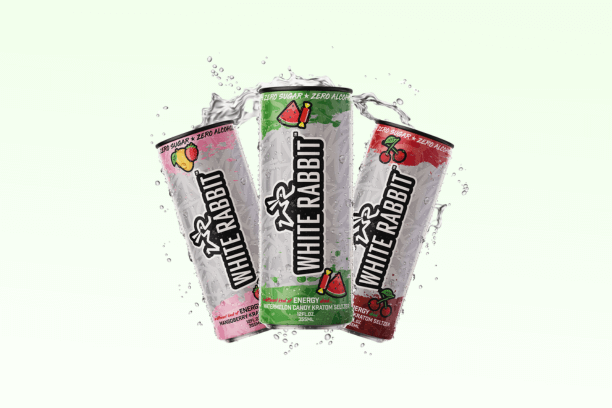
White Rabbit offers kratom-infused drinks that may help support energy levels, promote relaxation, and improve alertness. These offerings may help you wind down and lower fatigue without relying on stimulants or synthetic ingredients.
The brand markets these products as alternatives to traditional energy drinks, highlighting the presence of kratom, a plant whose active compounds can affect mood, energy, and focus.
In this review, we discuss the brand in detail, discussing its product offerings, potential effects, and perceived impact of its kratom drinks, flavor profiles, and the regulatory and legal context surrounding kratom use.
About White Rabbit
White Rabbit Energy is a U.S.-based non-alcoholic drinks brand, offering kratom-based drinks to support a mild psychoactive and relaxation effect. The brand’s energy drink lineup features multiple options, including Kratom Seltzers available in Root Beer, Cherry Bomb, Raspberry Lemonade Kratom Seltzer, Passion Fruit, Watermelon Candy, and MangoBerry flavors. For extended supply and convenience, the brand organizes its offerings in Sample Packs and Cases, which feature 4-, 12-, or 24-cans per pack.
As per the official site, the brand complies with the Kratom Consumer Protection Act (KCPA) testing standards. White Rabbit claims that its offerings undergo third-party testing in ISO 17025-accredited laboratories, which screen the formulations for contaminants such as heavy metals, pesticides, residual solvents, and alkaloid potency levels.
The brand’s offerings are available through its official website, as well as in retail stores in the United States, indicating omnichannel accessibility.
White Rabbit Products
-
Energy Drinks
The brand’s Energy Drinks range includes sparkling drinks infused with kratom extract and natural flavoring, which come in 12-ounce (355ml) cans. As per the official site, the range features Raspberry Lemonade, Watermelon Candy, Cherry Bomb, Root Beer, Sweet Peach, Passion Fruit, and MangoBerry flavors.
According to the manufacturers, all offerings in the Energy Drinks range feature zero calories and sugar, excluding ingredients like caffeine, alcohol, THC, or cannabidiol. Mitragyna speciosa extract is the main ingredient in these drinks, which is derived from the kratom plant and contains alkaloids such as mitragynine and 7-hydroxymitragynine. These compounds may interact with your body’s opioid and adrenergic receptors, which might support and improve alertness, energy levels, and mood.
The manufacturer claims to use reverse osmosis (RO) carbonated water to prepare the drinks, which may function as a purified base that could support hydration. Potassium sorbate is also added as a preservative to maintain freshness and stability in the drinks.
-
Sample Packs
The brand allows you to try multiple kratom drink flavors in varied quantities by offering Sample Packs in three different-sized options. As per the official site, these offerings include Sample Pack (4 Cans), Sample Pack Case (12 Cans), and Sample Pack Case (24 Cans). Each of these sample packs includes a mix of the brand’s core flavors, which include Cherry Bomb, Root Beer, Raspberry Lemonade, and Watermelon Candy.
The Sample Pack with 4 Cans features one can of each flavor, while the Sample Pack Case with 12 Cans comprises three cans each of the four flavors. Meanwhile, the Sample Pack Case with 24 Cans follows the same flavor assortment in doubled quantities, with six cans each per flavor.
White Rabbit Advantages
-
Diverse Flavor Range
White Rabbit maintains flavor diversity in its lineup, particularly the kratom-infused seltzers, supporting compatibility with different taste preferences. The brand’s drinks lineup includes multiple flavors, such as Cherry Bomb, Raspberry Lemonade, MangoBerry, Root Beer, Sweet Peach, and Watermelon Candy. Such drinks also feature ingredients like sucralose and arabic gum, which might help balance kratom’s natural bitterness.
With the availability of Sample Packs from the brand, the variety extends beyond flavor differences. It may allow you to choose from profiles that range from fruit-forward and citrus-based options to sweeter or more classic blends.
-
Minimal Additives Branding
White Rabbit adopts a transparent formulation approach, emphasizing that its kratom seltzer lineup does not contain caffeine, sugar, alcohol, THC, or cannabidiol. The brand’s seltzer centers on kratom extract as the primary component, supported by a clear ingredient list that includes carbonated water, natural and artificial flavoring, citric acid, gum arabic, sucralose, and potassium sorbate.
The brand highlights its streamlined composition on its product pages and labels, which might indicate that its offerings do not feature harmful additives like high-fructose syrups or multi-stimulant blends. White Rabbit’s emphasis on limited additives might reflect an intent to provide a controlled and straightforward consumption experience centered on kratom’s functional properties.
White Rabbit Limitation
-
Potential for Overconsumption
The brand highlights its offerings as non-alcoholic substitutes to support energy levels and mild relaxation. However, the White Rabbit lineup features kratom as an active ingredient. It contains alkaloid compounds like 7-hydroxymitragynine (7-OH) that may produce opioid-like side effects, which might vary depending on dosage and personal tolerance. If overconsumed, the brand’s kratom-infused offerings may trigger adverse effects like nausea, dizziness, or increased dependency.
The U.S. Food and Drug Administration has also issued warnings about severe adverse events linked to kratom use, including liver toxicity, seizures, and substance use disorder. Such warnings highlight the risks associated with kratom overconsumption, which are typically not explicitly highlighted in the brand’s warning disclaimers and product labels.
Marketing from the brand could make it easy to underestimate these risks. Without careful monitoring, you may unintentionally overconsume the brand’s offerings, which might raise the chances of side effects or dependency.
Pros
- Emphasizes zero-calorie, caffeine-free, and zero-sugar profile throughout its lineup.
- Claims to use a proprietary brewing process to preserve natural kratom alkaloids while reducing bitterness.
- Maintains attractive packaging imagery and flavor naming to support a memorable positioning.
- Features a dedicated “Labs” section that lists specifics of third-party testing standards and product-specific COAs.
Cons
- Potential for taste issues or an earthy aftertaste due to inherent kratom bitterness in the brand’s offerings.
- Depending on where you reside, the availability of its offerings can be limited.
White Rabbit Alternatives
-
Leilo
When comparing Leilo and White Rabbit, the brands have some nuances in terms of their core focus and positioning, range of offerings, and pricing structure.
Leilo positions itself around kava-based offerings to support relaxation, inspired by South Pacific tradition around the benefits of Kava. Its narrative emphasizes supporting calmness, mental acuity, and relaxation without triggering intoxication.
Meanwhile, White Rabbit focuses on kratom-based drinks to support energy levels and elevate mood. The brand emphasizes kratom’s stimulating properties in its offerings to support a non-alcoholic, functional drinking experience.
Leilo’s product lineup features kava-based drinks that are organized into categories like Classics, Mocktails, and Variety Packs. Beyond drinks, the brand also offers a powdered Drink Mix formulation that comes in a berry flavor, featuring 10 sticks (4.3g) per pack. Some featured drinks from the brand include Classics like Raspberry Hibiscus, Tangerine Mango, and Blackberry Orange. In the mocktails category, the offerings include Lime Margarita, Pina Colada, and Moscow Mule. Under bundle options, the brand provides the Variety Sampler, Classic Variety, and Mocktail Variety Packs.
On the other hand, White Rabbit’s lineup is centered around kratom-based seltzers, iced teas, and variety packs, with a diverse range of flavor profiles. Some signature kratom drinks from the brand include options like Watermelon Candy, Cherry Bomb, Root Beer, Raspberry Lemonade, Sweet Peach, and Passion Fruit.
The brand states that all products in the drinks lineup feature zero calories and exclude sugar, caffeine, alcohol, cannabidiol, and THC. Beyond singular options, the brand provides an assortment of 4 flavors like cherry bomb, root beer, raspberry lemonade, and watermelon candy in its Variety Packs category. These variety pack offerings are available in packs of 4, 12, and 24 cans.
In terms of pricing structure, there are some differences between the brands. For example, the Classics and Mocktails drinks range from Leilo retails to around $45-$55, while the bundled offerings, such as Variety Sampler and Mocktail Variety Packs, retail between $25 and $55. Meanwhile, White Rabbit’s pricing model shows more variation across formats, with its kratom drinks retailing for around $25-$30 for a pack of 4 cans. Its sample variety packs lineup costs between $70 and $145 for the 12-cans and 24-cans options, respectively.
Both brands emphasize adherence to established safety and testing standards, but differ in their communication. Leilo specifies that all its kava offerings undergo third-party testing and are brewed in an FDA-compliant, GMP-certified facility. It also provides clear consumption warnings regarding alcohol mixing, use during pregnancy, and age restrictions. On the other hand, White Rabbit’s Labs section outlines that the brand’s formulations are tested in ISO 17025-accredited laboratories to screen for heavy metals, pesticides, residual solvents, and alkaloid content. The brand’s product pages feature habit-forming cautions and implications of using kratom-based offerings.
-
Mitra9
Both Mitra9 and White Rabbit offer functional drinks and offerings. However, the brands diverge in aspects like their core positioning, range of offerings and formats, quality and testing standards, and accessibility.
Mitra9 positions itself as a lifestyle brand, offering both singular kava and kratom products as well as hybrid kava-kratom combinations. Its lineup features Kratom Seltzers, available in Berry, Black Cherry, Watermelon, Tangerine, and Cream Soda flavors. As part of its Kava Seltzers lineup, the brand offers options like Orange Dreamsicle, Lemonade, and Paradise Lychee. Beyond drinks, the brand offers kratom-based drink mixes like Raspberry Lime and Tangerine, while kava-based drink mixes feature options such as Island Punch and Strawberry Watermelon. Its hybrid Kratom+Kava Shots lineup features variants like Crisp Apple, Blue Razz, and Fire Shot.
On the other hand, White Rabbit focuses exclusively on kratom-based offerings, emphasizing ready-to-drink seltzers and multipacks. Its drinks lineup features options, such as Passion Fruit, Watermelon Candy, Root Beer, Cherry Bomb, Raspberry Lemonade, and MangoBerry flavors. Under variety packs, the brand offers Sample Packs, which come in quantities of 4, 12, and 24 cans. These variety packs feature four signature flavors from the brand, including Cherry Bomb, Raspberry Lemonade, Root Beer, and Watermelon Candy.
In terms of testing standards and COA availability, there are some similarities between the brands. For instance, Mitra9 claims that independent third‑party laboratories test its offerings and provide a Certificate of Analysis (COA) across different products in its lineup. Similarly, White Rabbit Energy states that all its offerings are tested in third-party ISO 17025-accredited labs for contaminants and alkaloid potency. The brand also provides batch-specific COAs for many of its products.
White Rabbit: Legality And Safety
Kratom (Mitragyna speciosa) is the primary ingredient in White Rabbit’s offerings, which remains federally legal in the United States, as the ingredient is not classified under the Controlled Substances Act.
However, the legal status of the brand’s kratom offerings may differ at the state level, depending on where you reside. For instance, the U.S. states of Alabama, Arkansas, Indiana, Rhode Island, Vermont, and Wisconsin have banned the use of kratom and products that feature its primary alkaloids, such as mitragynine and 7-hydroxymitragynine.
Even though states like California and Colorado permit the sale of kratom products, specific jurisdictions such as Denver and San Diego have imposed restrictions on their sale or use. Such restrictions may limit White Rabbit’s market reach and distribution potential.
Moreover, the U.S. Food and Drug Administration has not approved kratom for use. It has also classified dietary formulations that are or contain kratom as adulterated under section 402(f)(1)(B) of the FD&C Act. As a result, the brand’s kratom-based offerings cannot be lawfully marketed as a drug, dietary supplement, or food additive.
These state-specific bans and regulations may impact the legality of the offerings from the brand. As a result, you should navigate the complex legal landscape by verifying if the brand’s kratom offerings comply with both federal and state laws to ensure safe operations and responsible use.
Frequently Asked Questions
- Does White Rabbit Ensure Consistent Alkaloid Content Across Batches?
No. Although the brand lists that its offerings contain mitragyna speciosa extract, it does not guarantee consistent mitragynine or 7-hydroxymitragynine alkaloid levels across batches. - Are the Brand’s Offerings Entirely Sugar-Free and Caffeine-Free?
The brand highlights that none of its kratom seltzers contain sugar or caffeine. However, the Lemon Ice Tea formulation is sugar-free but contains 45 mg of caffeine per 12-ounce bottle. - Does White Rabbit Maintain Transparency Regarding Kratom Sourcing?
No. The brand states that all its products feature Mitragyna speciosa extract. However, it does not disclose details about the geographic origin or specific kratom strains (eg, Borneo, Maeng Da) used in its offerings.
Conclusion
White Rabbit Energy specializes in kratom-infused drinks. Its core offerings provide a caffeine-free, sugar-free, and alcohol-free substitute for supporting energy levels and improving mood.
However, it is important to note that its kratom offerings may produce effects similar to opioids or stimulants, depending on the amount consumed. Excessive intake may contribute to side effects like nausea, dizziness, impaired coordination, headaches, or even dependency.
There are also legal restrictions surrounding kratom-based products in U.S. states like Alabama, Arkansas, Indiana, Rhode Island, and Vermont, extending to some jurisdictions like San Diego and Denver. Before purchasing, it is advisable to check local regulations to ensure access to the brand’s kratom offerings is allowed.

Rachel has been a freelance medical writer for more than 18 years. She graduated from the University of Tennessee at Knoxville in 2005 and is currently practicing as a Certified Registered Nurse Anesthetist at a Level I trauma center.
Leave a Reply