

No products in the cart.
Contents
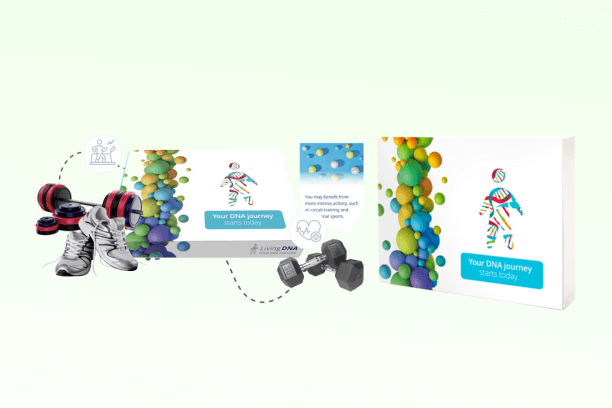
Living DNA is a genomics brand that specializes in providing detailed ancestry reports and health insights through DNA testing. It provides insights into your ancestral origins and helps explore the potential risks specific to your genes.
The Living DNA also offers access to sub-regional ancestry breakdowns, particularly for regions such as Africa, Europe, and the British Isles. The platform also provides offerings like the Wellbeing Kit, which provides details on how your body responds to vitamins, exercise, and nutrition.
In this review, we explore multiple aspects of the Living DNA, including the accuracy and depth of its ancestry reports and the relevance of its wellbeing insights. The review also discusses the product lineup of Living DNA, its advantages, and potential limitations.
About Living DNA
Founded by David Nicholson and Hannah Morden, Living DNA may help decode your DNA at a granular level, which could help you understand your unique genetic makeup, explore your genetic heritage, and provide insights into how your DNA influences your health and lifestyle.
The brand provides multiple offerings across ancestry and wellness categories. Its DNA Ancestry Kit could help deliver breakdowns of genetic heritage spanning over 150 regions across the world, including sub-regional breakdowns.
The DNA Fitness Testing Kit covers genetic factors related to exercise response and recovery. It includes aspects like strength, oxygen flow testing, blood vessel response, tendon durability, and recovery speed.
Living DNA’s Wellbeing Kit may deliver personalized, actionable insights rooted in your genetic makeup. It could provide tailored reports on how your body responds to vitamins (such as Vitamin D), processes different foods (including gluten and lactose), and nutrition ideas aligned
with your metabolism.
Accessing the Living DNA services requires a three-step approach. Initially, you need to order a DNA testing kit online and receive it either by standard or express delivery. Afterwards, you are required to collect your DNA sample with a quick cheek swab and mail the sample back. The
Living DNA platform offers a 6–8 week turnaround time for the testing results, which you may access by logging in to the Living DNA online portal.
Living DNA Offerings
-
Full Ancestry Kit
The Full Ancestry Kit from Living DNA provides a detailed view of your genetic heritage, claiming to trace 500 years of your family’s ancestry. It pairs autosomal DNA testing with mitochondrial DNA (mtDNA) and Y-chromosome analysis (for male testers) to map ancestry across more than 150 global regions.
Results are categorized into recent ancestry, regional detail, DNA today, and maternal and paternal haplogroups. The Full Ancestry Kit also provides access to DNA matching through Living DNA’s Family Networks, which could help identify your genetic relatives by comparing shared DNA segments.
Living DNA’s Full Ancestry Kit uses chromosome painting to visually map DNA segments to specific global regions. The method indicates how different parts of your chromosomes reflect ancestry from various populations.
-
Wellbeing Kit
Living DNA’s Wellbeing Kit covers how genetics may influence nutrition, fitness, and overall health. Using a simple cheek swab, the test analyzes DNA markers related to nutrient absorption, exercise response, and recovery.
Reports cover aspects like Vitamin Response, which examines how genes affect the uptake of micronutrients like vitamin D. The Food Metabolism report could provide insights into genetic variations influencing lactose and gluten digestion.
Other areas covered by the Wellbeing Kit include the Nutrition Ideas based on genetic tendencies. The testing results from Wellbeing Kit may also cover insights into Exercise & Recovery, which may highlight whether your muscle fibers are more suited to strength or endurance activities and how efficiently your body may recover after physical exertion.
Living DNA’s Wellbeing Report also pairs genetic findings with practical lifestyle suggestions. For example, in the case of genetic variants affecting vitamin D activation, you may be encouraged to adjust your diet or increase sunlight exposure. Exercise-related markers may guide training approaches that align with your physiology. Meanwhile, recovery insights use data on inflammatory and oxidative stress genes to suggest strategies for reducing fatigue and reducing injury risk.
-
Wellbeing & Ancestry Kit Pack
Living DNA’s Wellbeing & Ancestry Kit Pack pairs detailed ancestry testing with genetic-based wellbeing insights. The Ancestry Kit could help map ancestry distribution across your DNA, providing insights on maternal and paternal lineages, sub-regional breakdowns across more than 150 regions, and broader insights into ancestral migration patterns. Meanwhile, the Wellbeing report may cover aspects like vitamin response, food metabolism, nutrition, exercise, and recovery.
Living DNA Advantages
-
Features An Interactive Chromosome Browser
Living DNA provides an interactive chromosome browser that may help explore your genetic data in a detailed, segment-level format. Instead of depicting only summary percentages, the Living DNA interface maps DNA across chromosomes to indicate which segments relate to different ancestral populations.
When used as part of Living DNA’s Family Networks function, the chromosome browser may highlight overlapping DNA segments with relatives to trace shared ancestry. The browser might also help visually interpret inheritance patterns, recombination events, and regional ancestry in more detail.
-
DNA Upload Compatibility
Living DNA offers the ability to accept raw DNA uploads from other reputable testing companies, including Ancestry, 23andMe, Illumina, Gene by Gene, and MyHeritage. The platform supports multiple file formats (.txt, .csv, .zip, and .gz) and provides free basic results such as Recent Ancestry and Family Matching. Living DNA also offers optional upgrades like regional breakdowns across eight continental regions and additional wellbeing reports.
Similar platforms, such as GeneBase and AlterMe, do not allow uploads of third-party DNA files. This means that if you have already tested through another company, you would need to purchase a new kit directly from those brands to access their services. Living DNA’s flexibility in accepting existing data can make it more cost-effective and convenient compared to platforms that lock you into retesting. This advantage can save you money and time, while also avoiding the hassle of repeating a test you’ve already completed.
Living DNA Limitation
-
UK-Based Brand
Living DNA is headquartered and primarily operates in the United Kingdom, which may shape its genetic reference panels and ancestry insights toward UK and European populations. The UK-based brand profile of Living DNA could mean more detailed ancestry breakdowns for customers with British or European heritage, but the ancestry insights may not be that detailed for those with African, Asian, or other non-European backgrounds.
The UK base of Living DNA may also bring logistical challenges. DNA samples are typically processed within or near the UK, which may lead to longer shipping times, potential customs delays, and added complications for international purchases.
Living DNA operates under UK and EU regulations (such as GDPR), which may indicate compliance with reputable testing standards. However, the UK-based compliance may also impose restrictions on how testing data is accessed or used. For instance, in some cases, you must agree to broad liability disclaimers or restrictive terms to access your raw genetic data, which may feel restrictive.
The accuracy of Living DNA’s ancestry insights outside of Europe may be reduced, which might be accompanied by extended shipping and wait times for DNA testing kits and results. These concerns may create inconveniences when assessing Living DNA’s ancestry testing and wellness services.
Pros
- Provides access to a user-friendly chromosome browser for deeper analysis of DNA ancestry.
- Offers kit status tracking and online results access, conveying digital convenience and transparency.
- Claims anonymity and non-sharing of DNA data, signaling a brand-wide approach to privacy.
- Allows easy upload of raw DNA data from other services (e.g., 23andMe and Ancestry) directly to the Living DNA platform.
Cons
- Wellbeing reports are advisory in nature and not diagnostic, which may cause customer expectation mismatch.
- The six to eight weeks’ result turnaround window for DNA testing may be long and inconvenient for some customers.
Living DNA Alternatives
-
Genebase
Both Genebase and Living DNA provide access to actionable health insights and ancestry tracing through DNA testing. However, the brands diverge in aspects like the breadth of their offerings, core focus, and testing standards and certifications.
Genebase offers a broad portfolio of at-home DNA testing kits and reports, which span categories like ancestry (DNA Paternal Ancestry Test and Combo DNA Ancestry Test), fitness & nutrition (such as DNA Nutrition Test and DNA Celiac Disease), and health and diseases (like Skin Health DNA Test and Type 2 Diabetes Risk DNA Test).
The Genebase brand also offers relationship tests, such as the DNA Paternity Test, DNA Cousin Test, and DNA Maternity Test. Meanwhile, Living DNA focuses more strictly on ancestry and wellbeing insights, offering kits like the Wellbeing Kit, Full Ancestry Kit, DNA Fitness Testing, DNA Nutrition Testing, and Wellbeing & Ancestry Kit.
At the technical level, Genebase makes a clear distinction between Y-STR and Y-SNP testing, offering STR-based tests for relationship verification and SNP-based tests for deep paternal lineage. On the other hand, Living DNA references autosomal testing for recent ancestry across about 10 generations, with supplementary mtDNA and Y-DNA analysis.
Platform integration represents a point of contrast between the brands. Genebase provides access to over 100 ancestry-related web apps alongside its DNA testing kits, which may offer the flexibility to explore historical and population-level comparisons. Meanwhile, Living DNA centralizes its features in a single digital hub, offering its Chromosome Browser, Family Matching, and messaging features without the broader “app library” structure.
When it comes to testing standards and assurances, Genebase highlights multiple laboratory accreditations, including AABB, CAP, CLIA, SCC, and ISO 17025. These certifications may position the Living DNA brand as following legally recognized testing standards. On the other hand, Living DNA emphasizes privacy and security policies, including adherence to ISO:27001 standards and features such as two-step authentication.
-
AlterMe
When comparing AlterMe and Living DNA, both brands differ in aspects like the breadth of their testing services, core focus, and app integration ecosystem. AlterMe focuses on wellness insights by pairing DNA analysis with an ongoing subscription program supported by its biometric wearable and app. The brand offers the DNA Fitness & Health Report, which analyzes over 60 genetic markers (SNPs) related to your body’s response to fitness, nutrition, exercise, and recovery.
Meanwhile, Living DNA specializes in providing ancestry reports and wellness insights based on DNA testing. The brand’s primary offerings include the Full Ancestry Kit, which offers ancestry breakdowns for over 150 global regions, including 72 genetic regions within Africa and 21 sub-regions within the British Isles. Living DNA also provides the Wellbeing Kit that aims to examine how genes affect your body’s metabolism, vitamin response, exercise, and recovery.
From the perspective of ancestry testing services, AlterMe does not emphasize genealogy or heritage mapping, as its DNA insights are primarily directed toward fitness and health traits.
On the other hand, Living DNA offers extensive ancestry exploration, with sub-regional detail across multiple layers. The insights from Living DNA’s ancestry testing reports include maternal and paternal haplogroups, a chromosome browser for visualizing DNA segments, and a Family Networks feature that allows you to connect with relatives who share overlapping DNA.
Certifications and quality standards also separate the two brands. AlterMe states that the DNA swab samples are sent to its partner laboratories for processing, which are CLIA-certified and CAP-accredited, ensuring clinical testing standards.
Meanwhile, Living DNA highlights international certifications, including ISO 27001 for detailed information security and ISO 9001 for premium quality standards, as well as GDPR compliance.
AlterMe is built around an ecosystem that pairs the AlterMe app, fitness screen, and AlterMe’s biometric ring, which requires regular use to deliver personalized recommendations.
On the other hand, Living DNA’s experience is centered around its online portal, where you may access ancestry breakdowns, wellbeing results, and family matching tools. However, the Living DNA interface does not include the addition of wearables or daily engagement platforms.
How Did We Evaluate Living DNA?
-
Reputation of the Brand
To evaluate Living DNA’s reputation, we examined the brand’s background and ratings across multiple review platforms.
Founded in 2016 in the UK, Living DNA specializes in providing ancestry testing services, with a particular focus on detailed ethnic breakdowns based on DNA testing.
On Trustpilot, Living DNA holds a 4.5 out of 5 rating from over 640+ reviews, with many reviews praising responsive support and the ability to upload raw DNA data from other labs. Meanwhile, Living DNA has no ratings on the Better Business Bureau (BBB) or ConsumerAffairs, which may reflect the brand’s limited engagement on these platforms.
Living DNA holds a 4.6 out of 5 rating on TenereTeam based on just 10+ publicly accessible reviews. The limited sample size may reduce the credibility of the rating provided to Living DNA by TenereTeam.
-
Real User Feedback
For evaluating Living DNA, we examined verified consumer reviews of the brand (from May 2025 to present) on Trustpilot. Across multiple reviews, many consumers appreciated the features provided by the Living DNA platform, such as the ability to upload and compare raw DNA data from other providers. Many users also noted the accuracy of the genetic results and described their overall experience with Living DNA as positive.
Some customers also praised the customer service responsiveness of Living DNA. Some consumers shared specific examples where issues such as lost kits or unusual delivery situations were resolved efficiently, often with replacement kits or guided assistance.
However, the user feedback also revealed areas for potential improvement. Some users expressed confusion or dissatisfaction with regional classifications, such as Slovenia being grouped under “West Balkan,” which they felt was misleading. Other customers expressed that they received limited guidance in interpreting results, which left them unsure how to understand their reports.
Occasional inconsistencies in ancestry notifications were also noted. These insights indicate that while Living DNA generally delivers reliable services and strong support, enhancing clarity in reporting and regional accuracy could improve the user experience further.
Frequently Asked Questions
- Can Living DNA Determine Paternity?
No, Living DNA does not provide legal or direct paternity testing. The brand’s service caters to ancestry analysis and relative matching rather than establishing biological parentage. - Does Living DNA Have an Integrated Mobile App Ecosystem?
No, Living DNA does not currently offer a dedicated mobile application. You can only access the results through the Living DNA online portal, which works on both desktop and mobile browsers. - Can Living DNA Identify Medical Carrier Status?
No, Living DNA does not provide access to carrier testing for inherited genetic conditions such as cystic fibrosis or sickle cell anemia. The brand’s service is focused solely on ancestry, ethnicity estimates, and relative matching.
Conclusion
Living DNA positions itself as a genetics testing provider with an emphasis on ancestry, heritage, and wellness insights. The platform also provides access to sub-regional ancestry breakdowns, DNA matching with an interactive chromosome browser, and privacy in DNA sample accessibility and storage.
However, as a UK-based brand, Living DNA operates under strict UK and EU data protection regulations, which may shape its testing framework and service delivery. Living DNA’s genetic reference panels may be strongest for British and European ancestry, which may mean less detailed results if you have African, Asian, or other non-European ethnic backgrounds.
Before opting for the testing services offered by Living DNA, you should take into consideration aspects like the relevance and depth of ancestry detail needed, the 6-8 week results turnaround time promised by the brand, budgetary constraints, and the added value of wellness insights provided by Living DNA reports.

Rachel has been a freelance medical writer for more than 18 years. She graduated from the University of Tennessee at Knoxville in 2005 and is currently practicing as a Certified Registered Nurse Anesthetist at a Level I trauma center.
Leave a Reply