
No products in the cart.
Contents
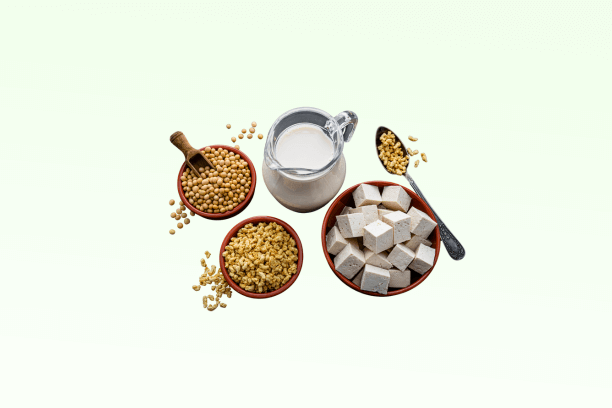
Soy isoflavone supplements may help support hormonal balance, ease menopausal discomfort, and promote bone health. These supplements contain phytoestrogens that may mimic estrogen-like effects in the body, which might help tackle potential signs of hormone imbalance, such as hot flashes, night sweats, or fatigue.
In this article, we explore the working mechanism behind soy isoflavone supplements and the benefits associated with them. The article also discusses the potential adverse effects of soy isoflavone supplementation and the evaluation factors to consider before opting for them.
What Are Soy Isoflavone Supplements?
Soy isoflavone supplements provide a concentrated source of isoflavones, which are naturally occurring plant compounds present in soybeans and soy-based foods.
The isoflavones may support cholesterol balance, promote bone density, and support hormonal balance.
You may find soy isoflavone supplements in multiple forms, such as capsules, tablets, powders, and even soy protein blends. Some brands focus on concentrated extracts standardized to contain a precise percentage of isoflavones, such as 40% genistein and daidzein, to deliver a consistent and measurable dose in each serving.
Others use whole soy powder, which may retain the full spectrum of naturally occurring soy nutrients, including proteins, fiber, and minor phytonutrients.
There are also variations in sourcing, as some brands use non-GMO soy grown without synthetic pesticides, which may appeal if you prefer a cleaner ingredient profile.
Other brands may integrate soy isoflavone supplements with nutrients such as calcium and vitamin D that could support bone health or blend them with black cohosh or red clover to support menopause symptom relief.
How Do Soy Isoflavone Supplements Work?
Soy isoflavone supplements may work by interacting with your body’s estrogen receptors (ERs). The isoflavones in soy are structurally identical to 17β-estradiol, the most active natural estrogen in your body. Because of this similarity, soy isoflavones may attach to estrogen receptors, which are special proteins found in bodily tissues like your brain, bones, blood vessels, and reproductive organs.
In low-estrogen situations (such as after menopause), soy isoflavones may partly activate estrogen receptors to help support estrogen-related functions.
For higher-estrogen conditions, soy isoflavone supplements might compete with stronger estrogen molecules, potentially decreasing excessive estrogen signaling.
Once ingested, your gut and liver could metabolize soy isoflavone by converting daidzein (a type of isoflavone) into equol, a compound with an even greater affinity for ERβ.
After absorption into your bloodstream, soy isoflavones may travel to target tissues, bind to estrogen receptors, and influence which genes are turned on or off.
Such effects may help support multiple bodily functions influenced by estrogen, such as bone strength, blood vessel flexibility, skin health, and temperature control.
Benefits of Soy Isoflavone Supplements
-
May Support Menopausal Symptom Relief
During menopause, estrogen hormone production in the ovaries decreases, which lowers estradiol (E2) levels. The drop may affect your hypothalamus, the part of your brain that controls body temperature.
As a result, your thermoregulatory system may become unstable, which could trigger menopausal discomforts like hot flashes and night sweats.
Soy isoflavone supplements contain phytoestrogens like genistein, daidzein, and glycitein, which might mimic estrogen-like effects.
They may bind to estrogen receptors beta (ERβ), which are concentrated in your hypothalamus and affect neurotransmitters like serotonin and norepinephrine. Such effects might help support improved temperature regulation during menopause, which may lower the intensity of symptoms like hot flashes or night sweats.
Soy isoflavone supplementation might help elevate your mood, improve sleep quality, support energy levels, and minimize physical discomfort.
-
Could Provide Bone Health Support
Bones are constantly breaking down with continuous rebuilding, and hormones like estrogen may influence these processes. Estrogen may help lower the rate of bone breakdown and support new bone formation. However, factors like aging, physical wear and tear, or menopause, may decrease estrogen levels, which might trigger loss of bone density.
Genistein and daidzein compounds present in soy isoflavones may attach to estrogen receptors (ERβ) found in bone cells, which may help influence bone remodeling. Through this action, they may slow down osteoclast activity that breaks down bone and encourage osteoblasts to grow and mature, thereby supporting stronger bones.
Soy isoflavones could also help with calcium balance by improving calcium absorption in your body and decreasing calcium loss in urine. Improved bone health might contribute to a reduced risk of fractures, better posture, and greater mobility as you age.
-
Might Support Healthy Cholesterol Levels
Soy isoflavone supplements may help maintain healthy cholesterol by influencing fat processing in the liver and reducing cholesterol absorption in the intestines. Genistein, a key soy isoflavone, can protect LDL cholesterol from the oxidation process that could make it more likely to form artery-clogging plaque. Supporting a balanced cholesterol profile may lower the risk of heart disease and stroke, boost blood flow, reduce heart strain, and promote overall vascular health.
-
Could Promote Skin Health
Soy isoflavone supplements may help improve skin firmness and elasticity by helping stimulate collagen and elastin production through estrogen receptors in the skin. They also help protect collagen by inhibiting enzymes that break it down. These combined effects can lead to smoother, more hydrated, and resilient skin, reducing wrinkles and fine lines while promoting a radiant complexion and better protection against daily damage.
Side Effects of Soy Isoflavone Supplements
-
May Cause Bloating and Gas
Soy isoflavone supplements contain natural carbohydrates called oligosaccharides (such as raffinose and stachyose), which your body cannot fully break down in the small intestine. It may happen because your body lacks the enzyme α-galactosidase needed to digest them. As a result, these undigested carbohydrates pass into your large intestine, where gut bacteria ferment them and release gases like hydrogen, methane, and carbon dioxide. The gas build-up may cause your stomach to feel swollen, tight, and uncomfortably full. You might also experience cramping, pressure, and excessive belching or flatulence. If your digestive system is more sensitive or your gut bacteria are out of balance, the discomfort from bloating/gas may be stronger and longer-lasting.
-
Could Trigger a Skin Rash or Itching
Although rare, you might experience a skin rash or itching as a sign of an allergic or hypersensitivity reaction to soy isoflavone supplements. Even small traces of soy proteins that remain after isoflavone extraction might act as allergens, especially if you are allergic to soy or sensitive to other legumes.
Your immune system could mistake the soy proteins as potential pathogens, which may signal mast cells in your skin to release histamine and other inflammatory substances. These chemicals may widen blood vessels, make the skin tissue leak fluid, and irritate nerve endings, all of which might contribute to redness, swelling, a burning sensation, or an intense itch. You might notice tiny red bumps, patches of irritated skin, or raised, itchy welts known as hives.
How To Evaluate The Best Soy Isoflavone Supplements?
-
Isoflavone Content and Standardization
When opting for soy isoflavone formulations, one of the first details to check is the actual isoflavone content, not just the total amount of soy extract.
Many labels list the soy extract composition in milligrams but leave out how much of that is pure isoflavones. You should look for formulas that are standardized to 20–40% total isoflavones, which may deliver around 40–80 mg of isoflavones per daily serving. If the label doesn’t specify the isoflavone content or percentage, it may be an indicator that the formulation lacks consistent potency.
Standardization matters because it helps ensure the same dose and benefit with every batch. Natural isoflavone levels in soy might vary depending on the soybean variety, growing conditions, and processing methods, and standardization may eliminate these inconsistencies.
-
Form of Soy Used
The form of soy used in a supplement may determine its potency and the type of benefits you might experience. You should look for formulations with soy germ extract if your primary goal is hormonal support or menopausal symptom relief. It contains a naturally higher concentration of genistein, often making up 35–40% of the total isoflavones in this form.
Supplements with whole soy powder may provide a broader nutrient spectrum, including proteins, minerals, and fiber, but usually deliver a much lower isoflavone concentration.
Formulations with soy protein isolate are high in protein, which might help with muscle growth and recovery. However, they contain modest levels of isoflavones (often under 2 mg per gram of protein), so they may not be helpful if isoflavone intake is your priority.
If the label doesn’t clearly specify the soy form, it’s best to avoid the formulation, as unclear sourcing may often signal unpredictable potency and benefit.
-
Third-Party Testing and Quality Certifications
Third-party testing is a reliable indicator to verify a formulation’s safety, potency, and purity. When opting for a soy isoflavone supplement, you should look out for brands that provide third-party testing certifications (such as ISO 17025-accredited), which may help confirm that the supplement delivers the exact amount of isoflavones stated on the label. It might also indicate that the formulation remains free from harmful contaminants such as heavy metals, pesticides, residual solvents, and microbial growth, and meets established safety standards.
When reviewing brands, you should look out for quality seals such as USP Verified (United States Pharmacopeia), NSF Certified (National Sanitation Foundation), or Informed-Choice/Informed-Sport. These quality certifications may help verify that the soy isoflavone formulation has undergone checking for purity and banned-substance screening.
Frequently Asked Questions
- Are Fermented Soy Isoflavone Supplements More Effective Than Non-Fermented Ones?
No, fermentation may convert isoflavones into their active aglycone forms, which are more easily absorbed by the body. However, the efficacy of both fermented and non-fermented soy isoflavone formulations may depend on dosage and quality. - Can Soy Isoflavone Supplements Alter Menstrual Cycles?
Yes, they may slightly lengthen the menstrual cycle or flow in some premenopausal women. However, these hormonal effects of soy isoflavone supplements are not universal. - Do Soy Isoflavone Supplements Have a Bitter Aftertaste?
Yes, some formulations may leave a mild to pronounced bitter or beany aftertaste due to concentrated soy phytoestrogen extracts. It may be more noticeable in soy isoflavone supplements with uncoated tablets or loose powder forms. - Can Soy Isoflavone Increase the Risk of Kidney Stones?
It is possible. Soy-based formulations may contain oxalates, which may bind with calcium in your urine to form calcium oxalate stones. The risk may be higher if you have a history of kidney stones, low fluid intake, or consume an oxalate-rich diet.
Conclusion
Soy isoflavone supplements may offer a concentrated source of plant-based phytoestrogens from soybeans. They might help support hormonal equilibrium, which may contribute to bone density maintenance, better cardiovascular health, and reduced menopausal discomfort.
However, soy isoflavone supplementation may trigger gastrointestinal discomfort, such as bloating, gas, and stomach upset, due to interactions with its oligosaccharide content.
Given these considerations, opting for soy isoflavone supplements should involve an assessment of your goals, pre-existing health conditions, and dietary preferences.
When opting for a brand, it is beneficial to consider factors like the source of soy (whether it is fermented or non-fermented), the isoflavone concentration, added ingredients, and third-party testing standards.
Some complementary lifestyle measures may help support the potential benefits of soy isoflavones. These may include consuming a phytonutrient-rich diet that includes strawberries, spinach, oats, or lean proteins like fish, poultry, or legumes.
Engaging in regular walking, resistance training, and yoga might help support bone density. You should also stay hydrated by drinking around 2–2.5 liters of water per day may help support nutrient absorption and minimize the risk of digestive discomfort.
Practicing deep-breathing exercises and integrating mindfulness techniques in your routine may help support hormonal balance.

Rachel has been a freelance medical writer for more than 18 years. She graduated from the University of Tennessee at Knoxville in 2005 and is currently practicing as a Certified Registered Nurse Anesthetist at a Level I trauma center.
Leave a Reply